


Key Takeaways
- Give something away for free: Moz, Semrush, and NerdWallet all use free tools to attract thousands of backlinks naturally.
- One page, one keyword: The more specific your page, the easier Google can rank it
- Trust is non-negotiable: Websites like Healthline and Wirecutter rank because Google trusts them. Add a real author bio, cite credible sources, and show your personal experience behind every post you publish.
SEO can feel confusing when you’re just starting out.
There’s technical SEO, on-page SEO, backlinks, content marketing… and the list goes on. Most guides just throw theory at you without showing what actually works.
That’s why I created this guide with real-world SEO examples.
I’ve been running BloggersPassion since 2010, that’s 16+ years of hands-on SEO experience.
I’ve tested strategies, made mistakes, and learned what truly helps with rankings.
In this guide, no fluff.
I’ve picked 12 REAL websites generating millions of visitors from Google right now and exactly what they’re doing, so you can copy it for your own site.
Whether you run a blog, an ecommerce store, or a local business, there’s something here for you. Let’s get started!
Table of Contents
- 12 Real SEO Examples You Can Learn From [2026 List]
- 1. HubSpot — Content Marketing SEO
- 2. Canva — Programmatic SEO
- 3. Moz — Free Tools SEO
- 4. NerdWallet — Interactive Tools SEO
- 5. Nike — eCommerce Product Page SEO
- 6. Wirecutter — Affiliate SEO
- 7. Healthline — E-E-A-T SEO
- 8. Zapier — Programmatic SEO
- 9. G2 — User Generated Content SEO
- 10. TripAdvisor — Local SEO at Scale
- 11. Wikipedia — Internal Linking SEO
- 12. Semrush — Free Tools SEO
- FAQs
- Final Thoughts on SEO Examples
12 Real SEO Examples You Can Learn From [2026 List]

Here are 12 websites winning on Google and what you can apply to your own site.
1. HubSpot — Content Marketing SEO
- Company type: B2B SaaS
- SEO strategy: Blogging at a massive scale
First up on our SEO examples is HubSpot.
Here’s what makes HubSpot’s SEO strategy so smart.
They don’t just write random articles. Every post on their website targets a specific keyword that their ideal customer is already searching for. Things like “how to write a cold email” or “what is a CRM.”
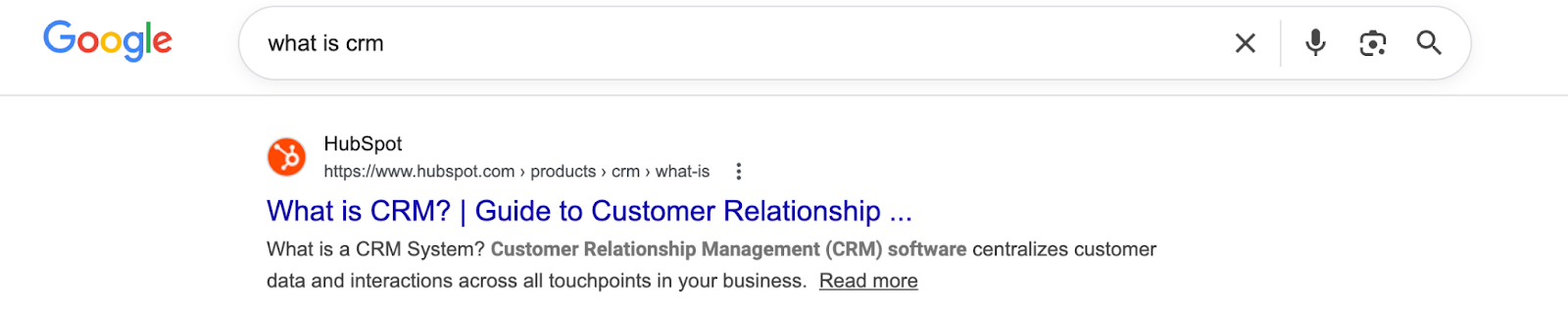
Someone searches on Google. They land on HubSpot. They see the software. They sign up.
The result? Their blog attracts millions of visitors every single month from Google alone.
At the time of writing this, according to Semrush (a popular SEO research tool), HubSpot’s website gets 4.2 million monthly visitors from SEO alone.
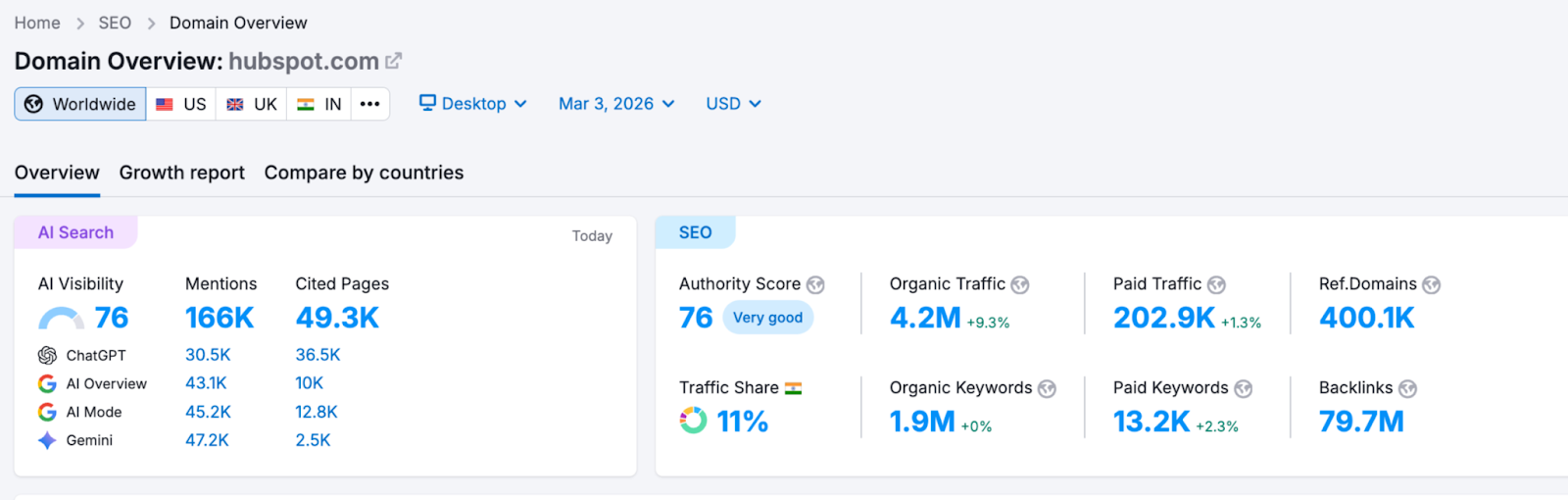
Key Takeaways:
- Target highly relevant keywords that your target audience is already searching for
- Make sure to cover topics at every level: beginner, intermediate, and advanced
- Don’t write for the sake of writing. Every post should serve a specific purpose and target a REAL keyword
Pro Tip: You don’t need to publish 50 posts a month as HubSpot does. Even publishing 3 to 4 well-researched posts per month consistently will generate steady traffic from Google.
2. Canva — Programmatic SEO
- Company type: SaaS / Design tool
- SEO strategy: Programmatic SEO through template pages
Canva doesn’t just rank for one or two keywords. They rank for millions of them.
And the best part? They didn’t publish a gazillion blog posts to do it.
Instead, they created a separate landing page for every single design template they offer.
Things like “Instagram story template,” “birthday card template,” “business card template,” and so on.
They attract a whopping 275 million visitors per month from SEO alone!
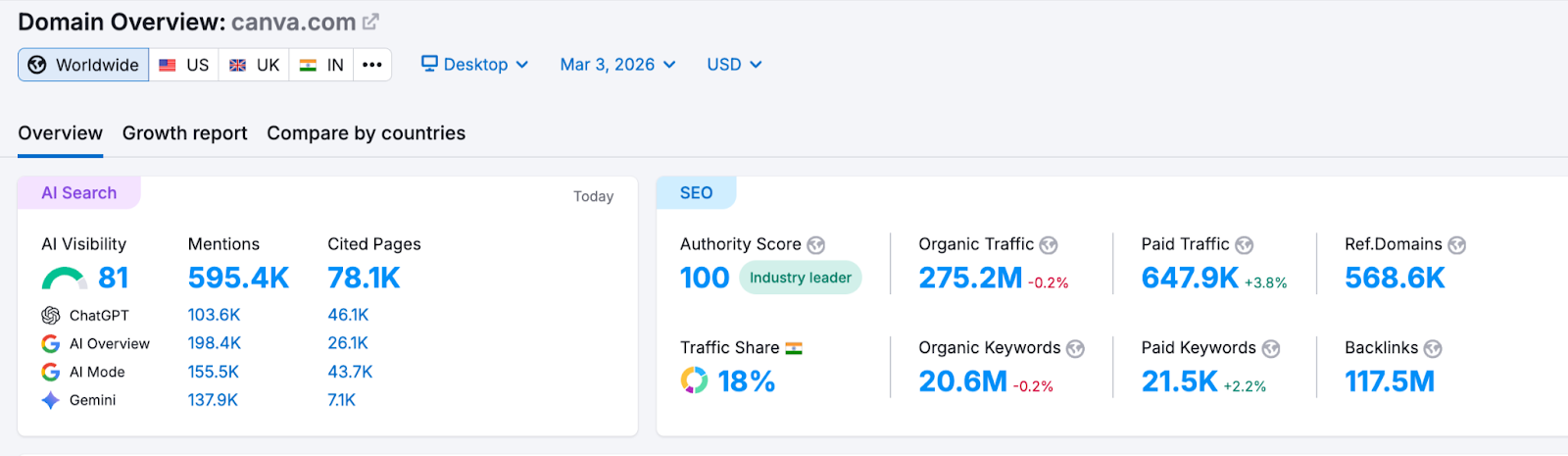
Think about how powerful that is.
Someone types “YouTube thumbnail template” into Google. Canva shows up. The person clicks, uses the free template, loves the product, and eventually upgrades to a paid plan. Or, keep using the free version. In any case, it’s a win for Canva!
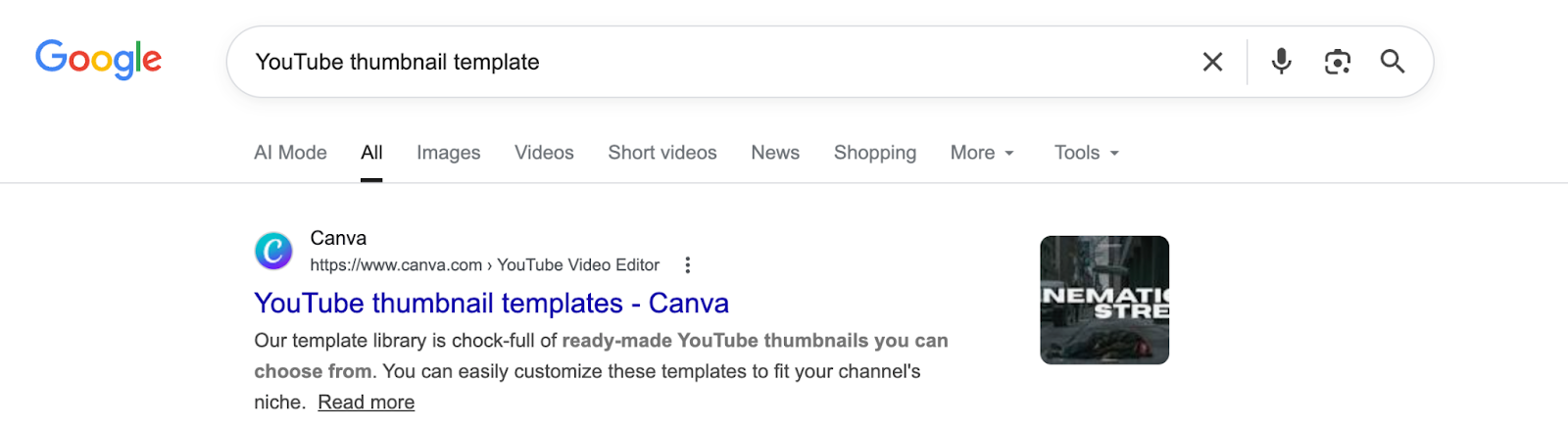
This is called programmatic SEO, where you create hundreds (or thousands) of pages with the same structure, each targeting a slightly different keyword.
Key Takeaways:
- If your product or service has many variations, create a dedicated page for each one
- Make sure each page targets a specific keyword (not just a generic one)
- Give users something valuable for free on those pages, and it makes conversion much easier
Pro Tip: You don’t need thousands of pages to use this strategy. Even a small blog can apply this idea. For example, if you write about food recipes, you could create individual pages for “easy chicken recipes for beginners” or “quick pasta recipes under 30 minutes”, each targeting a unique search query.
3. Moz — Free Tools SEO
- Company type: SaaS / SEO software
- SEO strategy: Free tools that attract massive backlinks
The best way to get thousands of websites to link to you? Give something away for free.
And that’s exactly what Moz did.
Moz created a suite of free SEO tools, the most famous of which is their Domain Authority (DA) checker. It’s a free tool that tells you how strong a website is in Google’s eyes.
Sounds basic, right?
But here’s the thing: every blogger wants to know their DA score. So they go to Moz, use the free tool, and then write about it on their own websites, linking back to Moz in the process.
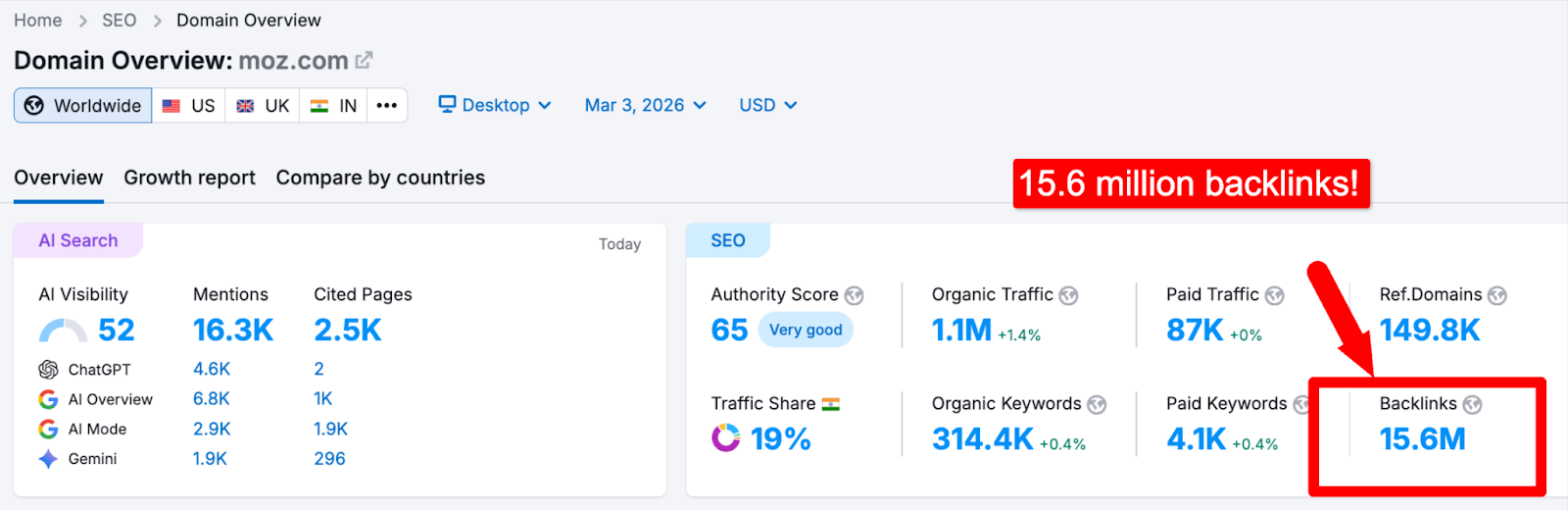
That one free tool has generated hundreds of thousands of backlinks for Moz over the years.
Moz attracted over 15.6 million backlinks so far with that one simple SEO strategy.
Key Takeaways:
- A free tool almost ALWAYS attracts more backlinks than a blog post ever will
- Think about what data or results your audience always wants to know, then build a simple tool around it. Now, you can build such tools or apps easily – thanks to AI and vibe coding tools.
Pro Tip: The tool doesn’t need to be complicated. It just needs to solve a specific problem your audience faces daily. Even a free template, a calculator, or a downloadable checklist can attract backlinks if it solves a real-world problem.
4. NerdWallet — Interactive Tools SEO
- Company type: Personal finance media
- SEO strategy: Backlink-worthy interactive calculators
NerdWallet’s secret weapon is NOT blog posts. It’s interactive calculators and comparison tools.
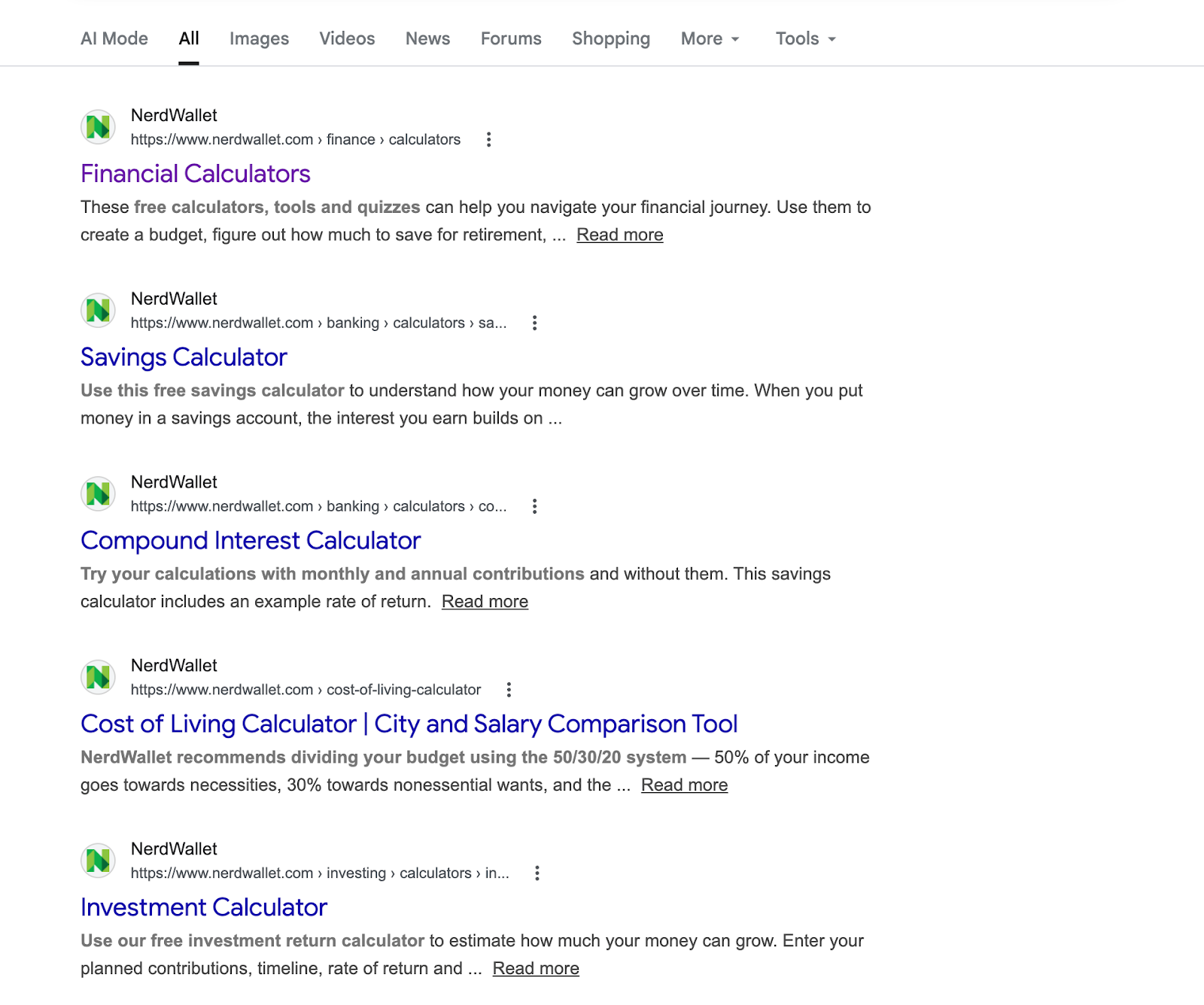
Think about it. When someone wants to figure out how much house they can afford, or compare two credit cards side by side, where do they go? They search Google. And NerdWallet shows up, almost every single time.
That’s why they generate nearly 10 million organic visitors a month from Google alone.
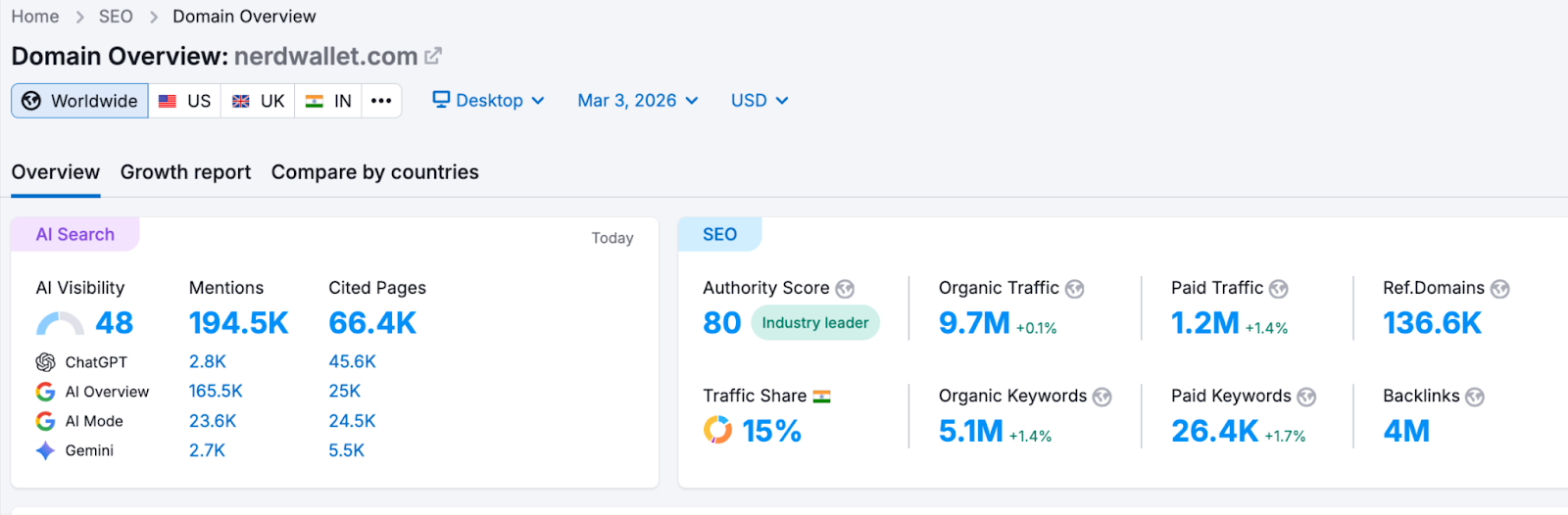
That’s the secret of link building. You’re not begging anyone for a backlink. People link to you because your tool is the best answer to their question.
Key Takeaways:
- Interactive tools attract far more backlinks than regular articles
- Focus on tools that answer a question your audience asks repeatedly
Pro Tip: This SEO strategy works in any niche. A fitness blogger could build a calorie deficit calculator. A travel blogger could create a trip budget estimator. Ask yourself: what number does my audience always want to know? Then build a simple tool around it.
5. Nike — eCommerce Product Page SEO
- Company type: Ecommerce / Sportswear
- SEO strategy: Keyword-optimized product pages
Every single product page on Nike’s website is treated like a mini SEO campaign.
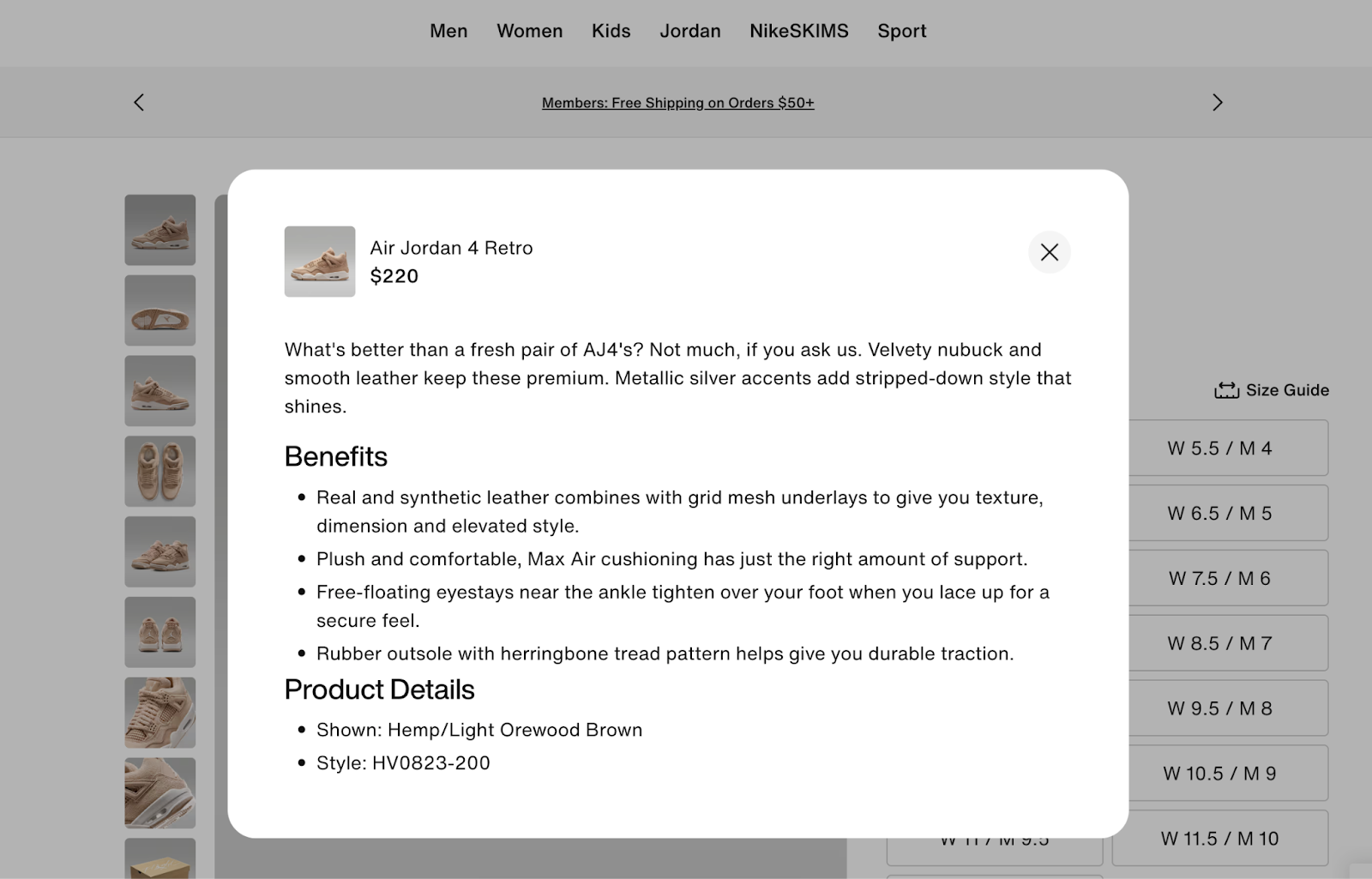
The product name is in the URL. The main keyword is in the heading. The description is detailed, clear, and naturally sprinkled with relevant keywords.
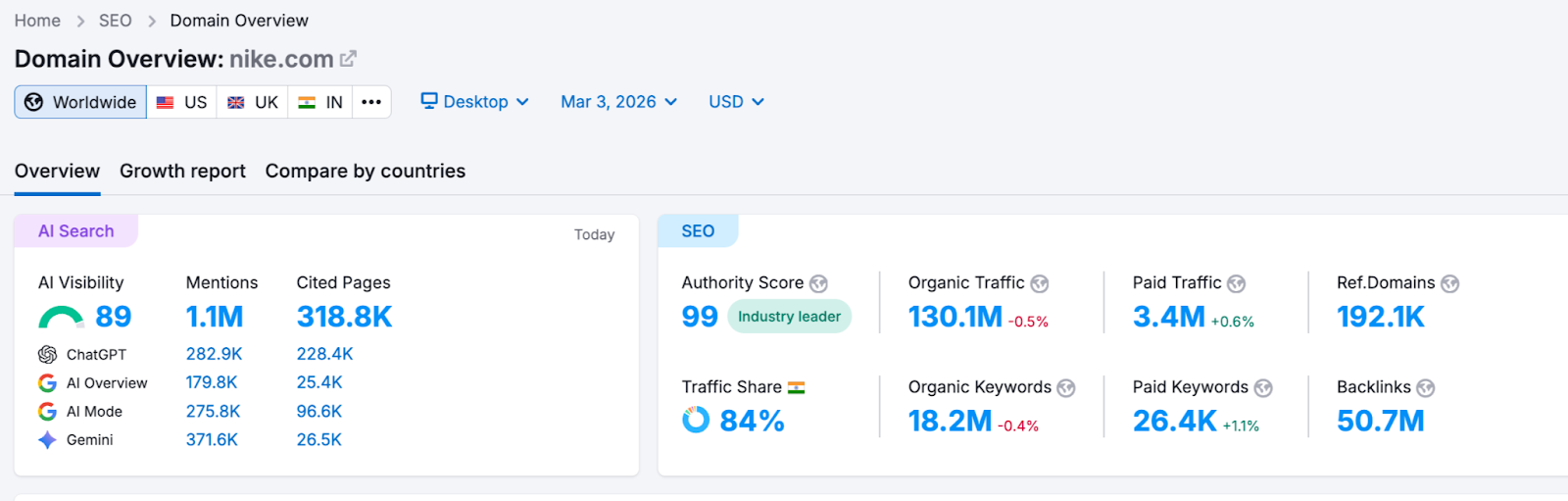
No wonder Nike gets over 130 million visitors monthly from search engines.
And.. Nike doesn’t stop there. They add clear product details and simple benefit points, such as materials, cushioning, color, and even the style code.
It helps buyers understand the product quickly and improves search engine rankings.
Key Takeaways:
- Treat every product page like an SEO campaign, not just a listing
- Put your main keyword in the URL, the page title, and the first paragraph of the description
- Add an FAQ section to each product page, targeting questions your customers actually ask
Pro Tip: Even if you only sell 10 products, this strategy works. Go to Google and type your product name followed by a question word like “Nike Air Max, how to clean.” You’ll instantly see what questions real customers are asking. Answer those questions directly on your product page and watch your traffic grow.
6. Wirecutter — Affiliate SEO
- Company type: Product review media
- SEO strategy: In-depth “best of” review pages
Wirecutter’s entire website is built around one type of content: “best of” review articles.
Best laptops. Best headphones. Best air purifiers. You get the idea.
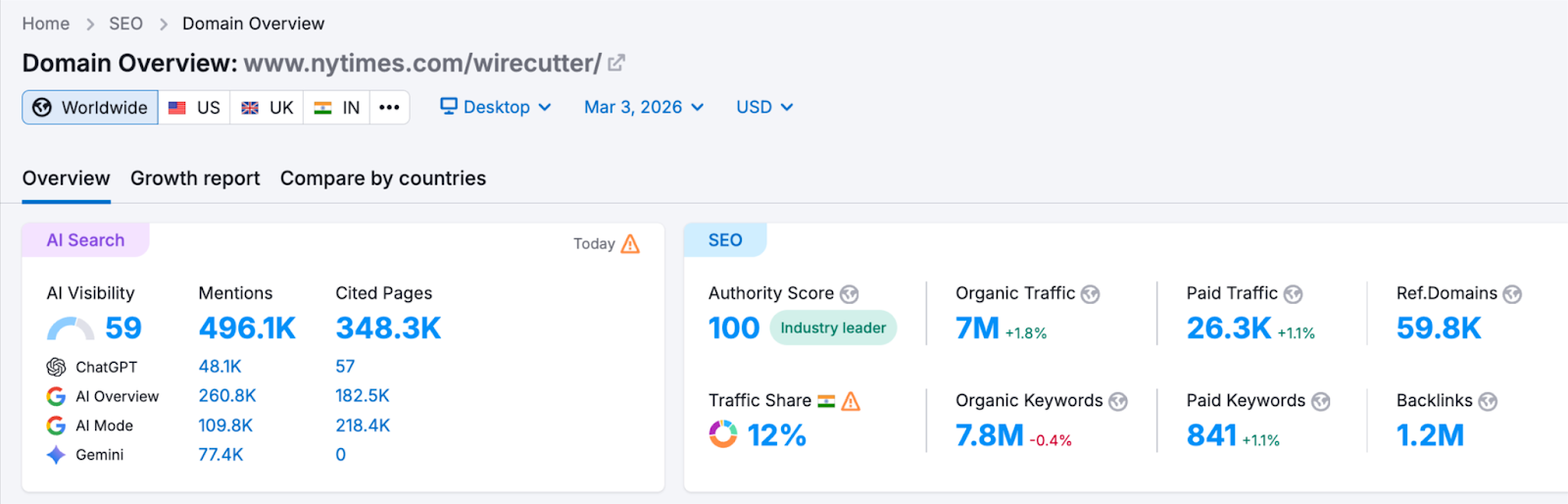
What makes Wirecutter stand out is the depth of its reviews. They actually buy and test every product they recommend. That hands-on experience shows in the writing, and Google rewards it with better rankings.
Like this;
Key Takeaways:
- Target “best + product category” keywords, as they attract buyers, not just browsers
- Always back up your recommendations with REAL testing and personal experience
Pro Tip: You don’t need a huge team to do this. Pick one product category you genuinely know well and write the most thorough and unbiased review on the internet. One great “best of” article can generate affiliate income for years.
7. Healthline — E-E-A-T SEO
- Company type: Health media
- SEO strategy: Expert-reviewed content to build trust
Health is one of the toughest niches to rank in.
Why? Because search engines like Google only show content they truly trust, because bad health advice can actually harm people.
Healthline’s entire SEO strategy is built around TRUST. Every article is reviewed by a real doctor before publishing. Their name, photo, and credentials are added right at the top of every page.
Have a look;
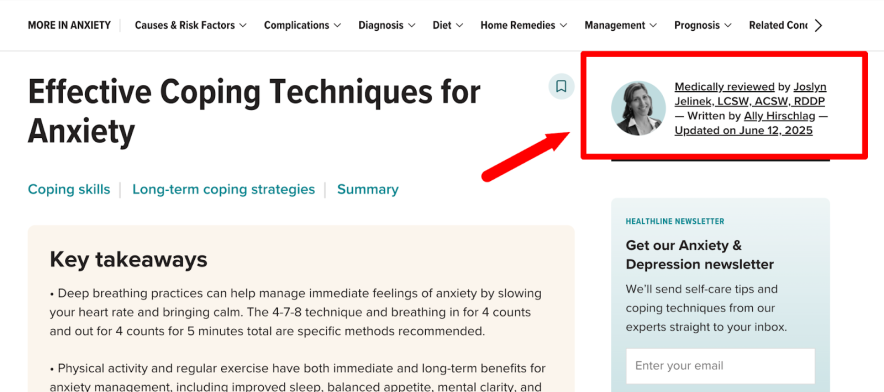
Google calls this E-E-A-T (Experience, Expertise, Authoritativeness, and Trustworthiness).
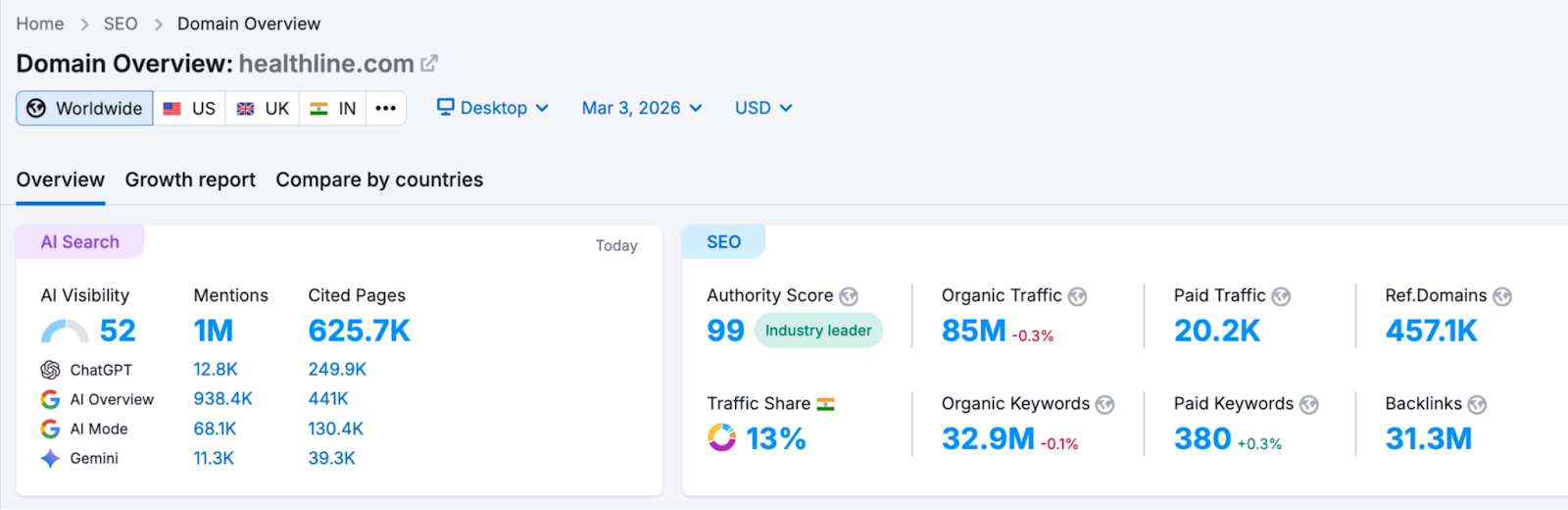
And Healthline nails all four. That’s why they attract over 85 million monthly visitors from search.
Key Takeaways:
- Always show who wrote and reviewed your content
- In sensitive niches (such as health, finance, legal, relationships, investing, and parenting), have an expert verify your content.
Pro Tip: Even a detailed author bio showing your personal experience builds trust with both readers and Google.
8. Zapier — Programmatic SEO
- Company type: SaaS / Automation tool
- SEO strategy: Individual landing pages for every app integration
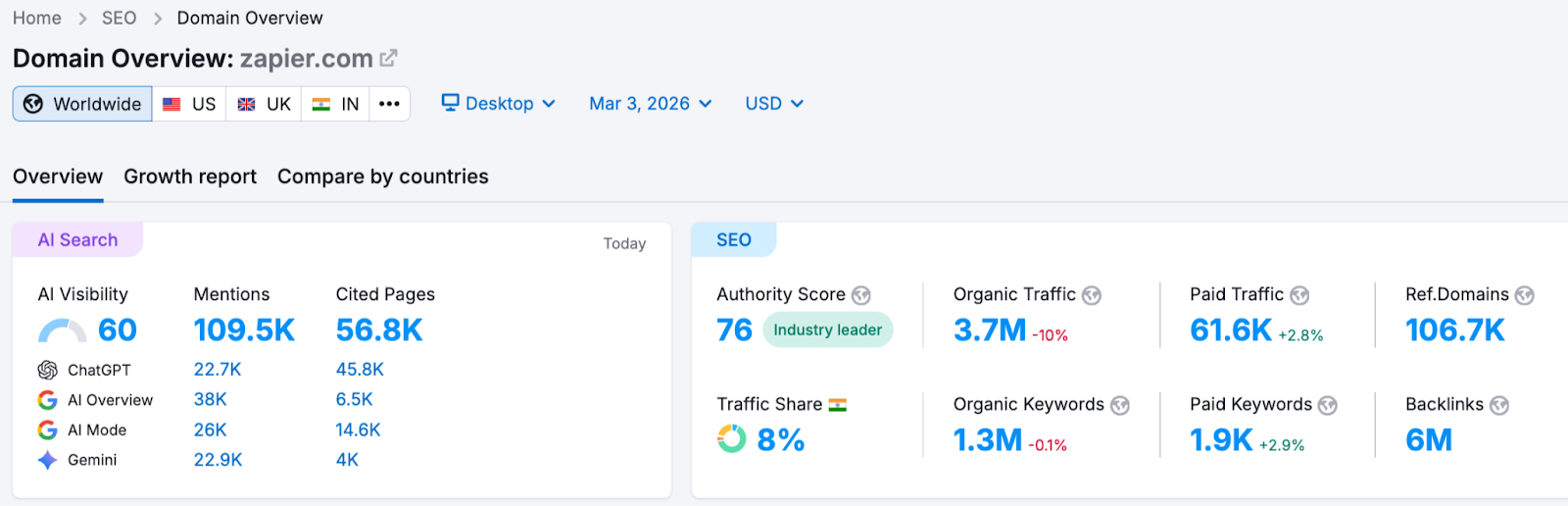
Zapier connects thousands of apps together. And they created a dedicated landing page for every single combination.
“Connect Gmail with Slack.” “Connect Shopify with Mailchimp.” “Connect Trello with Google Sheets.”
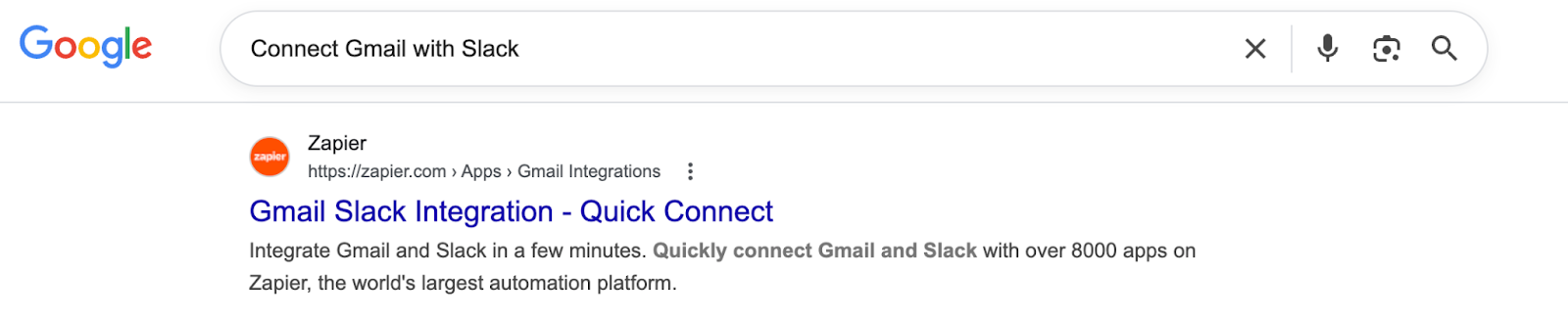
Each page targets a very specific keyword. Each keyword brings in a different audience. And every visitor lands on a page that shows exactly how Zapier solves their problem.
That’s thousands of pages, each page attracting massive traffic for free.
Key Takeaways:
- If your product has multiple use cases, build a dedicated page for each one
- Keep each page laser-focused on one specific keyword
Pro Tip: Start with your 10 most popular use cases first. You don’t need thousands of pages to see results.
9. G2 — User Generated Content SEO
- Company type: SaaS review platform
- SEO strategy: Letting users create the content for them
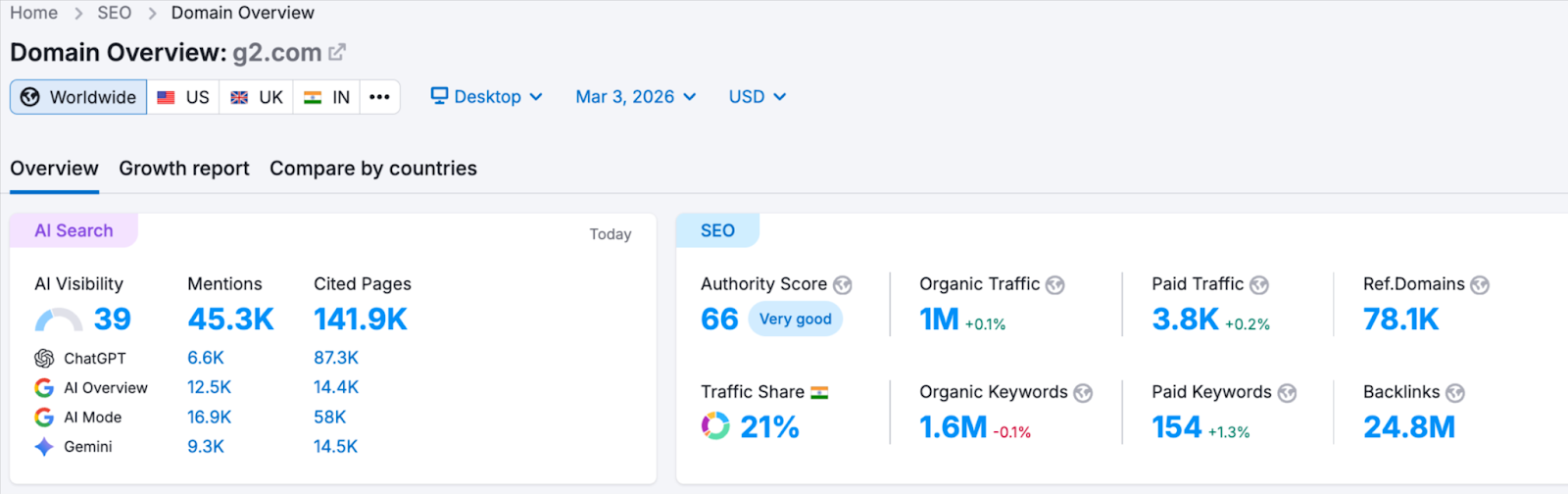
G2 cracked the SEO code without writing much content themselves.
Every time a user leaves a software review on G2, that review becomes FRESH content on their website. Thousands of new reviews get added every single day, all without G2 lifting a finger.
Google LOVES fresh and unique content. And G2 has an endless supply of it.
Key Takeaways:
- Let your users generate content through reviews, comments, or testimonials
- Fresh content added regularly signals to Google that your site is very active
Pro Tip: Even adding a simple comments section to your blog creates fresh user-generated content on every post.
10. TripAdvisor — Local SEO at Scale
- Company type: Travel / Hospitality marketplace
- SEO strategy: Dedicated pages for every location and property
TripAdvisor has a page for virtually every hotel, city, neighborhood, and landmark on the planet.
“Hotels in Paris.” “Cheap hotels near the Eiffel Tower.” “Best hotels in Bali under $50.” Each one is a separate page targeting a separate keyword.
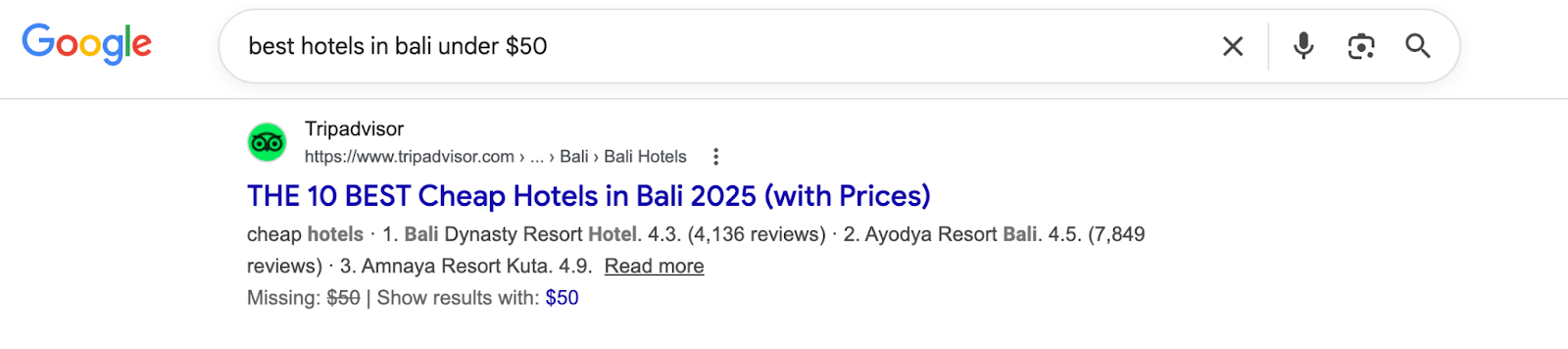
That’s local SEO taken to an extreme level, and it works great for them, as they generate over 230 million visitors monthly from search.
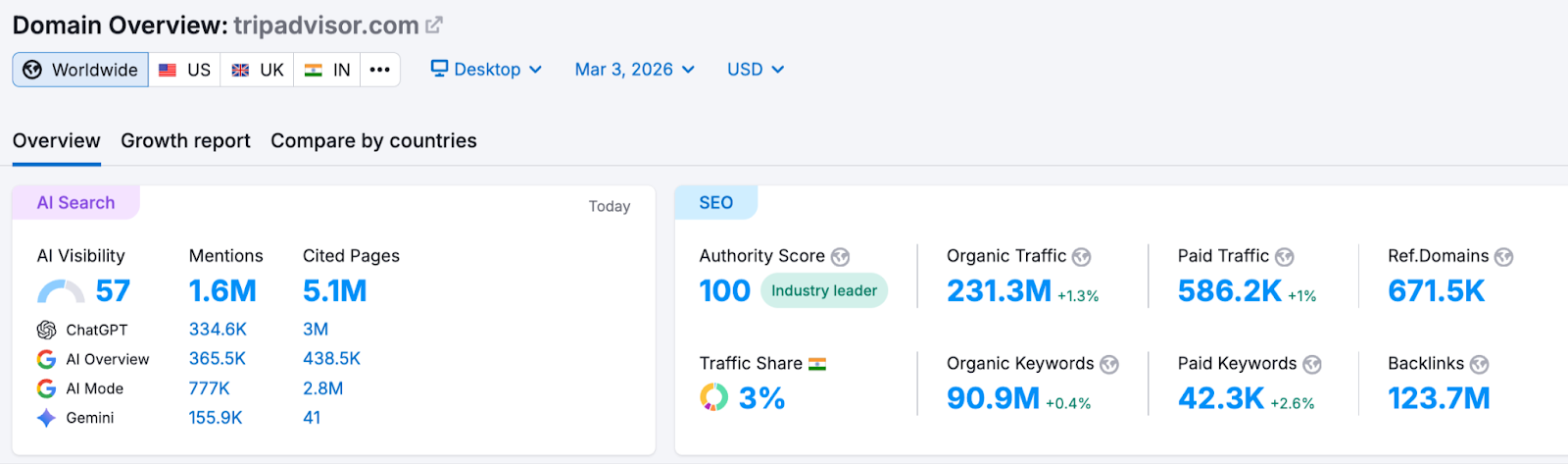
Every time someone searches for accommodation anywhere in the world, TripAdvisor has a page ready and waiting to rank for it.
Key Takeaways:
- Create dedicated pages for every location you serve
- Use specific location-based keywords in your page titles and headings
Pro Tip: Even a small local business can apply this. If you serve 5 cities, create a separate page for each one.
11. Wikipedia — Internal Linking SEO
- Company type: Non-profit encyclopedia
- SEO strategy: Massive internal linking structure
Wikipedia ranks for almost everything on Google. And one BIG reason is their internal linking.
Every Wikipedia article links to dozens of other Wikipedia articles. Click on “Apple Inc.” and you’ll find links to “Steve Jobs,” “Silicon Valley,” “iPhone,” and hundreds more.
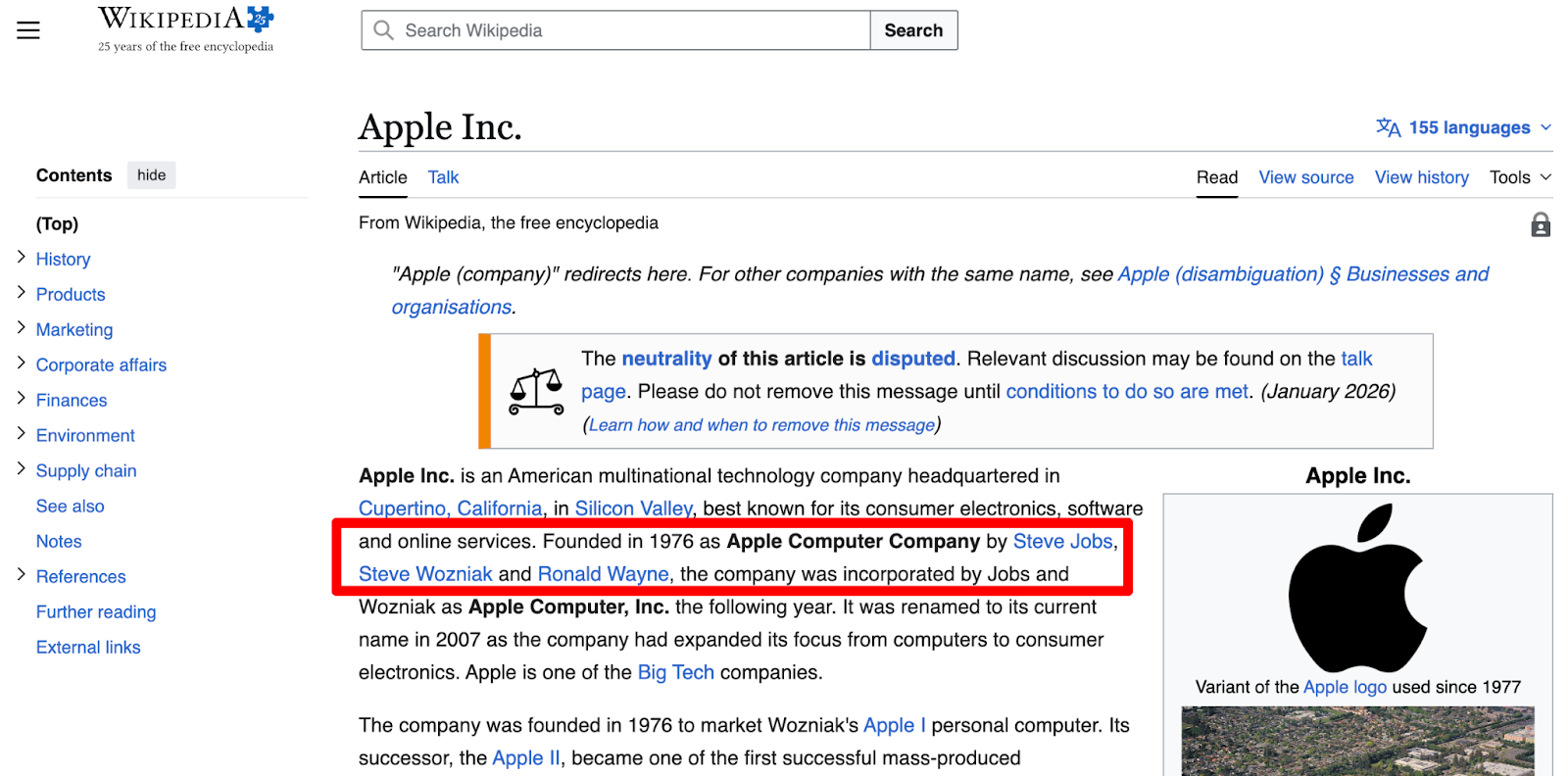
This creates a massive list of interconnected pages that Google can endlessly crawl.
Each internal link passes authority from one page to another, ultimately helping the website gain massive traffic from Google.
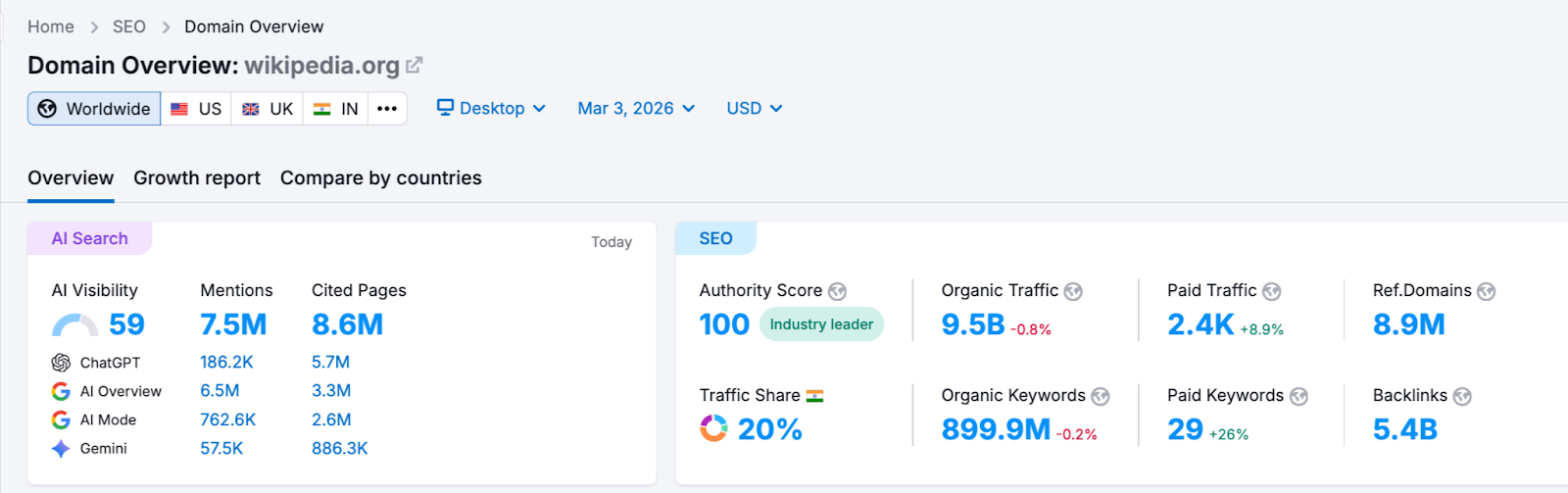
At the time of writing this, Wikipedia attracts over 9.5 billion monthly visitors from SEO.
Key Takeaways:
- Link to your own relevant articles within every post you publish
- Use descriptive anchor text, such as “best keyword research tools,” beats random text like “click here” every time.
Pro Tip: Go back to your 10 oldest posts and add internal links to your newer content. It’s a quick SEO win that most bloggers completely ignore.
12. Semrush — Free Tools SEO
- Company type: SaaS / SEO software
- SEO strategy: Free tools that attract high-intent traffic
Semrush sells a premium SEO tool. But they provide a ton of tools for free.
Free keyword research. Free site audits. Free traffic checker. Each free tool targets a specific keyword that their ideal customer is already searching for.
Someone searches “free keyword research tool.” They find Semrush. They use the free version. They love it. Then, they try their paid version.

That’s a smart business strategy, built entirely on SEO.
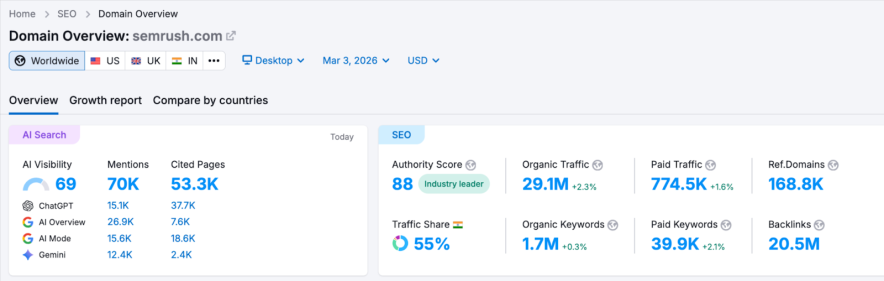
No wonder Semrush gets over 29 million visitors from Google.
Key Takeaways:
- Build free tools around keywords your ideal customer searches daily
- Give enough value for free that paying feels like a no-brainer
Pro Tip: Even a free template or tool works the same way. Give your audience a taste of value for FREE, and they’ll come back for more.
FAQs
There are four main types: on-page SEO (optimizing content and keywords), off-page SEO (building backlinks), technical SEO (improving site speed and structure), and local SEO (ranking for location-based searches).
It depends. Most websites start seeing traffic in 3 to 6 months. But it depends on your competition, domain authority, and how consistently you publish HELPFUL content.
Yes, you can. Start with keyword research, write helpful content, and build a few quality backlinks.
Adding your target keyword in the title tag, URL, first 100 words, and H1 tag.
SEO (Search Engine Optimization) is the process of optimizing your website to rank higher on Google. For example, if you run a bakery in Texas, you’d optimize your site for “best bakery in Texas” so people searching that term find you first.
Final Thoughts on SEO Examples
SEO isn’t a one-size-fits-all game.
Nike focuses on product pages. HubSpot puts its efforts into blogging. Canva dominates with programmatic SEO. Yet they all get massive traffic from Google in their own way.
The lesson? Pick the strategy that fits your business and give your 100% efforts.
You don’t need to do everything at once. Start with one takeaway from this list, apply it consistently, and build from there.
That’s exactly how BloggersPassion grew from a small blog in 2010 to generating over $18,000 per month based on SEO, one strategy at a time.
Got questions about any of these SEO examples? Drop them in the comments below.


