


Key Takeaways:
- Most new pages take 3 to 6 months to start seeing rankings on Google.
- The 3 factors that matter most in 2026: search intent, E-E-A-T signals, and backlink quality
- New blogs should target keywords with difficulty under 20
- Updating old content is just as powerful as publishing new content
Here’s a number that might surprise you.
Only 1.74% of new pages reach Google’s top 10 search results within a year.
In other words, 98 out of 100 pages you publish won’t rank in the first year.
Harsh truth, right? Yes. But here’s the good news.
That 1.74% is NOT random.
Those pages did a few things right: targeting the right keyword, creating helpful content, and building relevant backlinks.
And once you know what those things are, you can also boost your search rankings.
We’ve been doing SEO at BloggersPassion for over 16 years. We’ve ranked for hundreds of keywords, some quickly, some slowly.
And along the way, we learned what helps pages rank on the #1 page and what keeps them stuck on page #5.
In this guide, you’ll get:
- A direct answer to how long ranking actually takes
- Real data from Ahrefs and Semrush (not guesses)
- Our own BloggersPassion case study with screenshots
- The 5 factors that decide how fast you rank in 2026
- Actionable tips to speed things up
Let’s dive in.
Table of Contents
- How Long Does It Take to Rank on Google?
- What the Data Actually Says
- Our Own Case Study: What Happened at BloggersPassion
- 3 Factors That Affect How Fast You Rank on Google in 2026
- How Long Does It Take to Rank? (By Blog Type)
- How to Rank Faster on Google (3 Things That Actually Work)?
- FAQs
- Final Thoughts: SEO Takes Time, But It’s Worth Every Month
How Long Does It Take to Rank on Google?
Most new pages start seeing some movement on Google in 3 to 6 months.
For competitive keywords, it can take 12 months or more.
Here’s what the data actually shows:
- Ahrefs studied 1 million+ URLs and found that only 1.74% of new pages reached Google’s top 10 within a year
- Semrush studied 28,000 domains and found that by month 6, only 19% of domains had broken into the top 10
- The average #1 ranking page on Google is 5 years old, up from just 2 years old in 2017
Think about that last stat for a second.
The pages sitting at #1 right now? Most of them have been around for years.
Google values domain age, consistency, and trust.
But that doesn’t mean new bloggers can’t rank. You just need to be smart: choose the right keywords, create useful content, and build authority over time.
The good news? Once you understand why ranking takes time, you can do things that help you rank faster.
In this guide, we’ll show you exactly how.
What the Data Actually Says
Let’s look at what two of the biggest SEO companies found when they analyzed the data.
Ahrefs Studied 1 Million+ URLs
Ahrefs collected 1 million random URLs and tracked whether any of them ranked in Google’s top 10 within a year.
The results were surprising:
- Only 1.74% of pages reached the top 10 within 12 months
- 40.82% of pages that did rank in the top 10 got there within the first month
- A whopping 72.9% of pages currently ranking in Google’s top 10 are more than 3 years old
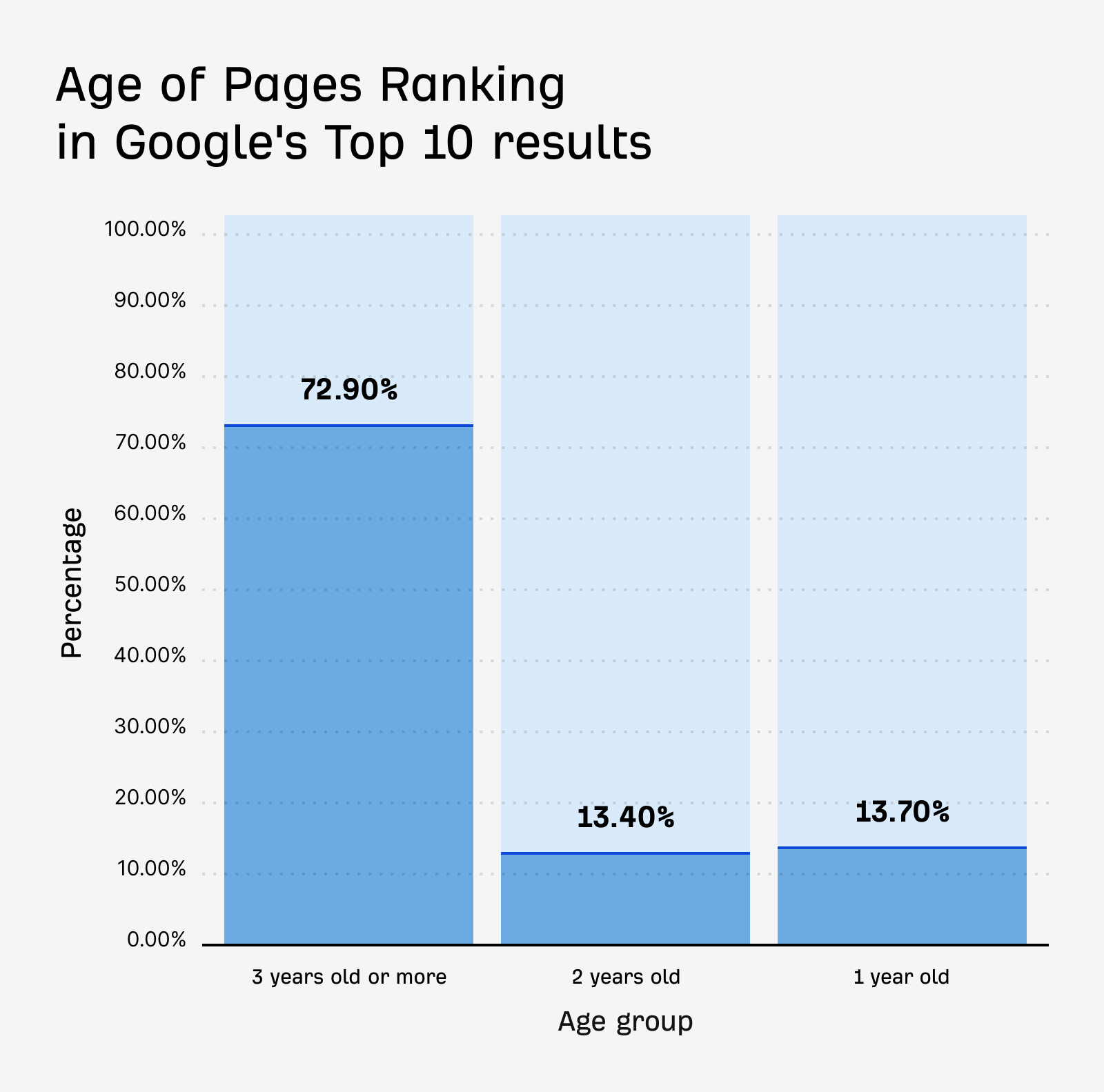
Here’s what that last point means for you.
If a page is going to rank quickly, it usually happens in the first month. After 6 months, the chances of reaching the top 10 drop a lot, unless you actively update and improve the content.
Semrush Studied 28,000 Domains
Semrush took a different approach. They tracked 28,000 newly registered domains over 13 months to see what separated winners from everyone else.
Here’s what they found:
- Only 7.65% of domains maintained top 100 rankings for the entire study period
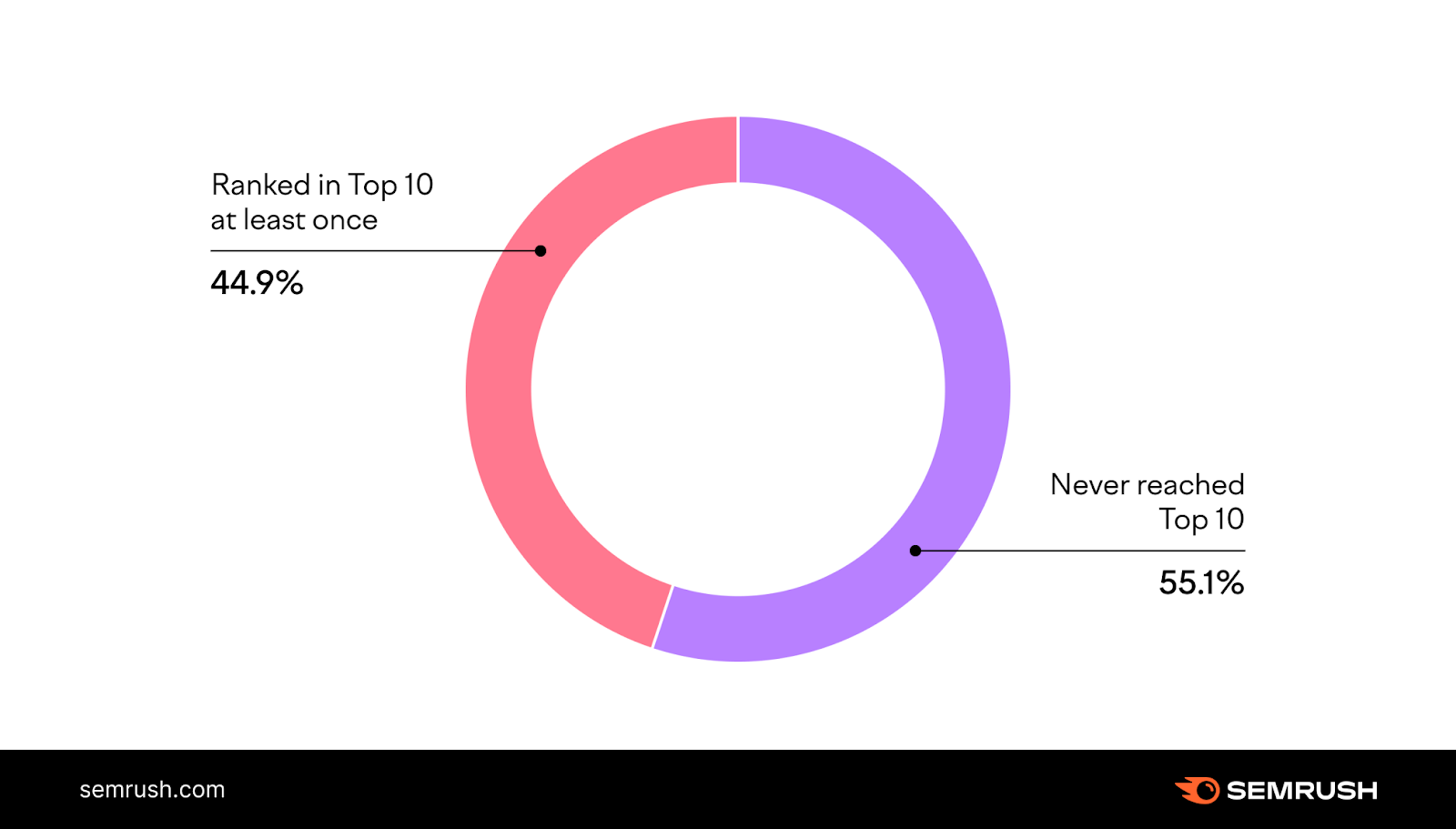
- 55.1% of domains that never reached page 1 had zero backlinks
- Pages ranking in the top positions were on average 3.5x longer than lower-ranking pages
- Top-performing sites attracted over 4,000 monthly organic visits after year one, while non-ranking sites got almost zero
What does this mean for you?
Two big takeaways from all this data:
- If your page hasn’t moved in 6 months, don’t just wait. Update it, improve it, and build backlinks.
- Backlinks and quality content matter. Pages with weak content and no backlinks rarely reach page 1.
Our Own Case Study: What Happened at BloggersPassion
Data from Ahrefs and Semrush is great. But let’s make it real with something we’ve actually experienced.
Here’s a real case study from our blog showing how rankings grow over time.
The Keyword We Targeted
The post we’re tracking is our article on Pinterest alternatives.
Here are the basics:
- Target keyword: Pinterest alternatives
- Monthly search volume: 8,400 searches (globally)
- Date published: July 16, 2023
What Happened Month by Month
Here’s the honest timeline.
Day 1: Google picked up the post on the same day we published it. We got 35 impressions in Google Search Console. No clicks yet.
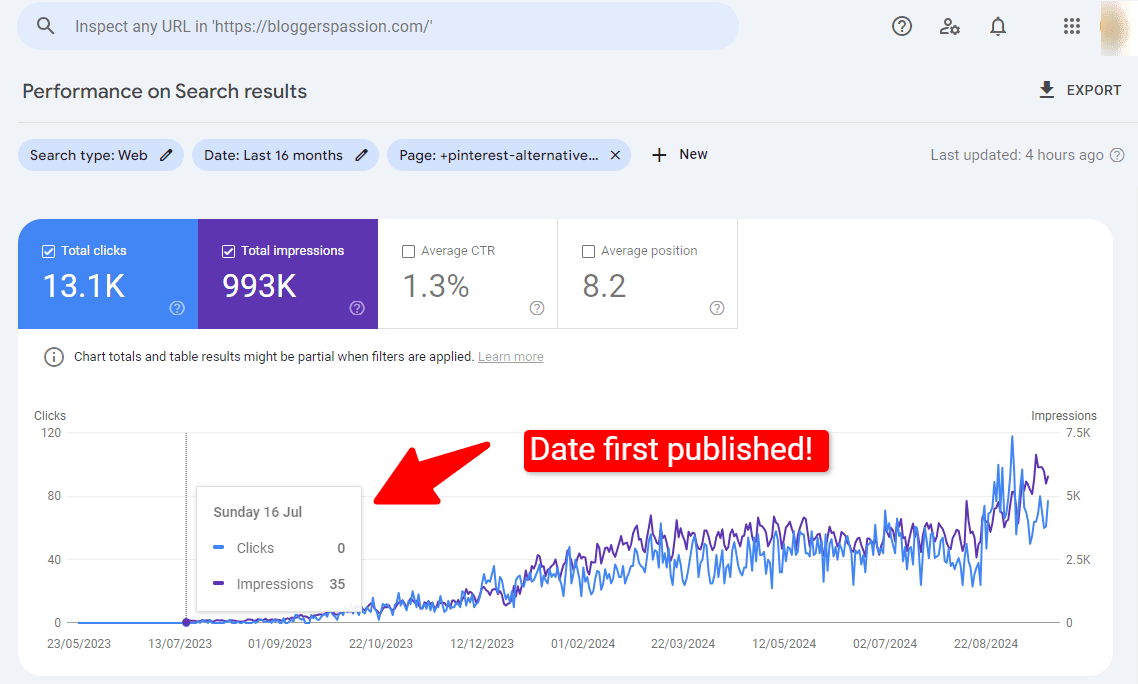
First 3 months: The post generated just 243 clicks total. Slow, but it was moving.
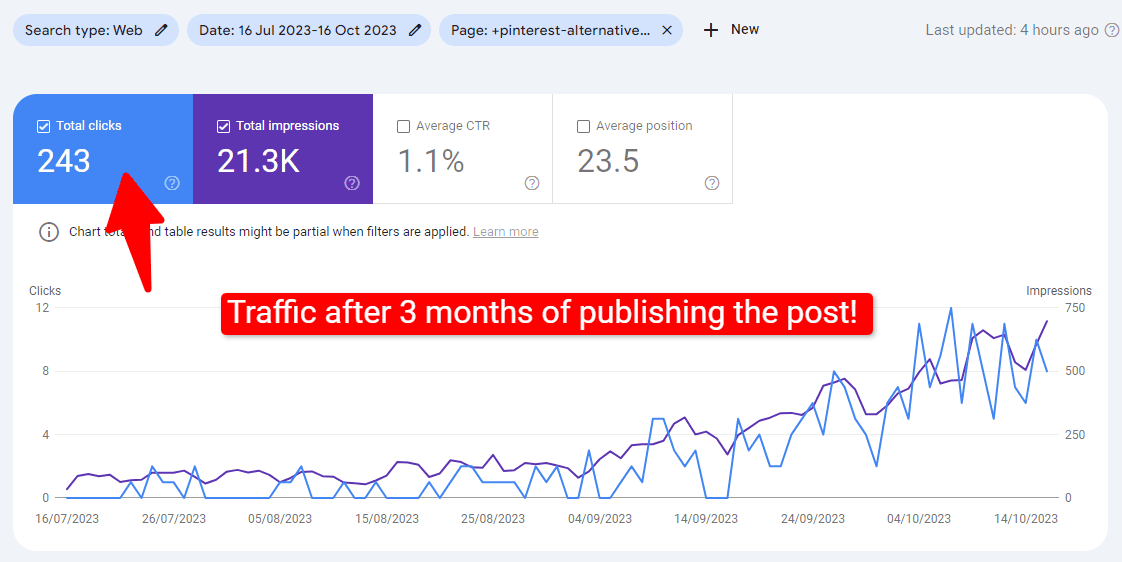
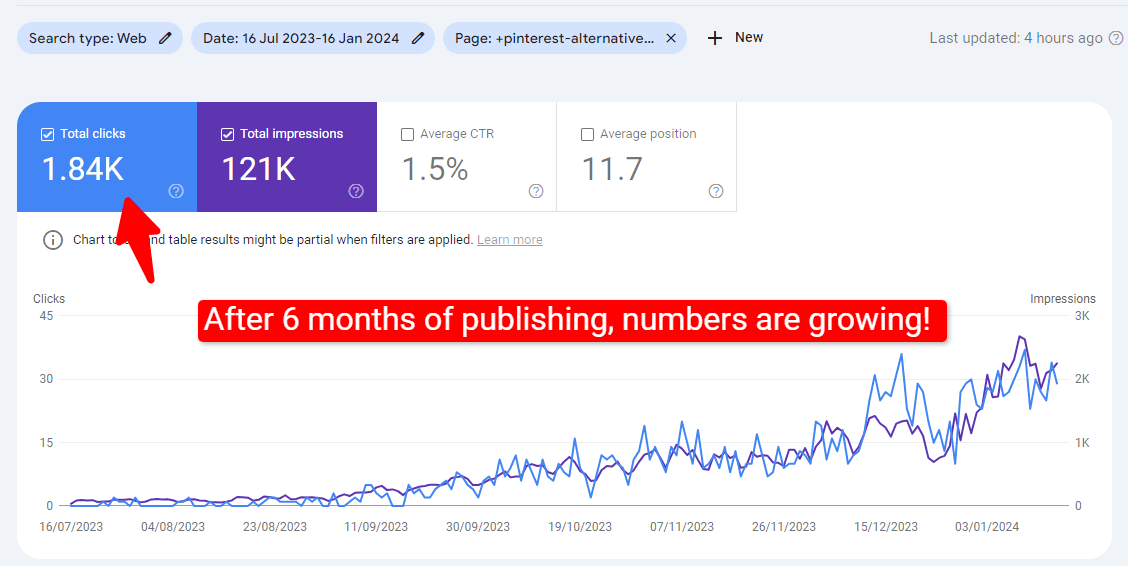
Month 6: Traffic began to pick up. The post crossed 1,800 visits.
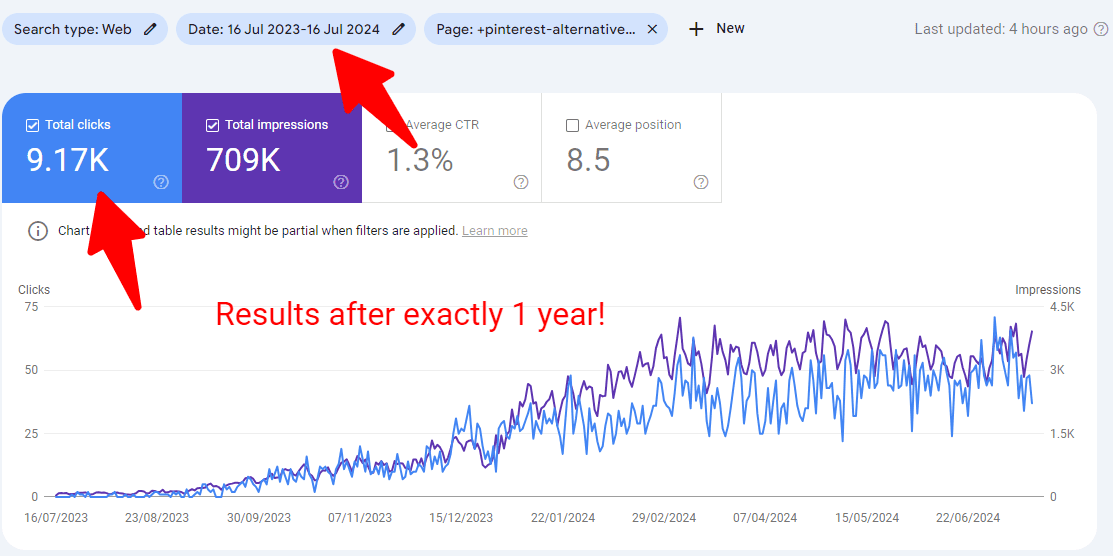
Month 12: Things really took off. The post hit over 9,000 visits in its first year.
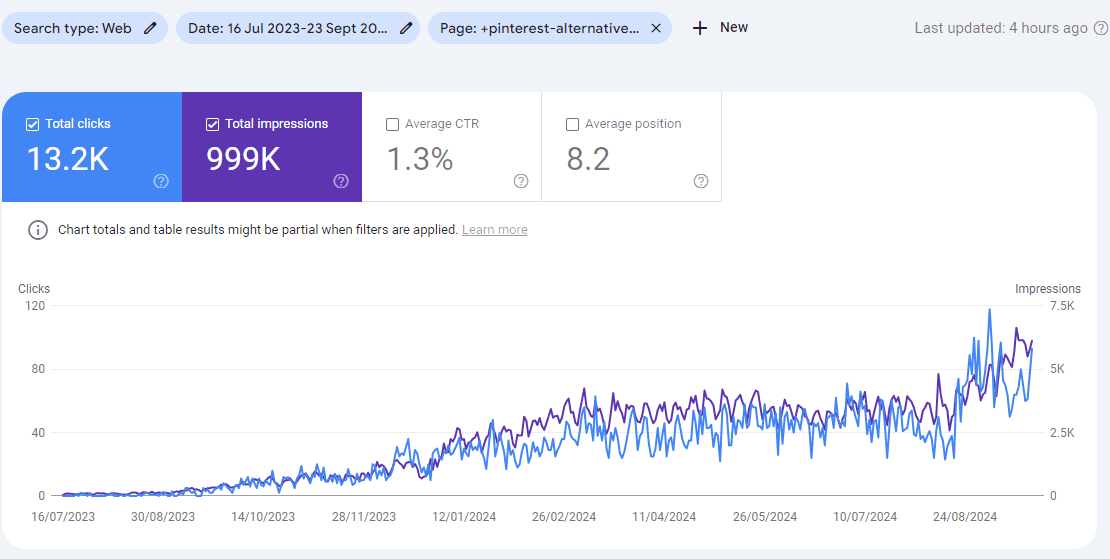
Month 14: The post attracted 13,200+ total visitors and nearly 1,000,000 impressions.
Update: 16 Months of Data (Nov 2024 – Mar 2026)
We pulled the latest numbers from Google Search Console, and here’s where things stand today.
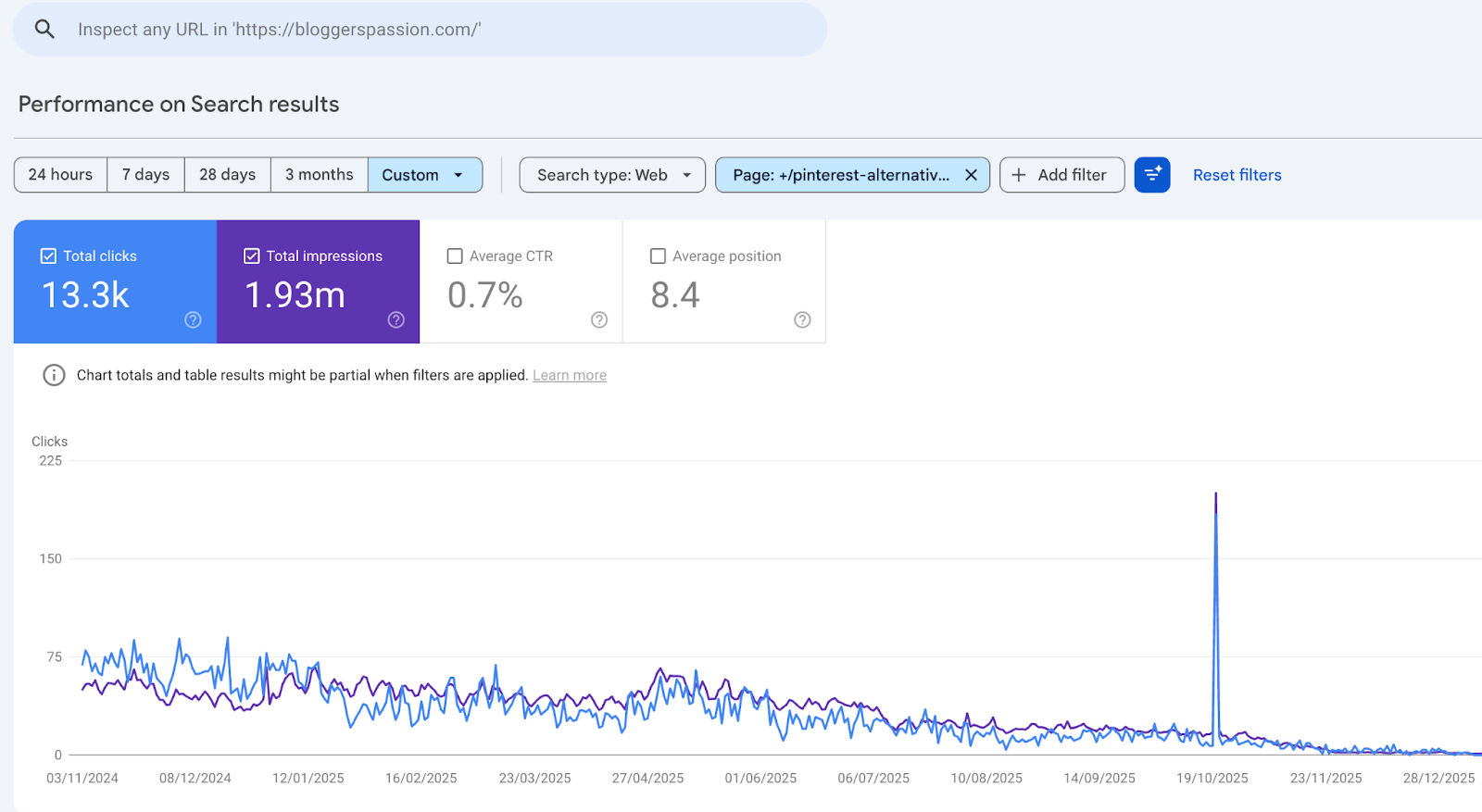
Over the last 16 months, the Pinterest alternatives post generated:
- 13,400 total clicks
- 1.93 million total impressions
- Average position of 8.4 on Google
The traffic chart also shows something important: rankings don’t always grow in a straight line. After a strong start, clicks gradually declined in 2025, with a clear spike in October.
That’s completely normal in SEO. Google updates, AI overviews, and new competitors all affect your rankings over time.
The takeaway? Publishing is just the beginning. The real work is monitoring, updating, and improving your content as things change.
3 Factors That Affect How Fast You Rank on Google in 2026
Not every website ranks at the same speed. Here are THREE key factors that determine how quickly your site gets faster Google’s rankings.
1. Search Intent Match
Google ranks pages that match what people are actually looking for.
For example, if someone searches “best protein powder for beginners,” they expect a list of products, not a long and boring guide on protein.
Before writing, search your keyword and see what the top results look like. Then create something similar, but better.
Google wants content from people who actually know the topic.
E-E-A-T means showing experience, expertise, authority, and trust.
Here are a few simple ways to do that:
- Add a clear author bio
- Share real examples, results, or screenshots
- Get links from trusted sites
- Focus on one main topic on your site
Our BloggersPassion case study works because it includes real screenshots, data, and timelines. That’s E-E-A-T in action.
3. Backlink Quality (Not Just Quantity)
Backlinks are still a strong Google ranking factor.
But in 2026, quality matters more than quantity.
100 low-quality links won’t help. One link from a relevant site is far more powerful.
Semrush’s study found that 55.1% of pages that never reached page 1 had zero backlinks.
Focus on earning backlinks through:
- Publishing original data and case studies (like this one)
- Writing guest posts for relevant blogs in your niche
How Long Does It Take to Rank? (By Blog Type)
The honest answer is: it depends on where your blog is right now.
A brand new blog and a 5-year-old authority site rank very differently on Google.
Here’s a realistic breakdown based on your blog’s age.
| Blog Type | Domain Age | Target KD (Keyword Difficulty) | Realistic Time to Rank | Primary Focus |
| New Blog | 0 to 6 months | Under 20 | 6–12 months | Target very low-competition keywords, publish detailed content, and build internal links |
| Growing Blog | 6 months to 2 years | 20–40 | 3–6 months | Target 1k–3k search volume keywords, moderate competition (KD 20–40), build topic clusters |
| Authority Site | 2+ years | 40+ | 2–8 weeks | Publish consistently, use existing authority, and still choose keywords wisely |
How to Rank Faster on Google (3 Things That Actually Work)?
Want to rank faster on Google? Here are 3 strategies that actually work in 2026.
1. Target Low-Competition Keywords First
Most beginners target highly competitive keywords like “SEO tools” right away. Those are dominated by authority sites with millions of backlinks. You can’t beat them on Google!
Instead, go after long-tail keywords with a difficulty score under 20.
That’s exactly what we did with “Pinterest alternatives,” a 3,300-search-volume keyword with easy competition (at the time of publishing). We hit page 1 in 5 months.
Start small. Boost your search traffic using small keywords. Build authority. Then go bigger.
2. Write Long-Form, Intent-Matched Content
Don’t just write more words. Write more useful words.
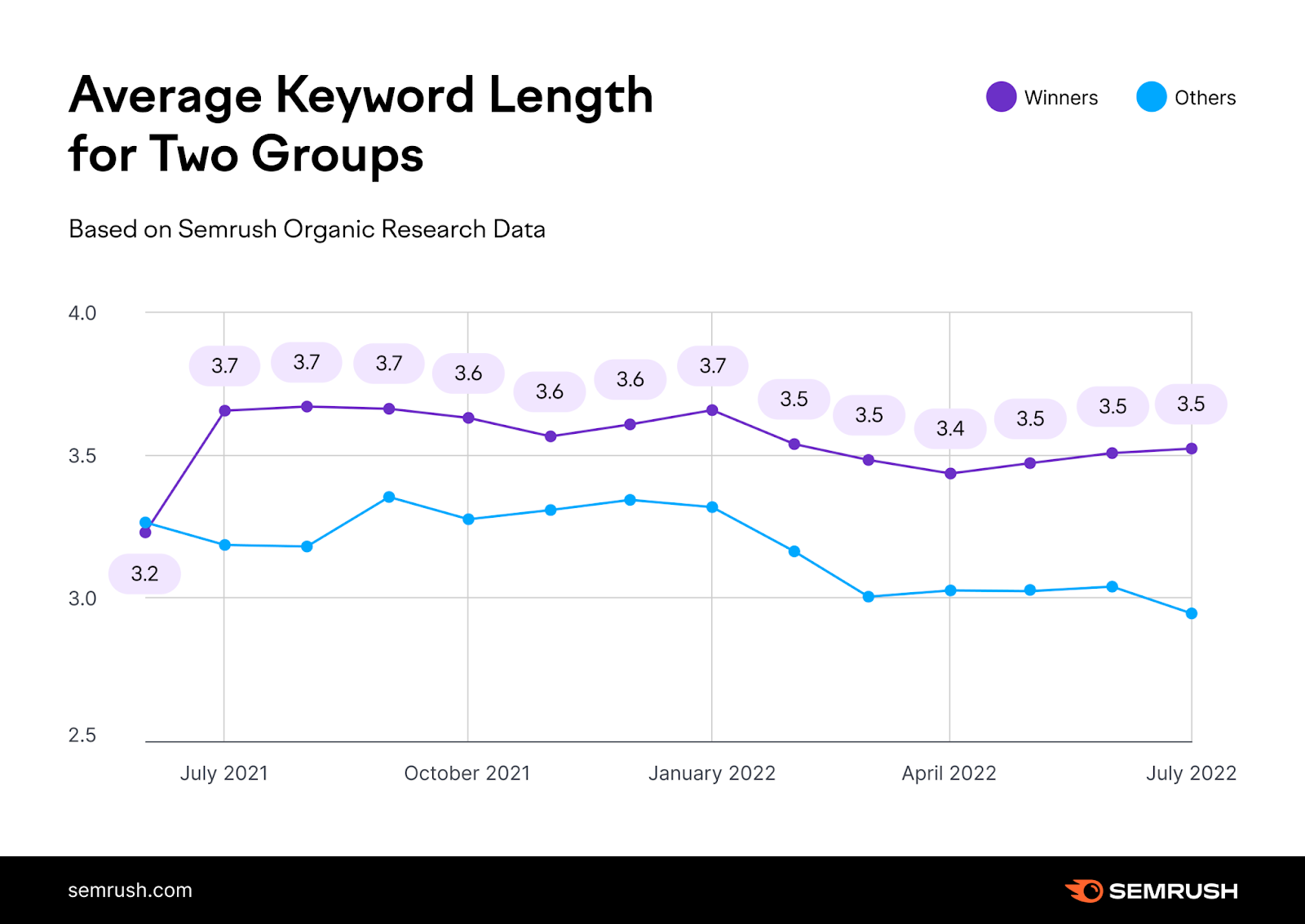
Semrush found that top-ranking pages are 3.5x longer than lower-ranking ones.
Our Pinterest alternatives post reached 2,000 words and generated 13,400 clicks over 16 months.
3. Update and Improve Old Content
Have your blog posts stuck on page 2 or 3? Update them before writing new content.
Add fresh data, update old stats, answer “People also ask” questions, and improve internal links. A good content update can push a post to page 1 faster than publishing a new one.
We do this every 6 months at BloggersPassion, and it often brings traffic back to older posts.
FAQs
Here are some interesting FAQs you should know to improve your keyword rankings on Google search.
Primary keywords are “focus keywords” which define the nature of your business, app, products or services. Secondary keywords are those keywords that supplement your primary focus keywords.
Make sure to target a keyword that has low relative search volume instead of picking high-volume keywords. Make sure to analyse the competition for the keyword you want to rank for.
To maintain keyword rankings, give readers exactly what they’re looking for and keep building quality backlinks to that page.
For most new websites, it usually takes around 3 to 6 months to start ranking for some keywords, depending on competition.
Yes, but usually only for very low-competition keywords or trending topics. Competitive keywords can take months (or years).
Browse more helpful case studies:
Final Thoughts: SEO Takes Time, But It’s Worth Every Month
Here’s the honest truth about ranking on Google: It’s slow at the start.
The first 3 months will feel like nothing is happening. You’ll publish posts, check Google Search Console daily, and wonder if any of it is working.
It is.
Our Pinterest alternatives post generated just 243 clicks in its first 3 months. By month 12, it had crossed 9,000 visits. By month 16, it had nearly 2 million impressions.
That’s how SEO works.
In 2026, SEO isn’t about publishing more posts. It’s about choosing the right keywords, staying consistent, and improving the content you’ve already published.
Did you find our SEO case study on how long it takes to rank on Google useful? Drop your biggest takeaway in the comments below. We read every single one.






Can you please give me detail explain about how to rank ecommerce website with particular keyword ranking startegies.
Thank You
Thank you for this great case study i will follow this and update you soon
Hello,
This blog post is giving really deep knowledge of the SEO.
It is very descriptive article.
Thanks and Regards,
Prashant Shah
Thanks for such a useful information really helps that how keywords ranking is important in search result since im doing SEO from last 2yrs to my website by reading your article ill implement this strategist to my website
hey there,
can you explain new google updates 2018 in your next article.
Thank you For sharing the Great article and this article is very helpful for me. we follow this technique in my activities to improve and I have learned a lot from you
Hey bro,
Though the keyword gets just 1.3k searches, I see the competition isn’t easy. 72.6 difficulty rating isn’t a joke. Congrats on beating those competitors and thanks for sharing the case studies.
Great case study, Anil.
I am assuming that your blog post took only 100-120 days because your site’s domain authority is above 50.
Site’s with less DA may take more time in ranking. (Am I right?)
By the way, thanks for this case-study it helps people like get some idea. 🙂
That’s true. For less DA websites, it will take some more extra time. They can reduce this gap by going for even less competitive terms having keyword difficulty (KD) less than 50.
Hello Anil,
Very informative case study. Keywords play a great role in ranking a site for a particular phrase. I have published a post a few days ago and it is ranking on the first page after 3 days of publishing the post. You are right longer content performs well in search engines and Google loves long content. Thanks for sharing this helpful case study.
Have a Great day 🙂
Vishwajeet
Anil the reason I love this post; it dives into what you need to do to rank on Google, in-depth. Reading, studying and using this post to rank takes time. Months. At least. Meaning it is the perfect representation for how long it takes to rank for semi-competitive or long tail keywords.