

Key Takeaways:
- SEO focuses on ranking on Google. OSO focuses on showing up everywhere, Google, YouTube, Reddit, AI tools, and more
- OSO is about growing your brand’s search share, not just chasing page 1 rankings
- You can start with OSO today by repurposing your best content across 2-3 platforms
You’ve spent years optimizing your blog for Google. Keywords, backlinks, and meta tags.
But the way people search is changing fast.
They’re asking ChatGPT. Finding answers on Reddit and TikTok. Getting AI-generated results without clicking a single link.
This is where OSO — Organic Search Optimization comes in.
OSO doesn’t replace SEO.
Think of it like this: SEO helps you rank on Google. OSO helps you show up on Google, YouTube, LinkedIn, AI tools, and anywhere else people search.
Example: If you write a post about “best WordPress SEO plugins,” SEO helps that article rank in Google search results.
OSO means that the same content also appears in YouTube videos, LinkedIn posts, Reddit discussions, and even AI tools that recommend plugins.
The bloggers who learn OSO today will be way ahead of everyone else tomorrow.
In this guide, we’ll break down exactly what OSO is, how it’s different from traditional SEO, and most importantly how you can start using it right now.
Let’s dive in.
Table of Contents
SEO vs OSO (The Introduction)
What is SEO?
SEO (Search Engine Optimization) is the process of optimizing your website to rank higher on Google.
You write a blog post → optimize it for keywords → build backlinks → rank on Page 1 → get free traffic.
That’s SEO in a nutshell.
It works. It’s worked for decades. And it still works today.
But here’s the problem.
Google is NO LONGER the only place people search. And even on Google, results look very different from what they did 5 years ago.
What is OSO?
OSO (Organic Search Optimization) is the process of getting your content found across all platforms, not just Google.
That means showing up on YouTube, Reddit, TikTok, ChatGPT, and Google’s AI Overviews.
In short, SEO was about ranking. OSO is about being found everywhere.
So, let’s dig deeper and compare OSO and SEO.
SEO vs OSO (Comparison & How to Prepare for Organic Search Optimization)
Let’s start with a straightforward comparison table between SEO and OSO.
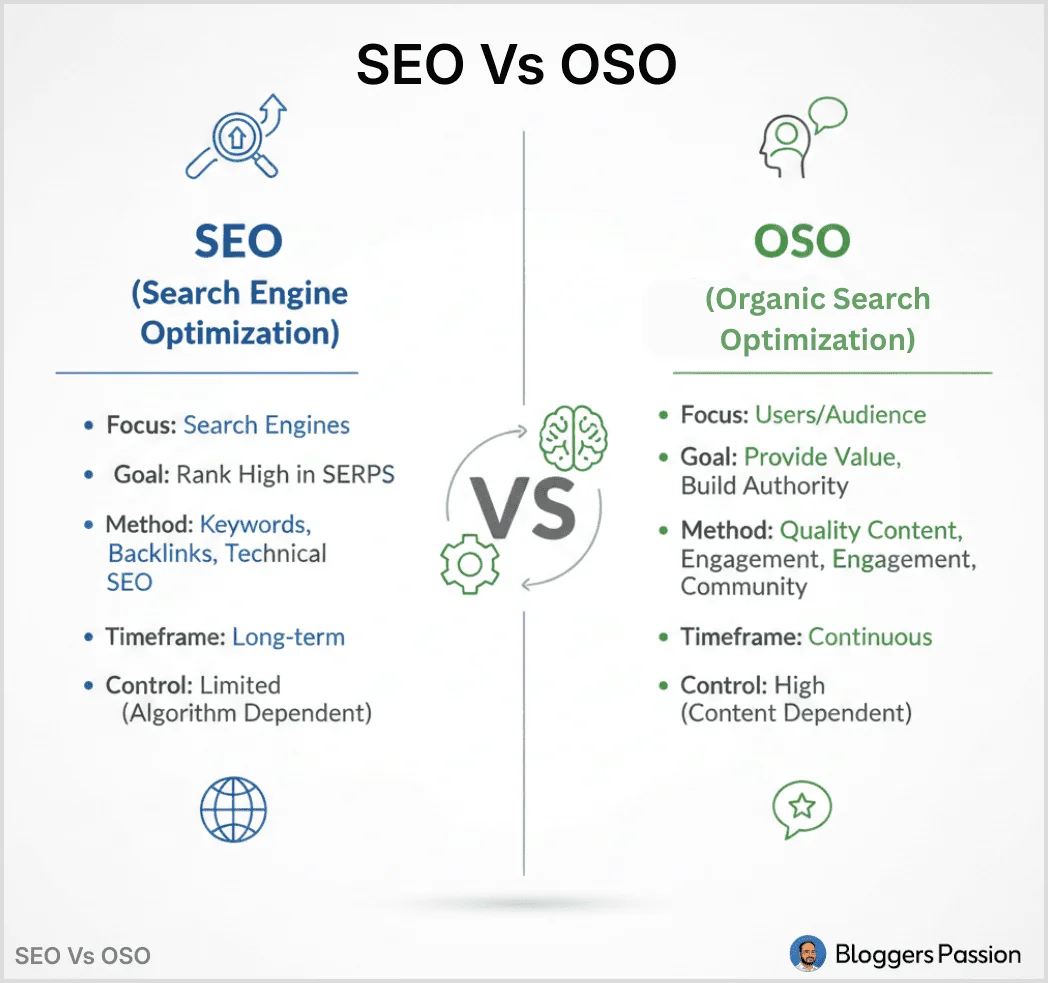
Comparison Table
| Feature | SEO (Search Engine Optimization) | OSO (Organic Search Optimization) |
|---|---|---|
| Primary Focus | Ranking your Website on Google. | Building Brand Visibility everywhere. |
| Platforms | Google, Bing, Yahoo. | TikTok, YouTube, AI (ChatGPT), Reddit, Maps. |
| Main Goal | High rankings on Page 1 of Search Engines. | Winning the “Search Share” across all apps. |
| The “Hook” | Keywords, Backlinks, & Site Structure. | Helpful Content, Community, & Direct Answers. |
| User Journey | Searches Google → Clicks your link. | Finds your video on TikTok → Asks AI about you. |
| Success Metric | Domain Authority & Organic Traffic. | Brand Mentions, Engagement, & Social Reach. |
| Philosophy | “Bring the users to my home base.” | “Be where the users are already hanging out.” |
| AI Visibility | Rank in Google’s blue links. | Get cited in ChatGPT, Perplexity & AI Overviews. |
| Content Format | Long-form blog posts & articles. | Videos, Shorts, Reddit Answers, Podcasts & blog posts. |
Did you know how SEO fits into AEO, GEO, and AIO? Check out the detailed comparison of SEO vs. AEO vs. GEO vs. AIO to understand how each one plays a role in AI-driven search optimization.
How to Get Started with OSO (A Simple Action Plan)
Here’s a step-by-step action plan you can follow even if you’re a complete beginner.
Step 1: Pick 2-3 Platforms Where Your Audience Hangs Out
Don’t try to be everywhere at once.
Instead, find out where your target audience already spends time.
For example, if you run a personal finance blog for millennials, your audience is probably on YouTube, Reddit (r/personalfinance), and Instagram. Start there, not on LinkedIn or Pinterest.
Quick tip: Google your main topic and see which platforms show up on Page 1. Those are the platforms Google already trusts for that topic.
Step 2: Repurpose Your Best Blog Posts for Multiple Platforms
You don’t need to create new content from scratch. Use what you already have.
Take your top-performing blog post and turn it into:
- A 60-second YouTube Short (just mention the key points)
- A Reddit post sharing your personal experience on the topic
- An Instagram Reel with a quick tip from the article
For example, if you wrote a post called “10 Ways to Save Money on Groceries,” you could record a 45-second video saying: “Here are 3 grocery hacks that saved me $100 last month…” and link back to the full post.
Step 3: Optimize for Direct Answers, Not Just Keywords
In OSO, getting more visibility means giving people the exact answer they’re looking for.
Just think about it. When someone asks ChatGPT or Google’s AI a question, it doesn’t pull up a 2,000-word blog post. It pulls out the most direct answer it can find.
So structure your content to answer questions directly.
Instead of starting a section with a vague intro like “Backlinks are an important part of SEO…”, start with: “A backlink is a link from another website to yours..”
The Truth About AI Overviews
If you search “how to start a blog,” Google now shows an AI-generated answer at the very top, before any blog post.
It summarizes the steps, picks content from multiple sources, and links to a few sites it considers RELEVANT.
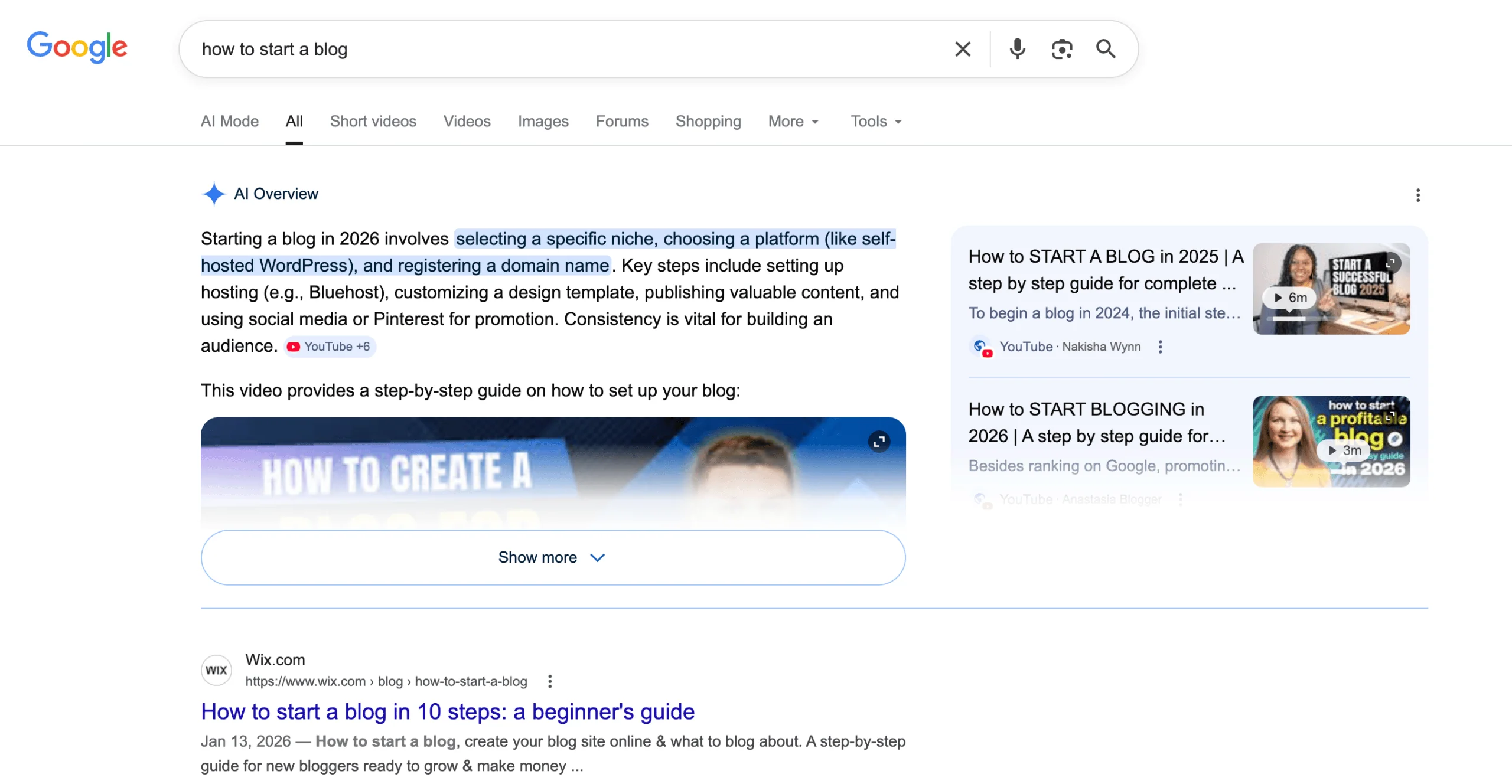
Your goal? Be one of those cited sources.
So, how do you actually get into AI Overviews?
Answer First
AI Overviews love content that gets to the point fast. It picks the content that answers a searcher’s query quickly.
Start every section with a direct 1-2 sentence answer, then explain further.
For example: “OSO (Organic Search Optimization) is the process of getting your content found across all platforms, not just Google.” Instead of starting with a long introduction or fluff that delays the actual answer.
Use Clear Headings That Match Real Questions
Google’s AI looks for content that directly matches the way people ask questions.
For example, instead of “Fat Loss Tips”, use clear headings like “How Can I Lose Belly Fat Faster?”
Small change. Big difference in how AI reads your page.
Keep Your Content Fresh
Search engines prefer content that’s updated and relevant to what’s happening right now.
Add a note at the top like: “Last updated: March 2026, updated with latest data and examples.”
And actually refresh it.
You can add;
- New stats
- Replace outdated examples
- Tweak the meta description and title
- Remove old references
- Add an FAQ section
You can read our in-depth guide on AIO optimization to learn how to rank inside AI-generated search results and stay ahead of traditional SEO.
Final Words: SEO vs OSO — What Should You Focus On Right Now?
SEO isn’t dead. It’s not going anywhere. If you’re a blogger, you still need to do keyword research, build backlinks, and optimize your content for Google.
But SEO alone isn’t enough anymore.
The bloggers who get massive traffic in the next few years won’t just rank on Google. They’ll show up on YouTube, Reddit, AI Overviews, and everywhere else their audience is searching.
That’s exactly what OSO is about. Start small. Repurpose one blog post, answer questions on Reddit, or create one short video.
The best time to start experimenting is right now, before everyone else catches on.
Which platform are you planning to focus on first for your OSO strategy? Drop a comment below, we’d love to know!
Related Resources:
- Is SEO Worth It In 2026? The Final Answer
- SEO Statistics That Blow Your Mind
- SEO Beginner Tutorial: Learn SEO step by step
FAQs
What is the difference between SEO vs OSO?
SEO (Search Engine Optimization) focuses on improving your website’s visibility in traditional search engines like Google, while OSO (Organic Search Optimization) is a broader strategy that optimizes your brand’s presence across AI platforms, social media, and all organic search results.
Is SEO going to die?
No. SEO is evolving and transforming into OSO.
How do I start with OSO as a beginner?
Start by creating helpful content, optimizing it for Google, AI tools, and social platforms.
Does OSO replace SEO completely?
No, OSO will complement SEO by expanding your online visibility beyond traditional search results.
What tools can I use for OSO?
Use tools like Google Search Console, Ubersuggest, Semrush, Perplexity, and social analytics platforms like HootSuite.
Is OSO relevant for small blogs?
Yes, OSO is particularly helpful for smaller blogs, as it helps them get more visibility by appearing across multiple organic search platforms.



The concept of Organic Search Optimization (OSO) is an intriguing evolution in the world of SEO, leveraging Generative AI and focusing on multi-platform optimization. While traditional SEO remains relevant, OSO’s emphasis on content breadth and user perspectives brings new challenges and opportunities for webmasters. Exciting times lie ahead for the search landscape, as we adapt our content strategies to embrace OSO and its potential for increased search share and organic traffic.
Hi Anil,
The SGE concept is new for many people and the way how you explained everything related to this concept is really impressive.
Yes, we have to be ready for SGE and focus more on quality of content. This information is really helpful for me and I’m sure for others as well.
Thanks!
-Nitin Dabas