Affiliate marketing is an excellent way to generate passive income online. There are a ton of people who are using affiliate marketing to earn thousands of dollars every year.
In fact, we generate over $13,000 per month from the blog you are currently reading. The good part about affiliate marketing is that the sky is the limit to your earnings.
Affiliate marketing has many types, and in this post, you will learn what each type does, along with examples and how to pick the right one to boost your affiliate earnings.
Let’s get started without further ado.
Table of Contents
- 8 Types of Affiliate Marketing That Actually Work in 2026
- 1. Content-Based Affiliate Marketing (Blogging/Product Review Sites)
- 2. Influencer and Social Media Affiliate Marketing
- 3. Email Marketing Affiliate Programs
- 4. Coupon and Deal‑Site Affiliate Marketing
- 5. SaaS and Service Affiliate Marketing
- 6. E‑commerce and Dropshipping Affiliate Marketing
- 7. Performance‑Based (CPA) Affiliate Marketing
- 8. Membership, Course, and Subscription Affiliate Marketing
- Final Thoughts
- FAQs
8 Types of Affiliate Marketing That Actually Work in 2026
There are three main affiliate marketing models:
- Content-based affiliate marketing
- Coupon and deal affiliate marketing
- Social affiliate marketing
But besides these, there are a few other types by which you can affiliate and earn easy income without much effort. Let’s go one by one:
1. Content-Based Affiliate Marketing (Blogging/Product Review Sites)
The easiest and most straightforward way to do affiliate marketing is through a blogging site where you can review the affiliate products. Well, this is the most popular type of affiliate marketing, as it offers a high potential to earn a large commission.
All you need is to build a good website where you can review and post helpful blogs that people are actually looking for. And once a user clicks on the special affiliate link and buys, by reading your recommendation, you get a 5% to 20% of the sale.
This type of affiliate marketing works great because search engines like Google provide free traffic to good blogs for years. People trust detailed reviews over flashy ads.
To explain to you properly, here is how I do affiliate marketing through BloggersPassion:
In 2025, with BloggersPassion, we made over $220,000 with average monthly earnings of $18,350. Yes, that’s correct! We have been doing this for over a decade now, and having a solid niche has kept us going strong.
Here is our earnings report for the last year:

So most of our earnings come from affiliate marketing, where we promote various products, including SEO tools like Semrush affiliate, web hosting services, and other tools like Jasper AI, etc.
How it Works
Let me break it down into a super simple, step-by-step guide. Firstly, you start by signing up for an affiliate program. It could be anything related to your niche. Now this is very important when I say ‘Related to your niche’ because only then are your users going to trust you and your affiliate links.
So, back to the point, it takes only 10 minutes to sign up for the affiliate program. Once you get the special link, the next step is to write a blog post reviewing the product that you wish to affiliate with. You test it yourself if you can, share real pros and cons, add your photos, and drop in that affiliate link naturally.
Now, when someone reads your post, trusts your advice, and clicks on the link to buy it, you get your cut wired to your bank or PayPal.
If you ask me, blogging-based affiliate marketing gives you control. It is not like social media posts that vanish fast. Rather, your articles stick around and pull visitors 24/7. Take my blog post for an example; my single post on “best web hosting for beginners” from 2018 still brings more than $500 a month in 2026 (Of course, I always update the post). Readers come via Google, read my real tests (like speed checks and uptime stats), trust the advice, and click.
And that’s how it works!
Pros and Cons
Pros:
- Offers a good passive income for life.
- You can do it at low costs (Just a hosting and a domain, and skills, of course)
- It is easy to scale.
- Brings you trust and authority with time.
Cons:
- It takes a bit of time to see real money (You shall have to write a lot).
- Google updates might hurt your site if you do not stick to the Google guidelines.
- Agree or not, there is tough competition. You have to be outstanding.
Now, the second most powerful type of affiliate marketing is social media. It is all about using your followers on Instagram, TikTok, YouTube Shorts, or even Threads to share products you like and earn commissions.
Here, everything works with engaging visuals like videos that appeal to your followers. I mean, all you need to do is create an engaging video or a visual showing off the product, and drop a special link where users can buy the item.
When your fans click on the link and buy the product, you pocket around 10% to 30% of the sale. Sometimes, even more with brand deals.
All the social media influencers who are promoting affiliate links, including the popular YouTubers like MrBeast, are great examples here.
MrBeast promotes products like Honey, which is a browser extension that automatically finds and applies coupons at checkout. Well, if I am not wrong, he has generated over $20 million through the collaboration with Honey!
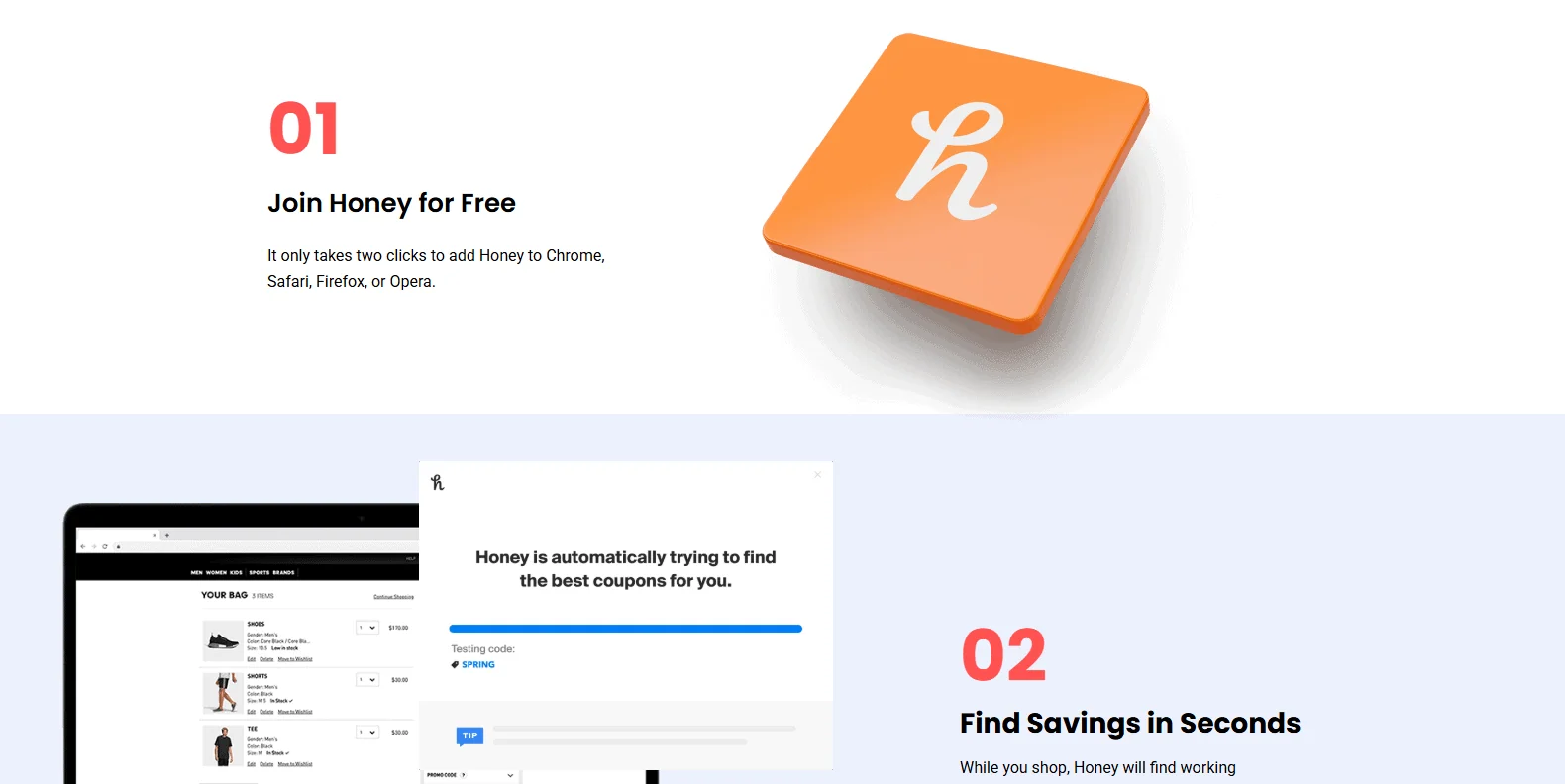
After all, the best influencers are those who strike the perfect balance between promoting their sponsors or affiliate products and providing genuine value to their followers.
As an influencer, you may have access to millions of fans from various industries. The key to successful affiliate marketing is to choose a specific audience and promote relevant products.
When choosing what products to promote, be sure to select products that are relevant to your niche and that you would genuinely recommend to your followers.
How it Works
Well, it is actually a no-brainer. Having a well-maintained social media account is all you need. Create content that is appealing to the social media audience and that will ultimately lead to gaining you more followers.
Once you have a good number of followers, you can start posting videos that contain the affiliate link. For instance, you can make a reel unboxing the sneakers, show them in action, say “These changed my runs, use my code!” Post it with the link in bio or swipe-up. Fans watch, love it, shop via your link.
What is more interesting is that TikTok Shop and Instagram Shops let people buy without leaving the app. Users can easily tap on the link, buy the product, and it is done! Social affiliate marketing is faster than blogs. Just a 15-second story can out-earn a 2000-word blog post.
So yes, if you have skills to engage the audience visually, social media affiliate marketing will do great for you.
Pros and Cons
Pros:
- Super Fast earnings.
- Your earnings scale with the followers.
- It is always fun.
Cons:
- You need to stay active daily.
- Algorithms can be your enemy (sometimes).
- Fake followers can be a headache.
3. Email Marketing Affiliate Programs
Next, Email marketing affiliate programs are also a common type of affiliate marketing. To be honest, this type was in trend when social media affiliate marketing was not around.
This type is a smart, behind-the-scenes way to earn money. No need for a blog or even social fame.
The only catch here is that you need to build a list of email subscribers. This can be done by offering free tips and deals so that they can sign up for it, and you get a potential user.
This would take a bit of time, but eventually you will have a long list of your potential buyers. Then plan a strategy about how you are going to design your email newsletter and how you can engage them to make a purchase.
When they click and buy, you grab 10-50% commissions, often recurring for subscriptions (which is way better than social posts).
How it Works
It is super simple (than any other type). First, sign up for affiliate programs considering a strong niche and grab your unique links.
Next, you grow your list for free by adding sign-up boxes on your site or social media. If you already have a list, then it is great.
What’s more, send emails to the list weekly. When a user clicks on your link and buys something, you get your cut for each sale.
Plus, with the AI personalization, you can segment each user by what they have clicked before and personalize the email as per their needs.
Pros and Cons
Pros:
- 25% to 40% open rate and 5-10% click rate.
- Recurring subscriptions bring continuous income.
- Once you set up the post, automations run while you sleep.
- Personalisation converts well.
Cons:
- Building the list might take a bit long.
- There can be a Spam trap.
- Broken links can be a trouble (They kill trust fast).
4. Coupon and Deal‑Site Affiliate Marketing
The next type is to have a coupon or deal site. Everybody always looks for coupon codes and discounts when they shop online.
So what happens here is, you run a website or app that rounds up discount codes, flash sales, cashback offers, and coupons from e-commerce stores.
Similar to the other types, when users click your exclusive codes and shop, you earn a healthy commission (often up to 15% on every sale). It is a low-effort gold if people love saving money, which they always do.
So yes, your coupon site becomes the go-to spot for online shoppers. Such sites pull thousands of visitors daily from Google searches like “Amazon coupon codes today”.
How it Works
RetailMeNot.com is one of the most popular coupon websites in the world. It currently has more than 200,000 offers, including 19,000+ in-store coupons and 24,000 restaurant deals across the world.
RetailMeNot makes most of its money from affiliate partnerships as it currently has access to over 50,000 partnering retailers.
So whenever someone clicks on any of the RetailMeNot coupon links or codes and makes a purchase, they get a commission.
According to Semrush data, RetailMeNot gets over 5.6 million monthly visitors from search engines like Google, which also helps with better conversions and sales.
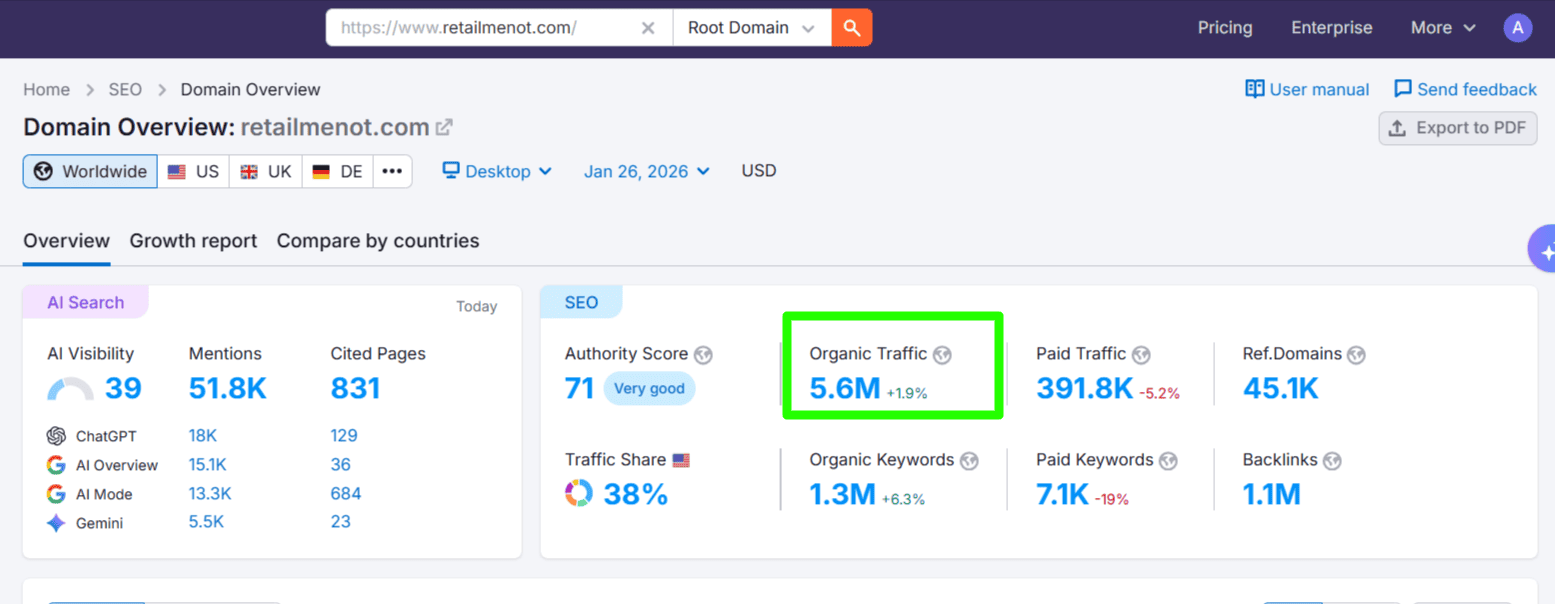
The key to building a successful coupon website is to offer exclusive coupons and promo codes that you can’t find anywhere else.
The main reason behind RetailMeNot’s success is that it is ranking for literally thousands of transactional keywords that are helping generate millions of dollars every year.
So if you’re planning to launch a coupon website, make sure to optimize your website for transactional keywords and build lots of backlinks.
Pros and Cons
Pros:
- No need to worry about the traffic. Searches never stop.
- No need for heavy content. Just a list of all the deals with a button.
- Easy to launch and monetize.
Cons:
- You must update the codes daily, and the codes expire fast.
- Competition for such sites is tough.
5. SaaS and Service Affiliate Marketing
SaaS and service affiliate marketing is like recommending your apps or online tools to your readers and getting paid every month when they stick around. You promote software-as-a-service stuff, tools like Semrush, Hostinger, or even services like VPNs and CRMs.
This type of affiliate marketing makes more earnings through a single sale than any other affiliate marketing type. The most interesting part is that most of these sales are recurring payouts. So you continue to earn as they pay their subscription.
So, a commission of almost 20% to 25% plus a monthly recurring payout is easy recurring income!
This affiliate type is particularly effective due to the recurring nature of SaaS subscriptions and the consistent demand from businesses, freelancers, and content creators who rely on these tools for operations.
How it Works
Just like having a blogging website, you can register with SaaS affiliate networks or direct programs, such as PartnerStack, Impact, or individual brand portals like Hostinger or SEMrush. Approval is generally free and based on website traffic or audience relevance.
Next, create your own informative resources, including comparison guides, tutorials, or case studies. This usually includes blog posts like reviews, guides, comparison articles, etc. You can share the content through blogs, email newsletters, webinars, or YouTube videos.
Users click the affiliate link, initiate a free trial or purchase, and then you attribute the sale via cookies (typically valid for 30-90 days).
SaaS affiliate marketing benefits from high customer lifetime value (LTV), where retention rates above 80% translate to sustained earnings. High-ticket items yield substantial commissions.
Pros and Cons
Pros:
- Once a user signs up, you get recurring payouts.
- High rate payouts.
- A single guidepost earns for a longer period.
Cons:
- If a subscriber cancels, your earnings stop.
- Extended sales cycles owing to trial periods.
- Need for periodic content refreshes.
6. E‑commerce and Dropshipping Affiliate Marketing
E-commerce and dropshipping affiliate marketing is like being the middleman for online stores without touching a single box. It is like you market the products on your own online shop with your own strategy, and when someone buys the product, the product will be delivered directly through the merchant. And in return, you earn your cut behind each sale.
You can even promote products from Shopify shops, dropshippers, or big e-commerce sites like Flipkart, Meesho, or Etsy.
This includes categories like apparel, electronics, and home goods. As an affiliate, you receive commissions typically ranging from 10% to 30% on completed sales generated through dedicated tracking links, without managing inventory, fulfillment, or customer support.
This approach is well-suited to the 2026 online shopping trends. Dropshipping arrangements allow merchants to delegate logistics. This means you can focus solely on traffic generation and conversions. Dropshippers love affiliates; they handle stock/shipping, you just drive buyers.
How it Works
This works when you register with relevant networks, such as Shopify Affiliates, Flipkart Affiliate, or Meesho Reseller programs, which provide unique tracking links and promotional materials at no cost.
Then identify high-demand items, such as accessories or seasonal merchandise, often verified through personal testing or supplier previews. You can distribute the content via social media, blogs, or email campaigns, incorporating calls to action like “Available now at a limited-time price” alongside affiliate links.
As usual, when a customer engages with your content and makes a purchase, you earn healthy commissions. Shoppable features in 2026, such as in-app purchases, streamline the buyer journey and enhance conversion efficiency.
E-commerce affiliate marketing capitalizes on perpetual product turnover and high transaction frequency. Low-priced items facilitate volume-based earnings. Plus, merchants often provide complimentary samples to affiliates, minimizing upfront investment.
Pros and Cons
Pros:
- Volume potential from affordable products.
- Trending products make huge earnings.
- Quick payouts.
Cons:
- Elevated refund rates for lower-quality items.
- Intense market competition.
7. Performance‑Based (CPA) Affiliate Marketing
Performance-based (CPA) affiliate marketing is all about getting paid for results, not just clicks or views, like leads, sign-ups, or app downloads, instead of full sales.
You promote offers like “free trial signups” for apps, insurance quotes, or credit card applications, and when someone completes the action, you pocket a fixed payout.
No waiting for them to buy; just get them to fill out a form or download. Super clean if you target the right crowd.
Online forms and quick actions are everywhere, from financial services to mobile apps. So it is low-pressure for users. No big spend and you cash in fast.
How it Works
For such affiliate marketing, all you need is to sign up for platforms like MaxBounty, CPAGrip, or ClickDealer. Approval is free and usually quick if you have some traffic or a basic site.
Further make landing pages or ads. Something like, “Free credit score check in 2 mins and a button.” Then run on Facebook, Google Ads, or even WhatsApp groups.
When users complete the action, the network verifies it (often instantly), and you receive payment weekly or bi-weekly via PayPal or bank transfer.
Pros and Cons
Pros:
- Guaranteed pay per action. That means no reliance on sales.
- Fast payouts, often weekly.
- Easy to test and scale with ads.
Cons:
- Requires upfront ad spend.
- Offers can saturate quickly.
8. Membership, Course, and Subscription Affiliate Marketing
Here you promote stuff like Netflix-style subscriptions, online courses (like Udemy or MasterClass), membership sites (fitness plans, stock tips), or premium newsletters.
Commissions can hit 30-70% of the first payment, plus 20-50% recurring as long as they renew. One happy referral keeps paying you for years.
This structure offers sustained revenue streams, as a single high-quality referral can yield income over multiple months, often exceeding the lifetime value of one-off product sales.
This is huge in 2026 because everyone wants quick skills or endless content like coding bootcamps, yoga apps, or investment clubs. People stick around longer than one-off buys, so your earnings build steadily.
How it Works
Start by joining networks like ClickBank (digital courses), Teachable Affiliates, or direct ones like Skillshare (₹1k+ per signup). They are Free and offer quick approval.
Then create comprehensive resources, including in-depth reviews, comparison analyses, case studies, or transformation testimonials.
Then you know what to do! Just insert your affiliate links strategically, alongside incentives such as exclusive bonuses (e.g., proprietary worksheets) or trial extensions. Your content should emphasize tangible outcomes, supported by screenshots, progress metrics, and user testimonials.
Pros and Cons
Pros:
- Recurring commissions create compounding revenue.
- Premium pricing yields substantial per-referral value.
- Scalable via evergreen, multi-format content.
Cons:
- Trial to paid subscription takes time.
- Churn risk. Users might cancel.
- Competition in hot topics like AI skills.
Final Thoughts
Affiliate marketing is growing rapidly, especially after the Pandemic. Why? Millions of offline businesses are starting and growing their presence online. Most businesses depend on affiliates to grow their product sales.
So if you are planning to start your affiliate marketing journey, today is the right time. Pick the RIGHT type of affiliate marketing, such as blogging/vlogging, coupon sites, review sites, etc, and be consistent.
What are your thoughts on the various types of affiliate marketing? Did you find this guide helpful? If you have any questions, let us know in the comments.
FAQs
What is affiliate marketing?
Affiliate marketing is a performance-based business model where publishers earn a commission by promoting a product made by another company or merchant using an affiliate link.
What are the 3 pillars of affiliate marketing?
There are THREE main pillars of affiliate marketing, including;
– Merchant (who creates the products)
– Publisher (who promotes the products)
– Customer (who purchases the products)
What are the best types of affiliate marketing?
Here are some of the best types of affiliate marketing to grow your sales;
– Influencer marketing
– Email marketing
– Blogging
– Coupon sites and product review sites
Which type of affiliate marketing is best?
Blogging is probably the BEST type of affiliate marketing. Blogging helps you create informative content around the products you promote and lets you promote your affiliate links naturally. Also, blogging is a cost-effective way to grow your affiliate sales.


![9 Best Real Estate Affiliate Programs in 2026 [High Payouts]](https://bloggerspassion.com/wp-content/uploads/2019/12/best-real-estate-affiliate-programs.webp)