


You’ve done the work. You wrote 2,000-word guides that rank at the top of Google.
For a long time, SEO was a “Controlled Narrative.” You owned the domain. You wrote the words. You decided what information was most important. As long as Google could crawl your pages, you were in the game.
Those days are over.
We have moved into a “Distributed Narrative.” AI models do not just look at your site. They interview the entire internet to see if you are actually a big deal. Google AI Mode also works the same.
They are looking for “social proof” in places you don’t control. They scan LinkedIn, G2, and news outlets. They want to see if real humans are talking about you when you aren’t in the room.
Disclosure: We get a commission when you buy a product via our affiliate link at no additional cost.
Why is the “Brand” the new SEO?
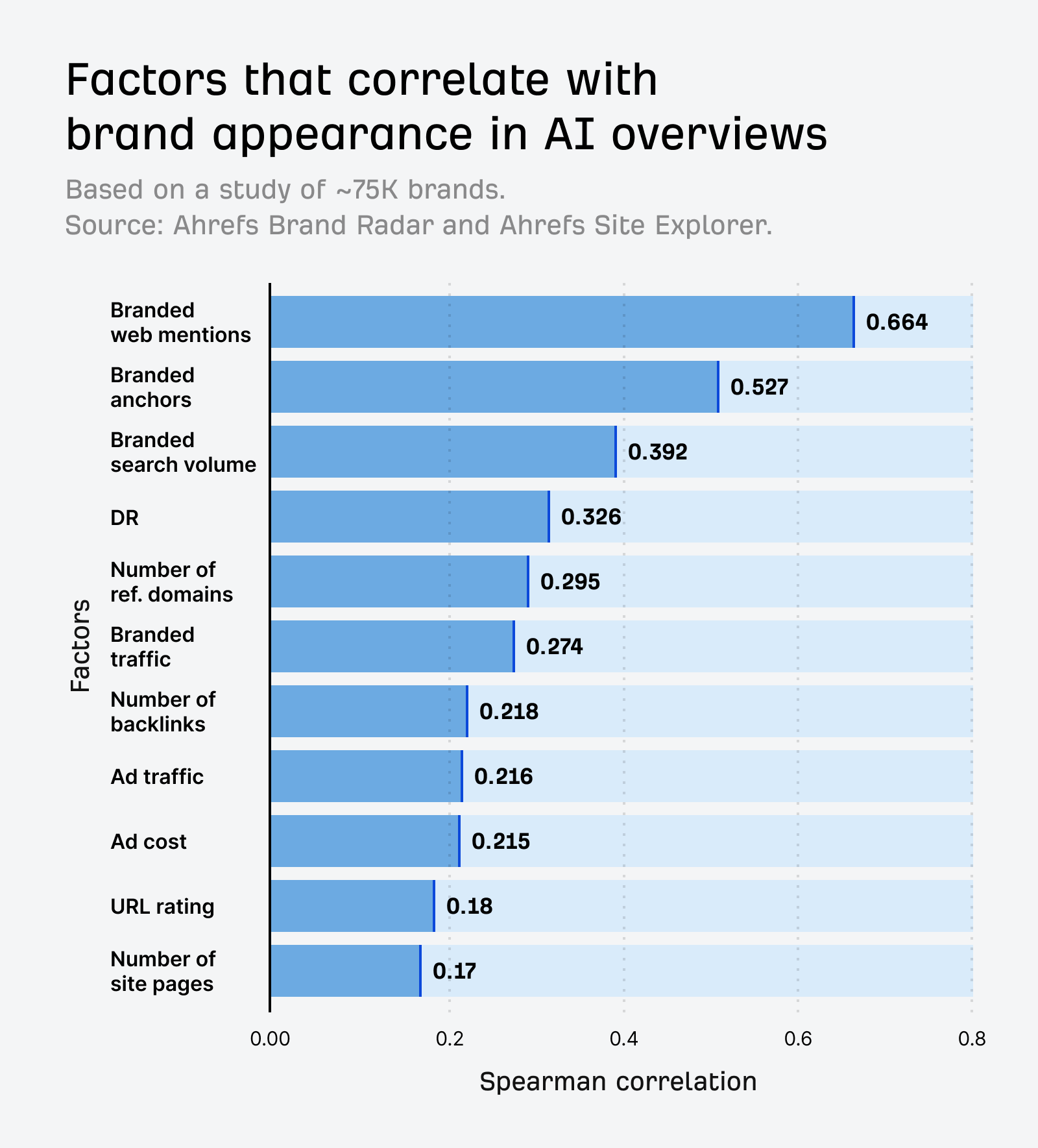
To the AI, if nobody is talking about you on third-party platforms, you don’t exist.
The battle for visibility has moved off your domain. It’s a bit like being the smartest kid in the room, but the AI only wants to talk to the people sitting at the “cool table” on Reddit.
If you want to win the AI game, you have to stop thinking like a webmaster and start thinking like a publicist.
Why Does AI Have a Long Memory?
AI models are like that one friend who never forgets an argument you had six years ago.
Take Seer Interactive for example. They are a big name in digital marketing. They do great work. But they found a problem that should worry every business owner.
Every major AI model was giving negative or skewed responses about them. Why? It all traced back to a single bad review from 2018.
One complaint from eight years ago was still shaping how modern AI described their company.
When a Large Language Model is trained, it takes a snapshot of the web. If that snapshot includes a viral thread where people were unhappy, that becomes a “fact” for that model.
Even if you have thousands of happy customers now, the AI might still be stuck in the past.
This creates a huge risk. You can’t just write more blog posts to bury a bad reputation. You have to find where these negative signals are coming from.
Are you checking what people said about you five years ago? Because ChatGPT is.
The 3 Pillars of the New Visibility Game
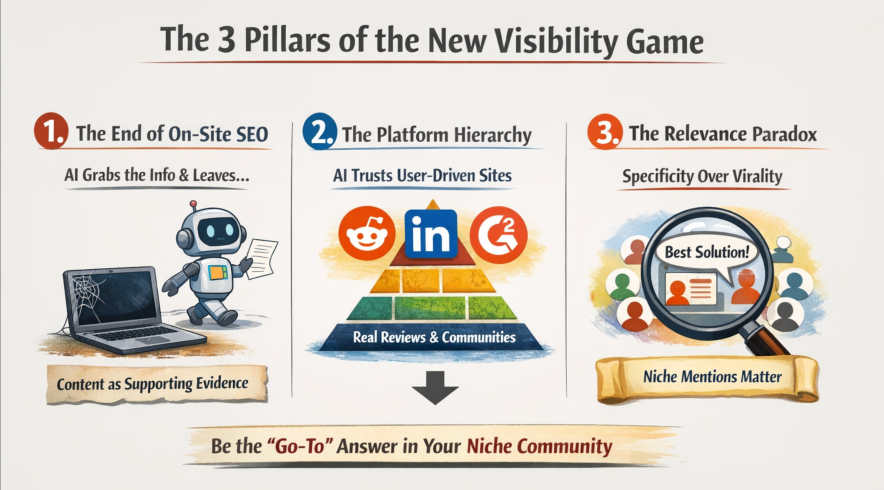
1. The end of the On-Site SEO
For years, we focused on “on-site” SEO. We built dozens of content. We hoped that if we made our content deep enough, people would stay.
AI models have changed the rules. They don’t want to stay in your garden. They want to grab the fruit and leave.
Your website content is now just “supporting evidence.” It helps the AI confirm a fact, but it rarely starts the conversation. The AI looks for the “primary source” elsewhere.
2. The platform hierarchy
Why does AI love Reddit so much? Or LinkedIn and G2?
It is because these platforms have something your website usually lacks: unfiltered human interaction.
LLMs prioritize these sites because they are harder to fake. Anyone can hire a writer to create a “top 10” list on their own blog. It is much harder to fake a five-year-old Reddit community or a hundred verified reviews on G2.
If you want to be visible, you have to go where the AI is looking. You need to be mentioned on the sites that the AI trusts more than your own.
3. The relevance paradox
Here is a weird truth about AI. A generic blog post that gets a million views might be less valuable than a single mention in a niche forum.
I call this the relevance paradox.
AI isn’t looking for “viral” content. It is looking for specificity. If a small group of experts on a private forum mentions your brand as the best solution for a specific problem, the AI notices.
It values that contextual relevance over broad reach.
You don’t need to be famous everywhere. You just need to be the “go-to” answer in the specific communities where your customers hang out.
Multi-Platform Chaos – A Big Problem
Now, you are expected to be an active voice on Reddit, a thought leader on LinkedIn, a video creator on YouTube, and a customer service pro on G2 and Yelp.
This is what I call multi-platform chaos.
Let’s say you spend three hours writing a brilliant response to a question on Reddit. Two weeks later, ChatGPT starts citing your brand because of that comment. Then, someone sees that AI answer and buys your product.
How do you prove that the original Reddit post led to the sale?
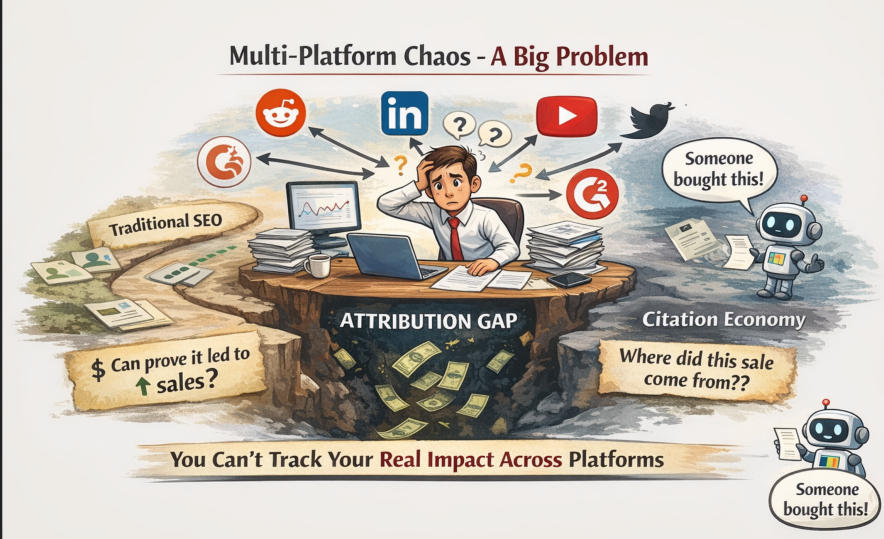
In traditional SEO, we have links and tracking codes. In the “Citation Economy,” we have a massive attribution gap. Most of these mentions happen in “dark social” or within the hidden training data of an AI model.
It is very hard to show your boss a direct ROI for a LinkedIn thread that never had a tracking link.
You might be spending all your time on X (formerly Twitter) when the AI is actually getting all its info about you from a niche industry forum you haven’t checked in months.
Without the right data, you are just guessing.
So, how do you stop guessing and start seeing what the AI sees? That is where we need a better set of tools.
Solution – AI Visibility Tools
You cannot fix what you cannot see.
This is why I have shifted my focus to Semrush One.
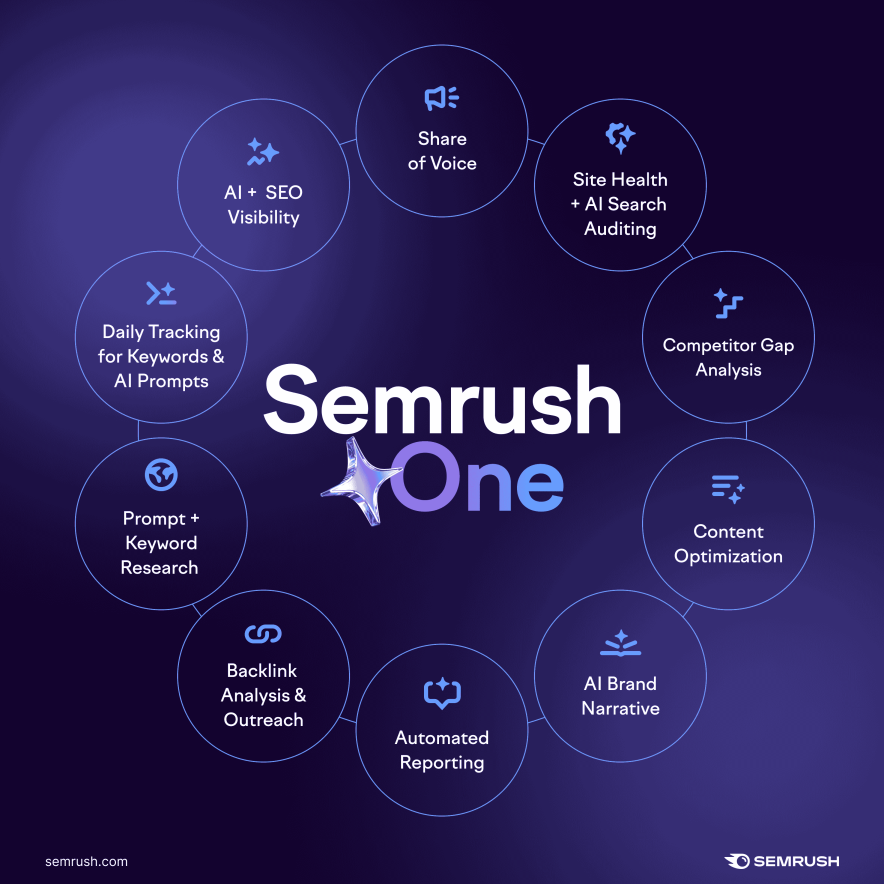
It is a bundle that connects the traditional SEO Toolkit with a newer AI Visibility Toolkit. It gives you a single view of how you rank on Google and how you are cited inside an AI response.
Seeing through the AI’s eyes
The first thing you need to do is stop guessing which platforms matter.
The Visibility Overview tool in the AI Visibility Toolkit is a bit like a spotlight. It shows you exactly where your brand appears in AI-generated answers.
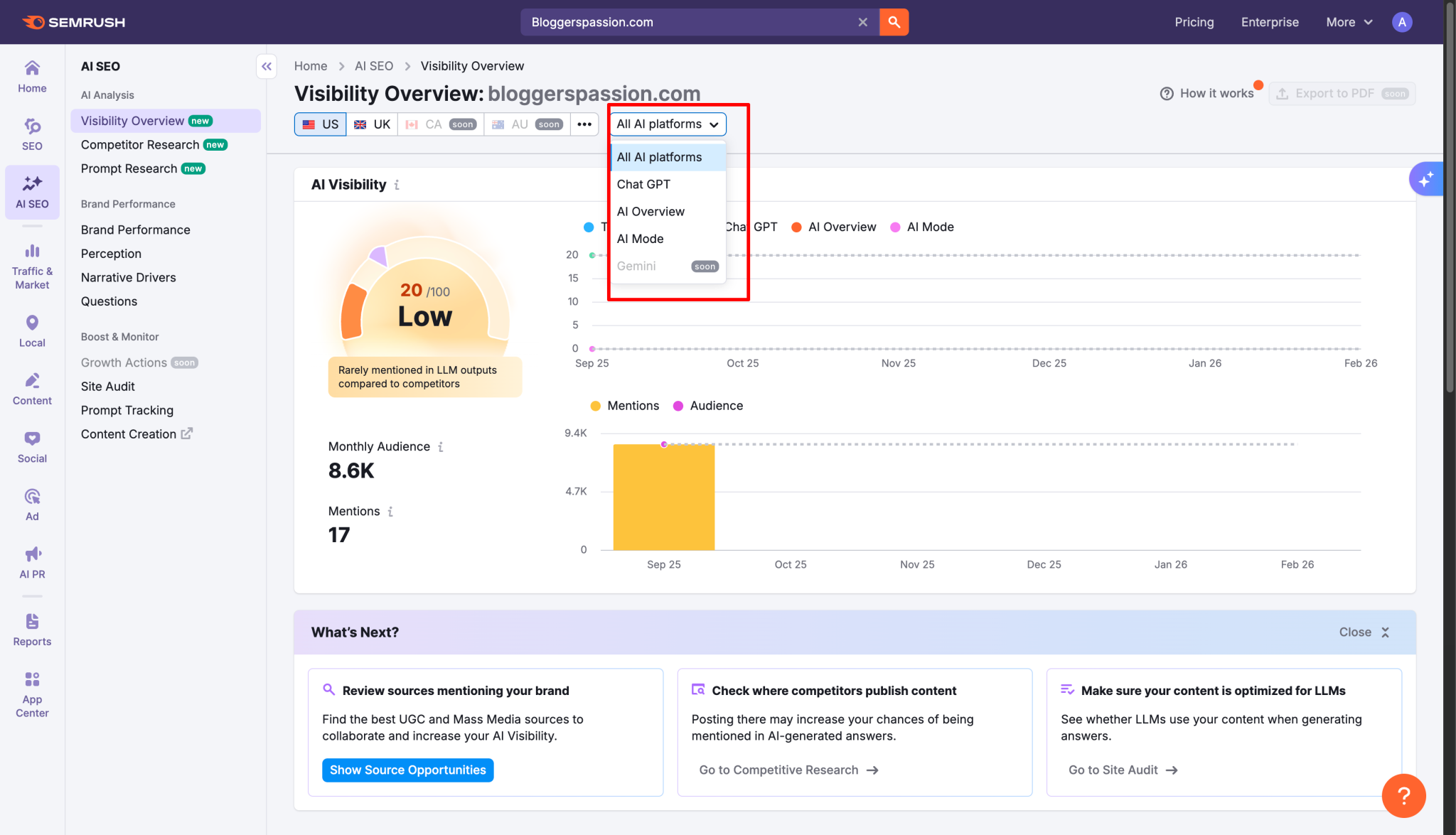
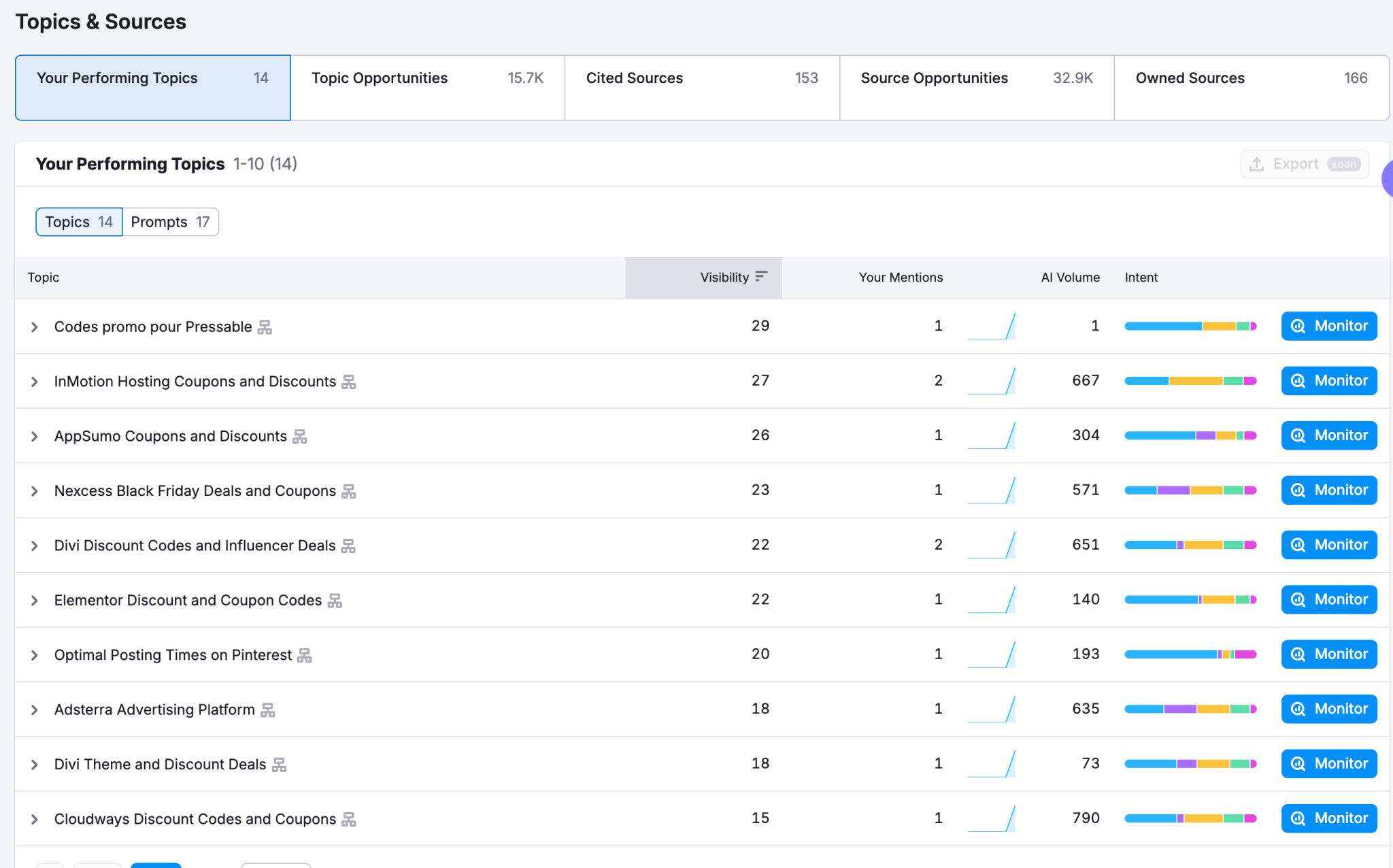
More importantly, it shows you which third-party sites the AI is actually using to talk about your niche. If the AI is pulling all its info from a specific review site or a news outlet you’ve ignored, this tool tells you.
Now you know exactly where to send your PR team.
Comparing the old world and the new
Are you still ranking #1 for your top keywords? Great. But is the AI still mentioning your competitor instead of you?
The Position Tracking tool lets you see both. You can monitor your standard search rankings alongside your “AI Citation Share.”
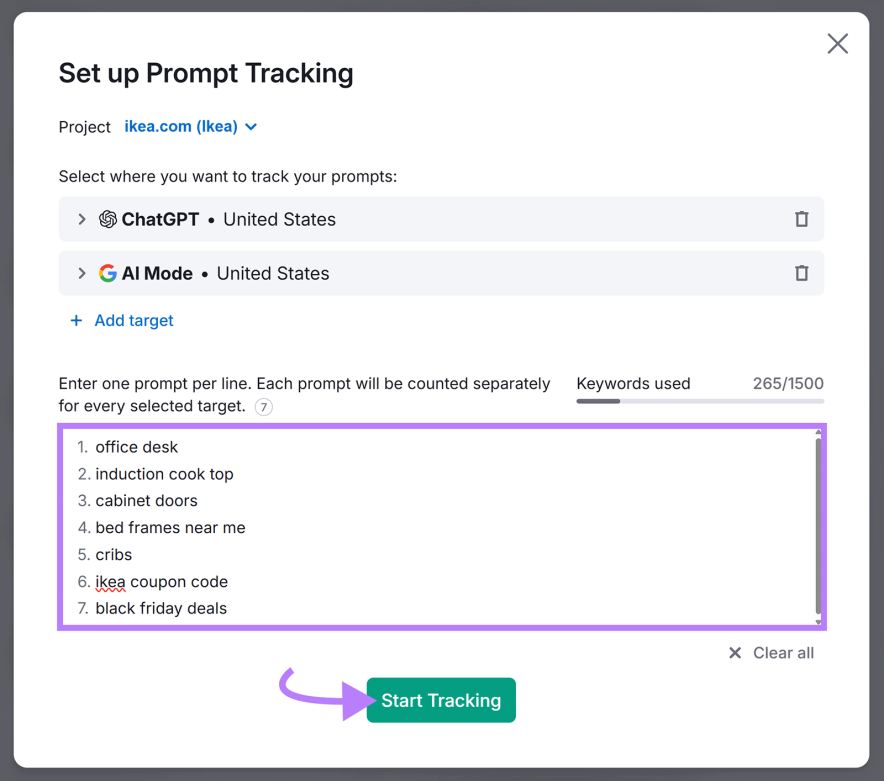
It is a reality check. If your site is winning on Google but losing in the AI answers, it means your “on-site” SEO is working, but your “off-site” authority is weak.
Finding the authority hubs
We used to use backlinks just to boost our rankings. Now, we use them to find the “hubs” that feed the AI.
Backlink Analytics helps you map the ecosystem around your brand. You can see which external domains are talking about your competitors and getting cited by LLMs.
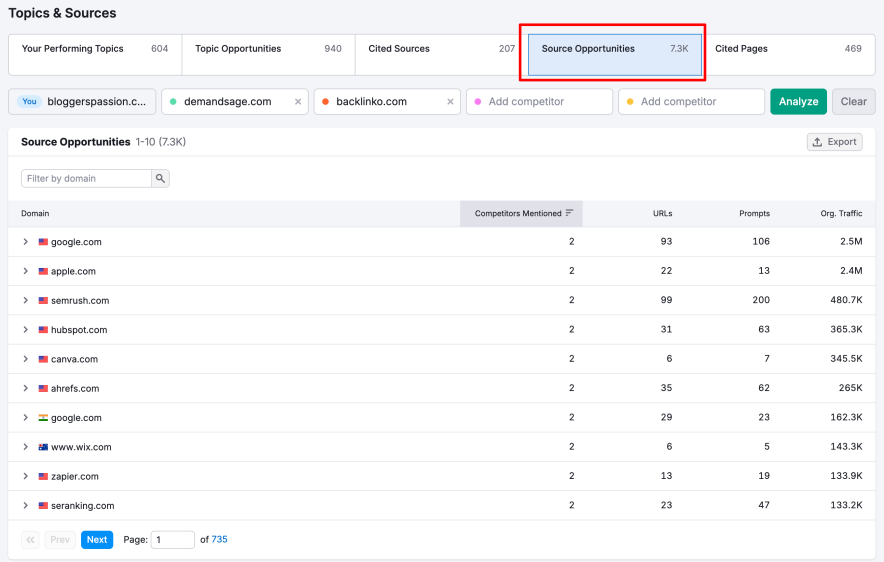
Think of these as “influence hubs.” If you can get a mention or a link on these specific sites, you aren’t just getting SEO value. You are training the AI to see you as a leader.
Take control of the narrative
You don’t have to fly blind anymore. You can actually track whether your digital PR efforts are turning into real AI mentions.
If you want to see how your brand looks to the “AI brain,” you should try these tools for yourself.
You can get a free trial of Semrush One here (14 days).
Community-First Content Strategy
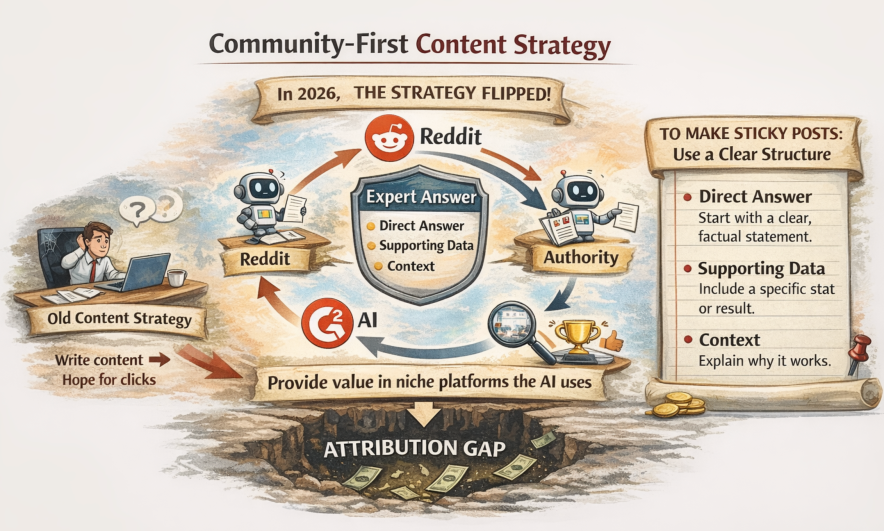
In the old world, we wrote for our own domains and hoped for a click. In 2026, the strategy was flipped. You need to stop writing primarily for your blog and start writing for the platforms that AI models actually read and trust.
I call this the Community-First Content Loop.
Have you noticed how often Reddit shows up in AI answers lately? There is a reason for that.
Studies from early 2026 show that Reddit content appears in nearly 70% of AI-generated responses. AI models love Reddit because it feels like real human deliberation. It is unfiltered, honest, and filled with “Experience”—the first ‘E’ in E-E-A-T.
If you want to be cited, you have to seed your expertise where the AI is looking.
This doesn’t mean you should spam forums with links. That is a quick way to get banned. Instead, you should provide high-value, expert answers to common industry questions.
When you share a unique insight or a specific data point on a subreddit, you aren’t just helping a user. You are “teaching” the AI that your brand is a trusted authority on that topic.
AI models don’t just read your posts; they look for facts they can pluck out and use. This is often called Generative Engine Optimization (GEO).
To win at this, your community posts need to be “sticky.”
I find that the best way to do this is to use a specific structure:
- Direct Answer: Start with a clear, factual statement.
- Supporting Data: Include a specific stat or a real-world result.
- Context: Briefly explain why it works.
This format makes it incredibly easy for an AI to extract your advice and cite you as the source.
Final Words: What Next?
So, where does this leave your strategy for the rest of the year?
On-site SEO is still the foundation. You still need a fast site and high-quality content to stay in the game.
The biggest takeaway is that you do not own your brand narrative anymore. The community does.
What a random person says about you on a forum or a review site now shapes how the biggest AI models in the world perceive you. You cannot ignore the conversation. You certainly cannot control it with just meta tags.
If you want to stay visible, you need to be where the AI is learning. That means getting active in communities, managing your reviews, and earning mentions in the media.
Don’t stay in the dark
The “Citation Economy” is already here. You can either guess how your brand looks to an AI, or you can actually see the data.
I highly suggest checking out Semrush One. It is the only way I have found to bridge the gap between traditional SEO and this new AI visibility world. You get the full SEO toolkit along with the specific tools you need to track your AI mentions and citations.
You can try it out for yourself here: 14 Days Trial
The web is talking about your brand. Are you finally ready to listen?
If you have questions about how to set up your tracking or which platforms to hit first, let me know. I am always happy to chat about where this industry is headed.
Explore More:
- Is SEO Still Worth it in 2026?
- SEO vs GEO vs AEO (2026)
- AI SEO Statistics (2026 Updated)
- Is AI Content at Risk (2026) – Recovery Guide
- Zero Click Issue Created By Google in 2026 [How to Deal With It?]




Leave a Comment
Your email address will not be published. Required fields are marked *