

Search engines like Google process over 99,000 search queries every second.
Did you know that organic search still drives 53.3% all trackable website traffic, which is way ahead of social media or paid channels.
Search engines are evolving quickly, prioritizing AI visibility, search intent, and user experience (UX) above all else. AI is also becoming a KEY factor in SEO. That’s because search engines aren’t just ranking pages anymore; they’re using AI to understand intent, context, and relevance.
Also, zero-click searches (where users get answers right on the search results page) now account for nearly 60% of queries.
In this post, you’ll discover how SEO is changing in 2026, what matters most for rankings, and what to do next.
SEO in the AI Era: 6 Key Trends Impacting Search Rankings
| SEO Trend | Impact |
|---|---|
| AI Overview | Huge impact on search results and user interaction with websites. |
| Zero-Click Searches | Decrease in overall click-through rates and focus on providing direct answers to users’ queries. |
| Topical Authority | Increased search volume, lower competition, and higher conversion rates. |
| Content Updation | Improved content relevance, increased user engagement, and potential for higher rankings. |
| E-E-A-T (Experience, Expertise, Authoritativeness, Trust) | Improved QUALITY of content, as it helps Google prioritize high-quality content based on author reputation and website credibility. |
| User Search Intent | Increased visibility in search engines and overall conversions. |

1. From Blue Links to AI Overviews
AI Overviews are now shaping how people search and discover content. Search engines like Google and Bing now use artificial intelligence to provide more comprehensive and helpful answers to users’ queries.
For example, let’s take a question like “how to learn SEO for free.”
Earlier, users had to open multiple articles and piece things together. Now, AI Overviews can instantly explain the topic and highlight ideas like “Free Online Courses & Certifications”, “Resources”, and more.
Have a look at the AI Overviews;
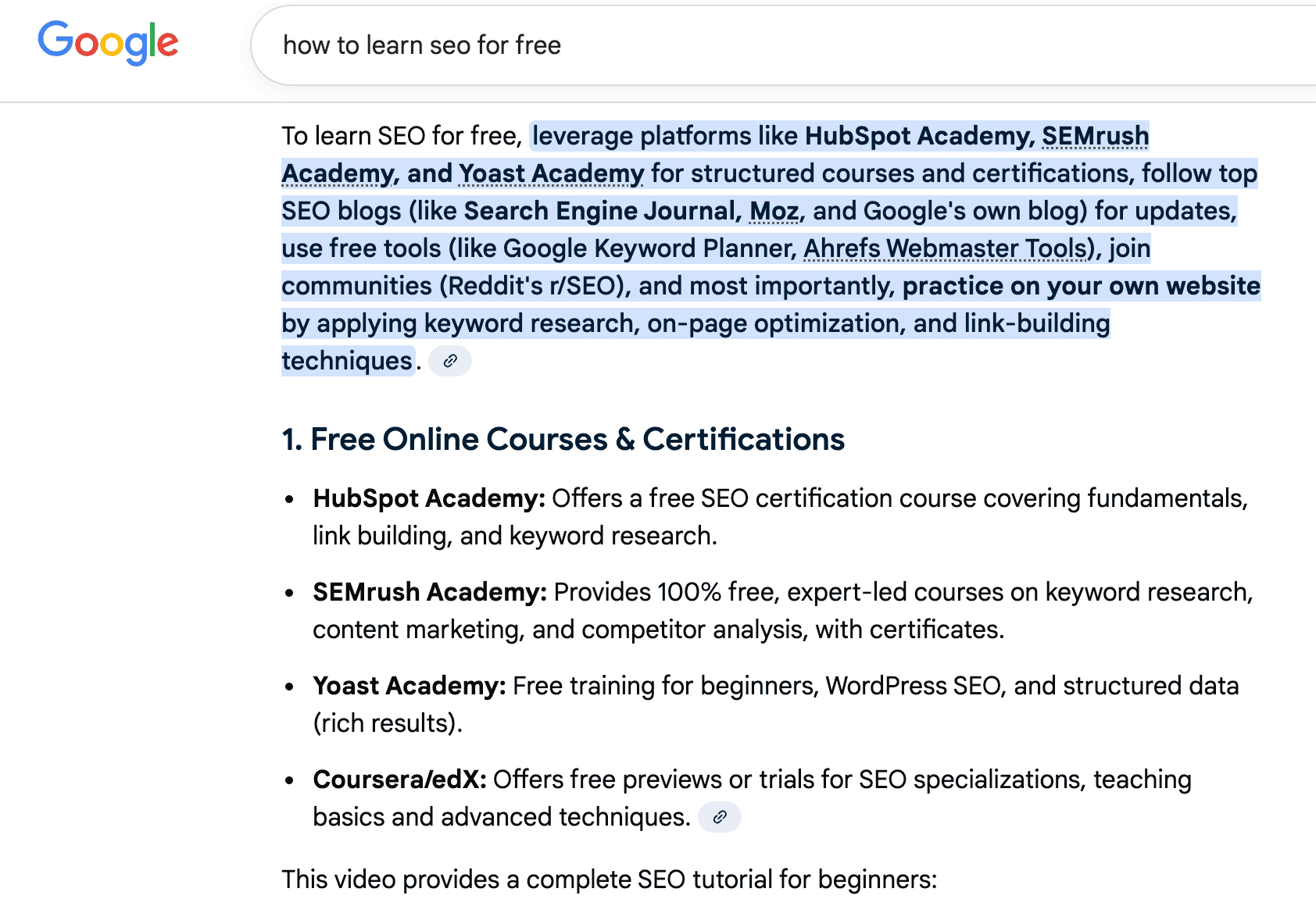
Think of it as Google saying: “Here’s the BEST answer for you, fast.”
Key Insights:
- AI Overviews focus heavily on search intent, not just keywords
- Google breaks big questions into smaller sub-questions
- It generates results and answers by summarizing and organizing information from multiple sources online
How to Prepare:
To win in the AI Overviews search era, stop writing for Google algorithms and start writing for humans.
Your content should:
- Directly answer real questions
- Be genuinely helpful, not what everyone else is saying
- Cover a topic clearly and completely
Also, structure your content well by:
- Using clear subheadings
- Highlighting key points with bold text
- Asking smart questions that make readers think and stay longer
Related: How to Optimize Your Brand to be Mentioned in Google AI Overviews & Other LLMs
2. Not Every Search Gets a Click
Zero-click searches are on the rise because search users want QUICK information from search results pages without clicking on any links.
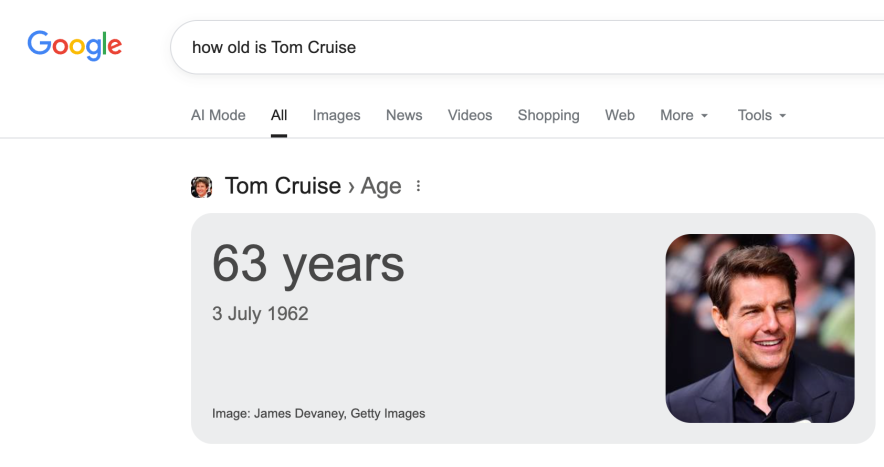
For example, when you search for ‘how old is Tom Cruise,’ you might see a direct answer like ’63 years’ appear at the top of the search results.
Key Insights:
- Zero-click searches are growing because Google provides direct answers on the results page, leading to fewer clicks.
- Search engines are getting better at understanding complex queries and providing direct answers to users’ queries.
- Certain search features such as featured snippets, rich snippets, etc made it easier for users to find information without clicking on links.
How to Prepare:
Zero-click searches aren’t always a bad thing for SEO but to reap benefits, you should aim for rich snippets and provide clear, concise answers to common questions.
One of the best SEO tips for 2026 is to identify keywords that trigger the SERP features like featured snippets, knowledge panels, and PAA boxes (People Also Ask).
For example, you could target keywords that trigger PAA boxes that include;
- Question-based keywords (examples: “What is the weather like in New York,” “What are the popular tourist attractions in New York”)
- Comparison keywords (examples: “New York vs. Texas,” “Miami vs. New York”)
- List-based keywords (examples: “best places to visit in New York for couples,” “top-rated hotels in New York”)
Once you identify these keywords, create content that provides clear answers to users’ queries.
3. Topical Authority Beats Keyword Targeting
Topical authority in SEO refers to your website’s expertise and credibility on a specific topic or subject. It simply evaluates your website’s credibility as a reliable source of information on a specific subject.
Key Insights:
- The more topical authority your website has, the higher rankings you can expect for certain topics.
- Increased search visibility for specific topics drives more organic traffic and higher engagement.
- It helps you establish yourself as an expert in your field.
- Builds trust with website users, as your website becomes a reliable source
How to Prepare:
Focus on content depth: Create comprehensive content clusters that demonstrate expertise in particular subject areas.
If you’re getting started, pick one topic at a time and create as much in-depth content as you can around that topic to become an expert.
The key is to create topic clusters: a pillar content page (the main topic) that provides a detailed overview of your primary topic. Then, you create related supporting content pages (sub-topics) that link back to the main page.
Let’s say you want to create topical authority on “WordPress SEO”.
Pillar Content: “Ultimate Guide to WordPress SEO” (where you write an in-depth overview)
Supporting Content Pieces:
- “Keyword Research for WordPress”
- “On-Page SEO Best Practices”
- “Off-Page SEO Strategies”
- “Technical SEO Optimization”
All the supporting pages should link back to the main “Ultimate WordPress Guide” – that’s how you build expertise on a subject.
4. Content Updating with Real Value
Google prefers fresh and up-to-date information over outdated content. That’s why keeping your existing content relevant to current search trends and user interests is the key to sustaining your keyword rankings.
Also, regularly updated content often attracts better user engagement in terms of comments, more social shares, and backlinks.
Key Insights:
Here are some of the primary benefits of regularly updating content to maintain its relevance and ranking.
- Helps you provide users with updated information.
- It can help you fix issues such as broken links, slow page load times, poor content quality, etc.
- It can help you extend the overall lifespan and value of the existing content.
How to Prepare:
Here are some of the best ways to update your existing content without a lot of extra work;
- Start by conducting content audits to identify outdated articles and ensure you provide up-to-date information.
- Use AI tools to spot missing topics, weak sections, or questions users are now asking
- Add more relevant keywords. Include an FAQ section. Replace or add appealing images.
- Link to other internal pages that are highly relevant to the topic
- Update SEO values, such as titles and meta descriptions, to make them more engaging.
- Above all, update the publish date of your refreshed content to signal to both search engines and website visitors that it is new and up-to-date.
5. Experience and Credibility Matter More Than Ever
In 2026, search engines care less about who publishes content and more about who actually knows the topic. Google uses E-E-A-T signals to judge content quality and relevance. Pages that show real experience and trust are more likely to rank well.
Simply put, content written by people who’ve actually done the work performs better than generic, AI-only content.
Key Insights
- Experience means first-hand, real-world experience with the topic. Example: An SEO expert who has personally built links and ranked websites.
- Expertise means deep knowledge and a strong understanding of the subject. Example: An SEO professional with 10+ years of hands-on SEO experience.
- Authority refers to the credibility and reputation of the content creator or author. Example: An SEO blog that other experts mention, link to, or quote.
- Trustworthiness means accurate, honest, and updated information. Example: Content that uses recent data, credible sources, and clear explanations.
How to Prepare:
To optimize your website content for EEAT, focus on the following things:
- Avoid using AI-generated content, as most AI tools produce “generic content” that doesn’t add valuea
- Show real experience by sharing first-hand examples, case studies, screenshots, or results
- Have your content written by experts who clearly understand the topic
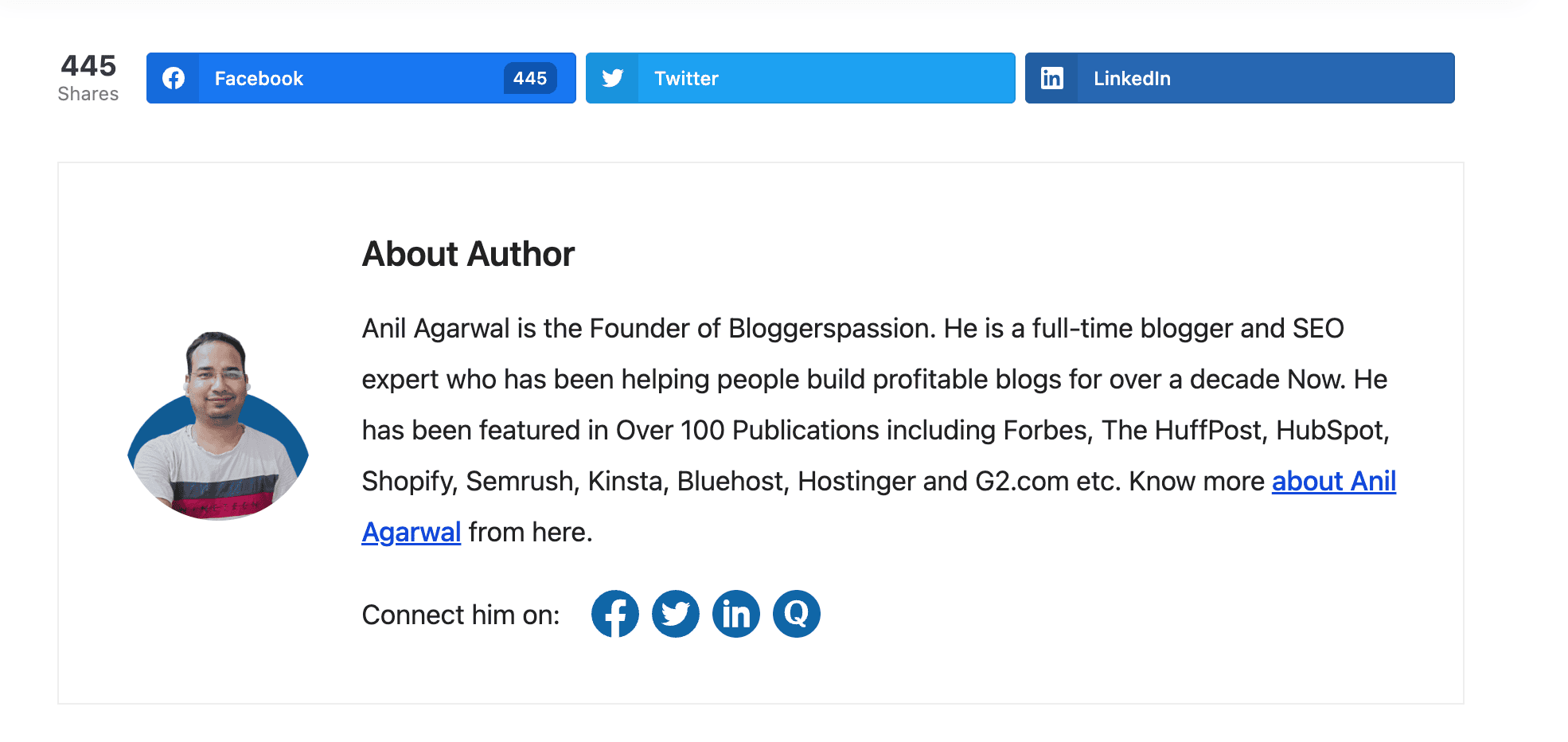
- Add author names, bios, and credentials on blog posts to show who created the content
- Build authority by earning links and mentions from top-quality websites
- Back your content with data from credible and up-to-date sources
- Link out to reliable websites and give proper credit where needed
- Keep content fresh by updating stats, examples, and publish dates regularly
Here’s an example on our blog showing expert author credentials to improve EEAT signals;
6. Search Intent Keeps Changing
Search intent is why someone searches online. It could be to learn something, compare options, find a website, or buy a product.
Understanding search intent matters MORE than ever because search engines focus on solving user problems, not just matching keywords.
Key Insights:
To survive in the SEO game, you must understand user intent as it influences search behavior.
Why? People are not using Google just to find information. They’re looking for answers, solutions and gather as much reliable information as they can about a product or service.
This is why you must analyze search results to understand the real intent behind the search queries or topics you want to target.
How to Prepare:
Here are some quick tips on analyzing search intent and tailoring content to meet the evolving needs and expectations of the audience.
Understand the intent by analyzing the search results
Before targeting any keyword or topic, perform a quick search analysis on Google.
Match content type to intent.
Examples:
- “How to grow strawberries”, write step-by-step guides and tutorials
- “Best strawberry fertilizer”, write list posts and comparisons
- “Buy strawberry seeds online”, write product or eCommerce pages
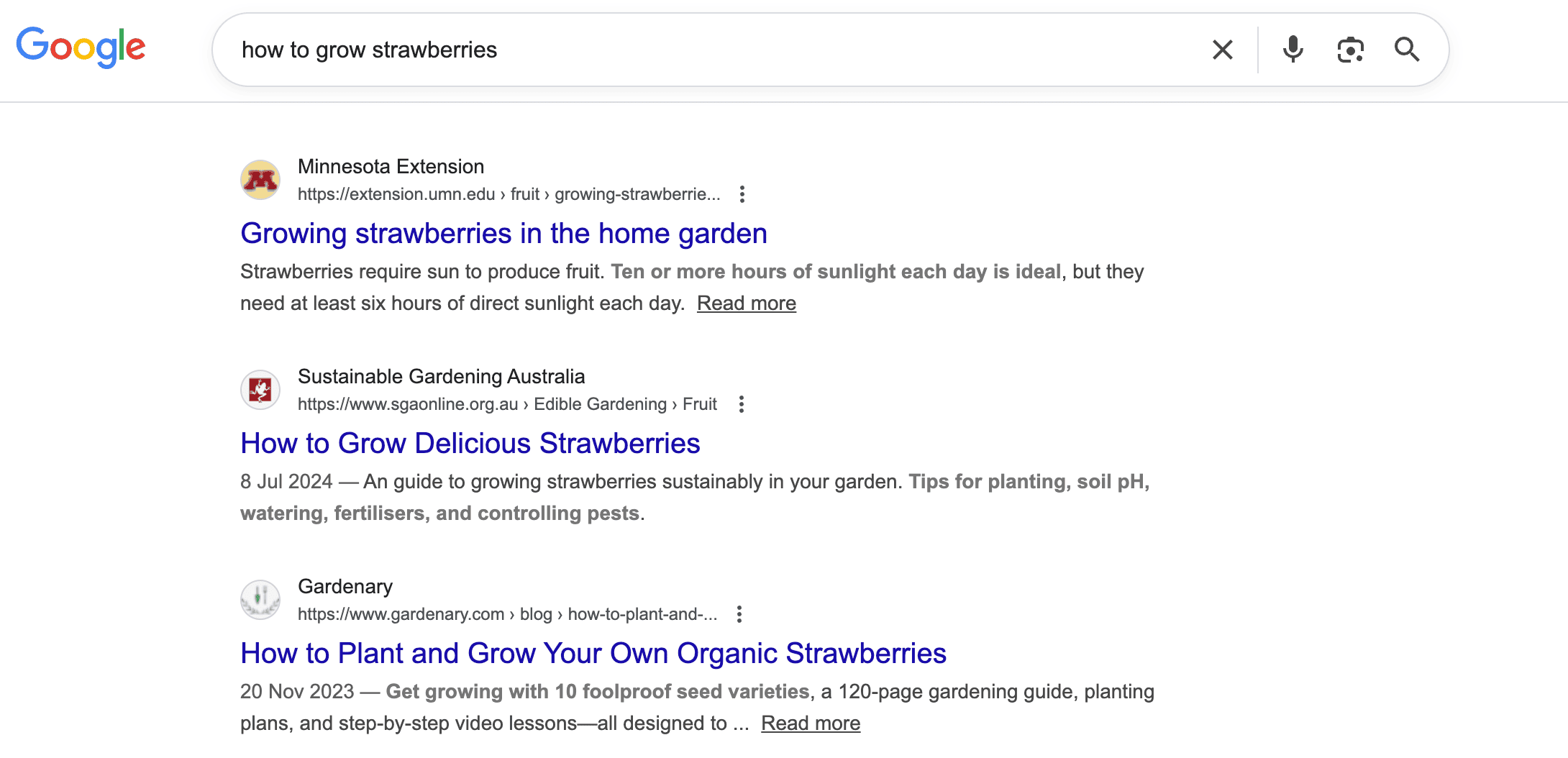
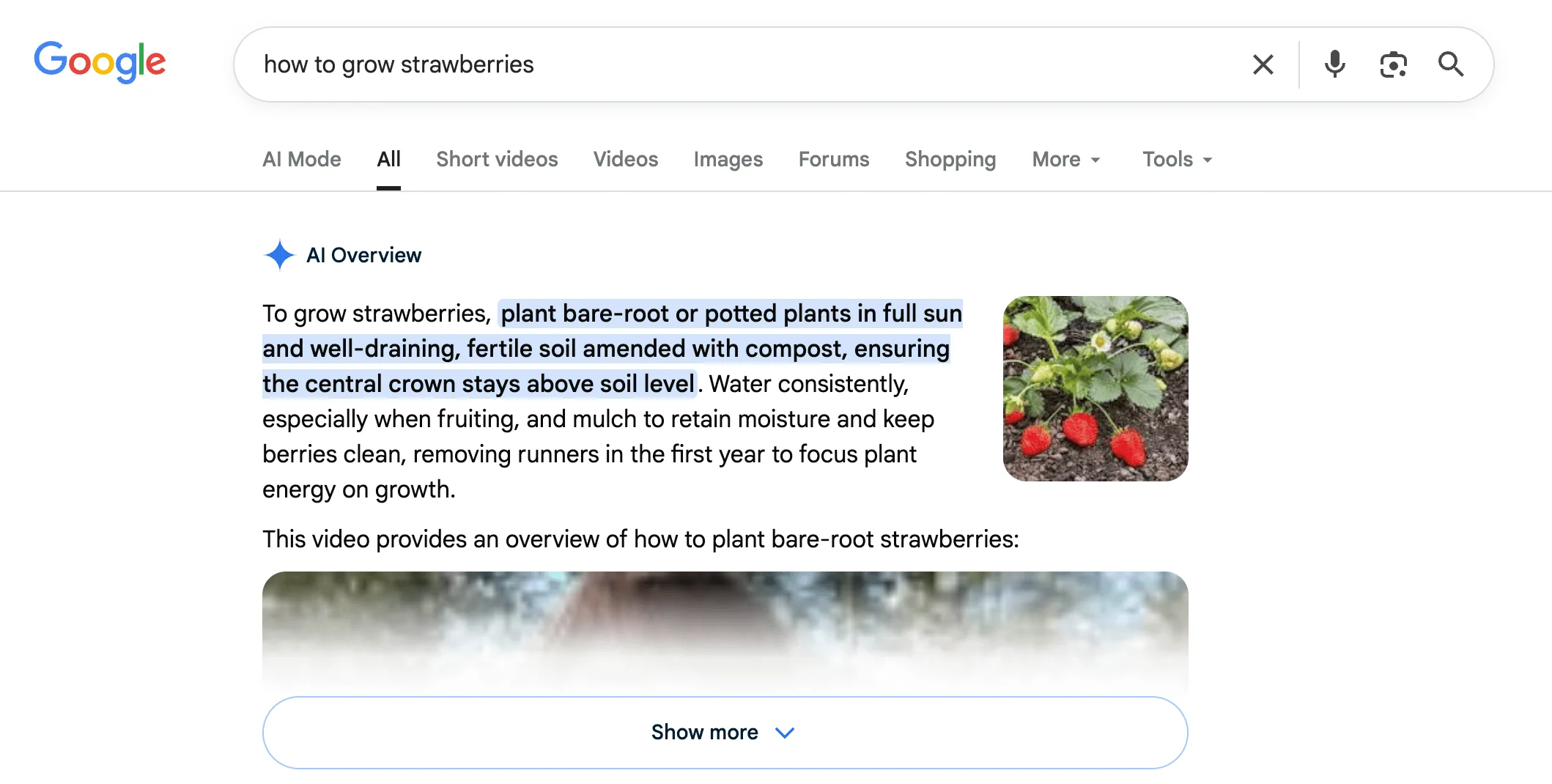
For example, if you search for an informative keyword like “how to grow strawberries,” you’ll find how-to guides.
Similarly, if you search for “buy strawberries,” you’ll find farms or stores selling strawberries.
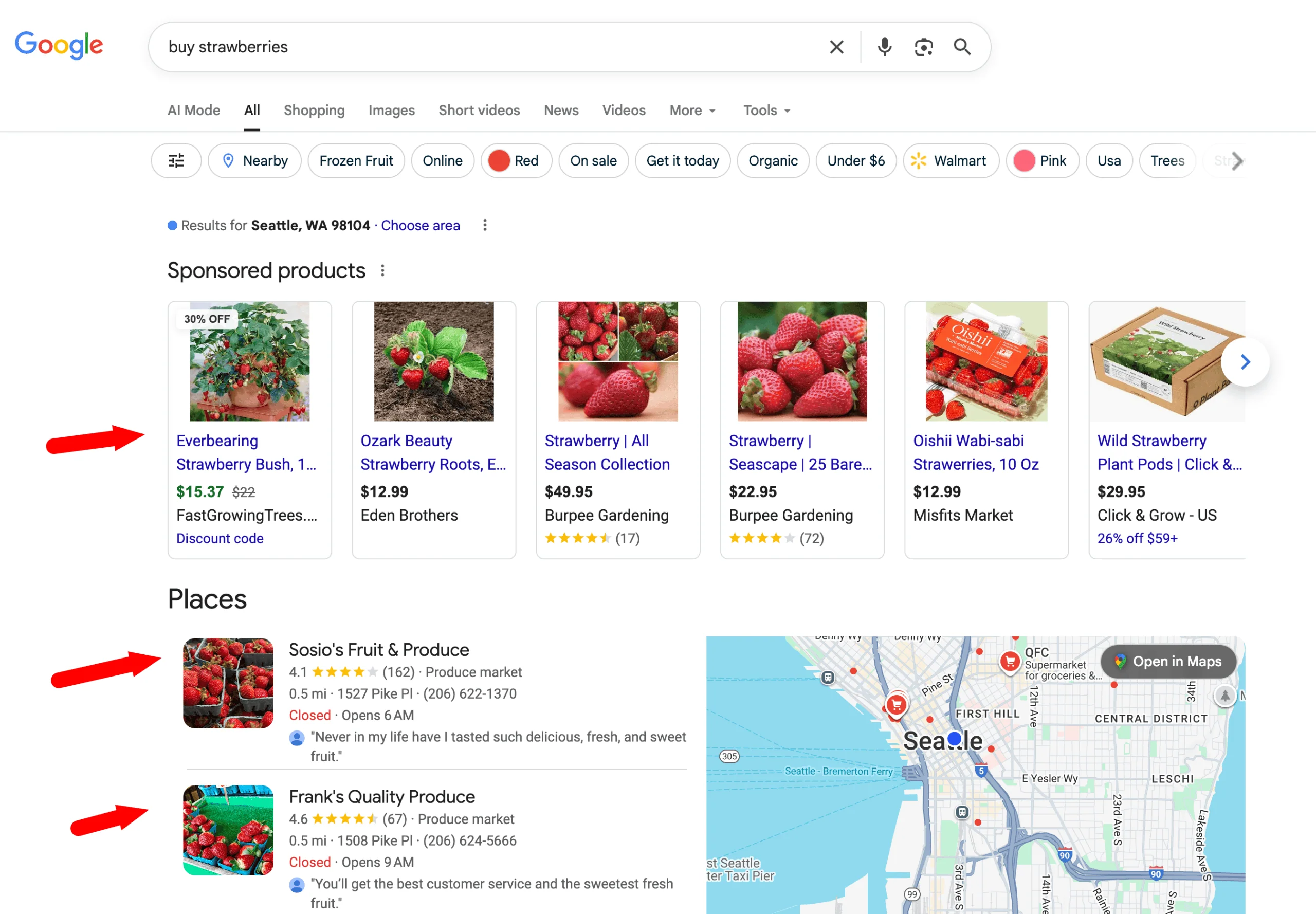
In the first example, the search intent is: INFORMATIVE, so you’ll find tutorials and how-to guides. In the second example, the intent is: COMMERCIAL, so you’ll find nearby stores that sell those items.
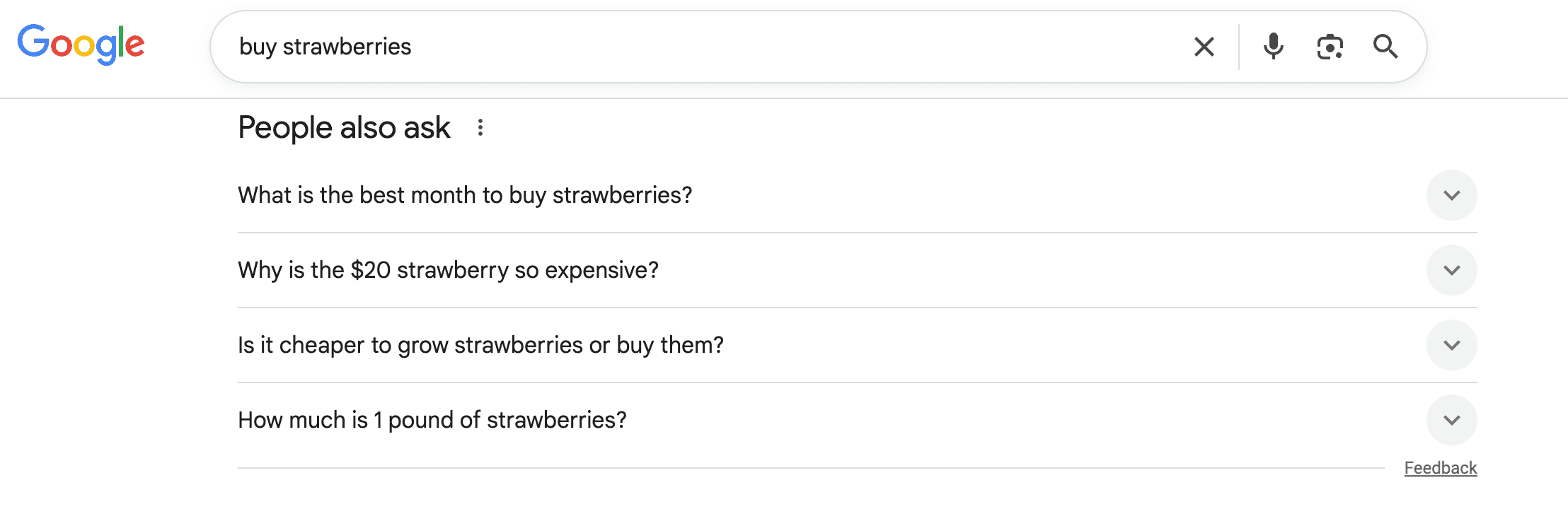
Use “People Also Ask” questions
These show what users want to know next. Add clear answers to these questions in your content.
Optimize for AI summaries
Add short and direct answers near the top of the page to increase chances of appearing in AI Overviews and featured snippets.
Create relevant content
Once you’ve identified the intent, create content that suits your users’ needs.
Are users exploring more options, looking for answers, or ready to buy? Based on that, create content or suggest products that satisfy the intent.
Here are a few more things to consider:
- Improve search intent match (add clear answers, step-by-step sections, and summaries)
- Add short, scannable sections (bullets, tables, quick takeaways) for better UX
- Optimize for AI Overviews & featured snippets by adding direct answers in your content
Conclusion on SEO Trends Google
SEO in 2026 is changing rapidly due to AI, but the BASICS still matter. Create helpful content, match search intent, show real author experience, and build trust.
If you focus on users instead of algorithms and keep updating your content with helpful information, your website will continue to rank well.
What are your thoughts on the future SEO trends? Do you have any questions? Let us know in the comments.
FAQs | SEO Trends 2026
Yes, SEO will still exist in 10 years. As long as people use search engines to find and browse information online, SEO will remain relevant, but it will look different from what it is today.
SEO is still relevant and will continue to grow even after 2026. However, SEO will focus more on intent, experience, and trust than keywords alone.
The future of SEO in 2030 will depend on AI, user behavior, and how search engines deliver answers.
According to AI in SEO Statistics, over 87% of SEOs now use AI to create blog posts, which proves SEO isn’t dead; it’s simply evolving with smarter tools.
Yes, SEO is one of the most valuable digital marketing components that will be in demand even after a decade.

Great explanation about feature of Search Engine Optimization in Upcoming Years.