If I were sitting across from you right now, I wouldn’t waste your time with a tour of the Ahrefs dashboard.
This is an unfiltered look at how Ahrefs actually performs when your traffic is falling.
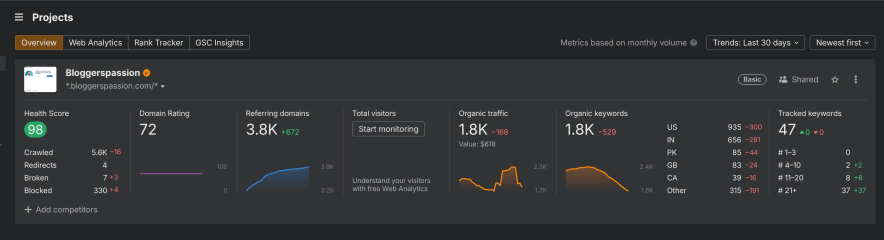
I have been in this blogging and SEO game for over 12 years. I have seen tools come and go.
When my site gets hit by a Core Update, I don’t care about pretty graphs. I care about the “why.”
Ahrefs and Semrush are the tools I reach for to answer those questions.
In this review, I will simply show what the Ahrefs walkthrough looks like once you actually work with it.
And more importantly, how it helps recover site traffic and maintain day-to-day tasks.
We are going to look at the data, the pricing traps, and the new AI features Ahrefs is offering in 2026.

Table of Contents
- The Summary:
- Ahrefs Accuracy vs. Google Search Console
- Ahrefs and MCP:
- From SEO to AEO: Ahrefs
- Analyzing SERP Volatility Patterns with Ahrefs:
- Backlinks & Ahrefs:
- Ahrefs Gives Me CPS Metric
- The Reality of Pricing and the Credit System
- Where Ahrefs Fails:
- The Comparison: Ahrefs vs. Semrush
- FAQs:
- Final Verdict: Who Should Buy Ahrefs?
The Summary:
Let’s start with the bottom line. Most people skip to the end of a review anyway.
This is the tool you should use when a site is losing traffic. It is a diagnostic tool for technical SEO and link health.
If you have a tight budget, the “pay-to-play” credit model will hurt. You get charged for almost every click. If you are a professional fixing a site hit by an update, you need this.
If you are just starting a small blog, look for a cheaper option first.
If you are in a hurry, here is the high-level data on where Ahrefs stands today.
| Metric | My Rating | The Quick Take |
| Data Accuracy | 4.4 / 5 | The standard for links and Keyword research. Produce a little bit different data from what Google Search Console shows |
| Pricing Fairness | 2.5 / 5 | The credit system is frustrating and expensive. |
| Ease of Use | 4.5 / 5 | Clean interface. Very low learning curve. |
| Future Proofing | 4.7 / 5 | Excellent AI and Brand Tracking features for 2026. |
Ahrefs Pros and Cons:
| Pros | Cons |
| If you verify ownership via GSC, those sites do not count toward your project limits. This is massive for niche site owners managing 10+ properties. | The $129 entry-level plan is hollowed out. It lacks search intent data and keyword clustering, making it feel like poor value compared to competitors. |
| Ahrefs offers a traffic potential metric. This looks past the seed keyword to show how much traffic a page actually earns for all its variations. It helps you prioritize topics that move the needle. | The Keyword Difficulty (KD) remains a math problem based on links. It often ignores “Entity” authority and brand trust, leading you to target keywords you can’t win. |
| The Brand Radar tool now tracks YouTube mentions. Since video is becoming a primary source for AI answers, this data is vital for a 2026 strategy. | Features like the Content Kit ($99/mo) and Report Builder ($99/mo) are sold as extras. Your monthly bill can double before you even start your daily work. |
| Ahrefs is still the king of finding broken inbound and outbound links. It is the most straightforward tool for “reclamation” strategies. | You don’t get daily updates by default. To see your ranks move every 24 hours, you have to pay for the $200 per-project “Boost Max” add-on. |
| You can connect Ahrefs directly to ChatGPT or Claude via an MCP server. You can ask “Find my top 10 ranking drops” without ever opening the dashboard. | Every click, filter, or AI request consumes a credit. There is no free trial to test these workflows, so you have to pay full price just to “see if it works.” |
| The free trial on any plan is missing. Other tools offer such an advantage to all the new users. |
Ahrefs Accuracy vs. Google Search Console
A common question I hear is, “Why does Ahrefs show different traffic numbers than Google Search Console?” It is important to understand that Ahrefs does not have access to your private analytics.
Even Semrush shows slightly different data than Google Search Console.
I would recommend trusting the Trends rather than the numbers.
When I tested the Google Search Console data of my 2 sites with the popular tools Ahrefs and Semrush, I found different numbers.
| Site | Last 3 Months Clicks (Google Search Console) | Last 3 Months Clicks (Ahrefs) | Last 3 Months Clicks (Semrush) |
|---|---|---|---|
| BloggersPassion | 5.69k | 6.9k | 6.4k |
| WPCoupons.io | 7.55k | 4.77k | 6.7k |
Ahrefs estimates traffic based on keyword rankings and estimated click-through rates. Google Search Console shows you the actual clicks from the search results.
I have seen cases where Ahrefs predicts 5,000 visits while GSC shows 50,000. This is normal.
That’s why I use GSC for your own site data. It is the only source of truth.
But the story is different when you do competitive analysis.
Since you cannot see their GSC, Ahrefs provides the best directional data available.
When I look at my competitor’s site, I don’t look at the exact traffic number in Ahrefs. I look at the line graph. Is the traffic moving up or down? Are they losing rankings for their top-tier keywords?
Accuracy in third-party tools is about relative performance.
If your competitor’s graph shows a 50% drop, they likely had a significant issue, regardless of whether the specific traffic number is 100% correct.
Ahrefs and MCP:
In 2026, many SEO consultants are moving away from manual data entry. We now use the Model Context Protocol (MCP) to connect Ahrefs data directly to AI tools like ChatGPT or Claude.
By setting up an Ahrefs MCP server, your AI assistant can pull live data from your projects.
You can ask the AI to identify keyword gaps between your site and a competitor in real-time.
Instead of clicking through five menus, you can type: “Find all pages where my ranking dropped more than five positions this week.”
I am still learning the art of giving ChatGPT the perfect prompts so it can pull valuable info from Ahrefs.
Every time the AI pulls data, it uses your Ahrefs API units. This can be more expensive than manual browsing if you are not careful.
Ahrefs recently added an “AI Content Level” metric to their reports. It tries to estimate how much of a competitor’s page was generated by AI.
Currently, this feature is limited. You can see it in the Top Pages report, but you cannot easily filter or export it yet.
It is a useful indicator for determining whether a niche is being flooded with automated content, but do not rely on it as a final judgment.
From SEO to AEO: Ahrefs
In 2026, we are seeing a shift from Search Engine Optimization to Answer Engine Optimization (AEO). Google and other platforms now use AI to answer questions directly.
Tracking AI Citations
Ahrefs recently introduced the Search Presence Index (SPI) and Brand Radar. These tools do not just track your ranking. They track how often AI models mention your brand.
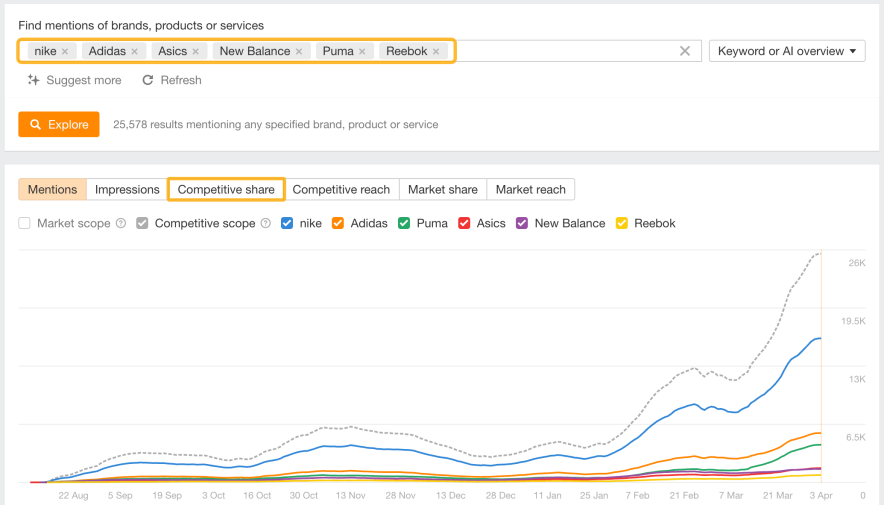
- AI Overviews (SGE): Is your website cited as a source in Google’s AI answers?
- LLM Mentions: Are models like ChatGPT or Perplexity using your data to answer users?
- Sentiment Tracking: Are you being mentioned in a positive or negative context on forums like Reddit?
Ranking #1 is less valuable if an AI answer takes up the entire screen. I use the SPI score to see if a brand is becoming an “Entity.”
Google prefers to rank brands it trusts as experts. If your SPI score is low but your rankings are high, your traffic might be at risk.
Use the Mention Gaps feature to find where your competitors are talked about on niche forums. These are the places where AI models “learn” who the real experts are.
Analyzing SERP Volatility Patterns with Ahrefs:
The Search landscape changed after the Helpful Content Updates. High search volume used to be the main goal. Now, volume without “Information Gain” is often a path to failure.
I use the Ahrefs SERP History graph to see who Google actually wants to rank.
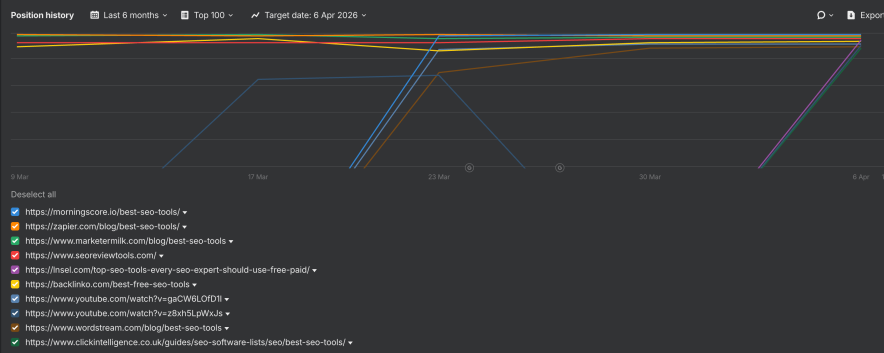
I look at the top 10 results over the last six months to check the history.
Then you have to identify a pattern. Are independent blogs being replaced by Reddit, Quora, or other massive brands
If the SERP is dominated by forums and “Big Media,” it is often a sign that Google no longer considers niche blogs the primary answer for that keyword.
To survive in 2026, you must provide details that others have missed. I use the Ahrefs Content Gap tool for this, but with a different strategy.
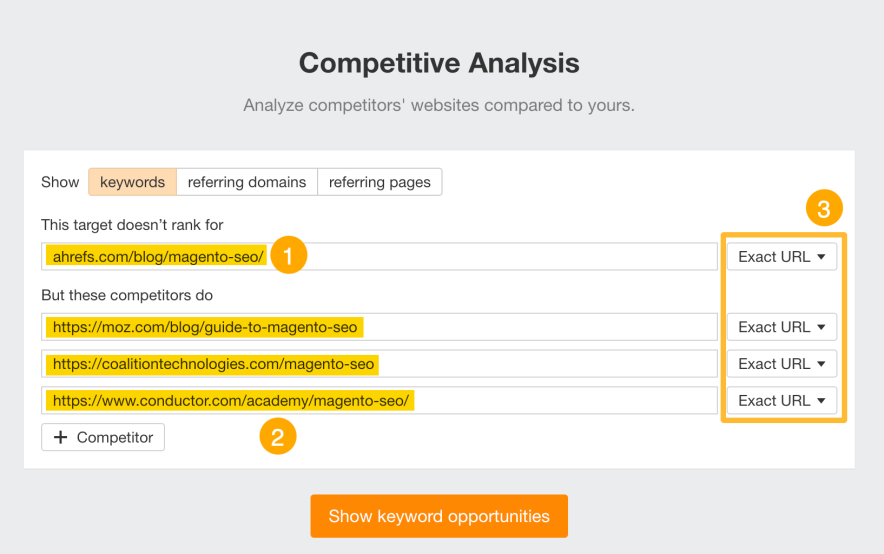
Instead of looking for keywords to copy, I look for “Sub-topic Gaps.” If three competitors are all answering the same four questions, and Ahrefs shows a related fifth question with high search intent, that is your opportunity.
Many keywords now have a high volume but very few clicks. This is because Google provides the answer directly at the top of the page via AI overviews.
Ahrefs shows you the percentage of searches that result in a click.
If a keyword has 10,000 searches but only a 20% click rate, it is often not worth the effort. I usually focus on keywords where the user actually needs to visit a website to get the full answer.
Anyway, Ahrefs is a great help here.
Backlinks & Ahrefs:
Backlink analysis is the core of Ahrefs. However, the way we judge links has changed.
Domain Rating is a relative score. It is not a Google ranking factor. A site can have a DR of 70 and still be a low-quality “link farm.”
I look at Outbound Links. If a website has a high DR but links to thousands of unrelated sites across different niches, those links have no value.
It is a sign that the site sells links to anyone. I avoid these sites entirely. Without Ahrefs, I can’t find those site link profiles.
Instead of chasing high DR numbers, I use the Ahrefs Link Intersect tool. It shows me websites that link to my competitors but not to my site.
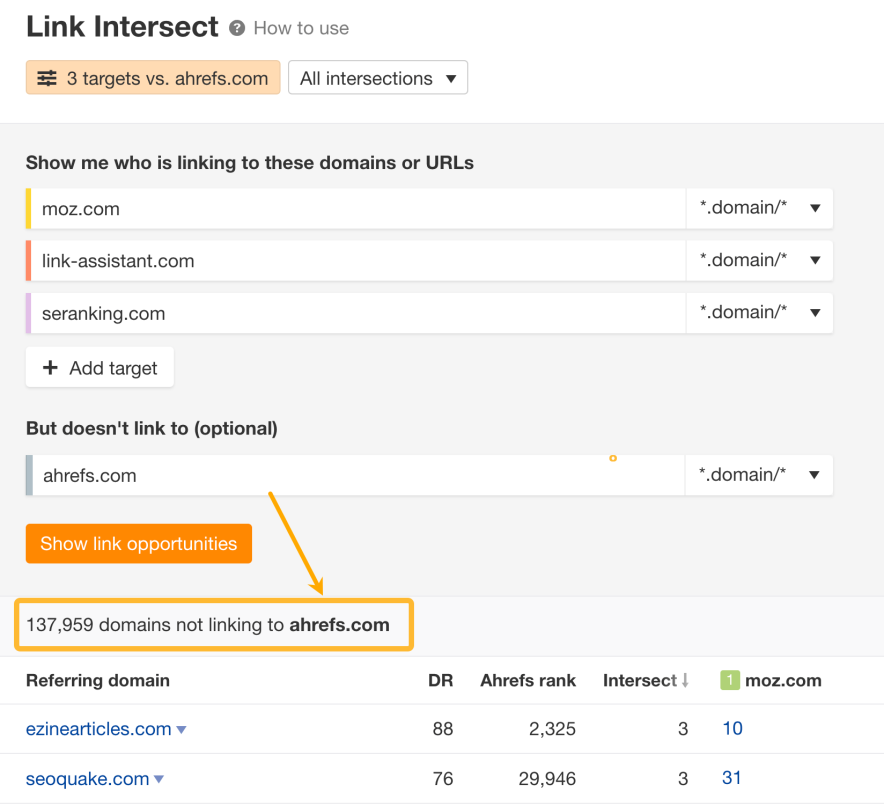
| Ahrefs Strategy | Goal | Why it works |
| Competitor Overlap | Find 3+ common links | These sites are likely to link to your niche. |
| Real Business Filter | Avoid PBNs | Look for sites with actual organic traffic. |
| Broken Link Building | Find 404 pages | Offer your content as a replacement for dead links. |
In Ahrefs, you can fetch the “Lost Links” report once a month. And sometimes this strategy helps me in Link building.
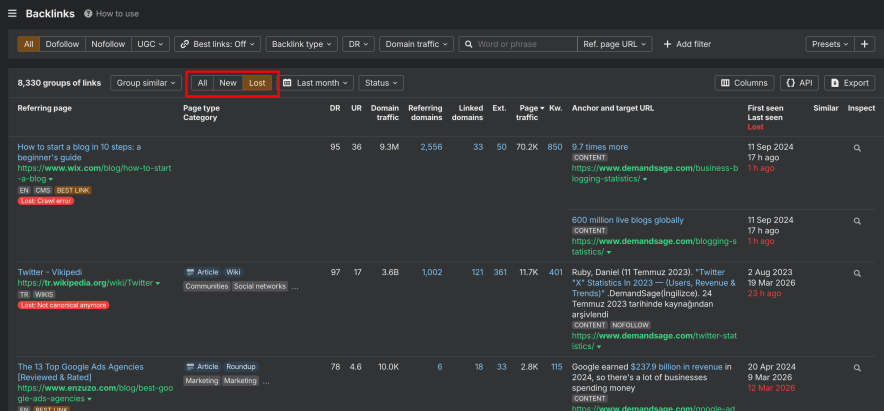
Sometimes, a high-quality site removes your link during a redesign. Reaching out politely to request that the link be restored is often the easiest way to gain authority without starting a new campaign from scratch.
Ahrefs Gives Me CPS Metric
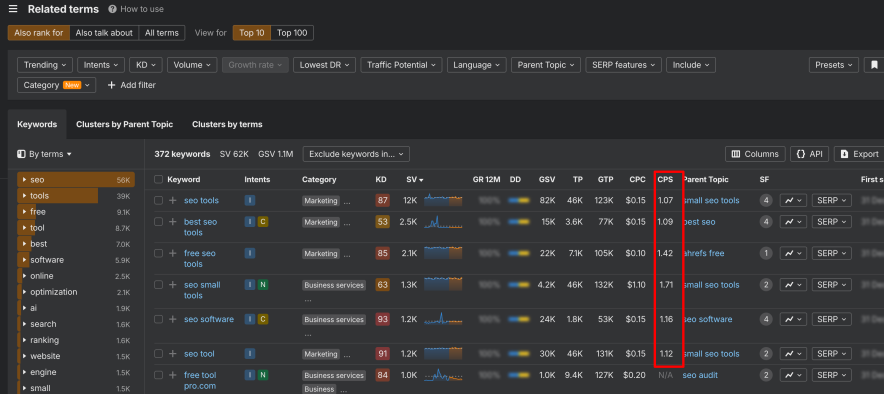
SEO was often a race to see who could mention a keyword the most. In 2026, that strategy will be outdated.
Now the goal is to understand why a user is searching and whether they will actually click on a result.
A keyword might show 10,000 monthly searches.
If the “Clicks” metric in Ahrefs is only 2,000, you are competing for a very small piece of the cake.
I prioritize CPS (Clicks Per Search) in Ahrefs. If the CPS is low, it means the user’s intent is already satisfied by an AI overview or a snippet. I avoid those keywords.
If you run an online store, raw traffic may look impressive. But you need people who are ready to spend money.
Ahrefs has specific filters that help separate “browsers” from “buyers.”
I use the Transactional and Commercial intent filters in the Keywords Explorer.
- Transactional: Shows users ready to buy (e.g., “buy noise canceling headphones”).
- Commercial: Shows users doing research before a purchase (e.g., “best headphones for travel”).
- Informational: Shows “how-to” traffic (e.g., “how do noise cancelling headphones work”).
By filtering for transactional intent, you can find low-volume keywords with much higher conversion rates.
The Reality of Pricing and the Credit System
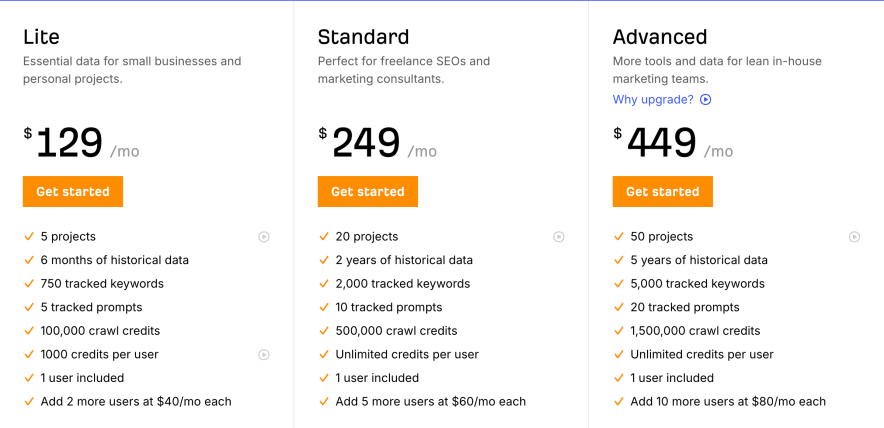
Pricing is where most users, including me, have been disappointed with Ahrefs.
In the past, you paid a monthly fee and used the tool as much as you wanted. Today, the system is based on credits.
This means the tool monitors your activity.
It means that opening a report or applying a filter often costs one credit. If you are a power user, you can consume your monthly allowance in a few hours.
The entry-level plans are often where the most frustration occurs.
- The $29 Starter Plan: This is a basic entry point. It works by checking a few keywords for a side project. It is not sufficient for a full site audit or competitor research.
- The $129 Lite Plan: Many bloggers start here. However, it is quite restrictive. You will quickly hit limits if you do deep research.
- Accidental Overages: It is easy to click a link and spend a credit without realizing it. You must be intentional with every action.
The base subscription price is rarely the final price. If you need specific features for a professional workflow, then you have to pay for add-ons.
| Add-on Name | Monthly Cost | What it Provides |
| Content Kit | $99 | Access to the Content Helper and Content Grader. |
| Project Boost Max | $200 | Required for daily rank tracking updates per project. |
| Report Builder | $99 | Needed for creating custom reports for clients. |
Pro tip to save with Ahrefs:
There is one strategic way to save money that many users miss. If you verify your website ownership through Google Search Console (GSC), that domain does not count against your project limits.
This is a massive benefit for anyone managing multiple niche sites. You can track the technical health of ten or twenty sites without paying for extra projects.
So I highly recommend verifying your sites via GSC before doing anything else with Ahrefs.
The $29 Starter Plan: Disruption or Credit Trap?
Ahrefs launched a $29 Starter Plan in early 2026 to compete with the rising number of low-cost SEO tools.
For a long time, the $99 entry price was a barrier for many. Now, that barrier is lower, but it comes with a catch.
I don’t view this plan as a growth engine. Instead, it is more like a paid trial. It gives you a taste of the data without giving you the power to move the needle at scale.
- The Credit Limit: You get 100 credits per month.
- The Reality: Every time you click a keyword or filter a backlink list, you spend a credit. If you are doing serious research, those 100 credits will be gone by lunch.
- The Constraints: You only get one month of historical data. This makes it impossible to see how a site performed a year ago or track long-term trends.
This plan is perfect for one specific scenario: Keyword Validation.
If you are starting a new side project and want to see if a niche has potential, $29 is a bargain. You can check search volumes and see who is currently ranking without committing to a $130 monthly bill.
If your site was hit by an update and you are trying to find the reason, this plan is useless.
You need to look at years of data, compare thousands of rows of competitor backlinks, and run deep site audits. The Starter Plan limits you to 250 rows per report. You will hit a wall before you find the answer.
Where Ahrefs Fails:
I use Ahrefs daily; it is not a perfect machine. There are areas where the tool provides a false sense of security.
If you follow its data blindly, you will waste months of work on keywords you can never rank for.
1.) The Keyword Difficulty (KD) Lie
I need to be clear about one thing. In Ahrefs, Keyword Difficulty is often a lie.
The tool calculates KD based almost entirely on the number of backlinks the top 10 pages have. It is a math problem, not a search engine simulation. Google has moved far beyond just counting links.
Why a “Low KD” doesn’t guarantee a ranking:
Brand Authority: Ahrefs does not factor in how much Google trusts a specific brand for a topic. If a massive brand owns the search intent, your small blog won’t rank, even if the KD is 5.
Search Intent: If the top 10 results are all product pages and you write a blog post, you won’t rank. Ahrefs ignores this context.
Internal Linking: Big sites rank using internal power. Ahrefs struggles to quantify the extent of a competitor’s “boost” from their internal architecture.
2.) The Context Gap: Ahrefs vs. The Real SERP
| What Ahrefs Sees | What Google Actually Sees |
| Number of referring domains | The actual helpfulness of the content |
| Keyword density and placement | User satisfaction and “dwell time” |
| Historical backlink growth | Modern “Entity” authority and trust |
3.) Don’t Let the Numbers Fool You
I have seen keywords with a KD of 60 rank easier than those with a KD of 10.
How? Because the high-KD keyword was being targeted by old, outdated content. The low-KD keyword was being dominated by a brand that Google “prefers” for that specific niche.
I always open the actual search results. Look at who is ranking. If you see Reddit, Quora, or massive media sites owning the top spots, the Ahrefs KD score is irrelevant. Your goal is to beat the intent, not just the backlink count.
The Comparison: Ahrefs vs. Semrush
Choosing between these two tools is a common dilemma. To use a cricket metaphor, Semrush is the All-rounder. It handles SEO, PPC, AI, and social media. Ahrefs is the Opening Batsman. It focuses on one job with extreme precision.
Which Tool Wins Where?
| Task | Winner | Reason |
| Backlink Validation | Ahrefs | Larger live index and better link hygiene tools. |
| PPC & Google Ads | Semrush | Superior data on competitor ad history and budgets. |
| Technical Site Audits | Ahrefs | Better integration of field data and bot analytics. |
| Competitive Analysis | Semrush | More predictable traffic estimates for high-volume sites. |
| AI Visibility | Semrush | Both offer the same kind of tools, but Semrush is structured nicely in its plans so that users don’t have to pay an unnecessary extra amount. |
If you manage Google Ads alongside SEO, Semrush is usually the better choice. It is a full-fledged digital marketing tool. If your goal is link building and technical recovery, Ahrefs is the better diagnostic tool. For detailed comparison, check here.
FAQs:
Does Ahrefs track ChatGPT citations?
Yes, the Brand Radar tool monitors mentions across various AI platforms and forums where these models gather information.
Is SEO ranking still important?
Yes, but it is only half of the story. You need rankings for traffic and AI citations for long-term authority.
Is Ahrefs Free?
No, Ahrefs main SEO suite is not free at all. The trial is not available as well. However, Ahrefs offers many small, standalone tools you can use anytime, free of charge, with some usage restrictions.
Does Ahrefs offer any coupons?
No. But you can save 17% OFF if you choose their plans for the annual tenure.
Explore More:
- Moz Review (The Classic Tool – Still Good Enough?)
- How to do Keyword Research Effectively?
- Is Doing SEO Worth it in 2026?
- Future of SEO [You can’t ignore the Evolution]
Final Verdict: Who Should Buy Ahrefs?
We have reviewed the data, pricing, and tools. Now it is time for the final decision.
Ahrefs remains one of the most powerful diagnostic tools in the industry.
However, it is no longer a “one-size-fits-all” solution. Your choice should depend on your specific needs and your current budget.
You should buy Ahrefs if:
- You are managing a site that was hit by a Core Update, and you need to perform “SEO recovery.”
- You are a technical SEO who needs to audit crawl budgets and field data.
- You need the most accurate backlink hygiene data to avoid link farms.
You should skip Ahrefs if:
- You are a beginner blogger with a limited budget. The $29 plan is too restrictive for real growth.
- You primarily manage Google Ads or social media campaigns.
- You need 100% accurate traffic numbers for your own site (use Google Search Console instead).
If you are a beginner, Ahrefs will likely break your heart and your wallet. The credit system requires a level of discipline that most newcomers lack.
But if you are a professional who needs to know exactly where the technical issues are, nothing else has the same level of precision. It is expensive. It is often frustrating. But for a professional, it remains a tool difficult to replace.