

Key Takeaways:
- SEO is one of the highest-income digital skills you can learn online in 2026
- SEO leads are highly profitable, with a 14.6% conversion close rate.
- Google continues to dominate search (Search, Images, Maps = ~93% of traffic)
- Demand for SEO experts, freelancers, and consultants is growing every year
- Learning the right SEO skills can lead to freelancing, jobs, or scalable online income
What’s the #1 high-income skill you can learn online in 2026? If you guessed SEO (Search Engine Optimization), you’re on the right track.
SEO isn’t just a traffic tactic anymore; it’s an essential thing for businesses that drives organic visibility, leads, and revenue.
According to Ahrefs data, 63.41% of all US web traffic referrals come from Google. Nearly 93% of global traffic comes from Google Search, Images, and Maps.
At the same time, SEO demand is growing fast. Searches for SEO jobs are up over 311% since 2016, and interest in SEO courses has grown by 654%, showing more people are learning SEO than ever. As AI changes how search works, businesses need people who know SEO and can use AI tools well.
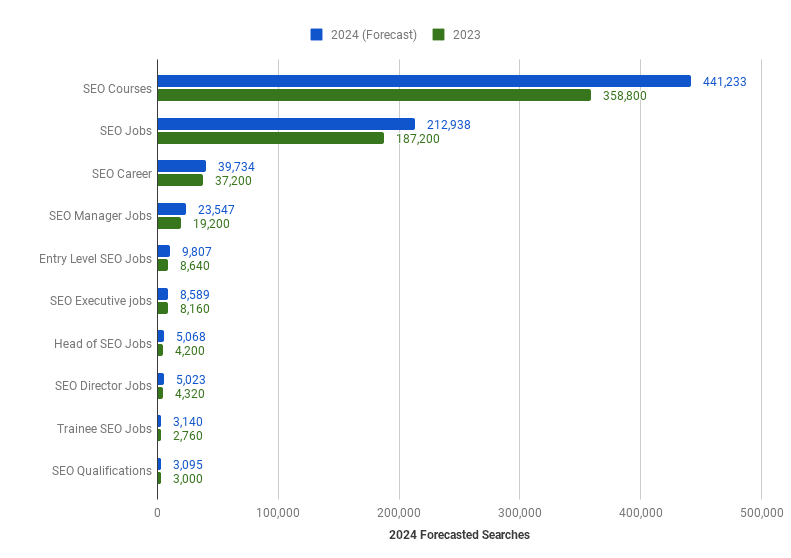
Whether you want to be an SEO expert, freelancer, or business owner, this guide covers the key skills you need to succeed with SEO in 2026 and beyond.
11 SEO Skills Needed for a Search Engine Specialist [2026 Updated List]

1. AI-Driven Keyword Research
Keyword research is the most important SEO skill to master, especially in the AI era. It helps you find the exact words people search for, improve rankings, and reach the right audience.
The most important thing is to start with a list of relevant topics. You can use your competitors to generate ideas. Once you have a list of topics, you can begin identifying the specific keywords for each topic.
Here’s a simple illustration of finding great keywords;
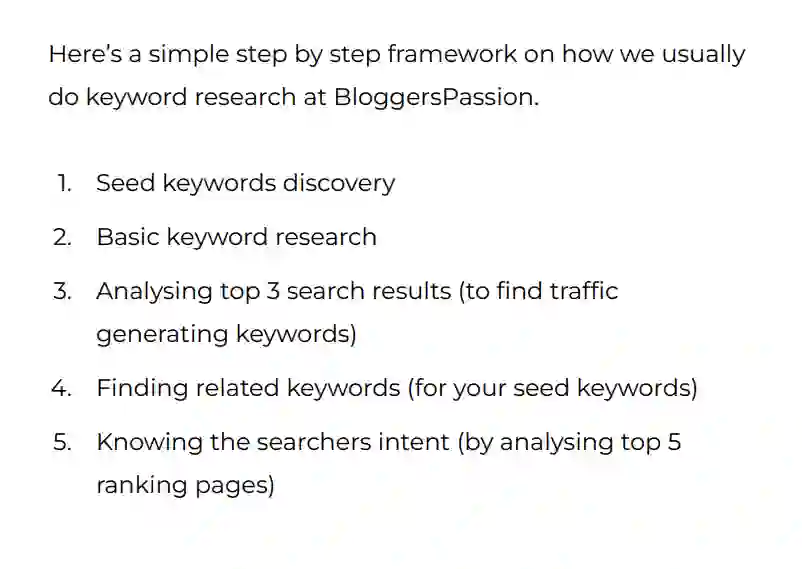
Here’s how to find great keywords with AI:
- Use AI-powered tools: Platforms like Semrush, Ahrefs, and Ubersuggest use AI to suggest keywords based on real search data. You can also use AI tools like ChatGPT, Perplexity, etc, for brainstorming topics.
- Focus on long-tail keywords: The key to keyword research is to find low-competition long-tail keywords that drive targeted traffic.
- Analyze competitors: You can use AI to analyze which keywords your competitors rank for, and which ones you’re missing. For example, enter a competitor’s website into an AI-powered tool like Semrush or Ahrefs. The tool shows all the keywords they rank for. If your site doesn’t rank for “best SEO tools for beginners” but your competitor does, the tool marks it as a keyword gap, giving you a primary keyword idea to target.
If you’re looking for a FREE guide, read our how to do keyword research like a pro tutorial.
2. Mastery of SEO Tools
What’s the ONE thing you’ll do the most as an SEO professional?
If you said “using SEO tools”, you’re right.
One of the must-have SEO specialist skills is the ability to use SEO tools like a pro.
Whether you’re running a website, an agency, or working as an in-house SEO specialist, you’ll be using a lot of SEO tools.
So you need to learn and master how to use popular SEO tools like;
- Google Search Console
- Google Analytics
- Semrush

Let’s quickly go through these tools and why they’re important.
Google Search Console (GSC): A free Google tool that shows how your site appears in Google Search. You can check indexing status, search queries, clicks, impressions, crawl errors, and page performance. Every website should be connected to GSC, as it’s essential for SEO.
Google Analytics: Another free Google tool that tracks your website traffic. It shows where visitors come from, which pages they visit, how long they stay, and which convert.
Semrush: Semrush is an all-in-one SEO toolkit used by over 10 million people around the world. It offers you over 50 tools under one roof including;
- Keyword research
- Competitor analysis
- Content marketing
- Social media management
- PPC ads
- Site audits
- Position tracking tool and much more
Ever wondered how often Google crawls a website and how its crawlers actually work? Get detailed insights into Google’s crawl budget, why it matters, and how it works in our in-depth guide on how often Google crawls websites.
3. Competitor and SERP Analysis
There’s A LOT of competition in SEO. No matter what niche you’re in, you’ll often face a lot of competitors who’re already ranking on the first page of Google search results.
To succeed in your niche, you need to find ways to outrank your competitors. Here’s where competitor analysis skills come into play.
Competitor analysis is all about finding the strengths and weaknesses of your current and potential competitors.
Focus on these key points:
- Identify your main competitors
- Find the keywords bringing them the most traffic
- Spot keywords that generate sales or conversions
- Check how many backlinks they have and where they come from
- Find second-page keywords (easy wins you can rank for faster)
Again, you need access to powerful competitor tools like Semrush to easily conduct competitor analysis in your industry.
Here’s a quick breakdown of how you can do competitor analysis to succeed as an SEO professional.
- Study how competitors optimize their pages and keywords
- List websites linking to them
- Find broken links pointing to their sites and reach out for links
- Observe their link building methods
- Check social engagement on their content
- Perform a simple SWOT analysis (strengths, weaknesses, opportunities, threats)
Above all, make sure to spend enough time performing a detailed SWOT Analysis to learn their strengths, weaknesses, opportunities, and threats.
Here’s a simple SWOT analysis illustration that you can use to improve your SEO expertise.

4. Basic Coding Knowledge
You don’t need to be a developer to succeed in SEO. But having basic coding knowledge gives you a big edge, especially in AI-driven SEO. Learn basic coding skills such as;
- HTML & CSS: Helps you understand page structure, headings, internal links, images, and make small on-page or layout changes without waiting for a developer.
- Structured Data (Schema): Lets you add schema markup for rich results, better visibility, and improved CTR
- Technical SEO Audits: Learn how to find and fix issues like crawl errors, broken links, page speed problems, and website indexing issues.
In 2026, AI tools will make this easier. You can use AI to:
- Debug HTML errors
- Generate schema markup
- Analyze technical SEO reports faster
- Suggest fixes for common site issues
Helpful resources to learn basics:
- CSS Tricks
- HTML Dog
- David Walsh Blog
- A List Apart
- WebDevBlog
5. Communication Management Skills

Communication Management Skills are important for every SEO professional. These skills help you communicate clearly and work well with others.
SEO is NOT a solo job. Whether you run a website, work with clients, or manage an agency, you need to communicate with writers, developers, designers, and clients.
Good Communication Management skills help you:
- Explain SEO tasks and goals clearly
- Set realistic timelines (SEO takes time)
- Work easily with teams and clients
- Build trust and long-term relationships
In case you’re curious, here are THREE excellent books you can read to develop Communication Management Skills.
- How to Win Friends & Influence People by Dale Carnegie
- 7 Habits of Highly Effective People by Stephen Covey
- Influence: Science and Practice by Robert Cialdini
6. SEO Copywriting for Rankings, CTR & Conversions
Copywriting is what you need to improve conversions and overall website sales.
Copywriting is using words to persuade people to take some action, which can be anything from trying your services to buying products.
Whether you’re trying to sell a product, promote a business, or simply get someone to read your blog post, the ability to write persuasive copy can make all the difference.
The good news? You don’t have to become an expert in copywriting to get results but you need to learn a few effective copywriting techniques as an SEO professional.
Here are a few essential copywriting tips for SEOs in 2026 and beyond.
Focus on emotions: All great copywriters touch people’s emotions. The key is to focus on creating clear and compelling arguments that appeal to your audience’s logic and emotions.
Try storytelling: People connect to stories. That’s why all billion-dollar companies including Apple, Amazon, Google, etc tell stories to quickly connect with people.
Storytelling is a timeless skill that continues to engage and entertain audiences of all ages. So learn to tell stories in the form of your experience, skills, and mistakes to connect with people.
Here’s a great illustration of copywriting basics by Quuu;

7. Link Building
As an SEO expert, one of the most important skills you can have is the ability to build backlinks.
Although Google algorithms are constantly evolving, one thing remains true in SEO: backlinks are still an important ranking factor. That’s why every good SEO strategy should include link building.
Backlinko found that backlinks remain Google’s key ranking signal.

There are a number of different factors to consider when you’re building links, but if you take the time to learn how to do it properly, it will be well worth the effort.
There are so many factors that Google takes into account when determining the value of a backlink, such as;
- The quality of the site it comes from
- The relevance of the site’s content
- The context in which the link appears and more
That’s why link building is a complex SEO skill to learn and master.
Make sure to read the top SEO blogs to hone your link building skills.
With a little effort, you can quickly start building the high-quality links that your website needs to rank well in Google.
That being said, here are a few effective link-building strategies that work like a charm in 2026.
- Guest blogging is the evergreen way to build links. Make a list of all the guest posting sites in your niche. Analyze their top-performing posts and pitch ideas along the same lines.
- Write on Quora. Although Quora links are no-follow but they add value to your website. Most of the popular Quora answers also rank well in Google so if you can write answers on those topics, you can get better organic visibility.
- Get listed in link roundups in your niche. There are many bloggers who regularly publish roundup posts. Try to find and participate to build links naturally.
- Reach out to other bloggers through email. Link to their stuff and email them whenever you publish high-quality content. Sooner or later, they’ll also reciprocate.
Extra Read: Build your skill set with the future of SEO.
8. UX & Engagement Signals
You should have basic SEO knowledge on UX basics.
UX, or User Experience, is all about creating websites that are easy to use for users. If your website’s UX is poor, it will ultimately harm user experience and search rankings.
Search engines like websites that are easy to navigate and crawl. Also, people love coming back to a website that’s faster and offers a clean interface.
Here’s a nice illustration on some of the key factors that influence your website’s UX.

Here are some quick tips to improve your website’s UX;
- Make it easy for people to find what they’re looking for. Use a prominent logo and include a search bar.
- Use a simple design. Use white space. Use readable font sizes. Avoid popups.
- Make your site mobile-friendly, as most people use their smartphones to browse the web
Above all, take consistent feedback from your clients, colleagues and friends. Experiment with different things and see what works best for your target audience.
Some of the best blogs for learning UX include:
- UX Planet
- The Nielsen Norman Group
- UsabilityGeek
- Smashing Magazine
- UX Booth
9. Search Algorithms, AI Search & SEO Trends Awareness
The future of SEO is constantly changing. One of the major technical skills required for SEO is the understanding of search engines.
You should know how search engines crawl websites, identify relevant information and show the best information to the users.
You should be able to identify and analyze all the latest SEO trends including Google major updates. Learn how AI impacts search queries and how website owners can rank for blog snippets.
Here are some of the top SEO trends that are impacting search results in 2026;
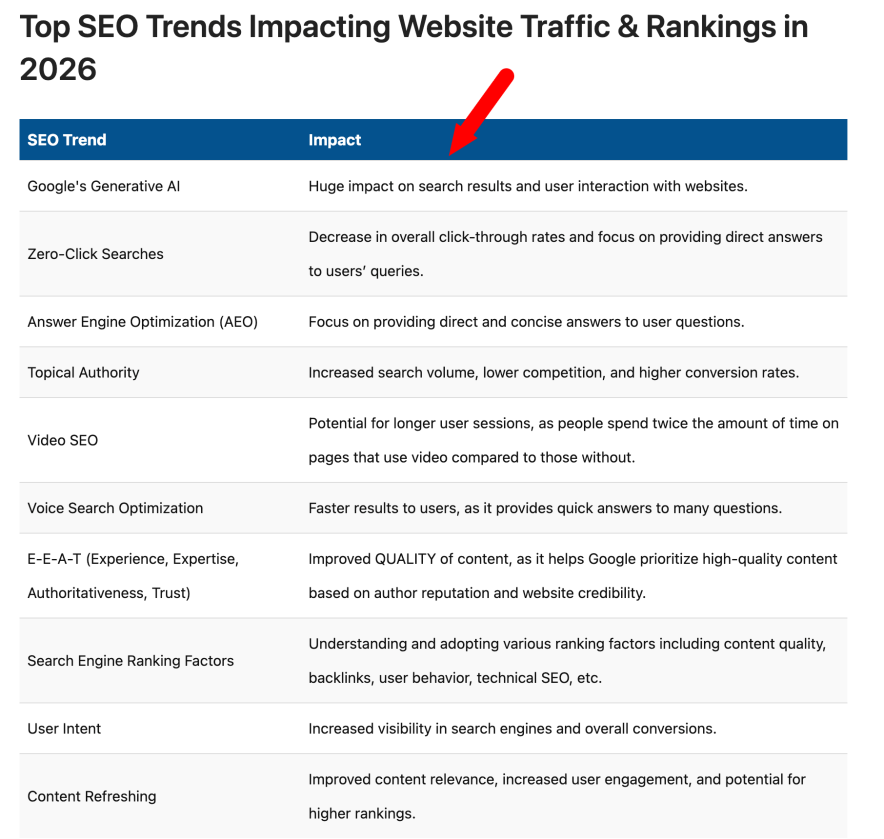
As an SEO professional, learn from the BEST. Some of the best websites to keep an eye on Google algorithms and latest SEO trends include;
- Search Engine Land
- Moz
- Search Engine Journal
- Search Engine Watch
- Search Engine Roundtable
10. Advanced Technical SEO (Indexing, Crawling & Performance)
If you want to build a career in SEO, you should give top priority to technical SEO.
Technical SEO involves improving the overall organic visibility of a website while offering a seamless user experience.
You should learn how to use and manage things like;
- robots.txt file
- Perform website audits
- Identify and fix website crawling issues
- Broken links
- Use the disavow tool to remove toxic links and so on
Here’s a nice illustration showing the different techniques involved in technical SEO.

11. SEO Strategy & Prioritization
Last but not least: as an SEO professional, you must learn how to prioritize certain SEO tasks.
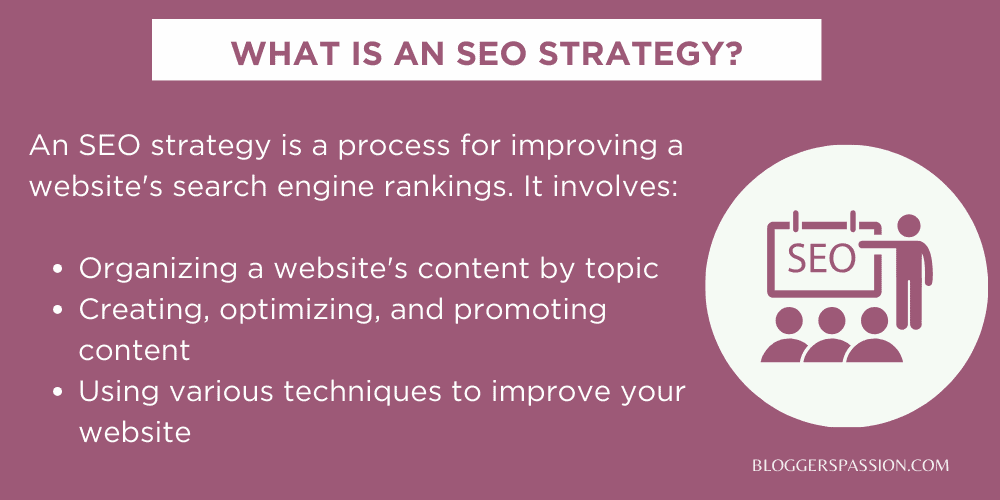
Identify tasks that will have the biggest impact. You should be able to use your resources on SEO activities that generate the highest return on investment.
For example, if your website takes a long time to load, it could negatively impact the overall user experience and search engine rankings.
By prioritizing your site’s speed optimization, you could have a greater impact on your overall SEO efforts than creating a few more blog posts.
FAQs on Skills Every SEO Expert Should Have in 2026
Here are some of the most commonly asked questions about basic SEO knowledge.
You need keyword research, content writing, basic technical SEO, competitor analysis, and the ability to use AI and SEO tools.
The four pillars are on-page SEO, off-page SEO, technical SEO, and content quality.
As an SEO professional, you’re responsible for improving the search traffic and organic visibility of a website. You’ll have to handle tasks like keyword research, technical SEO, PPC ads, content creation, link building, etc.
No, SEO doesn’t require coding skills. You can certainly become an SEO specialist without touching web coding. However, having basic knowledge in HTML, CSS, etc, certainly helps you make necessary changes to your pages whenever you want.
The four primary types of search engine optimization are on-page SEO, off-page SEO, technical SEO, and local SEO.
Final Thoughts | SEO Skills to Build Now
SEO skills are only confined by the limits of your own imagination. SEO is literally an ocean as there’s so much to learn as an SEO professional.
Wherever content can be created, there is a chance to use it toward your SEO advantage. Besides that, search engine optimization is a high-income skill, and the demand is only growing.
So what are your thoughts on the seo abilities mentioned here? Do you want to become an SEO expert? Have any questions? Let us know in the comments.
![How to Level Up Your Blogging Skills [2026 Complete Guide]](https://bloggerspassion.com/wp-content/uploads/2019/12/blogging-skills-300x157.jpg.webp)





Leave a Comment
Your email address will not be published. Required fields are marked *