Backlinks are the links that point to your website from other sites. These are often used as helpful sources in their content.
When trusted sites link to you, search engines see your content as more useful and reliable, which helps you rank higher.
In fact, top Google pages average 3.8x more backlinks than those lower down, and Google confirms they are a top-3 ranking factor.
But not all backlinks are healthy for your site. There are many types of backlinks, and some help your SEO while others can harm it.
In this guide on types of backlinks, you will see which links actually help your rankings, which ones are just “nice to have,” and which risky ones you should avoid so you can build a strong, safe backlink profile.
There are 4 main types of backlinks. These are:
- Do-follow Backlinks: Links that pass SEO authority (link juice) to your site.
- No-follow Backlinks: Links with a “no-follow” tag that don’t pass authority but can still drive traffic.
- Sponsored Backlinks: Paid links marked “sponsored” to show they are ads.
- UGC Backlinks: Links from user-generated content like comments or forums.
Table of Contents
- How Backlinks Impact Your SEO Performance in 2026
- The 4 Main Types of Backlinks and their Attributes (2026)
- 12 Backlink Varieties Based on Link Building Process in 2026
- Bad Backlink Types that Can Harm Your Site in 2026
- How to Build High-Quality Backlinks In 2026
- How to Track Your Backlink Profile in 2026
- Want to Get You Backlinks Audit?
- Conclusion
- FAQs
How Backlinks Impact Your SEO Performance in 2026
Backlinks act like votes from other websites, telling Google your site is genuine and worthy of ranking higher in search results.
The more quality backlinks you get from relevant, strong sites, the better your pages rank for your keywords.
Google sees a backlink as a recommendation. When an authority site links to you naturally, it passes “link juice” (some of its own strength) to your page. This increases your domain authority, helps pages rank faster, and even speeds up how quickly Google indexes new content.
Now, the quality of the links matters most. Studies show that sites with strong backlink profiles see up to 3.8 times higher rankings and jumps in organic traffic.
If you are getting one link from a high-quality site, it can beat others from the weak sites. Likewise, if bad links (spammy links) to your site can directly hurt your rankings and trigger penalties.
The 4 Main Types of Backlinks and their Attributes (2026)
Backlinks fall into four main categories based on their HTML attributes, which tell search engines how to handle them.
These main types are: do-follow backlinks, no-follow backlinks, sponsored backlinks, and UGC backlinks. These attributes directly affect whether the value or “credit” from a link is passed to your website, which in turn influences your search engine rankings.
Among these, do-follow links stand out as the most valuable because they work like a strong recommendation from one website to another.
Let’s take a look at each:
1. Do-Follow Backlinks
The most valuable links on websites are do-follow backlinks. They don’t have any special code telling search engines to ignore them. When another site links to yours this way, Google sees it as a vote of trust. Simply, as the other site points out, “This page is worth checking out.”
Here is how they work: Search engines crawl the web and follow these links from one page to another.
When they do, they pass some of the linking site’s authority, called “link juice,” to your page. This helps your site rank higher in search results, especially if the linking site has high authority.
The big plus with do-follow backlinks is better SEO and more traffic. Overall, they increase your site’s authority and make it easier to rank for different keywords. Plus, the visitors from such sites often stick around longer.
Benefits of Do-follow Backlinks
- Do-follow links pass SEO authority to your website, which helps in ranking higher on search engines.
- Quality do-follow links from trusted sites improve your site’s overall reputation and strength.
- Helps in increasing engagement as visitors click these links and come directly to your website.
- Do-follow links also help search engines discover and index your new content faster.
Example of do-follow Backlinks
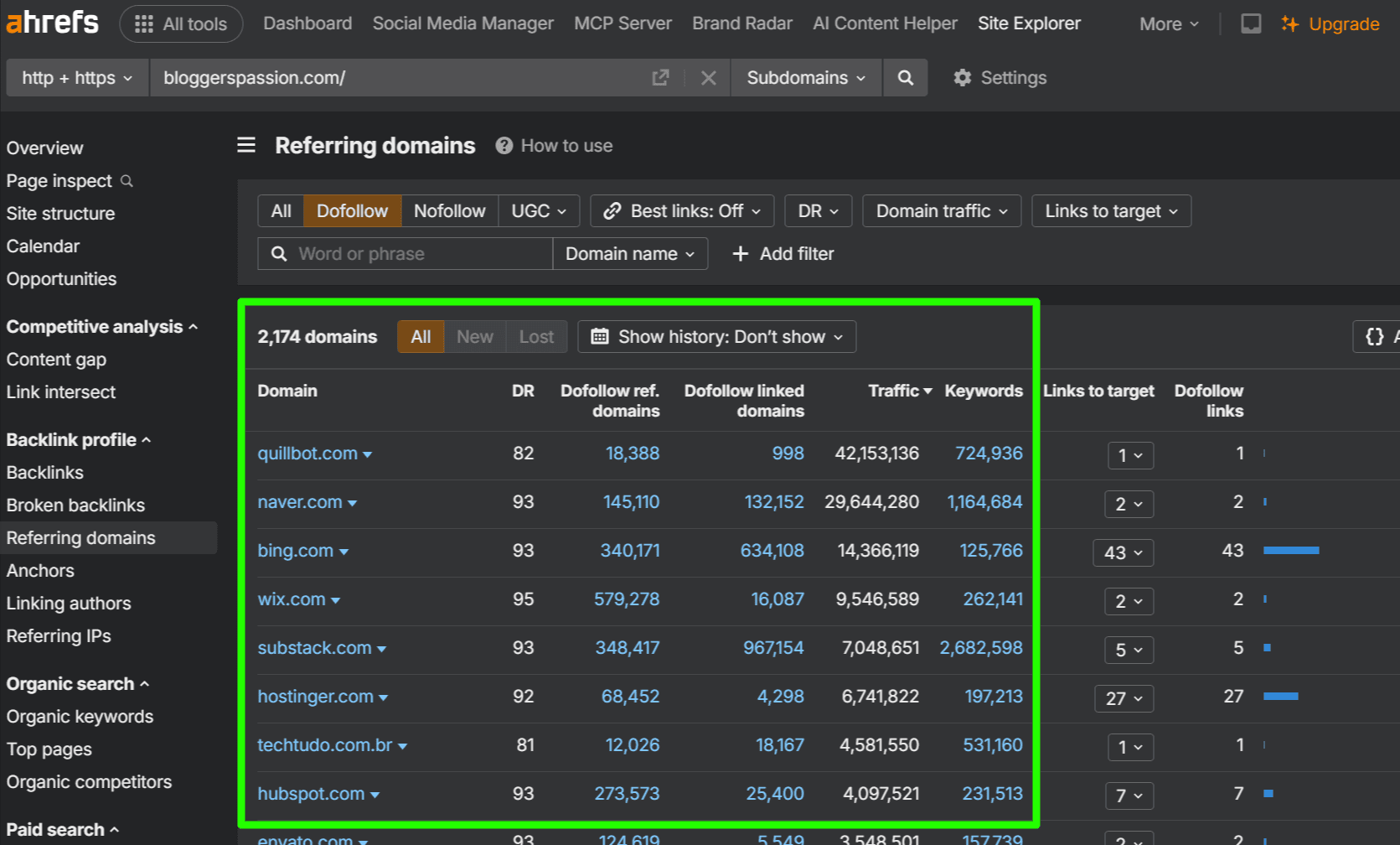
Initially, when my blog was just starting, I focused only on quality content and resourceful guides. This helped me gain the do-follow links naturally from the trusted sites.
I also wrote guest posts for popular SEO websites in my niche. In each article, I included a link back to my site. These do-follow backlinks from trusted sites helped boost my rankings and brought steady traffic.
Here is an example of do-follow links I have gained:
2. No-follow Backlinks
No-follow backlinks are hyperlinks with a special HTML tag called rel=”no-follow”. This tag tells search engines like Google not to follow the link or pass any authority or “link juice” from the linking site to yours. In short, it is a way for sites to link without giving you an SEO boost.
These links are useful when a site wants to link to another site but not boost its SEO ranking. Many blogs add no-follow tags to comments to prevent spammy links from directly improving rankings.
Sites use them when they want to share a link but do not endorse it fully or let it affect rankings. Google started requiring this for paid links too, to keep things honest.
While no-follow links don’t pass the usual SEO credit, they can still bring visitors to your site. Sometimes, Google may consider them as hints for ranking depending on the context, but they won’t have the same strong effect as do-follow links.
Benefits of No-Follow Backlinks
- Even though no-follow links don’t pass SEO authority, they still bring visitors who click to your site.
- These links expose your brand to new audiences and help gain recognition and trust.
- No-follow links reduce the risk of penalties because they don’t transfer authority.
- Sometimes, no-follow links from big sites can open doors to earning valuable do-follow links later.
Example of No-Follow Backlinks
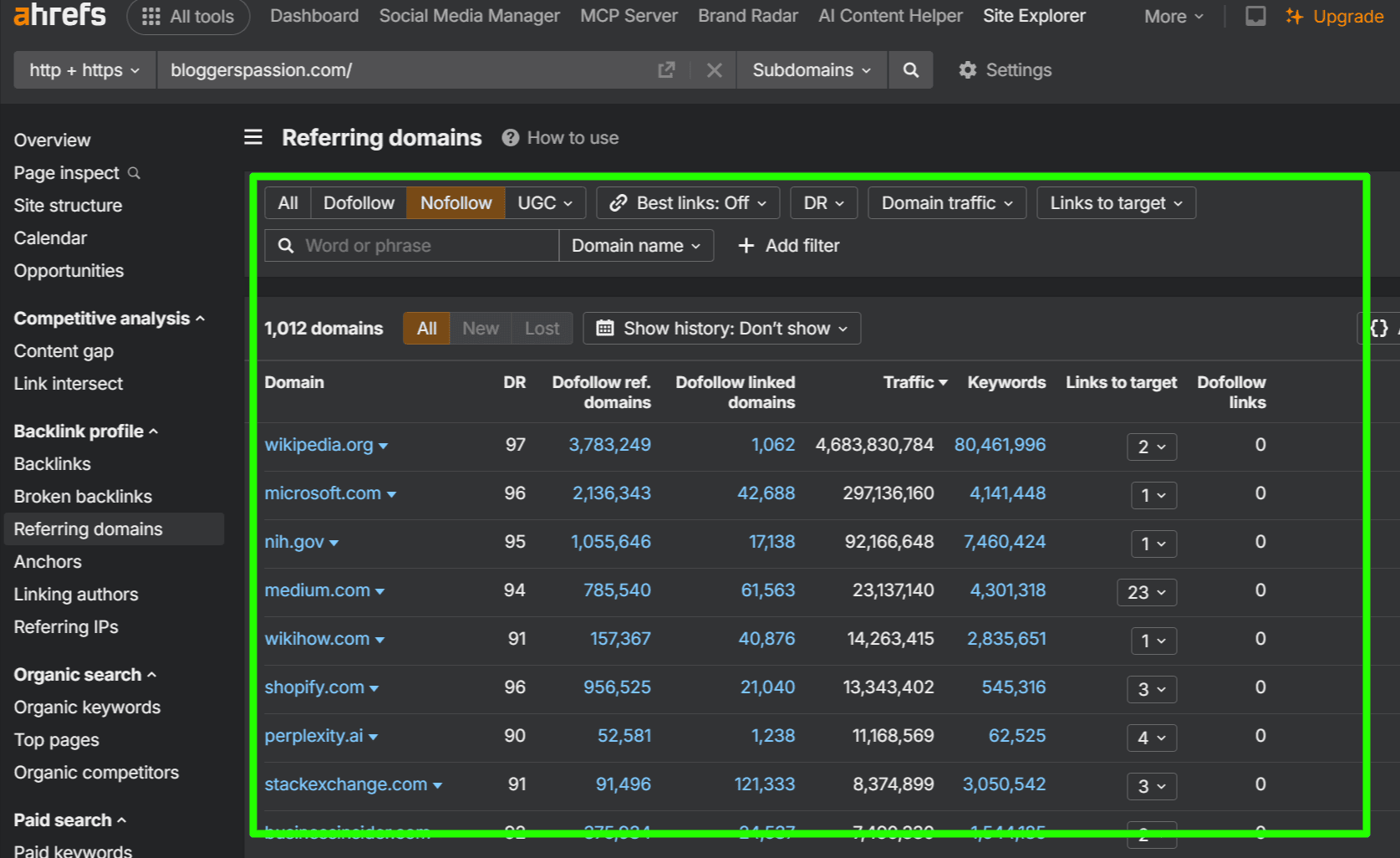
I receive no-follow backlinks every day. While these links don’t directly boost my rankings, they bring steady traffic and help build brand visibility.
Many visitors who find my content through no-follow links later link back with stronger do-follow backlinks, which do help my SEO grow.
Below is a screenshot of one of my No-follow links I received recently:
3. Sponsored Backlinks
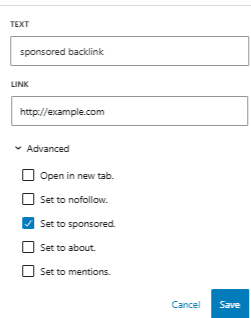
Sponsored backlinks are paid for, like those you get by paying another website to link to yours. They come with a special tag, “ rel=sponsored,” that tells Google that this is an ad and not a natural recommendation.
To put that simply, when you pay for one link, say, through a guest post or a link insertion on someone else’s site, Google knows it is sponsored and doesn’t pass authority. I.e., link juice to your page. This keeps things fair since it’s not earned through great content.
They still have value, though. Sponsored backlinks drive direct traffic from the linking site and build brand awareness, which can lead to real shares or searches later. Just don’t expect them to lift your SE rankings.
Benefits of Sponsored Backlinks
- Visitors from relevant sites click through to your content.
- Exposure on trusted platforms helps people recognize and trust your brand.
- It is safe from Google guidelines as they are properly tagged “sponsored”.
- High-quality placements attract potential customers ready to convert.
Example of Sponsored Backlinks
We do not sponsor backlinks on our site, nor have we built any, but here is an example of a sponsored backlink:
4. UGC Backlinks
UGC backlinks come from content that regular users create, like comments on blogs, forum posts, or product reviews. They carry a special tag called “rel=ugc” so Google knows the site owner didn’t add the link, but users did.
Suppose someone leaves a comment on a forum or reviews your product and drops a link to your site, that’s UGC. Google follows it but treats it differently from paid or owner-added links. It does not pass full authority like do-follow links, but it shows real user interest.
These links help in smaller ways. They can bring traffic from engaged users, add fresh signals to your site, and build trust if they are from relevant places.
Over time, they make your backlink profile look natural, which Google likes.
Benefits of UGC Backlinks
- UGC backlinks drive genuine traffic as users who create content naturally send interested visitors to your site.
- UGC backlinks build trust and social proof as real user links show authenticity.
- User content keeps visitors longer, which search engines notice positively.
Example of UGC Backlinks
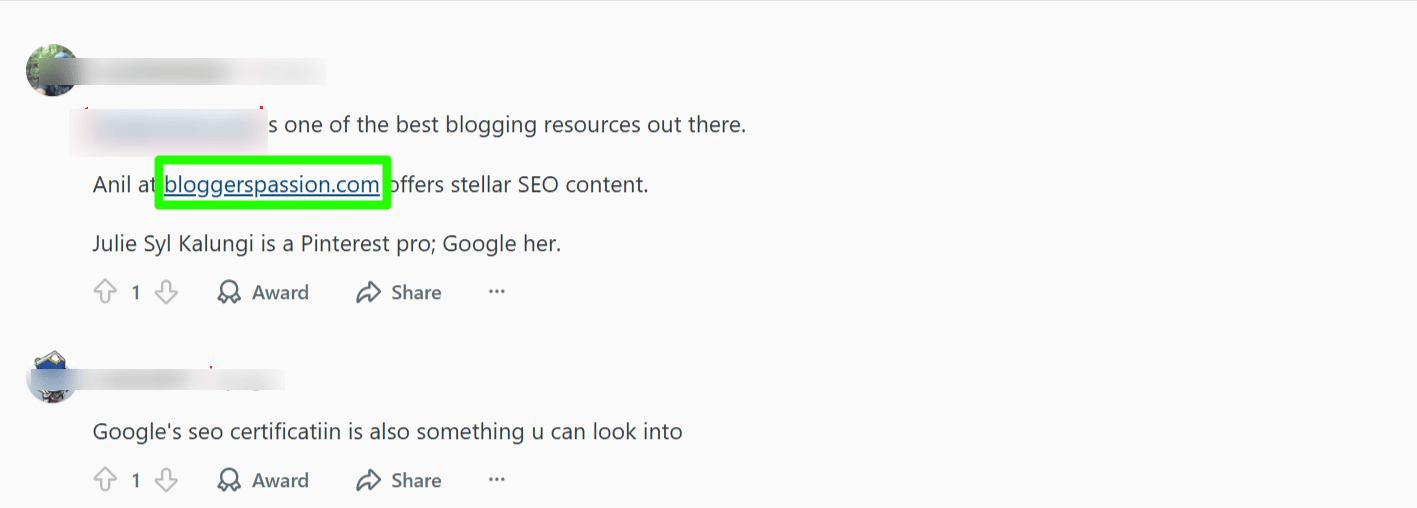
I receive UGC backlinks daily when readers comment on my blog posts or mention my content in forums like Reddit.
Here is one example of how I received a UGC backlink:
12 Backlink Varieties Based on Link Building Process in 2026
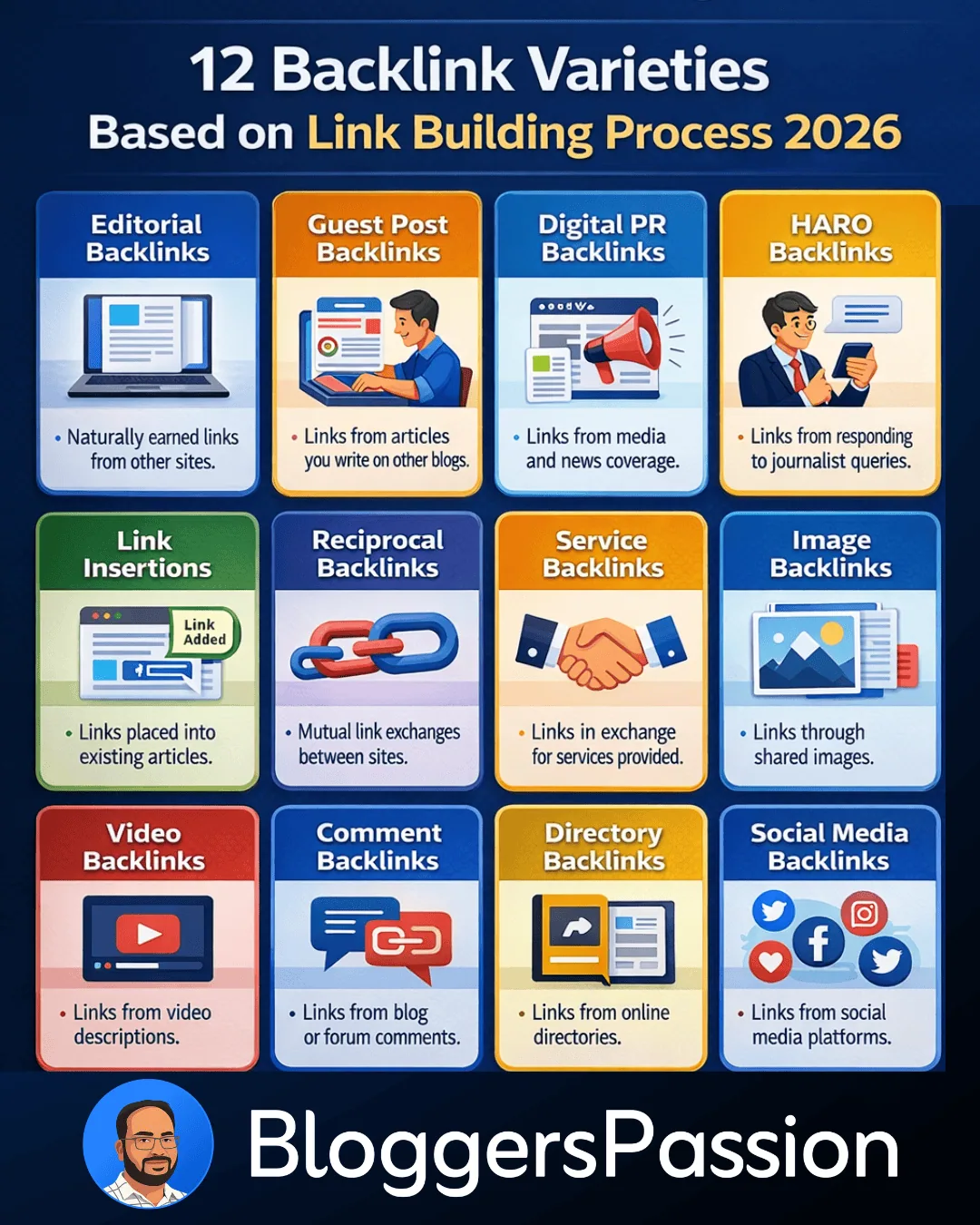
Beyond their HTML attributes, backlinks come in a wide variety depending on how you get them. These types of backlinks in SEO are grouped by building method.
Each has a different SEO value based on effort, relevance, and Google’s guidelines.
1. Editorial/Natural Backlinks
Editorial or natural backlinks are those that link to your site naturally (without you asking or paying). So when a writer from another website finds your content valuable and resourceful and mentions it in their post with a link, such links are known as Natural backlinks.
In simple words, it is like someone recommending your article in their own post because they genuinely liked it.
There is no deal, no link exchange, and no sponsorship behind it. That is why search engines treat these links as strong signals of trust and authority.
These backlinks are usually hyperlinked to the relevant text and the anchor text that makes sense in the sentence.
This natural placement tells search engines that the link is there to help readers, not to game the algorithm.
2. Guest Post Backlinks
Guest post backlinks are the links you get by writing an article for someone else’s website and, in return, they link back to your site inside that article.
So basically, you are borrowing their audience and authority in exchange for giving them free and useful content.
To simply explain, you find a relevant site in your niche, pitch them a topic, and write a helpful post in their blog. In your author bio or naturally inside the content, you include one or two links to your website. When the blog goes live, those links become guest post backlinks pointing to your pages.
3. Digital PR Backlinks
Digital PR backlinks come from news sites, blogs, or media outlets that mention your brand or content after you pitch a story through public relations efforts.
Let’s say you create something newsworthy, like a survey or expert quote, you pitch it to journalists, and they use it in their posts linking back to your site as a source.
Here’s how it works in plain terms. Instead of cold emailing for links, you build relationships with reporters by offering unique data, insights, or interviews that fit their articles.
When they publish and include your link, it is seen as earned coverage, not a paid placement, which makes it valuable for SEO. These backlinks carry weight because they often come from high-authority sites like Forbes or BBC.
4. HARO Backlinks
HARO stands for “Help a Reporter Out.” It’s a free platform where journalists, bloggers, and writers post queries asking for expert quotes, stats, or insights on specific topics.
You sign up as a source, get daily emails with these queries, and pitch a quick, helpful response with your expertise and if they like it, they include your quote and a link to your site in their article.
These backlinks pack a punch for SEO because they come from trusted publications, pass good authority, build your expert status, and drive traffic from readers. They are earned through value, not payment, so Google views them positively in your profile.
5. Link Insertions
Link insertion backlinks happen when you get your link added into someone else’s already-published article, instead of writing a whole new post.
You reach out to a site with relevant existing content, suggest where your link fits naturally, and they insert it, often for a fee.
Such types of backlinks work well, as the content you are going to put the link into is already indexed by Google. So when your link is inserted, the link juice flows faster.
So if you are looking to build a good backlink profile faster and increase your authority, link insertion is the best option to go with.
6. Reciprocal Backlinks
Reciprocal backlinks happen when two sites agree to link to each other. I have been using this strategy to build my backlink profile naturally and without paying.
To explain in simple format, site A adds a link to site B, and site B links back to site A. It is a straightforward way to help both sides.
All you need to do is contact another site owner in a related niche to yours and propose the exchange. If both agree, it is a win-win situation.
They offer some SEO value if the partner site has good authority and matches your topic, sending visitors and a bit of link juice. But Google watches for overuse, as too many look manipulative and can hurt rankings. So keep them limited to genuine partners.
7. Links Received in exchange for a service
Links received in exchange for a service, also called service-based or barter backlinks, happen when you provide something valuable like free work, a tool, or expertise, to another site, and they link to yours as thanks or credit.
It’s a fair trade. You might offer a free design, consultation, or beta access to your software. In return, they add your link to their site, often in a review, resource list, or shoutout.
No cash changes hands, just mutual benefit.
8. Image Backlinks
When a website uses one of your images like an infographic or any other graphic from your site, and links it back to your site as the source or credit, then such links are known as Image backlinks.
Instead of a text link, the clickable image itself points to your page.
From the SEO point of view, these backlinks are helpful for passing the authority from the host site, especially if it is relevant and trusted.
They also help your images rank in Google Image Search, drive referral clicks, and make your content more shareable across blogs or Pinterest.
9. Video Backlinks
Video backlinks are links that come from videos, especially those hosted on platforms like YouTube, Vimeo, or embedded in blog posts.
These backlinks typically appear in the video description, comments, or within the content where the video is embedded, which directs viewers to your website.
Because videos are engaging and often rank well on search engines, a backlink through a video can bring targeted visitors interested in your topic.
10. Comment Backlinks
Comment backlinks are those you get by leaving a comment on someone else’s blog, article or forum post that includes a link back to your website.
So when you find a blog post related to your niche, you can leave a thoughtful comment that contributes to the topic. If appropriate and allowed, you can include a link to a relevant page on your site. This link is called a comment backlink.
While comment backlinks usually don’t pass as much SEO authority as other types of backlinks (many are “no-follow”), they can still drive traffic, build your reputation, and help you connect with blog owners and readers.
11. Directory Backlinks
Directory backlinks come from online directories. For these backlinks, you submit your site details like name, URL, and description, and if approved, they add a link back to your homepage or a specific page.
All you need to do is look for the reputable directories in your niche, like local business listings or industry-specific ones, and fill out the submission form. Once done, they will review your application manually and get back to you.
Quality directories organize sites neatly and only accept relevant, legitimate businesses to keep their own standards high.
Social media backlinks are links from platforms like Facebook, Twitter (X), LinkedIn, Instagram, or Pinterest that point back to your website.
They show up in posts, profiles, bios, or shared content, sending users directly to your pages.
When you share a blog post or add your site URL to your social media profile, it creates a backlink.
Most are “no-follow,” meaning they don’t pass full SEO authority to your site as do-follow links do. But Google still notices them as signals of popularity.
Bad Backlink Types that Can Harm Your Site in 2026
Certain backlinks look tempting but can damage your SEO by triggering Google penalties, lowering rankings, or associating your site with spam.
These toxic types violate guidelines and create unnatural patterns that algorithms like Penguin detect easily.
Here are a few bad backlinks that you should avoid:
Paid do-follow Backlinks
Paid do-follow backlinks happen when you buy links from another site that pass full SEO authority without proper tags like “no-follow” or “sponsored.” Google sees this as a manipulation to game rankings, directly against their webmaster rules.
While it might bring a short-term boost, the risk of penalty and loss of trust far outweighs the gain.
The harm hits hard. The problem is that many paid do-follow links come from low-quality or unrelated sites that are not trustworthy. Google can detect this and may penalize your website by lowering your rankings or even removing your site from search results for link schemes.
Spammy Comment Links
Spammy comment links are low-quality links dropped in blog comments, forums, or social posts that have nothing to do with the conversation.
Bots or people leave generic remarks like “Great post!” just to sneak in a link to their site, hoping for a quick SEO boost.
These links rarely add value. They are often irrelevant, repetitive, or from shady sites. Most blogs mark them “no-follow” so they don’t pass authority, but a flood of them makes your backlink profile look unnatural to Google, which can drop your rankings or hit you with penalties.
The real damage comes from bad associations. Google spots patterns of spam comments and assumes your site is part of the scheme, hurting trust and traffic. Plus, they clutter comment sections, turning off readers.
The links that are placed inside widgets, small apps, or tools embedded on websites are known as hidden widget backlinks. These are either invisible or disguised to visitors, but still picked up by search engines.
These backlinks are considered bad because they are not placed editorially or naturally by the site owner.
They are often loaded with keyword-rich anchor text and embedded across many websites without proper disclosure, making them a form of link scheme.
Google treats this as a violation of its guidelines and can penalize sites using or hosting them.
To avoid harm, ensure that any widgets your site uses or creates do not contain hidden links. If links are necessary, they should be clearly visible and marked “no-follow” or “sponsored” to follow Google’s rules.
How to Build High-Quality Backlinks In 2026
High-quality links are only those that you get naturally from trusted websites.
A few years back, SEO and overall website health were focused on quantity. But today, SEO completely relies on the GOOD quality and relevance of the backlinks.
Here’s a detailed guide on how you can build strong backlinks that Google trusts:
Create EEAT-focused content:
The most basic and must-do step is to have content that has value and quality. Readers and even Google love content that has true and genuine information and solves the complete user intent.
So, having content that fulfills the Google EEAT guidelines is the most important step to gain good backlinks. Otherwise, no strong site would want to like your page on their site.
So make sure you write well-researched and well-formatted content, as it naturally attracts healthy backlinks.
Next, when you start attracting backlinks, check whether these are related to your niche. There is no point in having a link to a food blog if you run an SEO blog.
So yes, links that you gain from sites that are closely related to your niche carry more weight.
Even if you are guest posting, make sure you do that for the sites that are relevant to your niche.
Note: Use tools like Moz, Ahrefs, or Semrush to find websites with good domain authority (DA) and make sure their content quality is high.
Earn links naturally through outreach and relationships
The next strategy to build a good link is to reach out to other websites.
You can directly reach out to the other bloggers, journalists, and websites for the link exchange. Guest posting is also a good option to get strong links.
Pitch your website and expertise into the blogging and collaborate on content with them. This will lead to natural backlinks, and such backlinks are highly trusted by search engines.
Use diverse link-building strategies
Don’t rely on just one way to get links.
You can also try digital PR, answering questions with HARO, offering helpful resources, and fixing broken links on relevant sites. A diverse backlink profile looks more natural to Google.
Choose quality over quantity
A single backlink from a high-authority website often has more impact than dozens from low-quality sites.
Avoid link farms, paid do-follow links without no-follow or sponsored tags, or spammy comment backlinks that can cause penalties.
You might even get a do-follow backlink from a site that is not really relevant to your site or is spammy. Such sites must be disavowed in a timely manner.
Focus on natural anchor text
Anchor text is the clickable text in a hyperlink.
As Google suggested, anchor text matters most when you insert a link in a post.
So make sure you keep it natural and varied. You can use your brand name, generic terms, and relevant keywords sparingly.
Overdoing exact-match keywords can look manipulative and hurt your rankings.
Backlinks placed within the content of blog posts or articles carry more SEO value than links buried in sidebars or footers.
They seem more editorial and relevant, helping Google better understand the connection.
How to Track Your Backlink Profile in 2026
You will need a backlink analysis that will help you to understand who’s linking to you, if those links are good or bad, and how your SEO is changing.
Don’t worry, it is simple with free tools. Here’s a beginner-friendly guide using the ones you mentioned.
1. Google Search Console
Start here! It is free from Google and shows exactly what they see.
All you need to do is verify your site (add a tag to your homepage), then go to “Links” in the left menu.
You will see top linking sites, anchor text (the words people click), and new/lost links over time. Filter for do-follow links or one per domain to spot patterns. It is basic but accurate for your own site, no competitor spying, though.
2. Ahrefs free web master
Ahrefs free web master tool is another great way to keep an eye on your backlinks. After the search console, I trust Ahrefs free web master tool because it offers deeper insights into your backlinks.
Its Backlink Checker helps you see all the sites linking to yours and provides valuable insights about each link.
You can view the domain rating (which shows how strong the linking site is), the number of backlinks, anchor texts (the clickable text of links), and discover if any links might be harmful to your SEO.
The reason I like this tool is it is great at identifying toxic or spammy links that could hurt your rankings, so you know when to take action, like disavowing those links.
3. Semrush Backlinks Checker
Semrush is also a great tool that will help you analyze your backlinks.
It shows you the total number of backlinks, referring domains, and authority scores, giving you a clear picture of your site’s link strength. Semrush highlights the ratio of do-follow to no-follow links. This helps you know how much SEO value your backlinks pass.
Semrush also identifies potentially toxic backlinks so you can avoid penalties.
Want to Get You Backlinks Audit?
Check below and sign up for a free Semrush account that will allow you to get free account access for the next 14 days.
Try NowQuick tip: Check monthly. If rankings drop, audit for spam (low DR sites, weird anchors). Tools like these capture 80-90% of links and combine them to provide the full picture. For example, GSC flags a new spam wave on your “types of backlinks” page; Ahrefs confirms low DR; Semrush shows toxicity, you disavow and recover fast.
Conclusion
So there you have it!
All I can say is, focus on earning quality backlinks like editorial or guest posts from the sites that are related to your niche.
Don’t fall for any paid or spammy link types that can tank your rankings.
Also, make sure you use tools like GSC, Ahrefs, or Semrush so that you can keep watch on spammy links and avoid penalties.
What is your strategy for building backlinks to your website?
Let us know in the comments section below.
FAQs
What are the types of backlinks in SEO?
There are four main types of backlinks based on their attributes. These are do-follow (pass SEO value), no-follow (don’t pass value), sponsored, and UGC backlinks.
What are spammy links?
Spammy links are low-quality, manipulative ones from automated tools, irrelevant directories, or comment spam that violate guidelines and risk penalties.
How to create backlinks?
You can create backlinks through offering quality content, guest posting, HARO responding, and with UGC on forums and social media, while focusing on relevance.
What are do-follow backlinks?
Do-follow backlinks are standard hyperlinks without no-follow attributes that pass full link equity and authority to boost your SEO rankings.
How to build a good backlink profile?
You can build a good backlink profile by earning natural, high-quality do-follow links from relevant and diverse sites via content creation and outreach.


![Toxic Backlinks: How to Find, Remove, and Disavow Them in 2026 [A Beginner's Guide]](https://bloggerspassion.com/wp-content/uploads/2019/02/the-effect-of-bad-backlinks-and-how-to-remove-them.webp)