


Keyword research for a website in 2026 remains simple. People made it complex.
But I am not.
No matter whether you are a beginner or an advanced user, successful SEO keyword research will only be possible when it is data-based.
Isn’t it?
In this guide, I am going to show you a keyword research strategy that lets you optimize your content for both traditional SEO and AI-driven (GEO) answers.
This process helps you identify relevant keywords so your content appears in responses from LLM Models such as:
- ChatGPT
- Gemini
- Google AI Overviews
That is the primary goal for 2026.
I use a specific SEO tool for this entire workflow to ensure every move is backed by data. You can use this same tool for free.
Table of Contents
- Step 1: Find a Primary or Focus Keyword
- Step 2: Find Secondary Keywords
- Step 3: Steal Keywords from Top Ranking Competitors
- Step 4: Finalize the Final Set of Keywords
- Step 5: How to Incorporate Keywords into Your Site for the Best Results
- Use the most advanced keyword research technique: the alphabet soup
- Final words: Do keywords matter in SEO in 2026?
- FAQs:
Step 1: Find a Primary or Focus Keyword

Seed keyword generally describes your main topic.
Based on it, you have to figure out the “Primary” or “Focus” Keyword.
My seed keyword is “Keyword Research,” and I finalized the primary keyword: “How to Do Keyword Research.”
Let me show you how and why I finalized it.
In 2026, AI models and LLMs generate responses based on long-tail, question-based, or natural-conversation keywords.
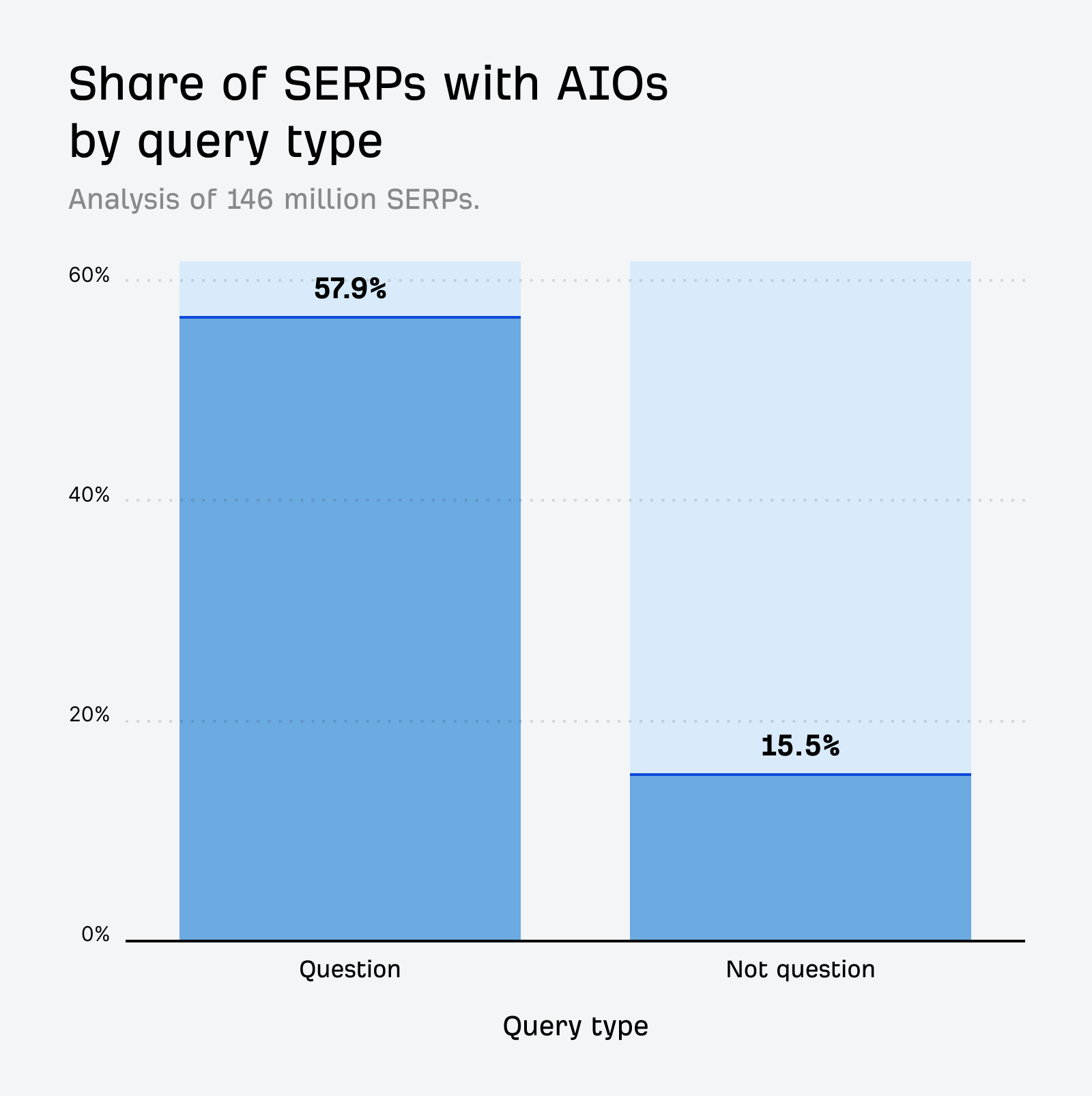
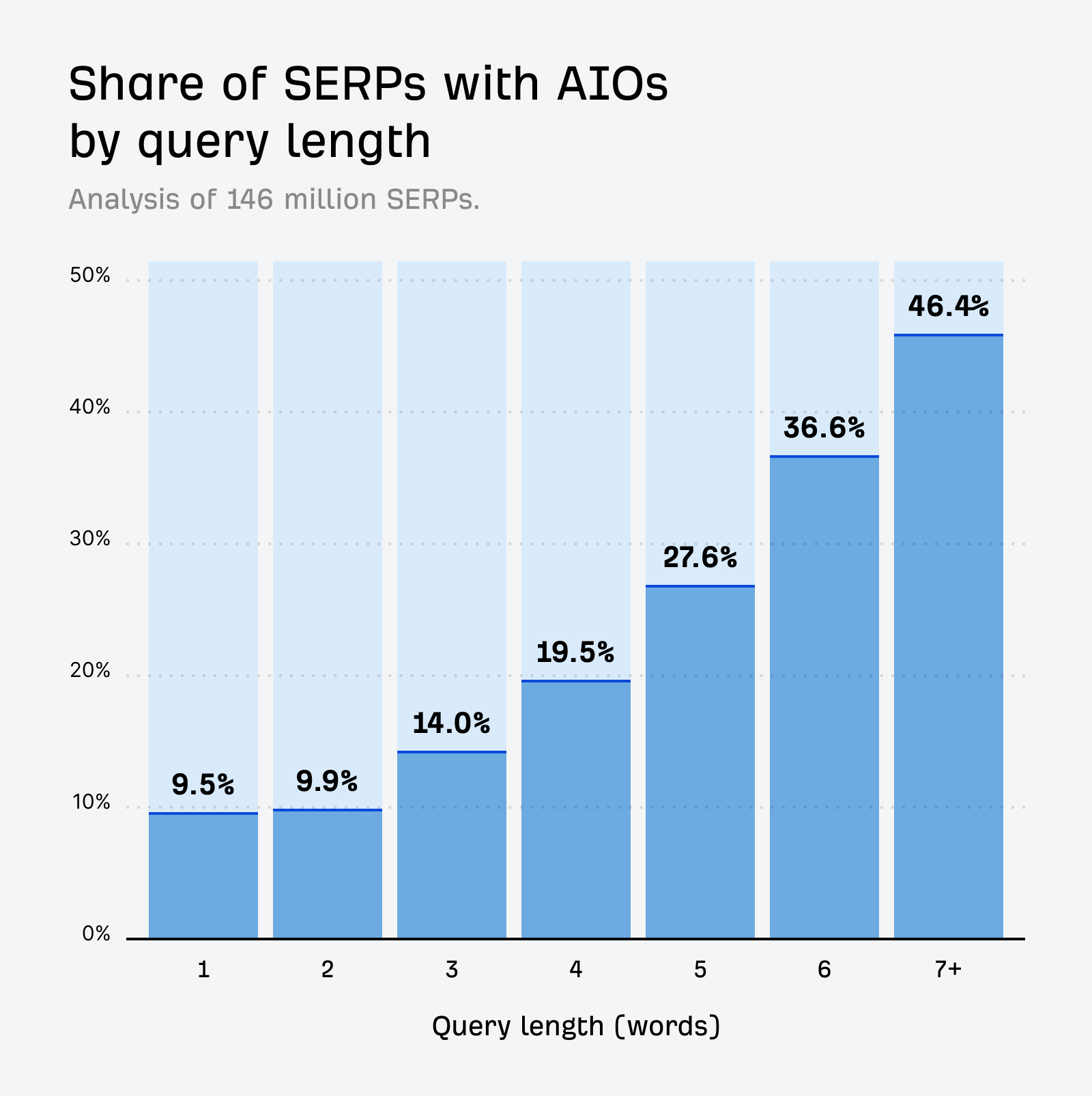
The good news is that these keywords usually have lower competition. You can rank for them easily.
While finding these, you must pay close attention to Keyword Difficulty (KD), Keyword Intent, and SERP features.
To find your primary keyword, you can use any of the following methods.
Using Google Search Console:
If your site is already linked to GSC, you can discover valuable keywords you are already starting to appear for.
Open your GSC dashboard and head to the performance section. Set your data view to the last 6 months.
Scroll down to the queries section and click on Impressions. This sorts your queries by impressions in descending order.
To narrow it down, add a query filter for your specific topic and include a seed keyword.
For example, I put the keyword “Keyword Research”, then Google Search Console gives me this data:
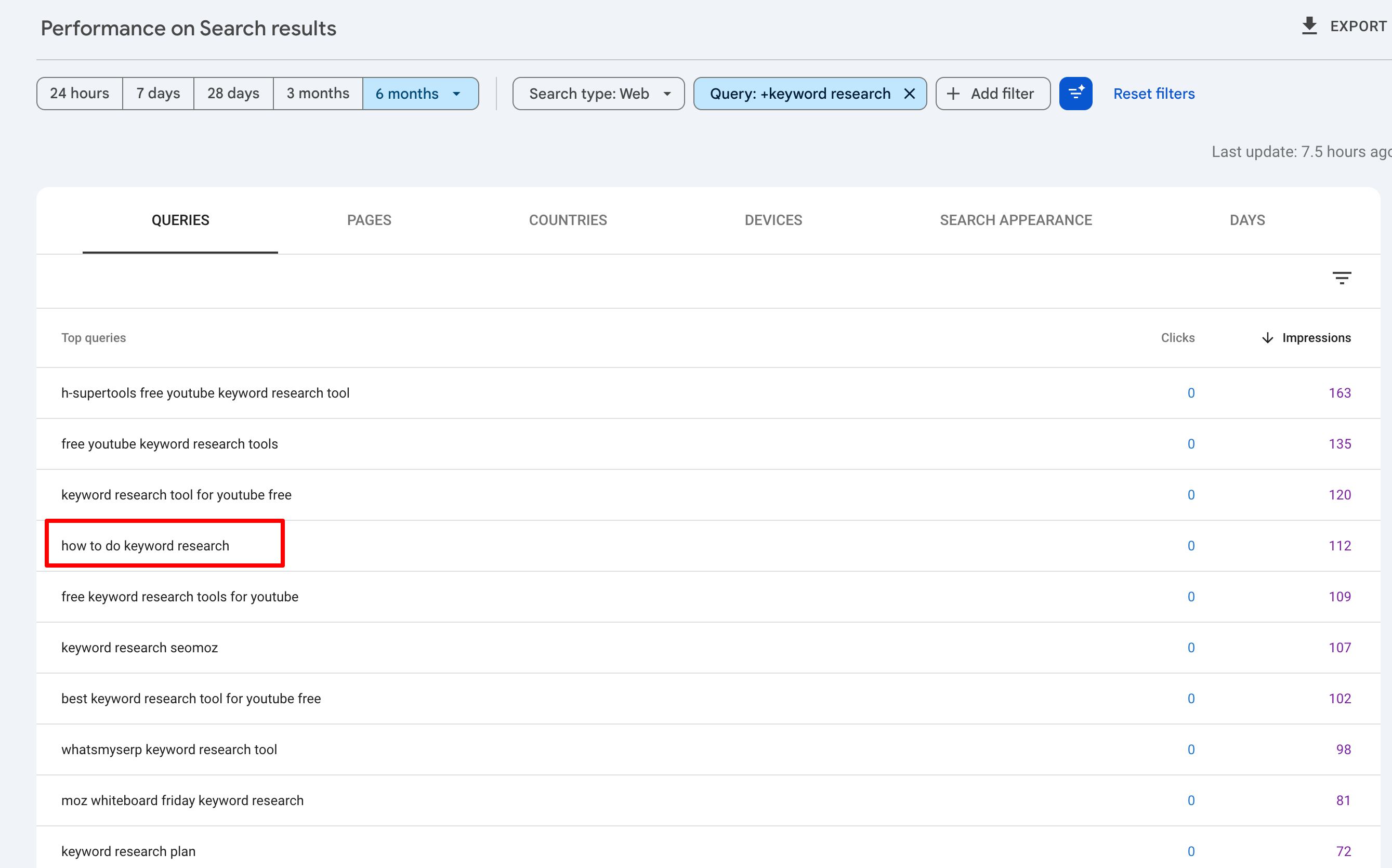
From this list, look for long-tail keywords that you can build dedicated content around.
Using a Keyword Research Tool:
Using a dedicated tool ensures your strategy is backed by hard data rather than intuition.
I have been using the Semrush tool for 10+ years for all kinds of SEO needs, including Keyword Research. You can use any tool. Some of the popular names include Ahrefs, SE Ranking, etc.
Most of these offer trials, so you can test them without paying the initial cost.
Anyway, back to the main.
When you open the SEO tool, you just need to head over to the Keyword Magic tool and enter your topic or a seed keyword. In my case that is “Keyword Research”.
Now it gives me dozens of keywords.
I could choose the first keyword with an 86 KD and 27k monthly volume.
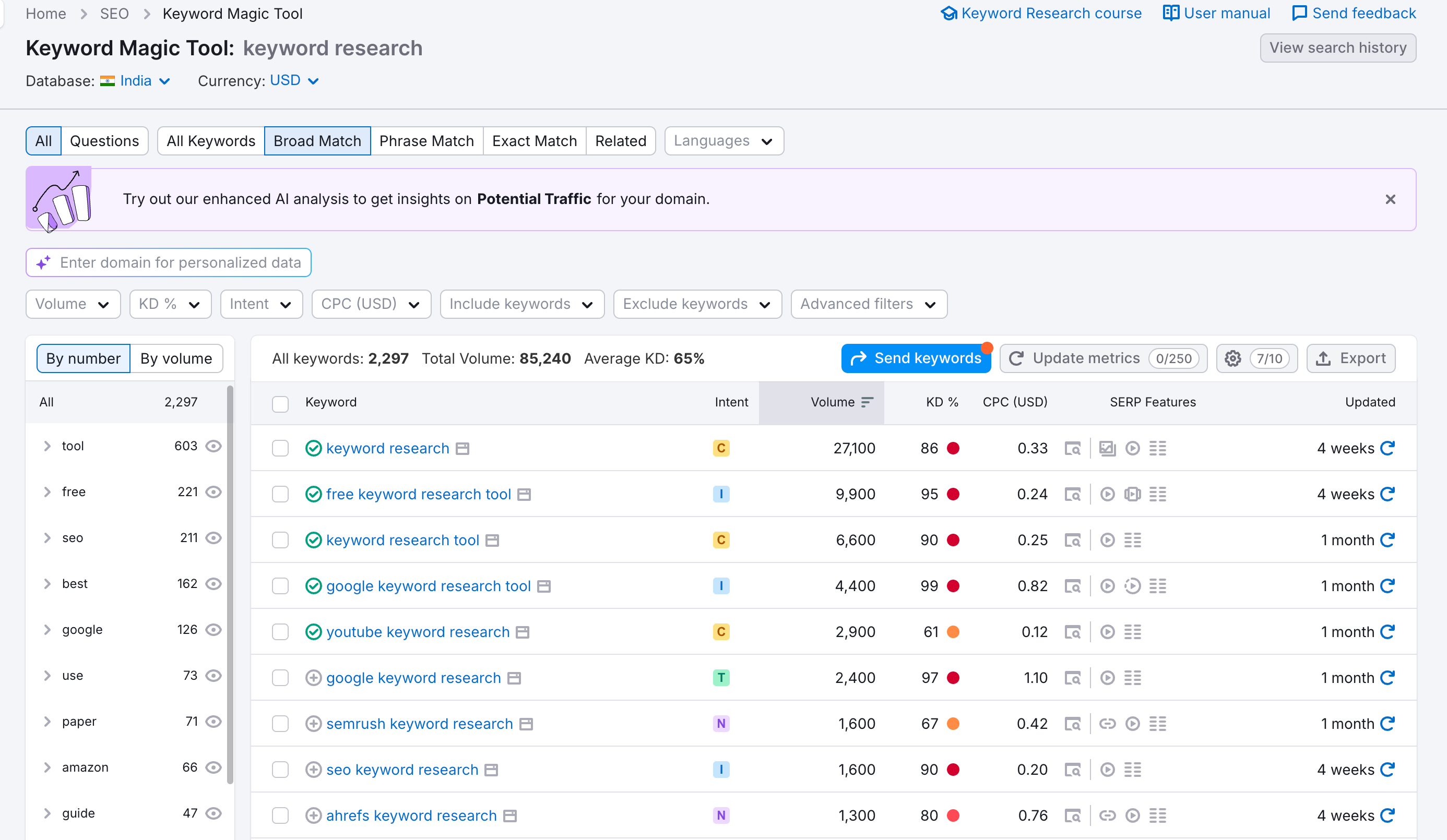
But I won’t.
I have to apply filters. My goal is to pick a primary keyword that is either a long- tail or a question. They are more likely to be picked up by AI LLMs.
Applying Filters:
- Word count: Input 3 or 4.
- SERP features: Select “Featured Snippet” and “AI Overview.”
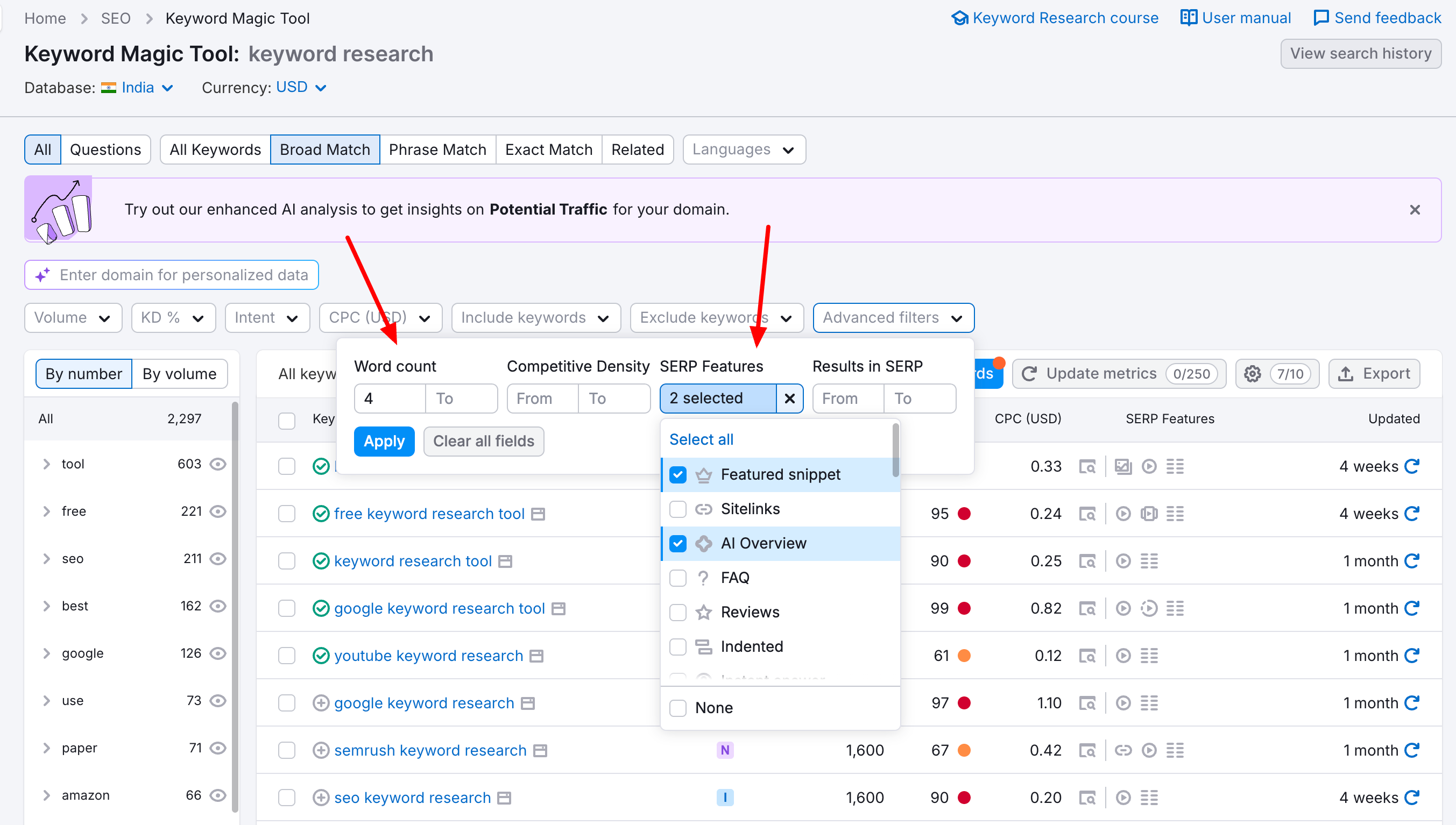
This identifies long-tail keywords that appear in Google’s AI mode.
Once the filters are applied, the next thing you have to look at is “Keyword Intent”.
I want to target an informational keyword.
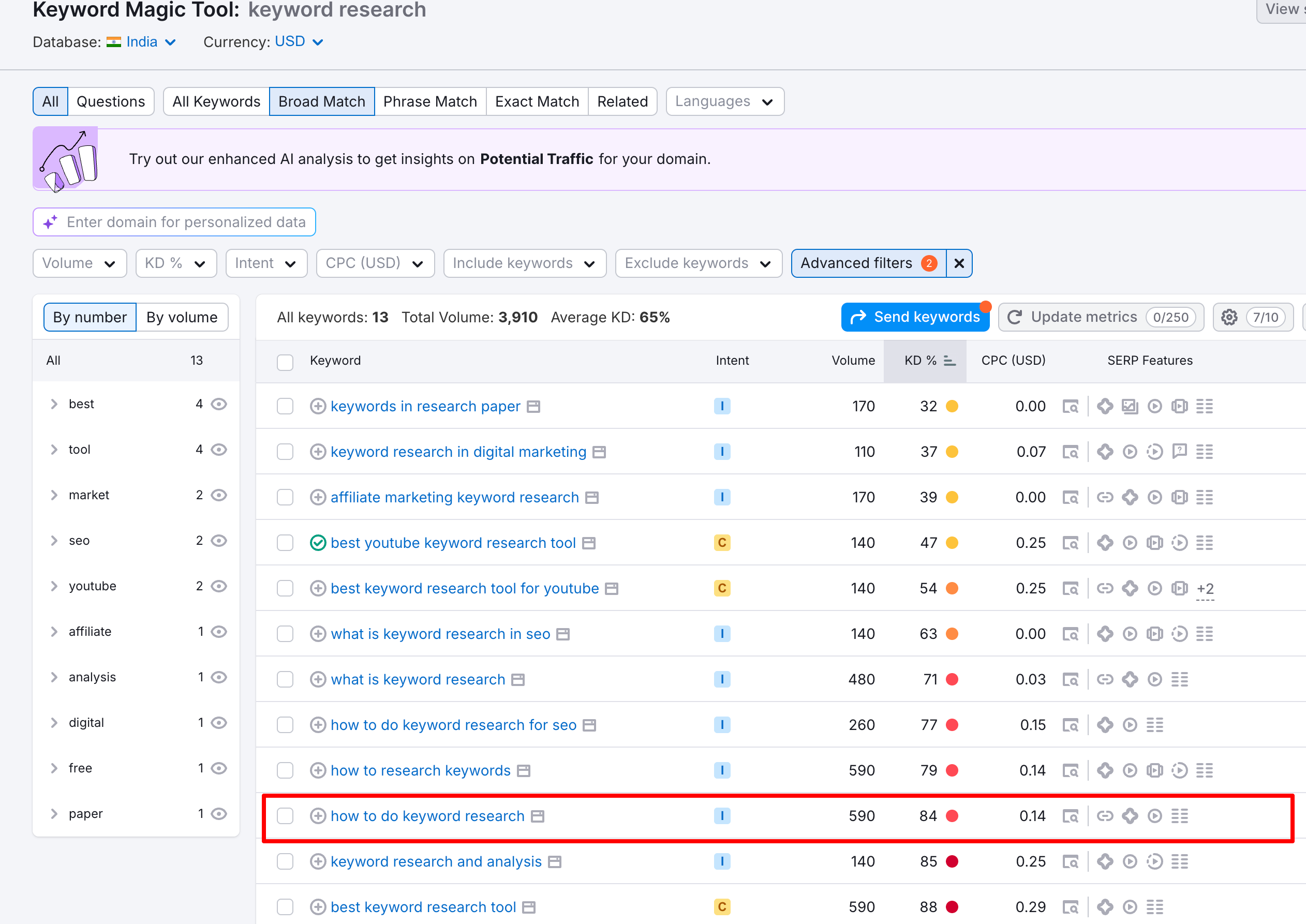
But yours could be different. That’s why you have to decide the intent first from the 4 following ones: Informational, Navigational, Commercial, Transactional.
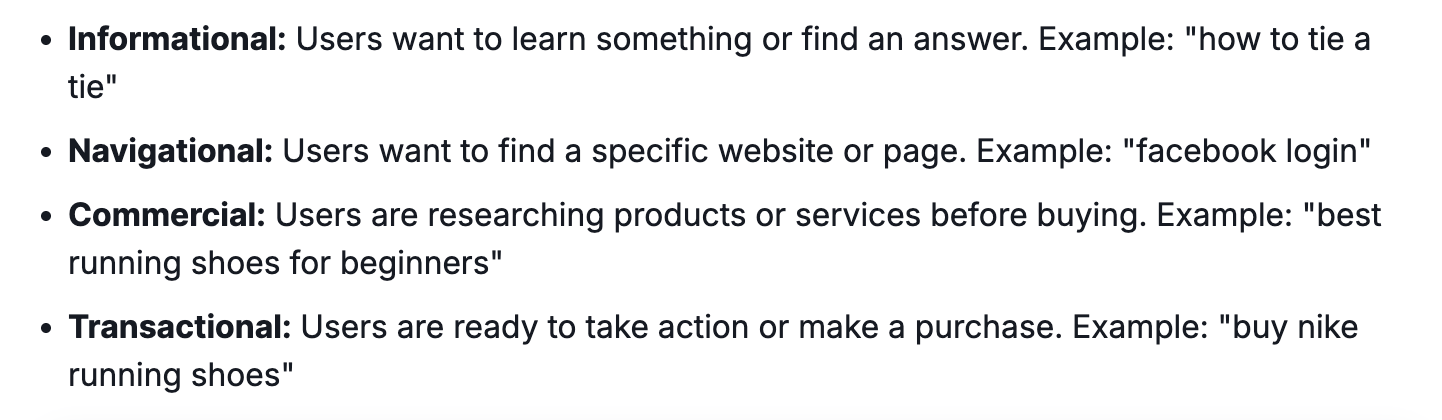
The next thing I have to check is Search volume and KD. Based on my long SEO experience, pick a keyword with at least 1,000 search volume.
If your site is new, aim for a KD below 30. In my specific case, competition is high, and nothing is below 30. I am taking a risk by relying on content quality and backlinks to gain rankings.
My keyword is not final yet.
I open the keyword in the Keyword Overview report to manually verify the metrics.
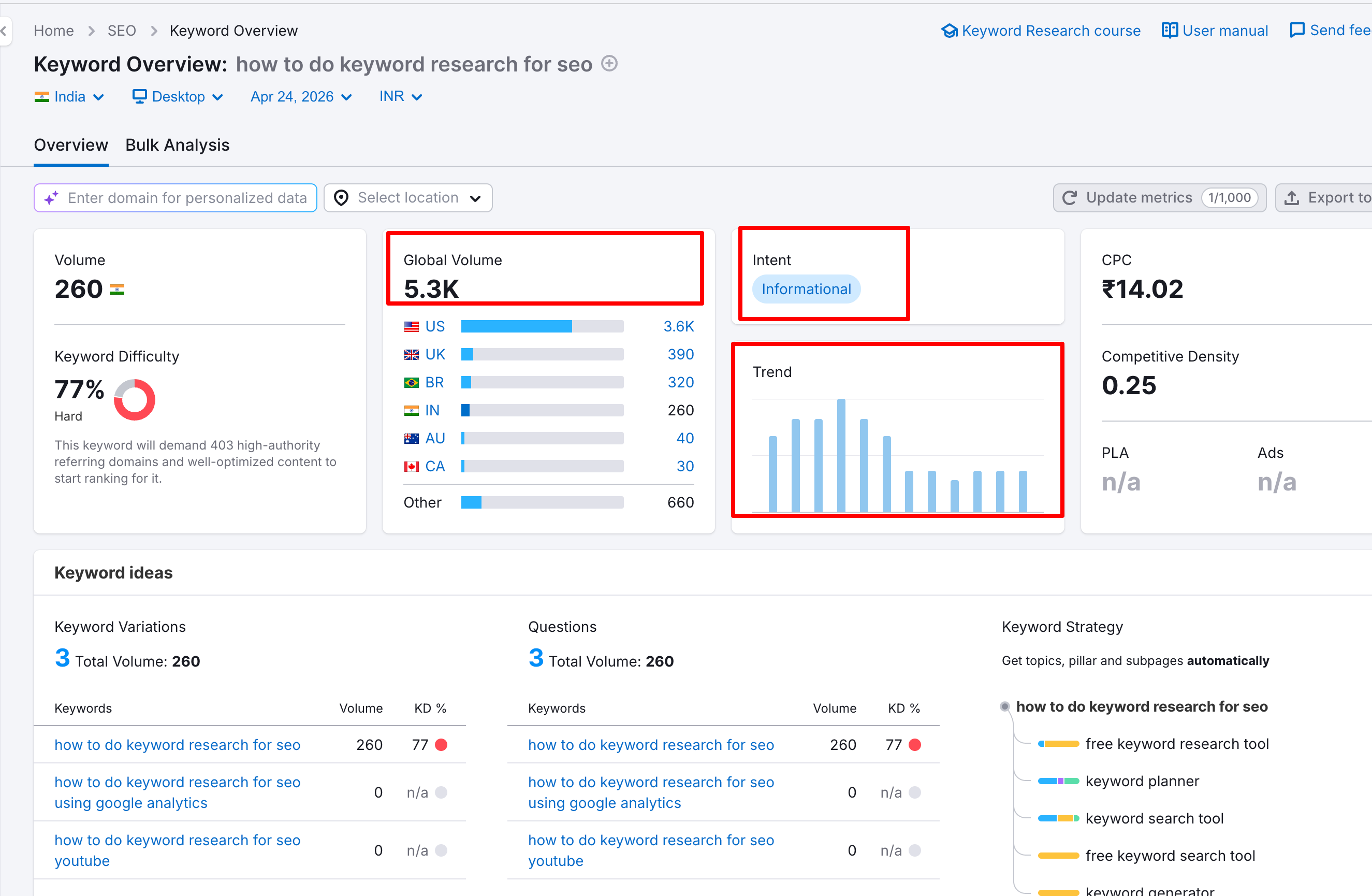
- The global volume for my selected keyword is 5.3k (The minimum I need is 1000)
- The intent is Informational as per my requirement
- The trend looks positive.
Finally, I searched for the keyword in an incognito window. Since blogs appear in the results, the informational intent is confirmed.

I am now ready to finalize this primary keyword.
How to Research Keywords Using Forums:
If you don’t find a keyword using the methods above, explore forums and social media. Go to a forum like Reddit and enter your topic.

If your audience is on Reddit, they are asking questions and having discussions. You will easily find long-tail and conversational keywords there.
Take these keywords one by one and verify them in your SEO tool using the metrics mentioned earlier.
If all seems good, you should find your primary keyword here.
In fact, forums are a goldmine to find hidden topics and content ideas in your niche that people are asking.
You can either create separate content or put some ideas in your content outline.
Do not use AI:
You might consider asking ChatGPT or Gemini to generate a list of keywords.
This is a waste of time.
Because they are AI tools, and they don’t have keyword data like SEO tools have.
They give you a list, but don’t provide any metrics like we find using a tool in the above step.
Step 2: Find Secondary Keywords
At this stage, you should have your Keyword research template ready as we prepare to fill it with secondary keywords.
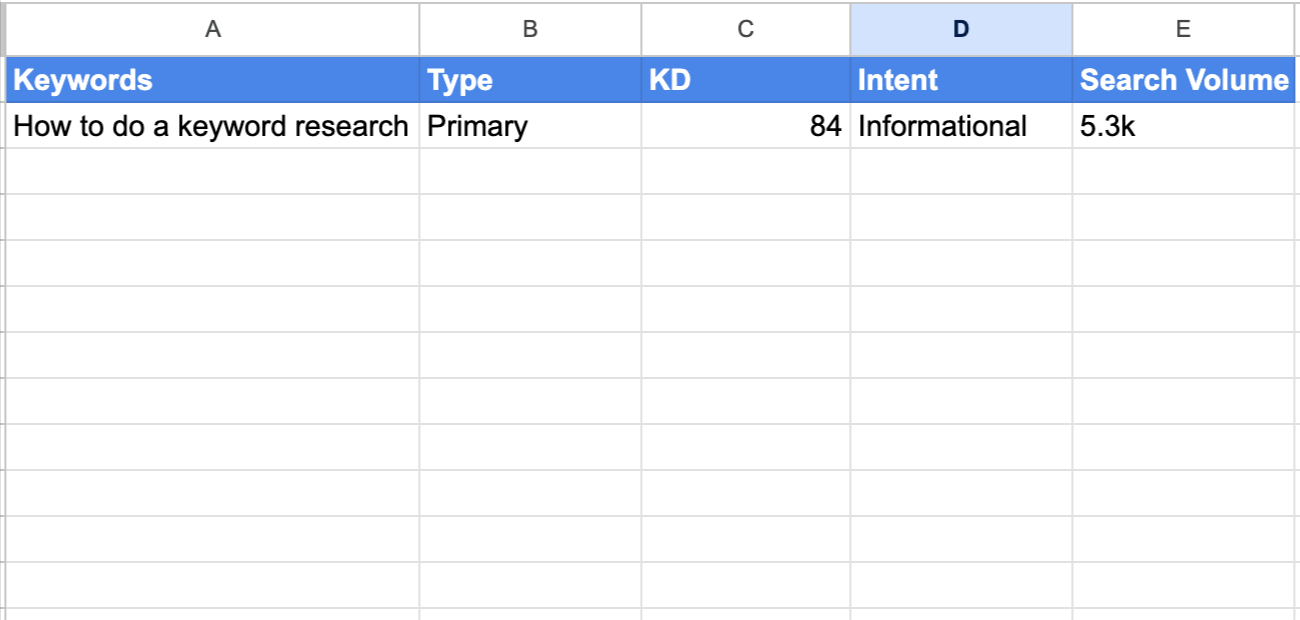
First, let’s find variations of your primary keyword.
Go back to the Keyword Magic tool and put your main keyword.
In my case, I only found 2. But you might find a lot of keywords in your niche.
I will show you another example of how to pick secondary keywords with variations.
Suppose my primary keyword is “Hostinger Coupon Code.”
The tool gives me many similar variations.
Take a look:
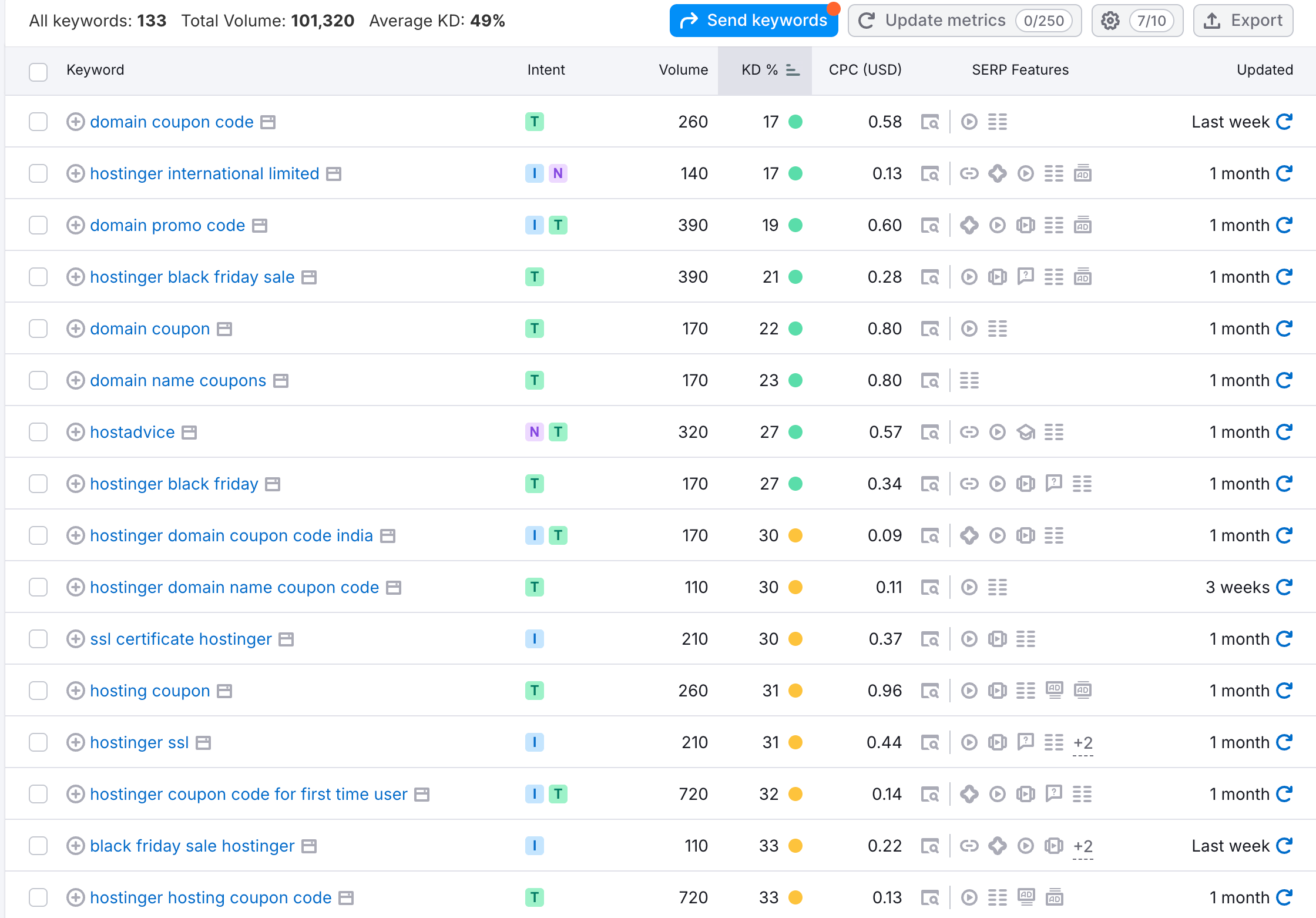
Now, you might think about targeting all these keywords since they look similar.
But no.
I will show you how to filter them in the next step. For now, just add the keywords provided by the tool to your Excel sheet.
Now, to find more relevant keywords, go back to the Keyword Overview report and put your main keyword in the box.
Once you scroll, you will see a “Keyword Clustering” box. Tap on it.
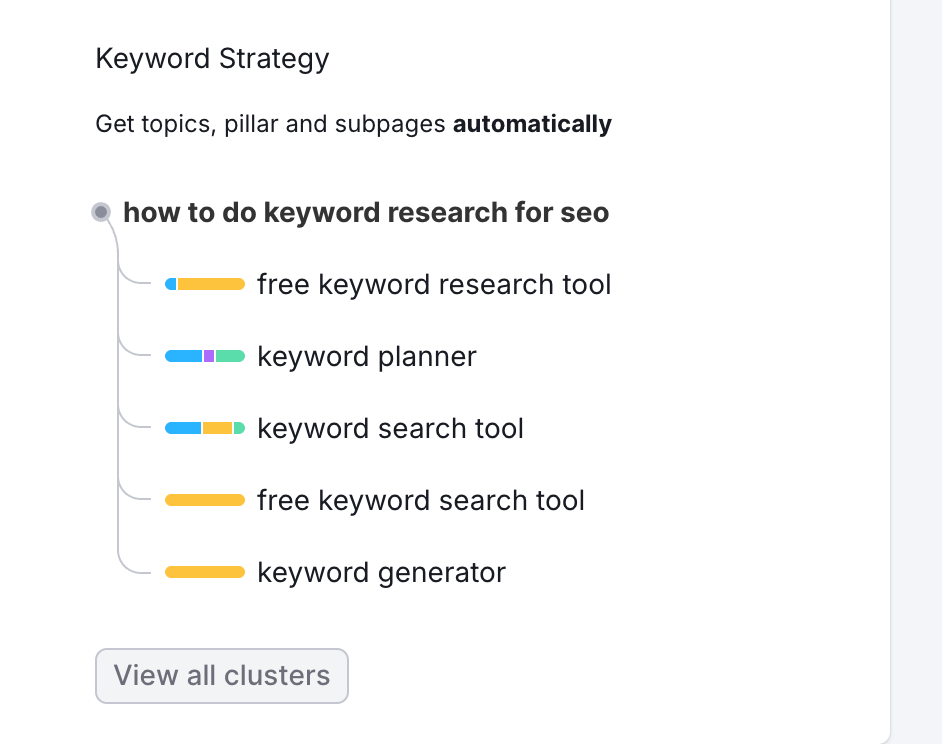
In traditional SEO, we gain rankings by targeting variations of a single keyword. But this often leads to keyword stuffing issues.
GEO no longer works that way. If you want to be cited in the responses of LLM models, you must think beyond that.
GEO is more about Entity Salience. This basically shows how deeply and relevantly your content covers a concept, rather than just targeting similar keywords. You have to build a relationship between different relevant concepts around your topic.
This is only possible when we cover all topics around our primary keyword and include related keywords as a group in our content.
That group is called a Keyword Cluster.
Creating keyword clusters manually is difficult. You would need many secondary keywords and deep knowledge of your topic to create groups one by one.
The tool gives you clusters in a single click.
Have a look:
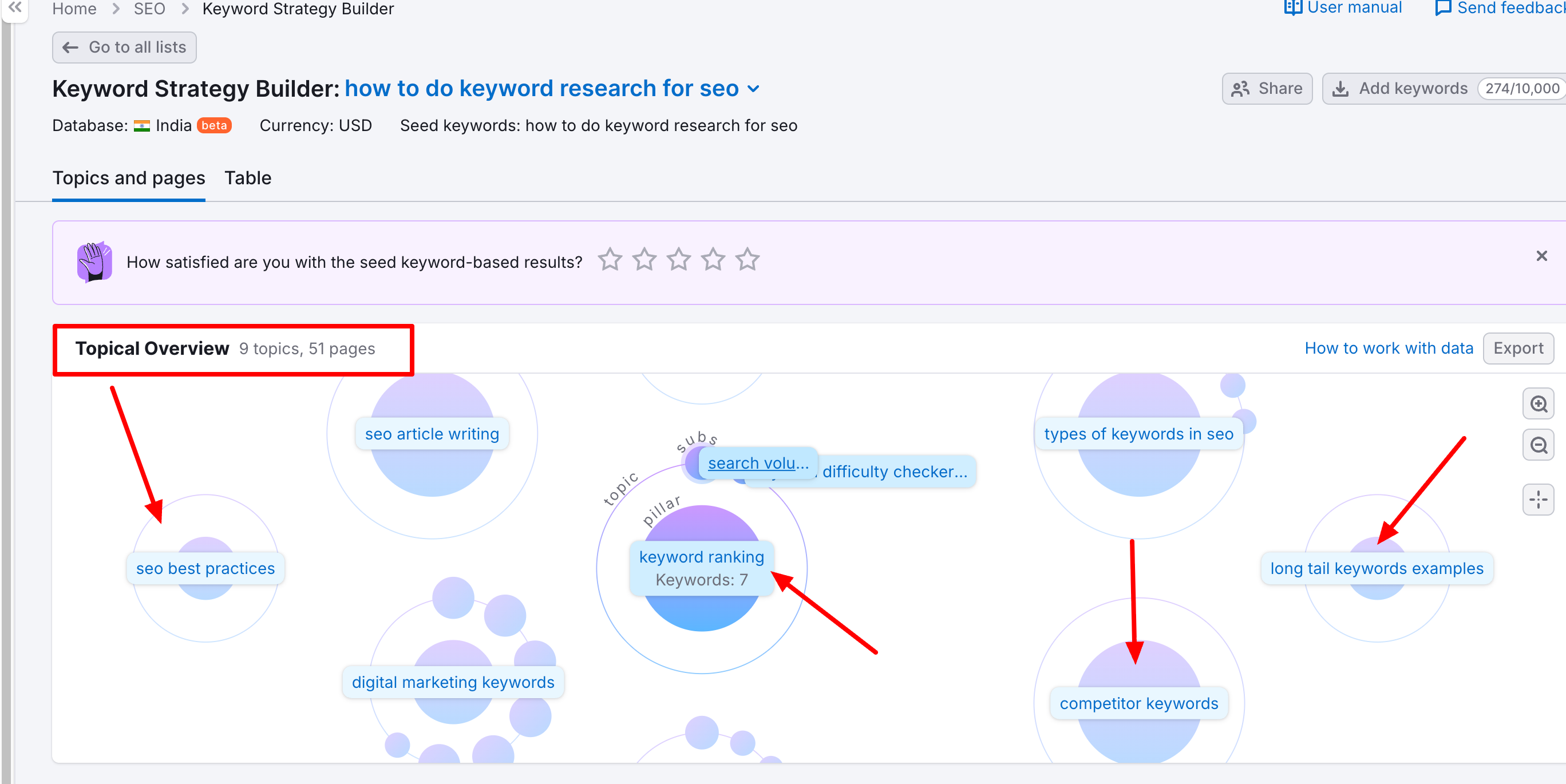
If you look closely, you will see keywords in every group.
You should not pick every keyword from every group as a secondary keyword. You might find some irrelevant topics here.
When you scroll down, check all the keyword clusters one by one to see if they are relevant to your topic.
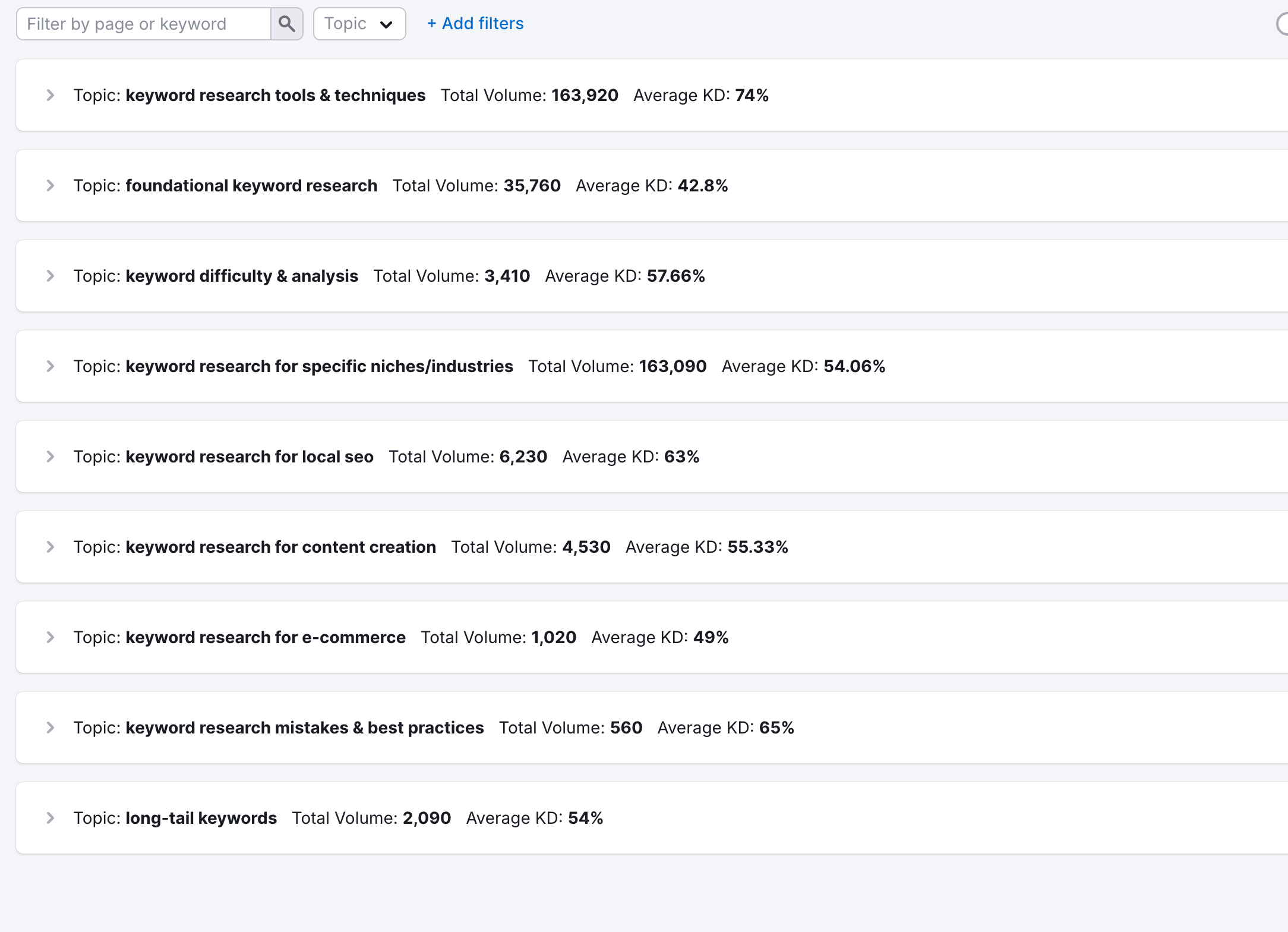
You can find many secondary keywords for your content here. You can also include these as topics in your outline.
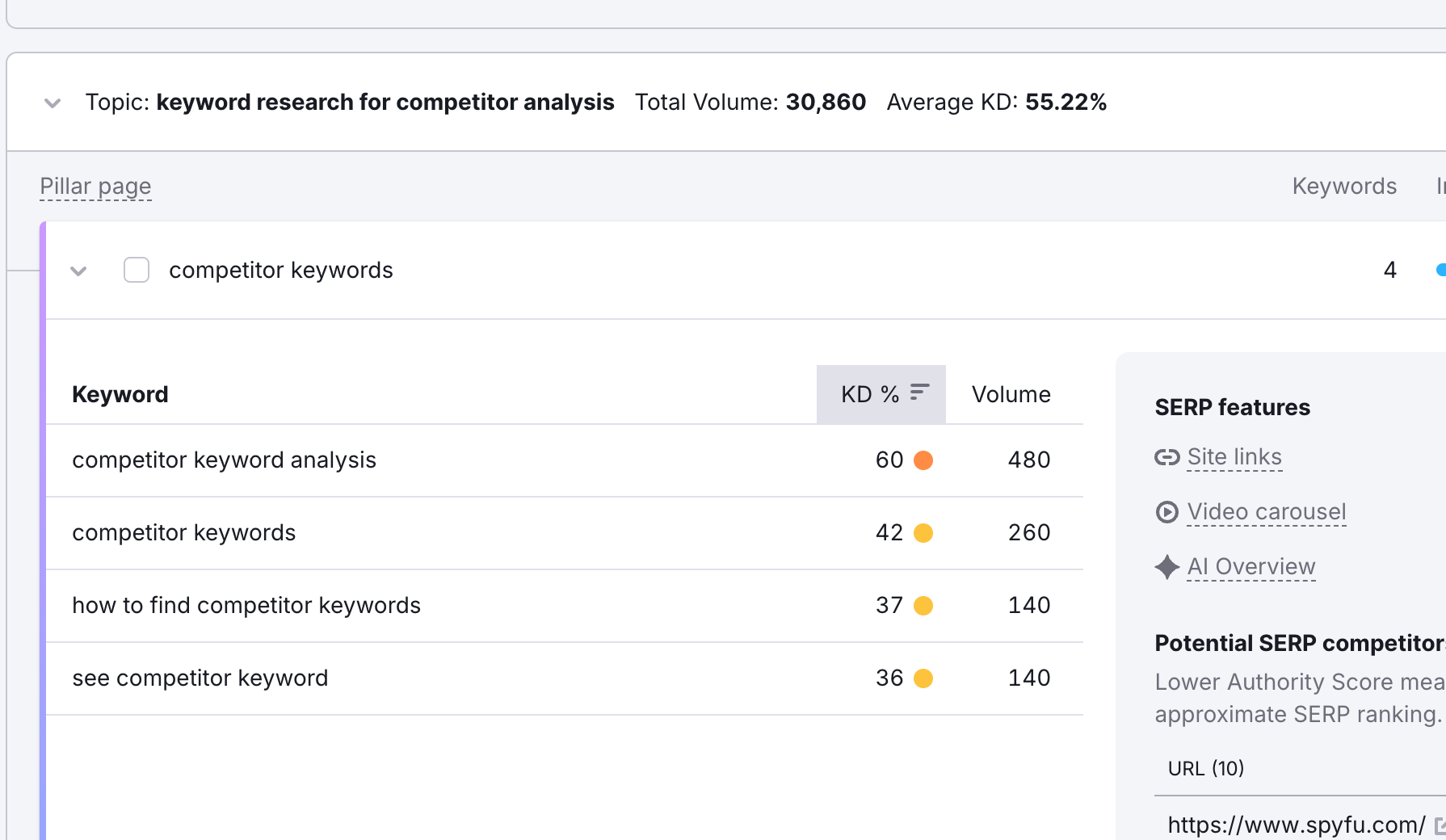
You can pick keywords with shorter variations here.
Your goal is to pick relevant keywords around the entire topic and incorporate them into your content.
By doing this, you ensure your content is optimized for GEO.
Put whatever keywords you find here into your Excel sheet.
Step 3: Steal Keywords from Top Ranking Competitors
Sometimes keyword research tools return fewer keywords, or we get confused when selecting them.
In these cases, the best approach is to target competitor keywords that are already proven and generating traffic.
To begin, you need to know who your competitors are.
Simply search for your primary keyword on Google, and you will find the names of the top players yourself.
Now, you have to put your domain name in the organic search of your keyword tool.
Once you do, you will find the exact keywords along with the specific traffic they drive to your competitor.
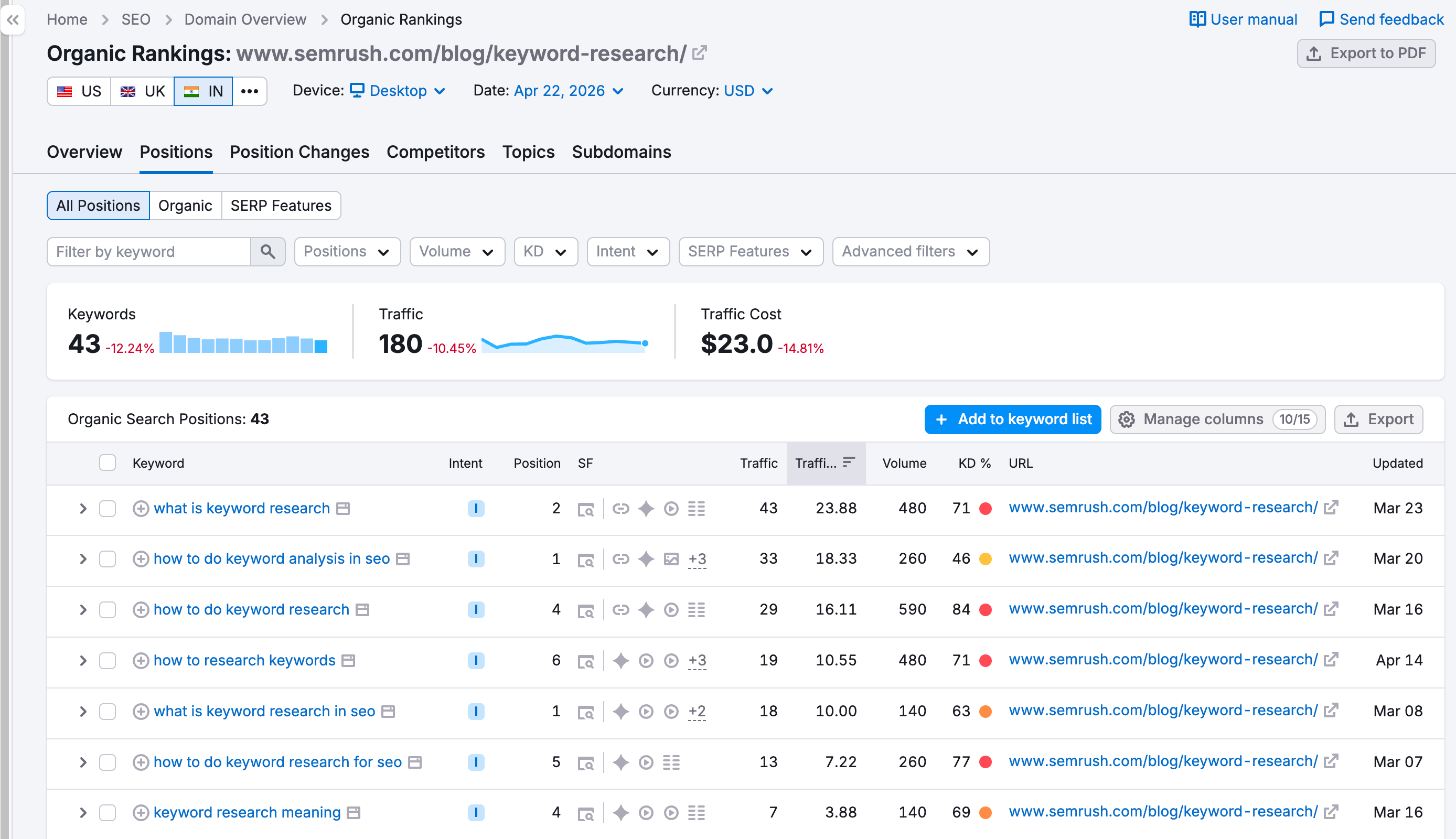
If you update an existing post and want to know the keywords your competitors are targeting but you’ve missed those opportunities, then you can use the Keyword gap strategy.
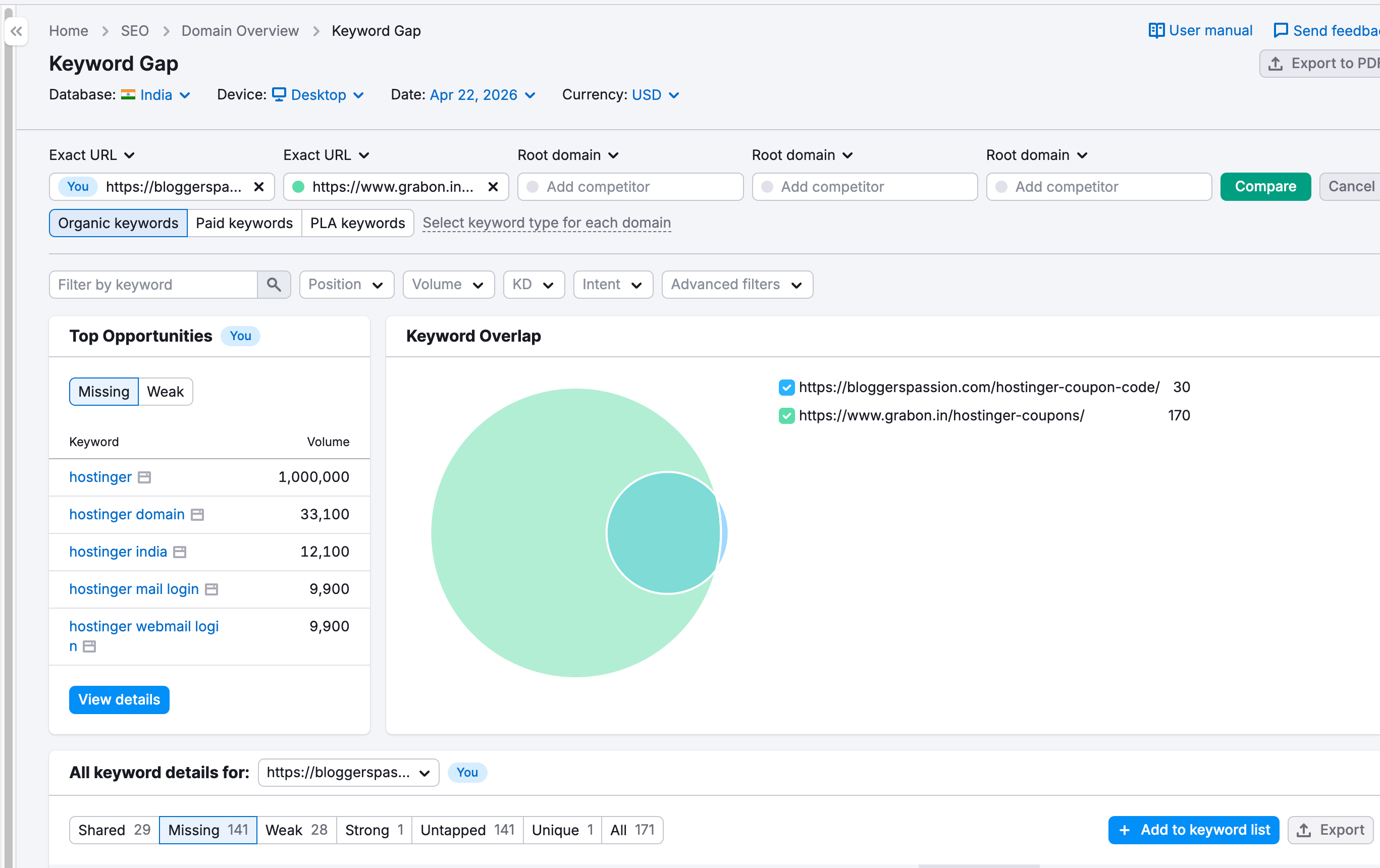
Finally, pick some keywords from the list and add them to your Excel sheet.
Step 4: Finalize the Final Set of Keywords
Ok, so you have plenty of secondary keywords at this stage.
It might be 20, 30, or more than that.
But you can’t put all of them in your content, otherwise it leads to Keyword stuffing.
I usually filter these keywords using the same criteria:
- KD should be less than 50.
- Intent should match your goal.
- Keywords should be long-tail and appear in AI overviews if you are optimizing for GEO.
- Search volume should be at least 1,000 globally or in your target countries.
Once you apply these filters, you will have fewer keywords left.
Now you must remove duplicates. The keywords that are variations but share the same meaning.
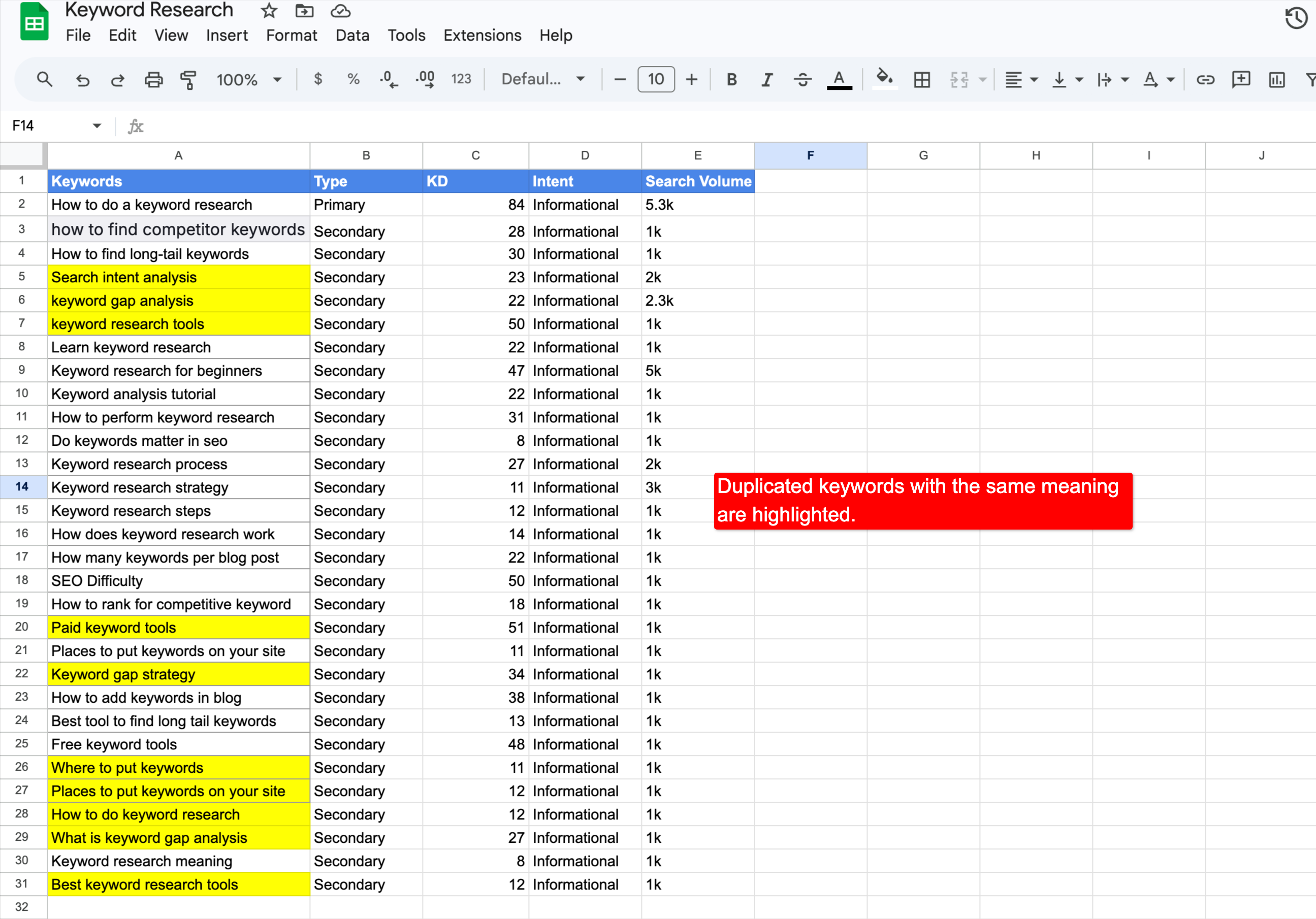
See, I highlighted the duplicates.
After deleting the duplicate keywords, you will have a refined list of target keywords. In the next step, you will see how to target them within your content
Step 5: How to Incorporate Keywords into Your Site for the Best Results
What are the best places to put keywords on your site?
You may ask.
There is no perfect answer to this.
These days, simply placing keywords according to a specific strategy does not work. You must ensure that any keyword you use in your content flows naturally.
I usually place the primary keyword 2-3 times: at the beginning, in the middle, and in the final sections.
It is better to cover secondary keywords within the flow of the text. If any keywords remain, include them in the outline and write a detailed section for each.
If there are still keywords left after that, you can cover them in the anchor text of other posts through internal linking.
So these are the top 5 keyword research steps you have to follow before writing.
Use the most advanced keyword research technique: the alphabet soup
This is actually an incredible strategy most SEO experts use to find the best keywords in any niche without any paid keyword tools.
Alphabet Soup is nothing but coming up with different keyword ideas for one particular keyword item using the Google Instant search tool.
Start with 2 or 3 broad topics that fit your blog. For example:
- Kids Camping
- Camping Stoves
- Family Tents
Then use the “Asterisk” Google operator.
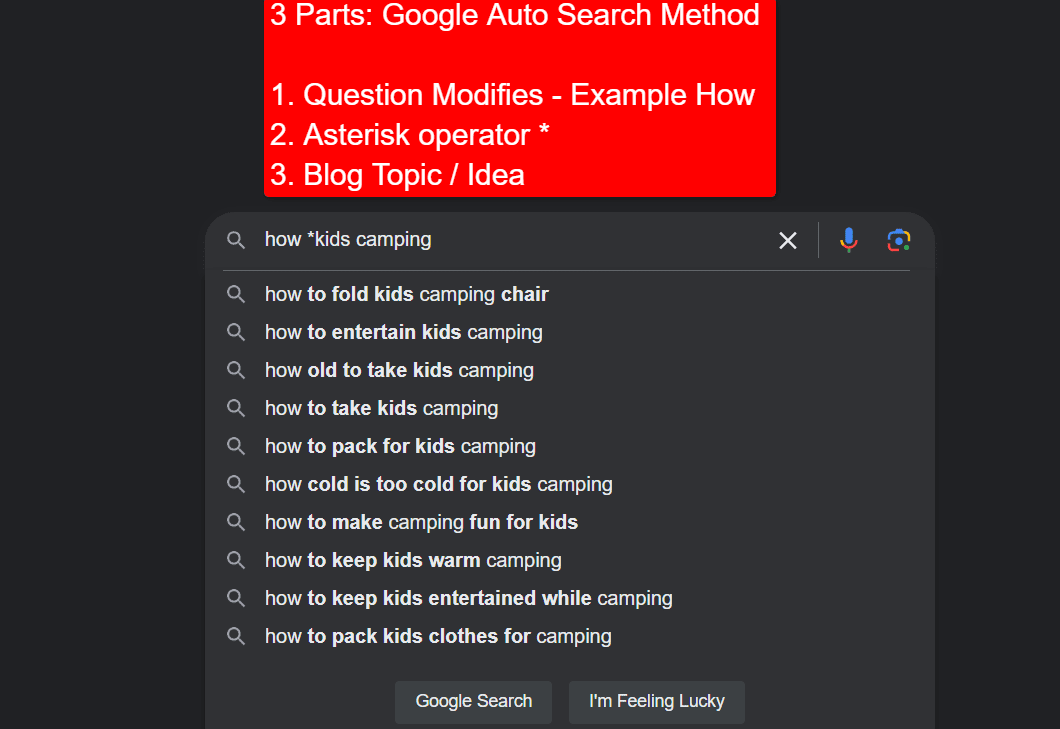
Go to Google and type a question word like “How,” followed by your topic. Place an asterisk (*) in between your words. The asterisk acts as a “fill-in-the-blank” for Google.
Example: Type “How * Kids Camping” into the search bar.
Google will automatically suggest popular questions like “How to pack for kids camping” or “How to keep kids warm while camping.” These suggestions are based on actual user activity.
Do not stop at “How.” You can uncover hundreds of different queries by rotating your starting words. Try using:
- Best (Example: “Best * for kids camping”)
- Why (Example: “Why * camping stoves”)
- What (Example: “What * to bring for kids camping”)
These long-tail questions are exactly what AI engines like Gemini and Perplexity look for.
By answering these specific, conversational questions, you increase your chances of being the primary source in an AI response.
Google’s auto-suggest is great for ideas, but SEO tools provide the data. This includes search volume and competition scores that the search bar cannot show you.
Anyway, this method is great because it still gives you trending terms around your topic, which SEO tools are not able to provide. You can take the seed keyword from here and then transfer it to SEO tools for further processing.
Final words: Do keywords matter in SEO in 2026?
Yes, basic on-page SEO including keyword optimization still plays a key role in optimizing a page for both GEO and traditional SEO.
Without keyword optimization, we cannot inform Google about the topic of our content.
Quality SEO keyword research allows you to cover a topic comprehensively.
If you use a keyword clustering strategy during your research, the quality of the content will automatically improve.
Google is more likely to push your content to the first page, regardless of your site’s domain authority.
So do proper keyword research before anything. It is a fundamental that you cannot ignore.
FAQs:
What is the Keyword Research process and how does it work?
In the keyword research process, we find the relevant terms people use to search for information regarding our topic. By targeting these terms effectively, we aim to rank our site for those specific queries.
What is Keyword Difficulty?
Keyword Difficulty (KD) indicates how hard it is to achieve a top ranking position for a keyword on a scale of 1 to 100. it generally depends on the authority of top-ranking domains, their backlink profiles, and other factors.
How to prioritize keywords?
You can prioritize keywords from your list based on their KD and search volume. The primary keyword has the highest priority; therefore, it should be included in the post title, H1 tag, and meta description.
Which is the best free keyword research tool?
Currently, you can try the Ahrefs Free Keyword Generator. It provides limited suggestions, but the data is trustworthy because it comes directly from the Ahrefs database. You can also try KeywordTool.io, which is the best tool to find long tail keywords.
Why do I use Semrush for keyword research?
Semrush likely offers the most keyword suggestions because its database contains 28.3 billion terms. It also includes advanced features like competitive analysis, keyword gap analysis, clustering, and personalized keyword difficulty. All these features help in building a successful strategy.
Is keyword research for Amazon and YouTube the same as for a website or blog?
The method for finding keywords is similar, but the keyword intent you target varies between blogs and e-commerce platforms.
How to rank for competitive keywords?
There are plenty of factors that help in outranking your competitors. The most important ones are optimizing for EEAT and creating quality content.
Explore More:







This is Really a Brilliant and Most Infromative Post Like Beginner Bloggers Like Me 👍🏻
Thank You… 🙏🏻
Hi sir,
I came through through a post best lifestyle blogs to follow by you. Then I also motivated to start my own and I started now the concern was keyword research and you came up with the solution. Many many thanks to you. You are really doing great.
Best regards ?
Hi Anil,
This blog post is a keeper! I do very little with keyword research. After reading this through, I realize the importance of it. I like the long tail one. Indeed, I will push myself a little harder using this as a guide.
-Donna
This an amazing guide for every newbie bloggers. Your contents contain a lot of useful informations and hacks for every new and experienced bloggers.
Thanks for sharing.
Regards,
Sayem Ibn Kashem
Great piece of information Anil. I used UberSuggest when intiatly I ventured into blogging. But later moved to Aherfs and found that its way more better than any paid tool. UberSuggest might be good for initial keyowrd study but the data shown by UberSuggest is not upto the mark.