


The global pet care market is expected to grow from $289.17 billion in 2026 to $499.06 billion by 2034.
That’s a massive market. And pet bloggers are taking their share of it.
Some make $5,000 a month. A few even cross $100,000 a year. But most quit before making their first $100.
So, what’s the difference? Having a plan!
This guide shows you exactly how to start a pet blog and make money in 2026, even if you’ve never written a blog post before.
By the end, you’ll know how to pick a profitable pet blog niche, set up your blog in under 30 minutes, and make money from it. Are you ready? Let’s dive in.
How to Build a Money-Making Pet Blog from Scratch [Follow Me Step By Step]

Step 1: Pick a Profitable Pet Niche
Don’t start a “pet blog.” Start a pet niche blog.
Why? Broad pet blogs compete with giants like Dogster and PetMD. It’s very hard to beat them.
But in a smaller niche, you actually have a chance to stand out.
Here are 3 quick tips to pick a niche;
#1. Pick your animal
Choose a pet you actually own or know well. Dog, cat, parrot, rabbit, or whatever you can write 100+ posts about without running out of ideas.
#2. Niche down further
This is where most beginners stop. Don’t.
Instead of “dog blog,” go specific:
- Rescue dogs and their first 30 days at home
- Senior dog nutrition (10+ years old)
- Raw feeding for Golden Retrievers
- Rottweiler back problems
Real example: Jessica Williams runs “You Did What With Your Wiener?”, a blog only about hiking with dachshunds. She makes $5,000 to $10,000 a month from ads alone.
That’s the power of going narrow.
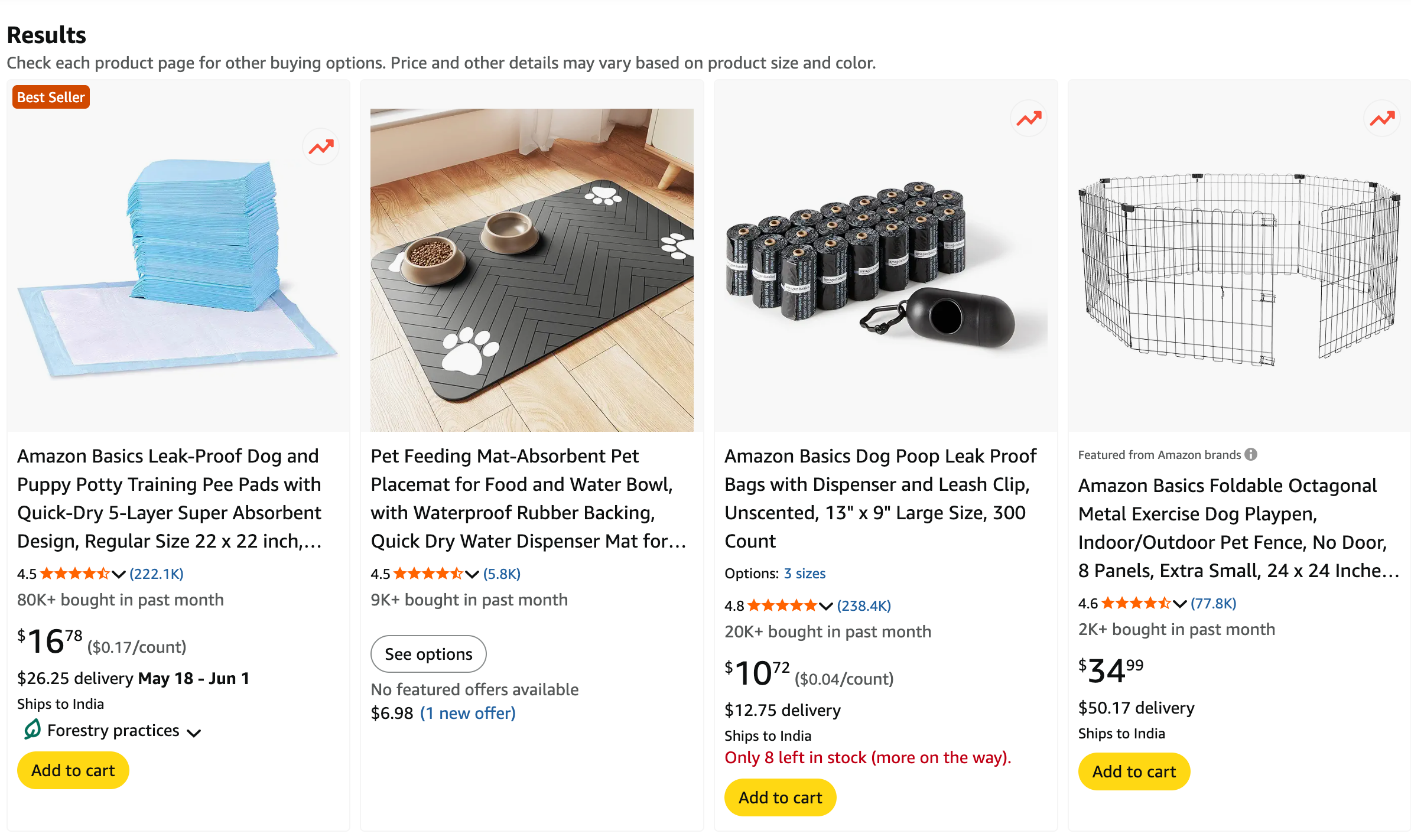
#3. Validate the niche on Amazon
Before you finalize your niche, check if products exist to sell.
Open Amazon > Pet Supplies > pick your sub-niche.
Look for:
- 1000+ products listed
- Multiple “Best Seller” tags
- Reviews in the thousands (or hundreds)
Read: Top Profitable Blogging Niches List [Updated for 2026]
Step 2: Buy a Domain Name and Web Hosting
The domain name would be the primary URL (identity) of your pet blog. Example: bloggerspassion.com
Web hosting is a server where your website files are stored, and it is only after getting web hosting that people can find your site on search engines like Google.
a) Pick the Right Domain Name:
A good domain name should have the following:
- Brandable (You can include your pet’s name)
- Ends with.COM
- Includes a niche-specific primary keyword (e.g., Dog, Cat, etc.)
- Easy to spell
- Easy to remember
For instance, I want to cover dog grooming and training information on my blog for now. However, I may expand to other dog-related markets in the future.
If I include keywords like “training” or “grooming” in my domain name, it could limit the scope of my blog.
If you plan to focus on a single category permanently, then you can include that specific category in your domain name.
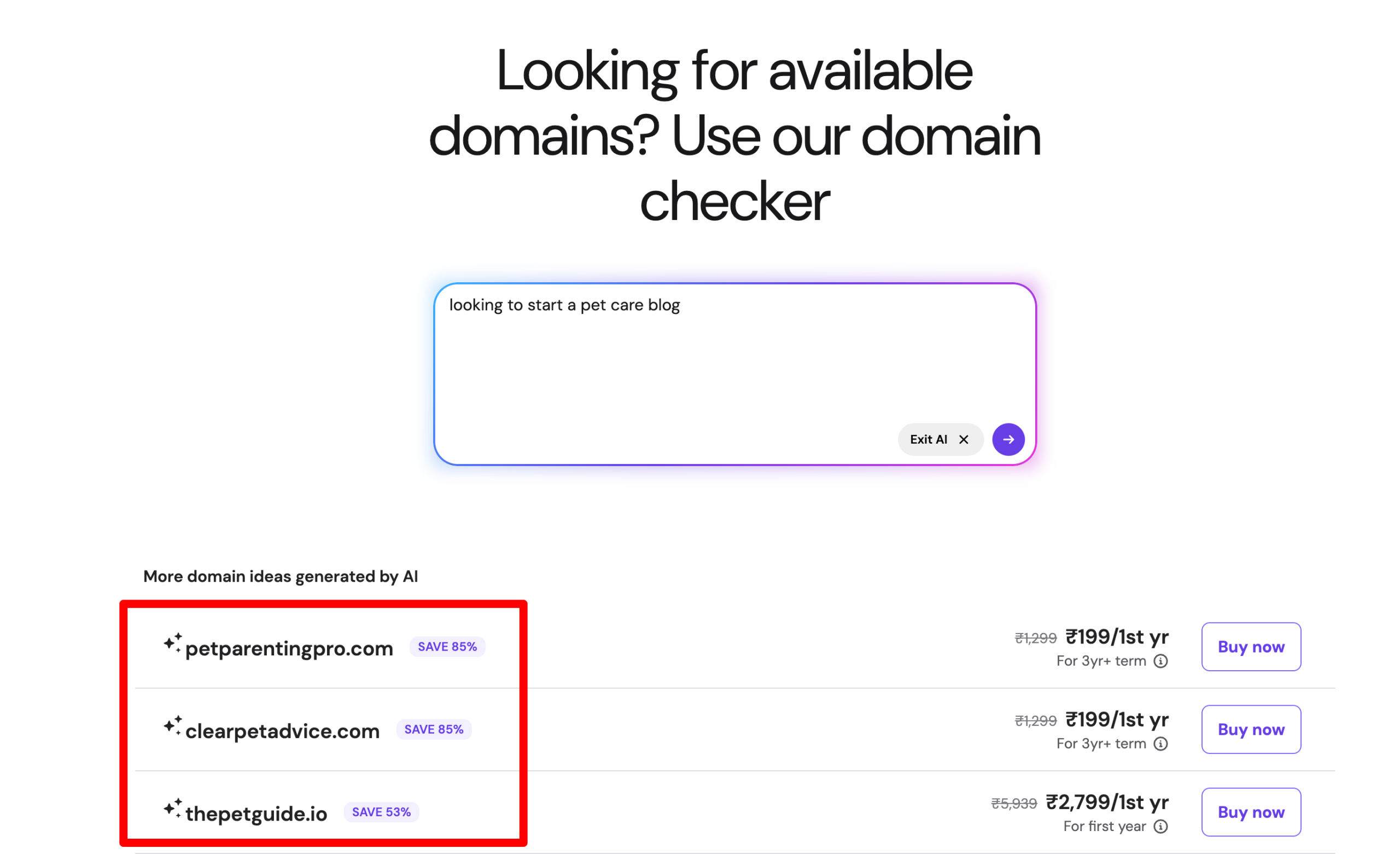
Stuck for ideas? Use Hostinger’s free AI domain name generator.
Buy hosting and grab a free domain
For new bloggers, Hostinger is the best value-for-money option. To get free domain registration for a year along with Hostinger hosting plans, click here.
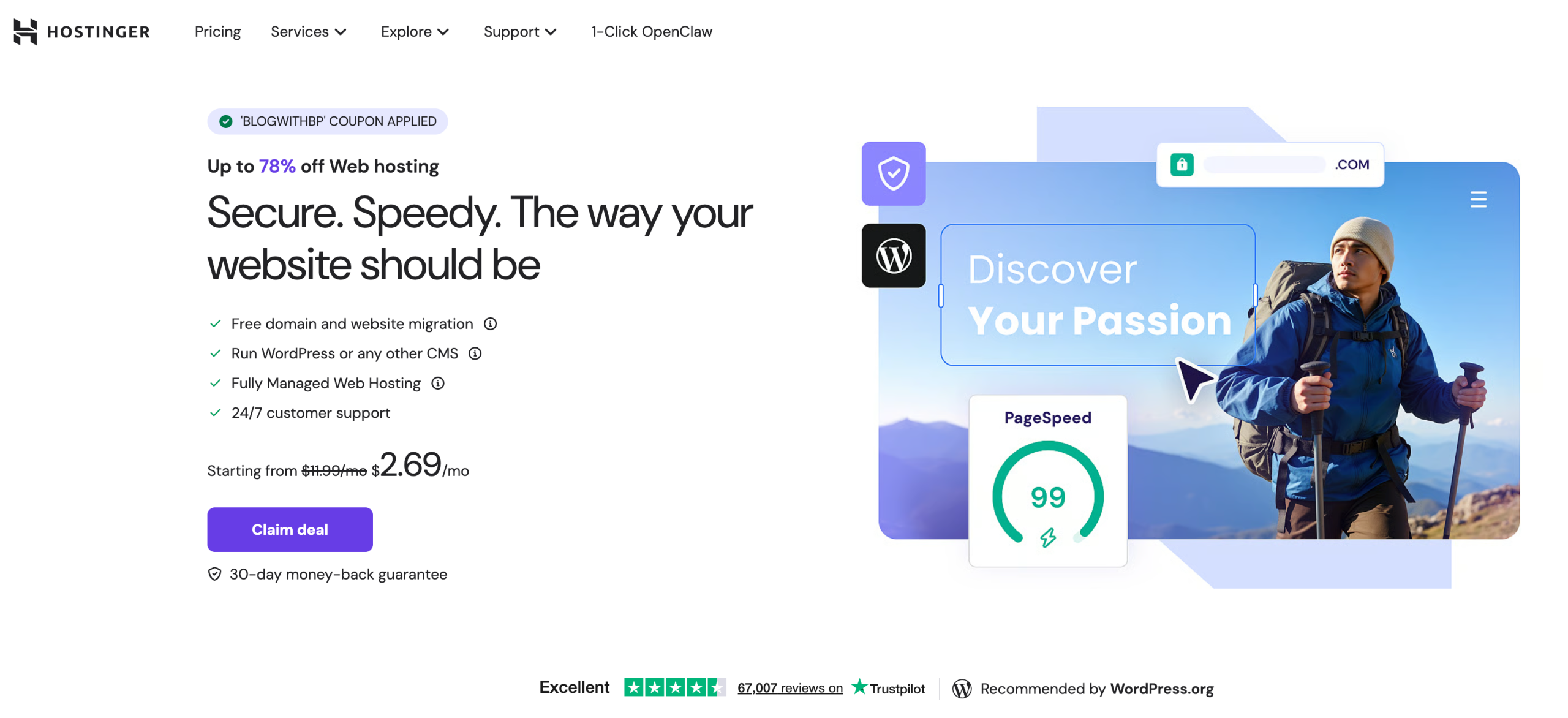
Use coupon code BLOGWITHBP to get a HUGE discount. The $2.69/month plan gives you:
- 1 year of hosting
- Free domain registration for 1 year
- 25 GB SSD storage
- Free SSL certificate
- Free AI website builder
That’s everything a new pet blog needs for under $35 a year.
Hostinger has served over 2 million websites to date, and their servers are reliable, as you can see in my Hostinger review.
Step 3: Set up your Pet Blog
It’s now time to set up your WordPress blog.
#1. Claim & Register a free domain name for the pet blog:
Once you log in to your Hostinger account, click on “Claim a Domain.”

After that, you’ll need to enter your name, address, personal details, and the pet blog domain name you finalized in the previous step.
That’s it! Once you do this, your domain name will be registered for 1 year at no cost.
#2. Choose a WordPress CMS:
A CMS, or Content Management System, is a type of software that helps you create, edit, organize, and manage a website without needing to know how to code. Hostinger offers multiple CMS options, including popular ones like WordPress.

Our site is also built on WordPress, which is free to use.
With WordPress, you can create anything from a simple pet blog to a full-fledged eCommerce pet website.
Once you install WordPress on Hostinger hosting, you can create blogs, add pages, customize designs with themes, and enhance features using WordPress plugins.
WordPress is versatile, widely used, and powers around 40% of all websites online!
In this quick WordPress and Hostinger tutorial, you’ll complete the easy 5-minute installation process—no technical skills required!
Here is a video tutorial for the same process.
Step 4: Configure Basic WordPress Settings for Your Pet Blog
Before moving to the pet blog design part, it is best to configure the basic WP settings and install some essential plugins:
- Set Permalinks: Go to Settings > Permalinks and choose “Post Name” for clean URLs.
- Add Site Info: Under Settings > General, add your site title, tagline, and ensure HTTPS is enabled.
- Install an SEO Plugin: Use plugins like Rank Math for on-page SEO and XML sitemaps.
- Adjust Reading Settings: Uncheck “Discourage search engines from indexing this site” in Settings > Reading.
- Optimize Media Settings: Configure image sizes under Settings > Media to prevent large uploads.
- Ensure Site Visibility: Confirm search engines can crawl your site in Settings > Reading.
- Set Privacy Page: Under Settings > Privacy, create a page to comply with GDPR regulations.
- Generate XML Sitemap: Create a sitemap using your SEO plugin and submit it to Google Search Console.
- Install Caching Plugin: Boost speed further with WP Rocket or W3 Total Cache plugin.
- Set Up Analytics: Add Google Analytics and Google Search Console to track site traffic and performance.
Read: List of WordPress Plugins Every New Blog Must Have in 2026
Step 5: Design Your Pet Blog
Your blog design matters more than you think. It can make or break your blog’s success.
Keep your design clean and simple. Use easy-to-read fonts, clear menus, and a mobile-friendly design. Why? Because most readers will visit from their phones.
Pick colors that match your niche. A dog training blog and a luxury cat products blog shouldn’t feel the same.
Don’t bombard your site with ads, popups, or animations in the beginning. Focus on readability and speed first.
For new users, the two most popular free themes are GeneratePress and Astra.
Quick Note: For a custom design and a highly professional look, you can explore the paid versions like GeneratePress Pro or Astra Pro. However, the free versions of either GeneratePress or Astra are more than enough for your new pet blog.
Step 6: Plan Your Pet Blog Content
Most new pet bloggers write random posts whenever they get a new idea. Then they wonder why they don’t get any traffic.
The fix? Create content with a purpose. Here are 5 post types that work best for pet blogs.
1. Product reviews
These are your money posts. People searching for “best dog food for puppies” or “best cat litter for apartments” are ready to buy. Add affiliate links and earn commissions from sales.
Example: 7 Best Dog Foods for Sensitive Stomachs in 2026
2. How-to guides
These bring long-term traffic and build trust. Pick a problem your readers face, solve it step by step.
Example: How to Stop Your Dog From Scratching Furniture
3. Comparison posts
Many buyers compare products before purchasing. Help them choose the right one.
Example: Farmina vs Royal Canin: Which Dog Food Is Better?
4. Breed or species guides
Detailed breed guides can rank on Google and bring steady traffic.
Example: Golden Retriever Care Guide for First-Time Owners
5. Personal stories
These may not bring huge traffic, but they build loyal readers. Share your real experiences and lessons.
Example: What I Wish I Knew Before Adopting a Senior Dog
Step 7: Drive Traffic to Your Pet Blog
A pet blog with ZERO traffic makes no money.
You need readers. For pet blogs, the following 4 traffic sources are best in 2026.
1. SEO (your biggest long-term traffic source)
Most pet bloggers get the majority of their traffic from Google.
Master the basics:
- Pick keywords with 200+ monthly searches and low competition
- Use the keyword in your title, URL, and first 100 words
- Write helpful posts
- Build internal links between related posts
- Build backlinks through guest posts and outreach
Want more details? Read our SEO tutorial for beginners.
2. Pinterest (the secret weapon for pet blogs)
Pet content does REALLY well on Pinterest. Cute dogs, cat care tips, training infographics, all of it gets pinned and re-pinned.
Here’s how to use Pinterest for pet blogging:
- Create a free business account
- Make 3-5 vertical pins for every blog post (1000×1500 pixels)
- Use Canva templates designed for Pinterest
- Pin daily for 60 days
A solid Pinterest strategy can drive 10,000+ monthly visits in under 6 months. Some pet blogs get over 50% of their traffic from Pinterest alone.
3. Instagram and TikTok
Pet content can perform well for short videos. A single 30-second clip of your dog can generate 100,000+ views.
The strategy is simple: post 3 to 5 times a week, link your blog in your bio, and drive traffic to specific posts via Stories or pinned comments.
4. Email list (start from day 1)
Social platforms can be gone overnight. Your email list can’t.
Add a free newsletter signup to your homepage. Offer a lead magnet (e.g., 10 Foods That Are Toxic to Dogs PDF). Send one email a week with your latest post.
A 1,000-subscriber email list can drive 200+ visits to every new post you publish (if it’s engaging).
5 Ways to Make Money From Your Pet Blog in 2026

You don’t need 1 million visits a month to earn from a pet blog. You need the right monetization strategy.
Here are the 5 income streams that actually work in 2026.
1. Affiliate marketing
You promote a pet product. Someone buys through your link. You earn a commission.
This is the easiest and fastest way to earn from a new pet blog. Top pet affiliate programs to join:
- Amazon Associates (anything pet-related, 3-4% commission)
- Chewy Affiliate (up to 4% on orders)
- Petco (3-7% commission)
- Embrace Pet Insurance ($30 per signup)
- PetSmart (4% commission)
For a full list, check our pet affiliate programs guide.
2. Display ads
Once you cross 50,000 monthly sessions, sign up for Mediavine. A blog with 100,000 monthly visits can earn $2,000-$4,000 a month from ads alone.
Here’s the usual progression for most pet blogs:
- 0-10k monthly visits, use Google AdSense ($1-$3 RPM)
- 10k-50k visits, use Ezoic ($5-$15 RPM)
- 50k+ visits, try Mediavine or Raptive ($20-$40 RPM)
3. Sponsored posts (after you have traffic)
Brands pay you to write about their pet products.
Typical rates in 2026:
- 5k-10k monthly visits: $100-$300 per post
- 10k-50k monthly visits: $300-$800 per post
- 50k+ monthly visits: $800-$2,500 per post
4. Digital products
Once you understand your audience, sell them something only you can make. eBooks, courses, printables, and meal plans for pets.
A $27 eBook + 1,000 monthly visits + 2% conversion = $540/month!
5. Your own pet products
Once your blog has enough authority, sell your own products through WooCommerce. You can try selling dog treats, accessories, and training guides.
Real earnings examples
- Jessica Williams (You Did What With Your Wiener?): $5,000-$10,000/month from ads alone
- Dogster: Nearly 1 million monthly visits, estimated 7-figure annual revenue
- Walkin’ Pets: Another authority pet blog generating huge revenue, mainly through ecommerce
List of Top Pet Blogs That Are Earning Huge [Pet Blog Ideas]
Searching for the best pet blogs and websites on the Internet to follow?
Here’s a handpicked list of the 3 best pet blogs to follow.
1. Dogster
Are you a dog lover and looking for an EXCLUSIVE pet care blog on dogs? Dogster is a blog you should definitely follow.
If you’re looking to get insights on dog behavior, health, food, and more, Dogster is the perfect website for you, where you can get expert advice.
Here are some of the things you can learn from this dog blog;
- Dog health & care
- Dog food
- Dog training
- Puppies
- Lifestyle
- Dog breeds and more
According to Semrush, this pet Blog is generating more than 1 million organic visits.
2. Walkin’ Pets
Walkin’ Pets is one of the popular pet care websites where you can find exclusive information on elderly, disabled, and handicapped pets.
You can find everything from dog wheelchairs to dog harnesses to pet products, and more on their website.
Here are some of the topics you can discover on their blog;
- Pet Health & Care
- Pet Food
- Dog wheelchairs
- Pet Toys and much more
3. Go Pet Friendly
Do you want to know how to travel with your pet but are not sure where to start? Then check out the “Go Pet Friendly” blog.
Whether you’re planning a weekend road trip or exploring your own country along with your pet, you can use their tips, guides, and resources to have a memorable pet-friendly travel experience.
You can find the following things on their pet care blog;
- Pet Travel Tips & Resources
- Pet-Friendly Cities
- Pet-Friendly Trip Ideas and much more
How Long Until You Make Money from Pet Blogging?
Most pet blogs make little to no money in the first 6 months. That’s completely normal. SEO takes time.
Here’s the realistic growth timeline for most successful pet bloggers:
- Months 1 to 6: $0 to $100/month. You’re publishing 2 to 3 posts a week and waiting for traffic to grow.
- Months 6 to 12: $50 to $500/month. A few posts start ranking. First affiliate commissions come in.
- Months 12 to 18: $500 to $2,000/month. You’ve got 50+ posts. Some rank on page #1 on Google.
- Months 18-24: $2,000 to $5,000/month. Traffic starts growing if done right.
- Year 2+: $5,000 to $10,000+/month. Again, it depends on how consistent you are and how seriously you treat your blog like a real business.
FAQs About Pet Blogging:
How to find pet blog post ideas?
You can use tools like Quora or Semrush to find blog post ideas in your niche. You can also analyze the top websites in your industry to come up with top-performing posts.
How to get traffic to a pet care blog?
Here are some of the best ways to increase traffic to a pet blog.
– SEO (keyword research, link building, content creation)
– Email marketing
– Social media
– Guest posting on other pet care websites
– Paid ads (on Google, Facebook, Instagram, etc)
How long does it take to make money from pet blogging?
Most pet bloggers earn their first $100 around month 6. By month 12, one can expect $500/month.
What are the top pet blogs to follow?
Here are a few of the top pet blogs to follow in 2026.
– Go Pet Friendly
– Dogster
– Dogalize
– Walkin’ Pets
How to make money from pet blogging in 2026?
One can make money from pet blogging in many ways, including;
– selling affiliate products
– selling their own pet-related products
– selling premium content such as eBooks, membership sites, etc
– advertising
– sponsorships, paid reviews, collaborations, and more
Is pet blogging still profitable in 2026?
Yes. The global pet care market hit $280 billion in 2026 and grows 7% annually. Pet owners spend $1,200+ per dog and $700+ per cat each year.
How much can you earn from pet blogging?
Your earnings from pet blogging depend on your monetization methods and current traffic. A pet blog can generate anywhere from $100 to $5,000 per month, while top blogs are making over $100k monthly.
Conclusion
Starting a pet blog is easier than ever. But making money from it takes time and the right strategy.
Don’t try to compete with BIG pet websites from day one. Pick a small niche, publish helpful content, and focus on solving real problems for pet owners.
Also, with Google penalizing AI-generated content, I recommend writing your pet-related articles yourself based on original research. This approach ensures long-term success in SEO and pet blogging.
Learn basic SEO. Improve your content over time.
If you have any questions at any step, feel free to ask in the comments.


![How to Start a Blog in 2026 in India [Beginner Friendly Way] – My Example](https://bloggerspassion.com/wp-content/uploads/2012/01/how-to-start-a-blog-300x157.jpg)




I want to start pet friendly blog's but not sure how to go about it. Thanks for giving me a starting point.