


Are you searching for blogging tips, and always get something repeating like “Write high-quality content”, “Be consistent,” and “Promote your blog.”?
Most articles say these same things! None of these is wrong. But these are enough to grow a successful blog in 2026. If you’re still relying only on generic advice, your blog will not be visible.
What actually makes the difference today is how well you understand search intent, how deeply you cover a topic, and whether your content has real experience and authority.
I started blogging in 2010 and at that time, you could publish a 500 word article, build a few backlinks, and rank within weeks. And now, Google algorithms have upgraded.
Search engines evaluate your content based on depth, relevance, experience, and usefulness. I’ve built multiple blogs, seen traffic up & down, and learned what actually works for the long term.
This blog post is not a list of generic blog tips. It’s a consolidation of what consistently drives traffic, rankings, and revenue, especially in competitive niches.
Table of Contents
- Case Study: Growing a Blog to 50K Monthly Visitors
- Part 1: Beginner Blogging Tips
- Part 2: Content Writing Tips
- 6. Use the Problem – Give Solution
- 7. Write Content That Matches Search Intent
- 8. Structure Content for Readability
- 9. Add Real Examples (EEAT Booster)
- 10. Avoid Generic Advice
- 11. Target Long-Tail Keywords
- 12. Optimize On-Page SEO
- 13. Internal Linking Strategy
- 14. Build Backlinks
- 15. Improve Page Speed
- 16. Use Semantic Keywords
- Part 3: SEO Tips
- Part 4: Monetization Tips
- Part 5: Advanced Blogging Strategies
- Wrapping Up
Case Study: Growing a Blog to 50K Monthly Visitors
Let me tell you a real scenario that reflects how blogging works today.
A few years ago, I launched a new blog in a moderately competitive niche. The domain had no authority, no backlinks, and no traffic.
I had followed traditional advice, such as targeting high-volume keywords and struggled for months with no results. Then, I took a different approach.
I focused almost entirely on long-tail keywords, especially queries that beginners search for.
These are often overlooked by experienced bloggers because the search volume looks small individually. But collectively, they drive significant traffic.
For example, instead of targeting “blogging tips,” I targeted variations like:
- blogging tips for beginners
- How to get traffic to a new blog
- blog SEO tips for small websites
Each of these keywords had lower competition and clear user intent.
The second key decision was the depth of the content. I didn’t try to publish frequently. Instead, I focused on writing fewer detailed posts that fully answered the query.
Every article was structured carefully:
- Interesting introduction that answered the query
- organized sections with proper classification
- practical examples and case studies
- internal links to relevant content
Within three to four months, some blog posts started ranking. By the sixth month, the blog was generating around 50,000 monthly organic visitors.
There were no viral spikes. No aggressive link building. Just consistent execution of a system that is aligned with how Google evaluates content today.
The biggest takeaway from this experience is simple! Traffic growth is predictable when your strategy aligns with search intent and content depth.
From my experience, I hope you understand that I tested a few things and followed the strategies that worked. Let’s see those blogging tips and tricks in detail.
Note – For your clear understanding, I classified the blogger tips into 5 sections!
Part 1: Beginner Blogging Tips

1. Choose a Profitable Niche (Not Just Passion)
Many new bloggers make the mistake of choosing a niche based on passion. While writing about something you love is motivating, it doesn’t guarantee traffic or revenue.
The reality is that a blog without an audience is a hobby, not a business. You will be successful only when your passion meets demand.
I learned the hard way that understanding market demand is essential like loving your topic. How to balance your passion with profitability?
- Validate search demand: Use tools such as Ahrefs or Google Keyword Planner to check monthly search volume.
- Check competition: Look at the top 10 Google results. Can you offer something better or different?
- Assess monetization potential: Ask yourself: Can I sell courses, promote affiliate products, or run ads in this niche?
- Identify long-term trends: Use Google Trends to ensure the niche is evergreen.
How I chose a niche: I tested a “DIY candle-making” blog. I was interested in this niche, but after keyword research, I found low search volume and few affiliate opportunities. So, I switched over to “Home crafts with high-profit potential,” and within six months, my blog traffic doubled because the niche had search demand and monetization options.
2. Validate Your Niche with Keyword Research
Keyword research is the foundation of a successful blog. Without it, even the best content will not reach the right audience.
In 2015, I started a tech blog and published several posts without doing keyword research. Most of them were on the 5th & 6th pages of Google because they didn’t match what people were searching for.
Step-by-Step Keyword Validation Process:
- Start with seed keywords: These are broad ideas related to your niche.
- Expand to long-tail keywords: Use keyword research tools to find long phrases related to your main keyword.
- Analyze competition: Check the authority of top-ranking pages. If your blog is new, avoid highly competitive keywords.
- Check search intent: Ensure the keyword aligns with the content you can provide is informational, transactional, or navigational.
- Evaluate traffic potential: Prioritize keywords that can bring sustainable traffic, not just seasonal spikes.
Mini Case Study: I targeted the keyword “best blogging tools for beginners 2026” on a new blog. The top 3 competitors had outdated guides. I created a fresh, detailed article with screenshots, internal links, and semantic keywords like “blogging software,” “writing tools for bloggers,” and “SEO tools for beginners.” Within 4 months, it ranked on 1st page and started to drive audience from search engines.
3. Understand Your Target Audience Deeply
Blogging isn’t about what you want to write! It’s about what your audience needs. Understand your readers and ensure every post resonates and drives engagement.
Step-by-Step Audience Research:
- Define demographics: Age, location, occupation, and income. For example, a blog on “Freelance Blogging Tips” might target 25 to 40-year-old aspiring writers worldwide.
- Identify knowledge level: Are they beginners, intermediates, or advanced? Tailor content accordingly.
- Map goals and pain points: What are their biggest challenges? What solutions are they searching for?
- Monitor forums and social media: Places like Reddit, Quora, and niche Facebook groups reveal questions and common struggles.
Real Example: On my SEO blog, I realized beginners were confused by technical terms like “canonical URLs” or “meta tags.” By creating beginner-friendly guides with simplified explanations, I increased engagement and reduced bounce rates.
4. Choose the Right Platform
Your blogging platform affects your flexibility, SEO, and long-term growth. Beginners often choose free platforms like Blogger or WordPress.com, but these have limited customization, SEO control, and monetization ways.
Why Self-Hosted WordPress.org Is Ideal:
- Full SEO control: Install plugins like Yoast or Rank Math.
- Customizable themes: Optimize for speed and mobile-first design.
- Scalability: Add features like memberships, eCommerce, or courses.
- Ownership: You control your domain, content, and monetization.
My blogging experience: I migrated a hobby blog from WordPress.com to a self-hosted WordPress.org setup. After migration and SEO optimization, organic traffic doubled within 3 months because of site speed, URL structure, and SEO plugin optimization.
5. Focus on Execution, Not Perfection
Beginners spend months to make logos, select the theme, or design the homepage. While branding matters, execution matters more. Publishing consistently and improving over time will give better results than waiting for perfection.
Real-World Example: In 2011, I spent two months to design the homepage for my personal development blog. By the time it launched, it had no traffic. I learned to focus on publishing valuable content, then optimized its design. Within six months, traffic grew steadily, and small design tweaks made a bigger impact than the initial “perfect” design.
Tips to Prioritize Execution:
- Launch with a simple theme and refine later.
- Set a content schedule: 1-2 posts per week; maintain this consistency.
- Focus on actionable content rather than aesthetics initially.
Part 2: Content Writing Tips
6. Use the Problem – Give Solution
Every reader comes to your blog with a question. If your content identifies the problem and provides a clear solution, it’s more likely to engage and convert.
Example: Instead of writing a generic post titled “Blogging Tips”, a better approach is “How to Increase Blog Traffic in 30 Days”. Start by explaining why readers are struggling with low traffic, then break down actionable steps they can implement immediately.
Step-by-Step Approach:
- Identify the problem: Use forums, social media groups, and keyword research to find what your audience struggles with.
- Empathize with the reader: Acknowledge the frustration or pain point.
- Provide actionable solutions: Break solutions into steps that can be implemented immediately.
- Include examples or case studies: Show real results to increase your credibility.
Real Example: I wrote a post, “How I Grew My Blog Traffic from 0 to 10,000 Visitors in 90 Days.” The post outlined my step-by-step strategy, including content clusters, keyword research, and promotion tactics. Within 2 months, it became one of my top-performing posts, demonstrating the power of solving a real problem.
7. Write Content That Matches Search Intent
Understanding search intent is crucial for content that ranks. Google now prioritizes content that fulfills user expectations, not just content stuffed with keywords. There are three primary types of search intent:
- Informational: “How to start a blog” → Educational guides, tutorials, or explainers.
- Transactional: “Best blogging courses 2026” → Product reviews, recommendations, or affiliate content.
- Navigational: “BloggersPassion SEO tips” → Content focusing on a specific website or brand.
- Commercial: Ahrefs Vs Mangools → Product/Brand Comparisons
Step-by-Step Approach to Match Intent:
- Analyze the top 10 search results for your target keyword. What type of content is ranking?
- Determine whether users are looking for step-by-step guidance, in-depth analysis, or product recommendations.
- Align your content format with the intent. For example, write a guide if it’s informational or a comparison if it’s transactional.
How I write content: When targeting the keyword “SEO tips for beginners 2026,” I noticed top results were lists without examples. I created a detailed, step-by-step guide with screenshots and actionable exercises. This post not only ranked on page 1 but also increased engagement and time on page.
8. Structure Content for Readability
Even the most valuable content can fail if readers struggle to consume it. Readability is both a UX and SEO factor.
Key Best Practices:
- Short paragraphs (2–4 lines): Easier on the eyes, especially on mobile.
- Headings and subheadings (H2/H3): Organize content and improve scannability.
- Lists and bullet points: Highlight actionable steps.
- Visuals: Screenshots, infographics, and tables break monotony.
Example: I audited a competitor blog and found long blocks of text with no headings. Visitors bounced quickly. After restructuring my posts with headings, subheadings, and lists, my bounce rate dropped by 17%, and dwell time increased, which signaled higher quality to Google. I would say it’s a reward from Google for the quality of my content.
9. Add Real Examples (EEAT Booster)
Google favors content that demonstrates Expertise, Authoritativeness, and Trustworthiness (EEAT). Generic advice is insufficient. Sharing personal experiences or case studies increases credibility.
Tips to Add Authority:
- Screenshots and data: Show real traffic numbers, keyword rankings, or analytics.
- Case studies: Share step-by-step processes you used to achieve results.
- Expert quotes or references: Link to authoritative sources to back claims.
Mini Case Study: In a post on keyword research, I included a screenshot showing how I identified a long-tail keyword that brought 5,000 visitors in 3 months. This increased both trust and engagement, demonstrating expertise in SEO.

10. Avoid Generic Advice
Advice like “write quality content” or “be consistent” are really boring. Readers want specific steps they can implement.
Actionable Approach:
- Instead of “write quality content,” explain:
- How to research keywords
- How to structure posts for SEO
- How to optimize headings, meta descriptions, and images
- How to build links
- Instead of “be consistent,” provide a content schedule template with tips for batching posts, setting deadlines, and tracking progress.
Example: I created a post “10-Step Blogging Checklist for Beginners” that turned general advice into actionable steps. The post became my most shared beginner guide that has driven over 8,000 visits in the first 60 days.
11. Target Long-Tail Keywords
Long-tail keywords are less competitive and closely match user intent. They will help beginners like you rank faster.
Example:
- Short-tail: “SEO tips” (highly competitive)
- Long-tail: “SEO tips for beginner bloggers 2026” (low competition, highly targeted)
Step-by-Step Approach:
- Use SEO tools to find long-tail variations.
- Analyze top-ranking pages for content gaps.
- Naturally integrate long-tail keywords and semantic phrases throughout the post.
Mini Case Study: A post targeting “long-tail SEO tips for new blogs” jumped from page 6 to page 1 after I added examples, visuals, and semantic keywords like “keyword targeting for blogs” and “beginner SEO strategy.”
12. Optimize On-Page SEO
On-page SEO ensures Google understands your content. It’s not about keyword stuffing! it’s about strategic placement and context.
Best Practices:
- Include the primary keyword in the title, first paragraph, and meta description
- Use semantic keywords naturally throughout the content
- Add internal links to related posts
- Use descriptive headings with target keywords
Real Example: I have rewritten a post on “blogging mistakes to avoid” with on-page SEO improvements. Semantic keywords such as “common blogging pitfalls” and “beginner blog errors” helped it rank in the top 3 for multiple related search queries.
13. Internal Linking Strategy
Internal links improve SEO, user experience, and topical authority. They show Google the relationship between your content and help distribute link equity across pages.
Step-by-Step Approach:
- Identify pillar posts (main topic pages) and supporting posts (subtopics).
- Link supporting posts to pillars using descriptive anchor text.
- Update old posts with links to new content.
Example: I have a pillar post, “Complete Blogging Guide.” All supporting articles like “Content Writing Tips” and “SEO Basics for Beginners,” link back to it. This cluster structure helped the pillar post rank in the top 5 for “blogging tips 2026.”
14. Build Backlinks
Backlinks remain one of the strongest ranking factors. You should focus on getting quality links over the number of backlinks.
Strategies:
- Guest posting on relevant niche blogs
- Finding resource pages and request inclusion
- Broken link building to replace outdated links with your content
Mini Case Study: I acquired 3 high-authority backlinks for a blog post on content strategy. Within 2 months, the post climbed from page 4 to page 1 for the targeted keywords.
15. Improve Page Speed
A slow-loading blog can kill rankings and engagement. Google considers speed a ranking factor, and readers won’t wait more than a few seconds.
Optimization Tips:
- Compress images using TinyPNG or ShortPixel
- Enable caching with plugins like WP Rocket or FlyingPress
- Use a lightweight, mobile-friendly theme like GeneratePress
- Consider using a CDN like Cloudflare

Example: I optimized a blog’s images, enabled caching, and reduced server requests. Page speed improved from 4s to under 2s, and bounce rate dropped by 12%
16. Use Semantic Keywords
Semantic keywords help Google understand context, not just individual words. Including related terms improves topical relevance and can boost rankings for multiple queries.
Example:
- Primary: blogging tips
- Semantic: blog growth strategies, beginner blog SEO, content optimization tips
How to Use Semantic Keywords:
- Identify them via tools like LSIGraph or ChatGPT
- Naturally integrate them into headings, subheadings, and body text
- Avoid forced placement; aim for contextual relevance
My Semantic phrase experience: By adding semantic keywords to a post on blogging tools, it ranked for over 15 additional search queries which is driving extra visits/month.
Part 3: SEO Tips
17. Focus on SEO for Long-Term Growth
SEO is not about instant traffic! It is compounding results over time. A well-optimized post can continue attracting thousands of visitors months or years after publication.
Why Long-Term SEO Matters:
- Unlike social media traffic, organic search traffic is owned and sustainable.
- Compounding growth occurs as your posts gain backlinks, user engagement, and topical authority.
- Evergreen content can dominate search results for years with minimal maintenance.
Step-by-Step Approach to Long-Term SEO:
- Keyword Clustering: Group related keywords around pillar topics to create content clusters.
- On-Page Optimization: Ensure titles, meta descriptions, headings, and semantic keywords are optimized.
- Internal Linking: Connect new posts to older content to strengthen the overall SEO network.
- Content Updates: Refresh content regularly to maintain relevance and rankings.
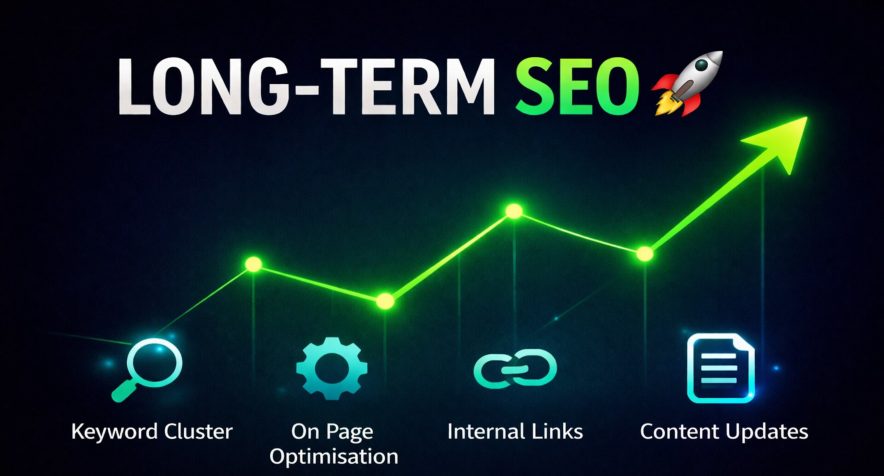
Case Study: I published a blog post on “Beginner Blogging SEO Tips” in 2023. Initially, it ranked on page 3. After optimizing for long-tail keywords, adding examples, and updating data annually, it now ranks on page 1 for multiple related keywords, which has generated consistent traffic over 3 years.
18. Promote Content Effectively
Publishing high-quality content is just the first step. Promotion is essential for generating engagement signals, attracting backlinks, and increasing visibility.
Promotion Strategies:
- Social Media: Share posts on platforms where your target audience hangs out on X, LinkedIn, Pinterest, and Instagram.
- Communities and Forums: Engage on Reddit, Quora, and niche Facebook groups to answer questions and link to your content contextually.
- Email Newsletters: Notify subscribers of your new posts to drive immediate traffic and engagement.
- Influencer Outreach: Reach out to industry influencers for mentions or backlinks.
My promotion style: When I promoted a post on “Content Writing Mistakes” in niche Facebook groups and via email, traffic spiked by 45% in the first week. Backlinks from bloggers who found value in the post also helped it rank higher in the SERPs faster.
19. Repurpose Content
Repurposing allows you to expand reach, save time, and reinforce authority. One piece of content can be turned into multiple formats.
Examples of Content Repurposing:
- YouTube video
- Social media posts
- infographic
- Podcast episode
Step-by-Step Approach:
- Identify high-performing posts.
- Choose formats suitable for your audience. Visual guides perform well on Pinterest, while in-depth guides work as YouTube videos.
- Adapt content for the new format but maintain the same value and messaging.
- Link back to the original blog post to consolidate SEO benefits.
Real Example: I repurposed a 3,000-word post on “Advanced Blogging SEO Strategies” into a YouTube video series. The videos attracted new readers to my blog, and, as a result, overall engagement doubled within a month.
20. Build an Email List
An email list gives you direct access to your audience, unlike social media algorithms that control visibility. Email subscribers are more likely to engage with your content, buy products, and share posts.
Steps to Build a Strong Email List:
- Offer Lead Magnets: Provide value (ebooks, checklists, templates) in exchange for email sign-ups.
- Use Pop-Ups and Inline Forms: Avoid being intrusive; focus on timing and placement.
- Segment Your List: Group subscribers based on interests, behavior, or engagement level for personalized messaging.
- Provide Consistent Value: Send newsletters with actionable tips and updates.
My eBook Offer: I have created a bundle of eBooks for my email subscribers at a discounted price (This offer is still available). The sales for this combo offer were good.

Part 4: Monetization Tips
21. Affiliate Marketing: Promote Products You Trust
Affiliate marketing is the best way to monetize your blog, but it works best when you genuinely promote the products you use. Your readers can spot generic promotion, so authenticity is key.
My Step-by-Step Affiliate Strategy:
- Choose relevant products: Select the products align with your niche. For example, a blogging tips blog can promote SEO tools, hosting/theme services,
- Join reputable affiliate programs like Impact Radius or Awin affiliate platforms, or niche-specific programs like Cloudways or Elegant Themes.
- Create valuable content around products: Don’t create content to insert links! Write detailed tutorials, reviews, or case studies that explain how the product solves a problem.
- Disclose your affiliate relationship: Transparency builds trust! Tell them that you will get affiliate commissions when your visitors buy through your referral links.
My affiliate earnings: I wrote a detailed post on “Top 5 SEO Tools for Bloggers” and shared my personal experience with each tool. It is still making a good income through affiliate sales every month.
22. Sponsored Posts and Brand Collaborations
Sponsored content allows you to earn revenue while maintaining authority, but it must align with your audience’s interests.
Tips to Get Sponsored Deals:
- Build authority: Establish your brand through engaged audiences and quality content.
- Pitch: Send personalized proposals to popular products/services explaining why your audience is a perfect fit.
- Negotiate transparently: Set rates based on your site traffic and engagement
- Maintain authenticity: Don’t forget to disclose sponsored posts to maintain reader trust.
Example: On my blogging tips site, I partnered with an online course provider to review their content marketing course. I shared honest insights, including pros and cons. Engagement increased, and it helped me get more collaborations with other brands.
23. Create Digital Products or Services
Selling your own products or services allows you to retain full revenue, build authority, and deepen your relationship with your audience.
Options (Choose a suitable way):
- Ebooks or Guides: Share step-by-step strategies in your niche.
- Online Courses or Workshops: Teach what you’ve mastered
- Consulting or Coaching Services: Offer your personalized advice
- Membership Sites: Provide exclusive content, tools, or community access.
Step-by-Step Approach:
- Identify the top challenges your audience faces.
- Package your expertise into a product that solves those problems.
- Launch with a pre-sale or beta version to validate demand.
- Promote via email, social media, and your blog content.
My eBook: I created a “10-Day Blogging Course” ebook for beginners who struggle to get started with blogging. After promoting it through my email list and blog posts, it gained a decent income for me in 3 months. This not only monetized my audience but also positioned me as a blogging influencer.
Part 5: Advanced Blogging Strategies
24. Analyze Your Blog Traffic
You should understand how readers interact with your blog, as it is important for its growth. Analytics reveal what works, what doesn’t, and where you should focus next!
Step-by-Step Traffic Analysis:
- Install Google Analytics 4 (GA4): Track page views, sessions, bounce rate, and user behavior.
- Identify top-performing posts: Focus on content generating the most traffic and engagement.
- Analyze sources: Organic search, social media, referrals, and direct visits show where your audience comes from.
- Monitor user behavior: Heatmaps (like Hotjar or Crazy Egg) reveal scrolling patterns, clicks, and engagement points.
My Analytics experience: I noticed my blog post “Blog SEO Mistakes” had high traffic but low engagement. By analyzing GA4 data, I discovered readers dropped off midway due to a lack of visuals and examples. After adding screenshots and actionable tips, I saw considerable improvement in engagement and average session duration.
25. Content Upgrades for Higher Conversions
I believe that the content upgrades are lead magnets embedded within posts to increase email subscriptions and conversions.
How to execute it?
- Identify high-traffic posts: Focus on posts attracting significant readers.
- Create relevant upgrades: For example, a checklist, template, or mini-guide related to the post topic.
- Add a call to action: Give it in exchange for an email address.
- Track performance: Monitor opt-ins and tweak the offer if necessary.
Example: In my “Keyword Research Guide,” I have included a free downloadable spreadsheet for my subscribers. Conversion rate jumped from 1.5% to 3% overnight!
26. Implement Topic Clusters
Topic clusters improve authority and search visibility by organizing related content around a pillar page.
How to Implement Topic Clusters?
- Identify pillar topics: Broad, high-value subjects like “Blogging Tips” or “SEO for Beginners.”
- Create cluster content: Write detailed subtopics that link back to the pillar page.
- Interlinking: Each cluster post links to the pillar and other related posts to distribute link equity.
- Update regularly: Update pillar and cluster content to maintain topical relevance.
How it worked for me: I created a topic cluster around “Content Marketing for Bloggers” with 8 supporting articles. The pillar post jumped from 5th to 2nd page page 5 for multiple keywords.
27. Automate Processes to Save Time
I always leverage automation tools to maintain efficiency as they scale content and marketing efforts.
Automation Strategies:
- Social Media Scheduling: Tools like Buffer or Hootsuite can schedule posts across multiple platforms.
- Email Marketing: Send automated sequences based on your subscribers’ behavior.
- Content Repurposing: Use tools like Canva for visuals, Lumen5 for video repurposing, and Pabbly for workflow automation.
- SEO Monitoring: Set up alerts for broken links, ranking changes, and site errors through SEMrush or Ahrefs. Also, make use of AI SEO tools to perform better.
My strategy: By automating social media promotion and list building, I save 10 hours per week and hence I can focus on creating high-value blog posts.
Wrapping Up
After staying in this online field for more than a decade, one thing is clear:
Blogging is not complicated! But it requires the right approach.
If you focus on:
- Understanding your audience
- Creating valuable content
- Applying SEO strategically
- Staying consistent
You can build a blog that grows steadily over time.
Most bloggers fail not because blogging is hard, but because they follow outdated or incomplete advice.
I hope you have learned some useful blogging tips and tricks through my guidance. If you get stuck at any stage, reach me for immediate help.


![13 Best Free Blogging Sites In 2026 [Ranked And Reviewed]](https://bloggerspassion.com/wp-content/uploads/2012/08/free-blog-sites-list.webp)



I love to read all blogging posts such a piece of gorgeous information you have been mentioned in this blog, I saw in you on the quora platform then after that I searched on google, and finally, I find out a great informative blog.
Thank you so much
Sir, I recently heard about Web2.0 linking strategy, do suggest the same to do like have multiple relevant blogs and updating posts on them ?
That should work. idea is to update them with high quality content, promote those blogs and build some audience on them to get maximum benefit from them.
You have provided some great tips, and this may be one of the best articles on the blog. I was wondering why I had so many blogs, and now I’m thinking about eliminating them. I’m also thinking about switching my hosting and reading all the books as well as you have suggested.
Inspiring story of your’s, I really look forward to your blogs.
Hi Anil Sir,
It is really inspiring reading your blogging journey. I just started with it on blogspot.com. I gained knowledge from reading your post. I am still a novice. Would like to get such inspirations from leading bloggers like you. Getting into writing such blogs will take time for me. But will try my level best to apply your tips and tricks in my blogging. At times it is really difficult to understand and do things in one go. But surely will keep working hard to achieve. A positive attitude always works.
Regards,
Rita
Hi Anil,
Well first of all I would like to thank you for sharing your successfully 15 years blogging secrets. What i liked the most in this article is about “Smallseotools” & “Crazyegg” which is really good enough to give tough competition to other paid tools as discussed in your post. I also agrees with you on Pareto 80/20 rule. Really this rule comes to true most of time while I do analysis of my posts and their promotional activities on various Social media platform.
Regards,
Akhilesh
Hello Anil,
Thank you so much for Bloging tips. that tips really works, i love it your content, keep sharing.
Excellent tips.
I have learned a lot from bloggers passion and this one of the best articles on this blog.
I was doing the mistake of creating many blogs and now I think to rectify it.
Another thing is to change my hosting, and I will try to read all the books as stated by you.
Hi Anil,
This post is so incredibly good.
I learned a bunch of similar lessons during my 13 year blogging career. Giving freely vibes deeply with me because pros are generous servants, first and foremost. From there, all of this free giving increases skills, exposure and credibility. Credible, skilled bloggers seen in many spots go pro because people buy their stuff and also hire these bloggers.
Being generous and patient are keys because most bloggers, in their fear and panic, are stingy and impatient. Or perhaps the bloggers seem to be patient but blog from stingy energies. Other bloggers are generous as can be but incredibly impatient. The challenge is to be generous for a long time.
I am learning new things, per one of your tips bro. Optimizing my blog posts for SEO since January of 2021 has opened my eyes because I ranked most of these new posts on page 1 for a little bit, at least. But even ones that did not rank – written with competitive keywords – still drew more organic traffic through my list and social media, all because my readers and new readers enjoyed the 2,000 plus word, detailed offerings.
Being a pro blogger is not as hard as people think but the journey feels uncomfortable sometimes. Most bloggers bail at the first sign of discomfort, struggle, fail and blogging seems hard for them for many years. A select few bloggers do not panic and bail, hugging uncomfortable fears, and simply keep blogging for the long haul until going pro. Everything depends on your mindset because your mindset determines whether you do the right blogging things for a long time.
Smashing guide Anil. I retweeted and also shared on my Facebook.
Ryan
Your post is really helpful for starter bloggers who have just started blogging passionate to nurture the audience and also making money passively.
It really helps me to analyse all drawback that results to low traffic on my blog . These useful tips really helps me to figure out new strategies to grow and nurture my audience.
I am learning and improving SEO skills. Can you guide me on how to make strong network connections?
It was really amazing and helpful content. I love your blogging tips. Thank you so much Sir.