


We all know that Semrush has 50+ features to offer. Obviously, Semrush is a winner.
But the goal of this comparison is to highlight Moz differences and to learn whether Moz stands in front of Semrush or not.
I have been using Semrush for 10+ years. And Moz for a couple of months. I think I can share my valuable insights.
Let’s move to the comparison.
Disclosure: We get a commission when you buy a product via our affiliate link at no additional cost.
The Data Accuracy of Moz and Semrush
I ran a quick test on my own site to see how the numbers stacked up. For my ‘Hostinger coupon code’ page, Google Search Console reported 987 organic clicks from India over the last 6 months
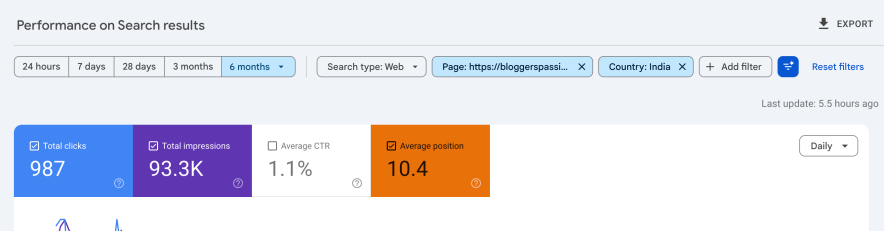
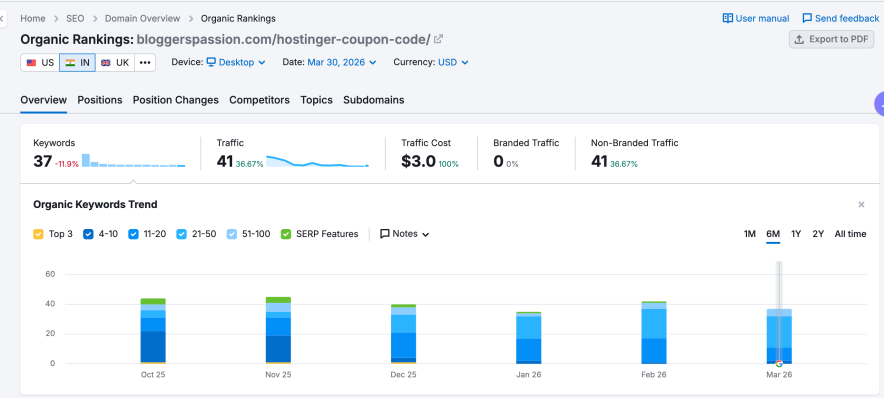
In Semrush, it estimated 243 clicks. Moz doesn’t even offer a tool to estimate organic traffic for specific URLs.
To test the database strength of both keyword research tools, I entered a rare topic into their suggestion tools and found that Semrush provided 1,958 suggestions, whereas Moz provided 998.
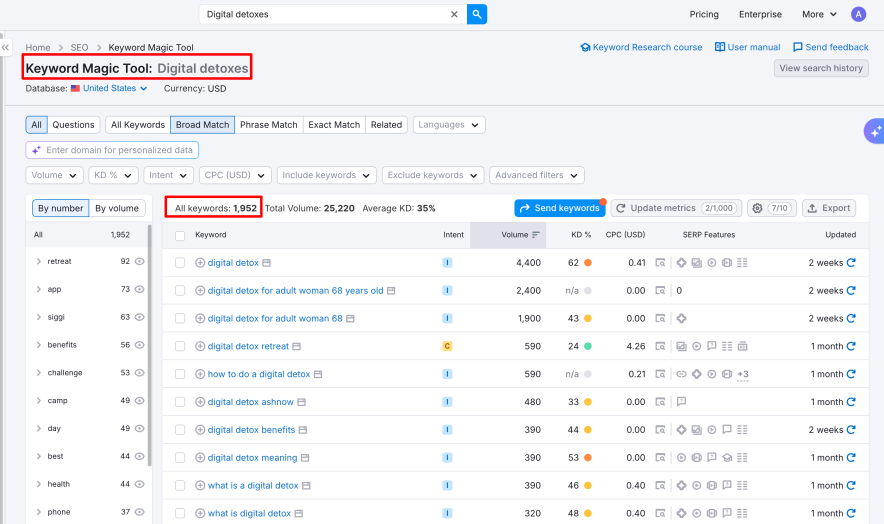
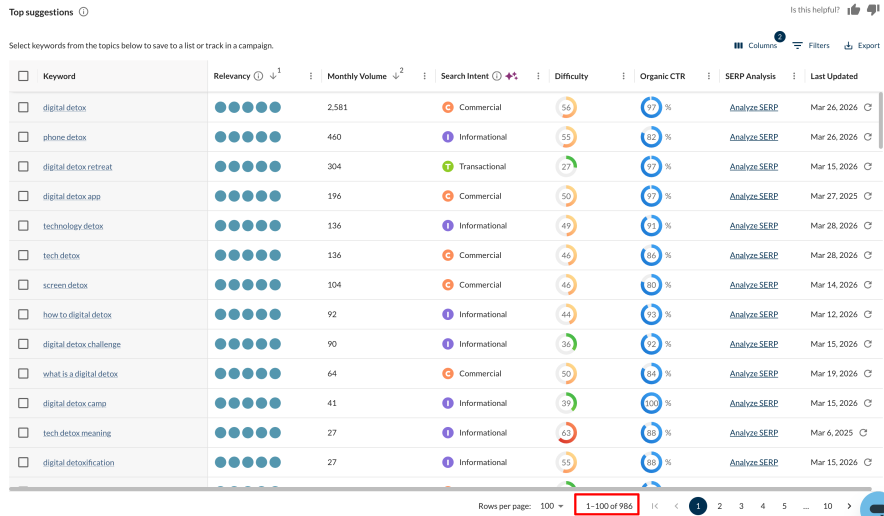
998 is still not a bad number, but Semrush gives you more topic or keyword ideas for sure.
How Moz and Semrush Compared?
| Feature | Semrush | Moz |
| Best For | Those who are looking to subscribe to a full AI-powered SEO and marketing toolkit | Small sites looking for only SEO tools |
| Keyword Database | Massive (25B+) | 1.25B |
| AI SEO Tracking | Tracks multiple models (ChatGPT, Perplexity, Google). | Currently limited to ChatGPT (Beta). |
| Backlink Analysis | Larger database with automated email outreach. | Industry-standard DA & Spam Score. |
| Site Audit | Deep technical data (Core Web Vitals & AI structure). | Cleaner interface with much higher crawl limits. |
| Rank Tracking | Daily updates (24-hour cycle). | Weekly updates (standard). |
| Content Tools | Topic Research & SEO Writing Assistant | NA |
| UI / Experience | Cluttered/Complex (50+ tools). | Simple, clean, and beginner-friendly. |
| Starting Price | $117.33/mo (Classic) or Semrush One plans. | $49/mo (Starter Plan) |
| Unique Edge | AI Visibility Score & Keyword Magic Tool. | Brand Authority & 5-way Link Intersect. |
AI SEO & Search Visibility:
In 2026, it’s no longer just about ranking #1 on a page. We also want our page to become a cited source that an AI like ChatGPT, Gemini, or Google AI overview uses to build its answer.
Both Moz and Semrush have integrated AI-tracking features to help users in this new AIO SEO era.
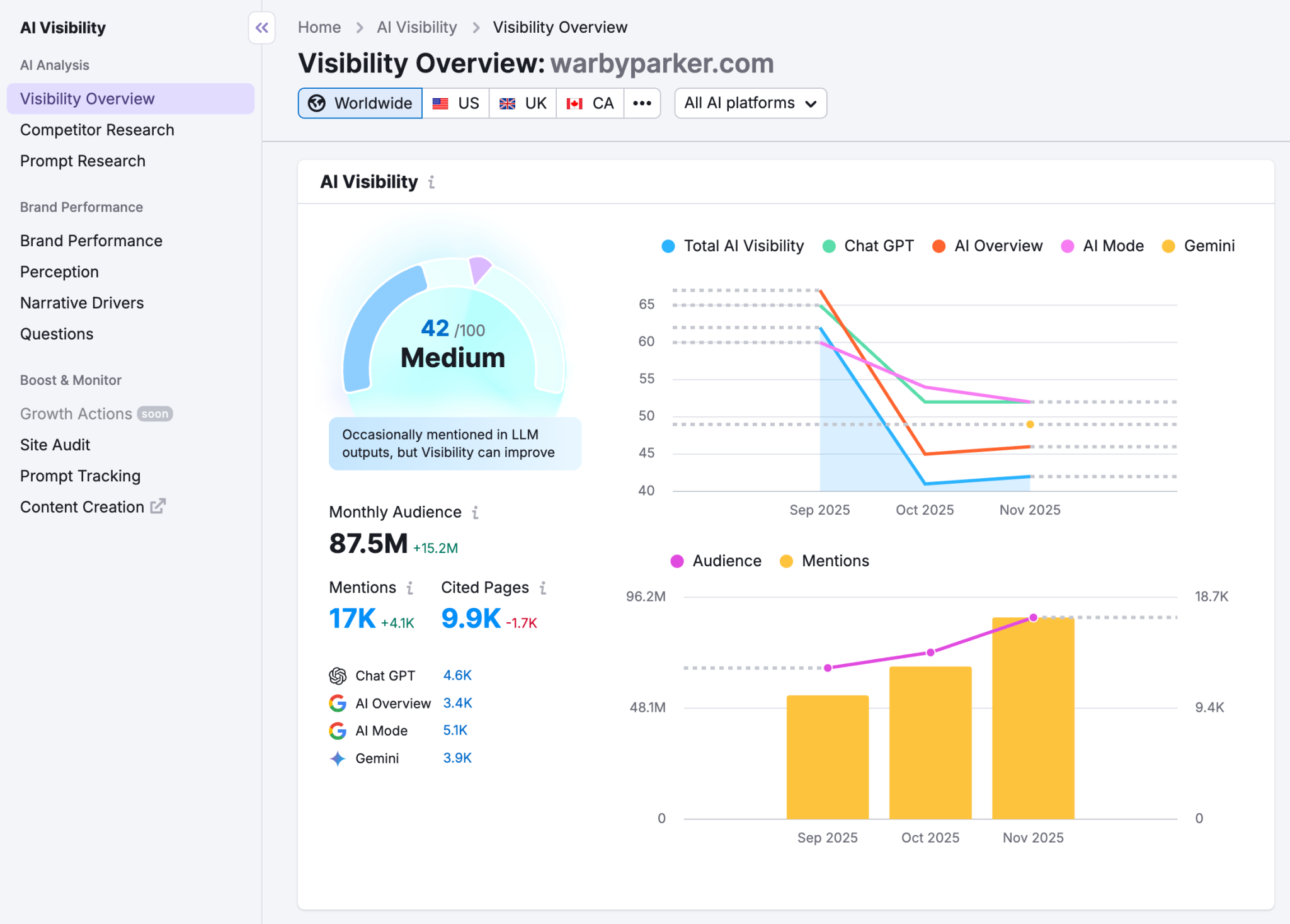
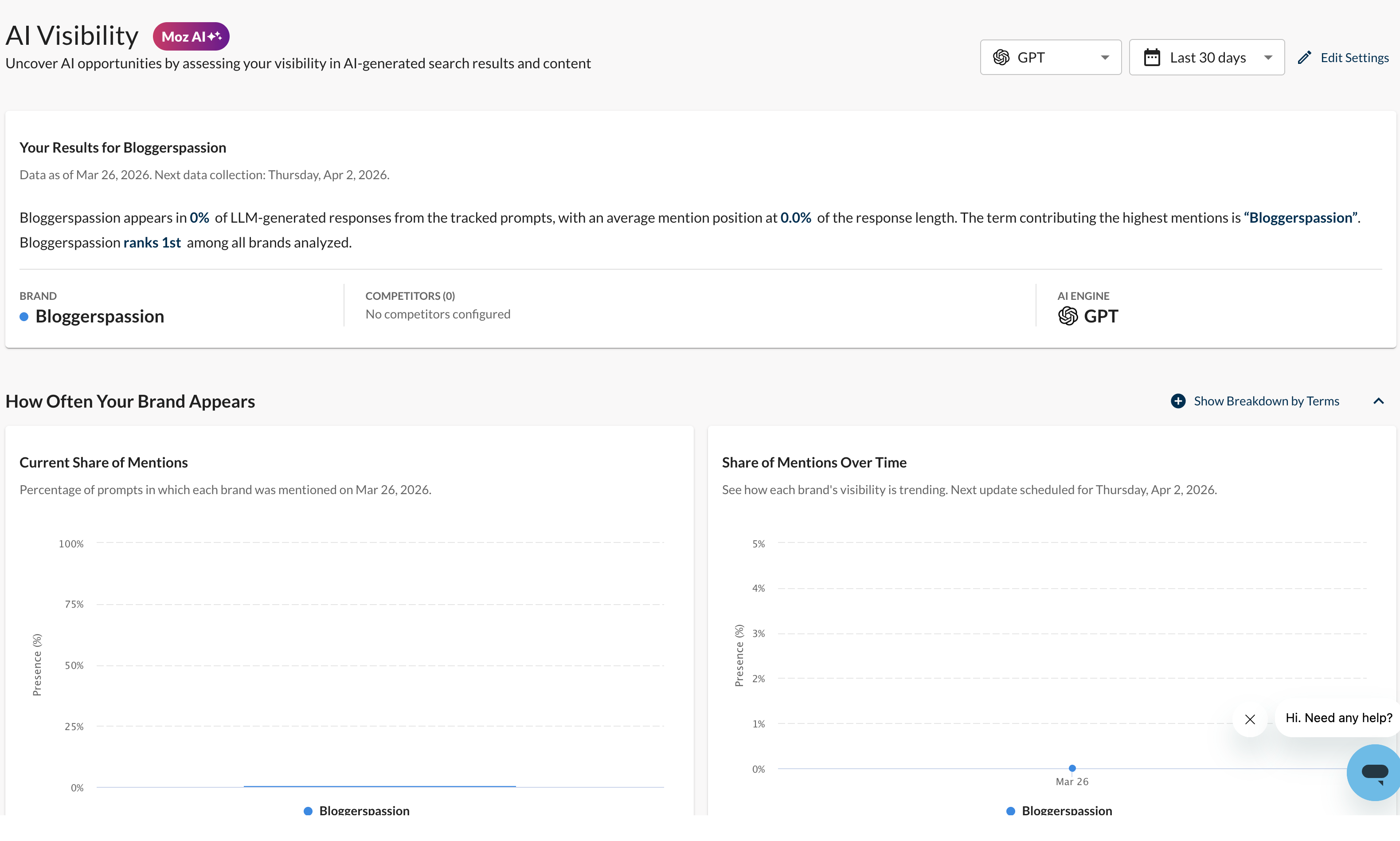
They both offer an AI Search visibility feature, which shows how often your domain appears in AI-generated summaries compared to your competitors.
In Semrush, you can track your Brand AI presence in multiple LLM models, including ChatGPT, Perplexity, and Google AI mode. In Moz, the feature is currently limited to ChatGPT.
Keyword Research:
Both Semrush and Moz offer multiple tools for keyword research that feel quite comprehensive to use.
But they both approach the data differently. You will find standard metrics in both, such as:
- Monthly Search Volume,
- Keyword Difficulty (KD) score (rated 1-100),
- And lists of Related Keyword Suggestions
Both tools also allow you to see which keywords your competitors are currently ranking for and offer “Keyword Gap” features to identify terms they use that you are missing.
Plus, they both show the search intent (Informational, Commercial, Navigational, and Transactional), which helps you structure your content
In Semrush, you can find tens of thousands of keyword suggestions. Using the “Keyword Magic Tool,” you can filter these into topic clusters and identify “low-hanging fruit” keywords (easy-to-rank terms).
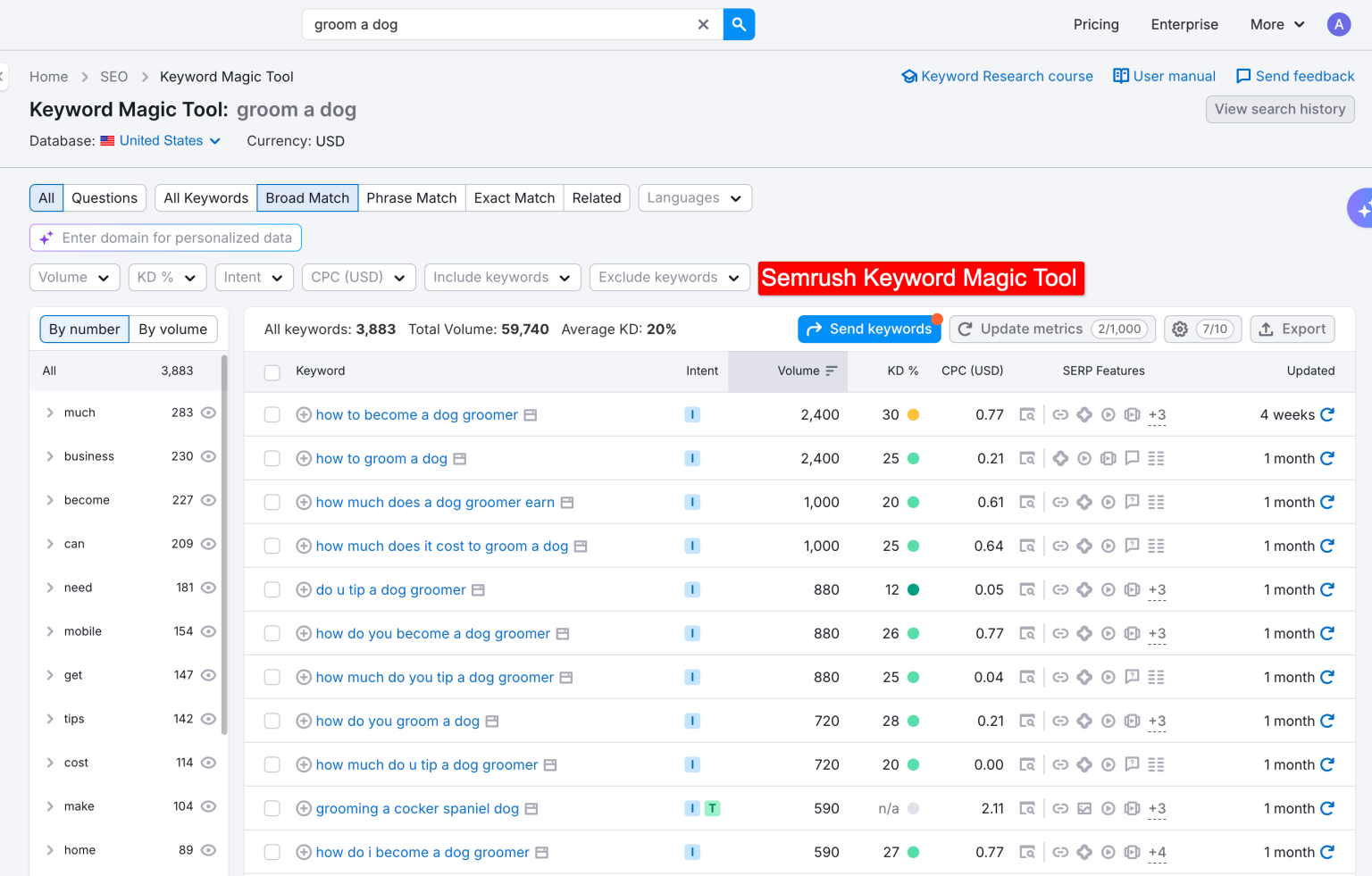
Moz works when you believe in the “less is more” approach. It provides a simple keyword research interface that, instead of overwhelming you with excessive data, It allows you to find exactly the keywords you need and save them to your custom lists.
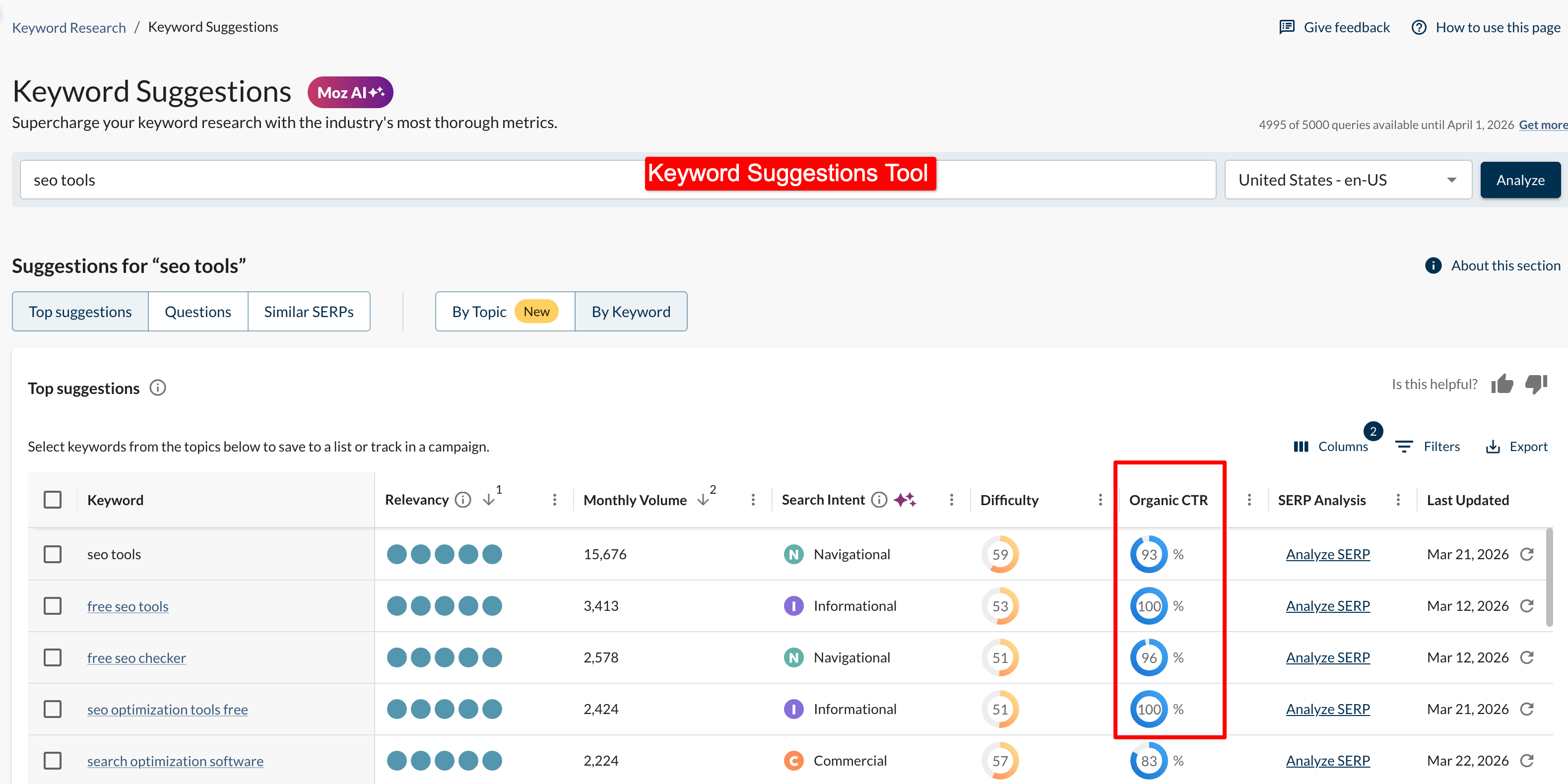
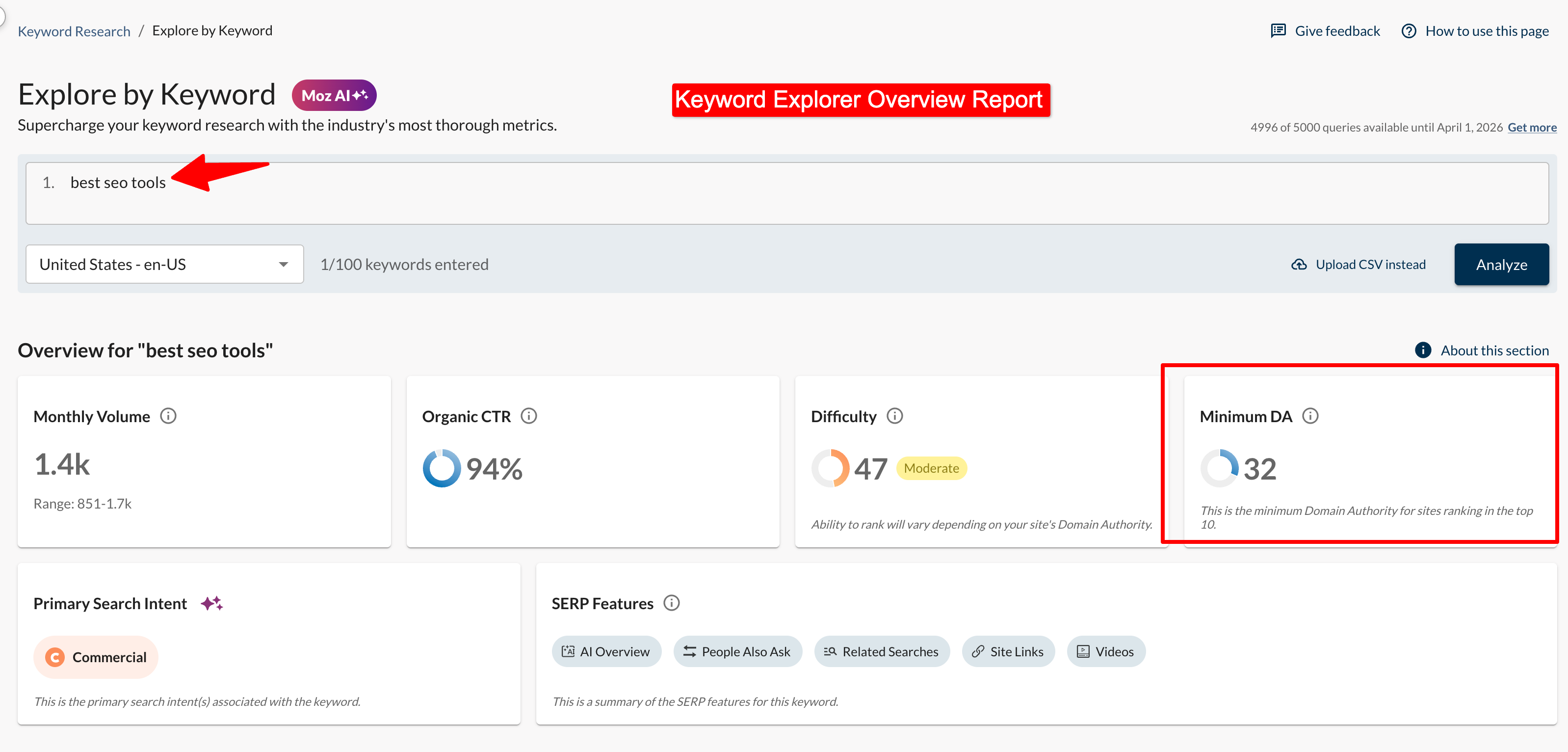
Moz features the ‘DA’ (Domain Authority) metric, which is recognized industry-wide for its accuracy. It shows the lowest authority score currently ranking in the top 10.
Semrush is clearly ahead of Moz in the keyword research segment.
They offer a database of 25 billion keywords, whereas Moz offers roughly 1.25 billion. Because of this, Semrush is much more likely to generate keyword ideas for smaller niche topics than Moz.
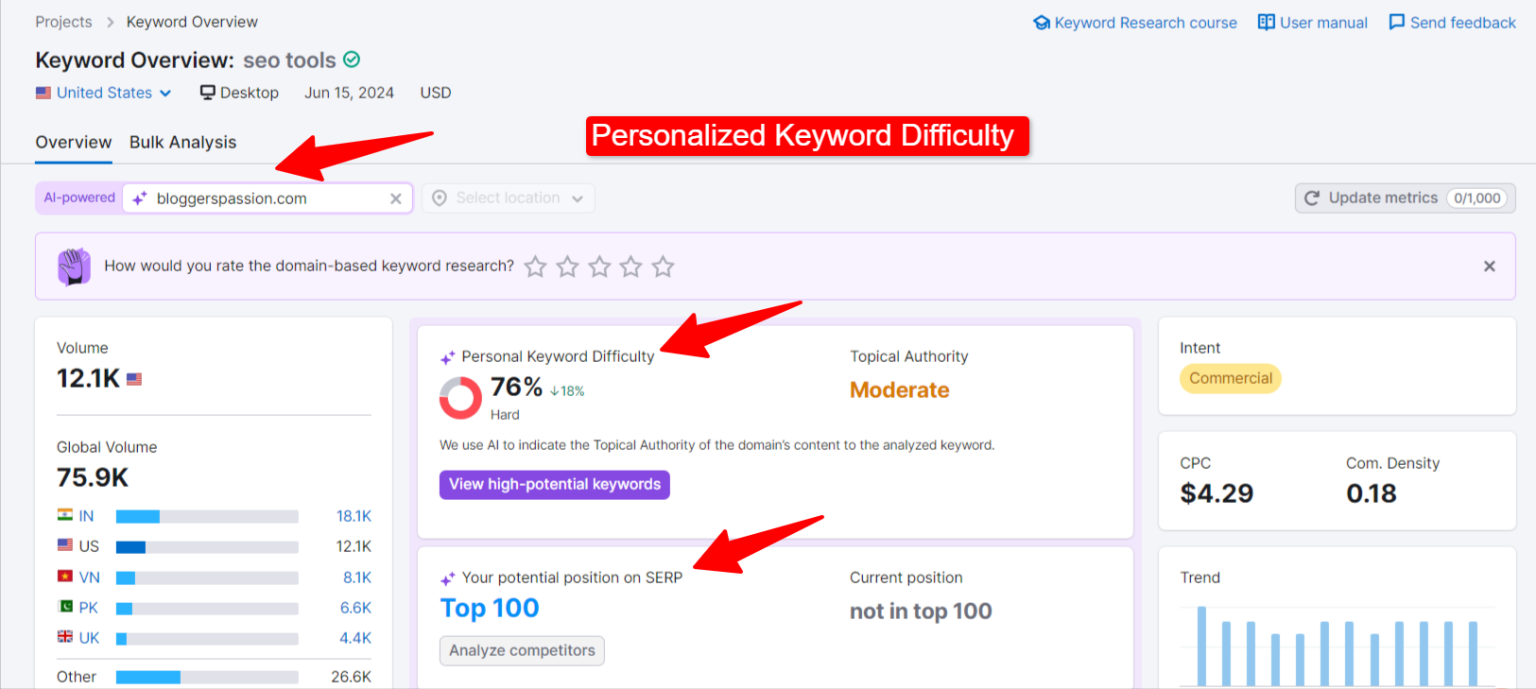
Plus, Semrush offers a unique AI Personalized Keyword feature. It helps you calculate how difficult it will be to rank for any given keyword based specifically on your site’s authority. This is really helpful rather than depending on the industry average.
Despite Moz’s smaller database, their DA and Brand authority metrics could be really helpful in making research on real projects, they show how established a competitor is.
Overall, both tools will help you complete your keyword research. Your choice simply depends on the popularity of your niche; if you are working on a smaller topic, there is a higher chance you will get more keywords from Semrush.
You can identify the potential size of your topic idea using Google Trends. When you take the trials for Semrush and Moz, you can input a few seed keywords right at the start to see which tool offers more data.
If there is only a marginal difference, I would suggest going with Moz because it is more cost-effective.
Competitor Research:
Our entire SEO planning primarily depends on competitor research. Doesn’t it?
If we talk about common things, the “Domain Overview” report is available in both tools. In both platforms, you can enter a competitor’s URL and instantly see their:
- “authority score” (Domain Authority in Moz vs. Authority Score in Semrush)
- the total number of external backlinks,
- and the primary keywords they rank for
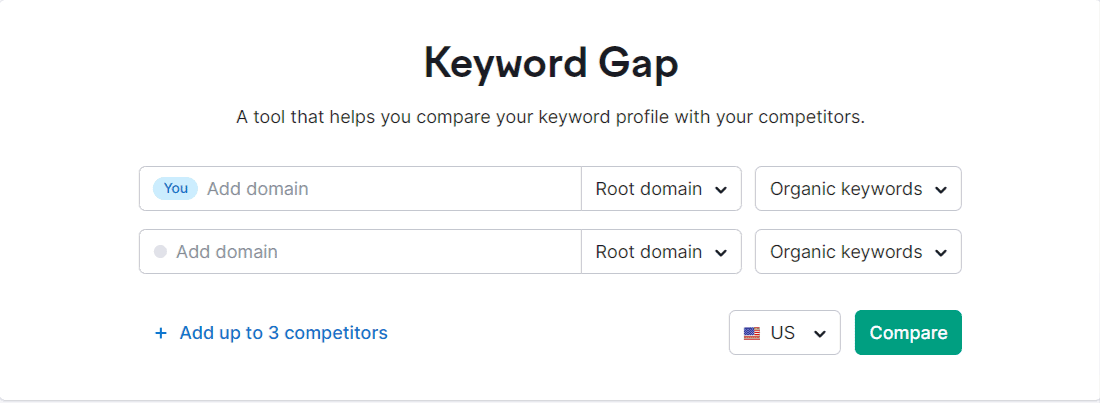
Both tools offer “Gap Analysis” features. Basically, it allows you to compare your domain against multiple rivals simultaneously to see exactly which keywords or linking domains they have that you are currently missing.
If you are using Semrush, the impact is comprehensive. It allows you to see the estimated monthly traffic for a competitor. In other words, you can identify pages that generate revenue or the ad copies they are bidding on. This analysis is absent in Moz.
Moz’s focus is on SEO competitive analysis. Its Brand Authority metric and Domain Search Theme provide a unique look at how “established” a brand is in the eyes of search engines.
Semrush recently added an ‘AI Visibility’ tool to its kit. It allows you to track your competitor’s brand visibility across AI search models. Moz has a similar tool; it is currently still in the beta stage.
In Moz’s link profile comparisons, you can explore your domain alongside five other domains (one more than Semrush’s limit of four)
Overall, Semrush offers detailed traffic analysis; however, Moz could be a highly effective option for those who prioritize their work around more traditional SEO metrics like Domain Authority and Spam Scores.
Backlink Analysis:
To put it briefly, both tools are equally powerful in this segment.
Because Semrush has a larger link database, you could consider it the winner. Otherwise, their general functionality and feature offerings are essentially the same.
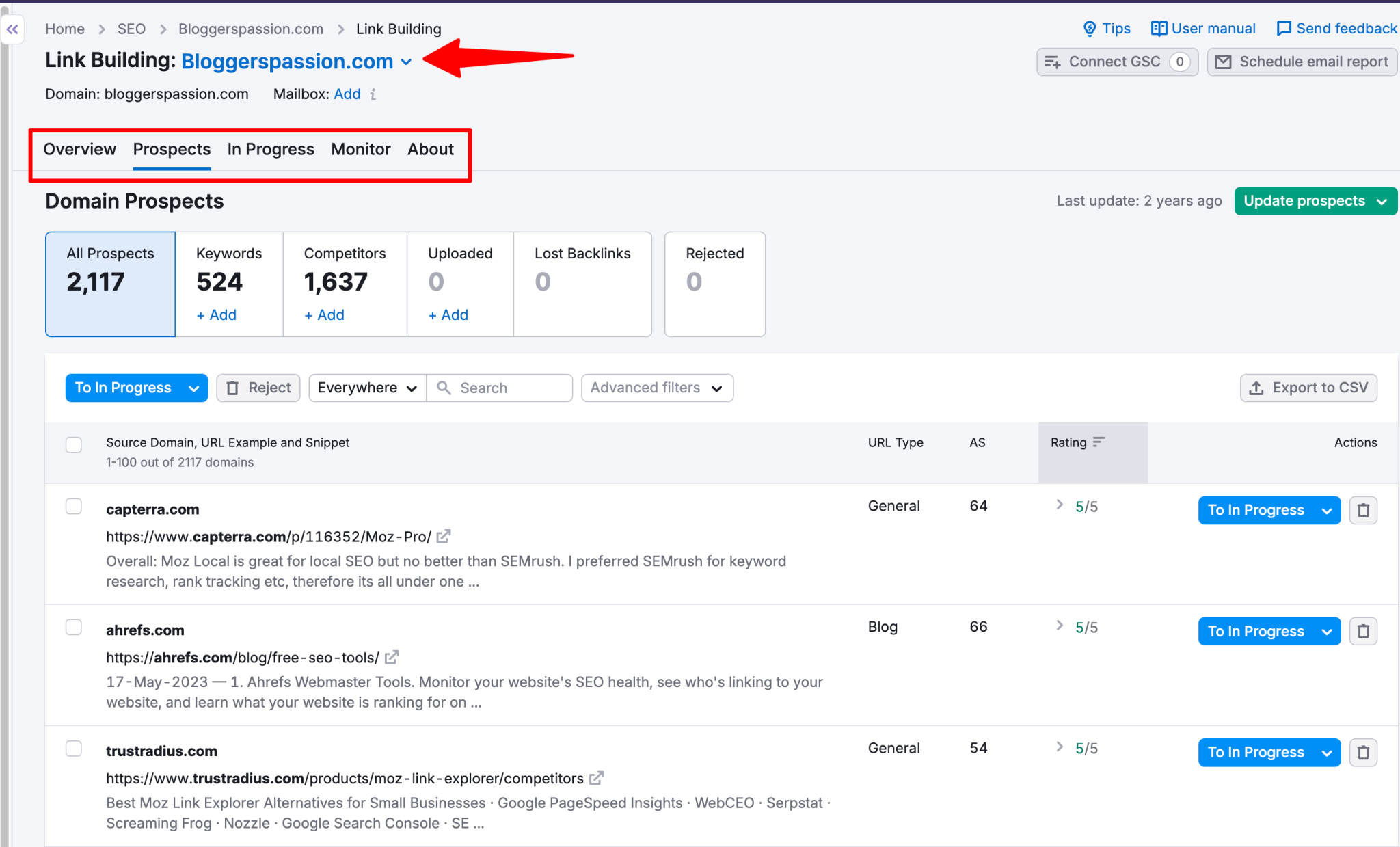
Semrush has a dedicated link building tool that can automatically suggest prospects based on your content and even allow you to send outreach emails directly from the dashboard.
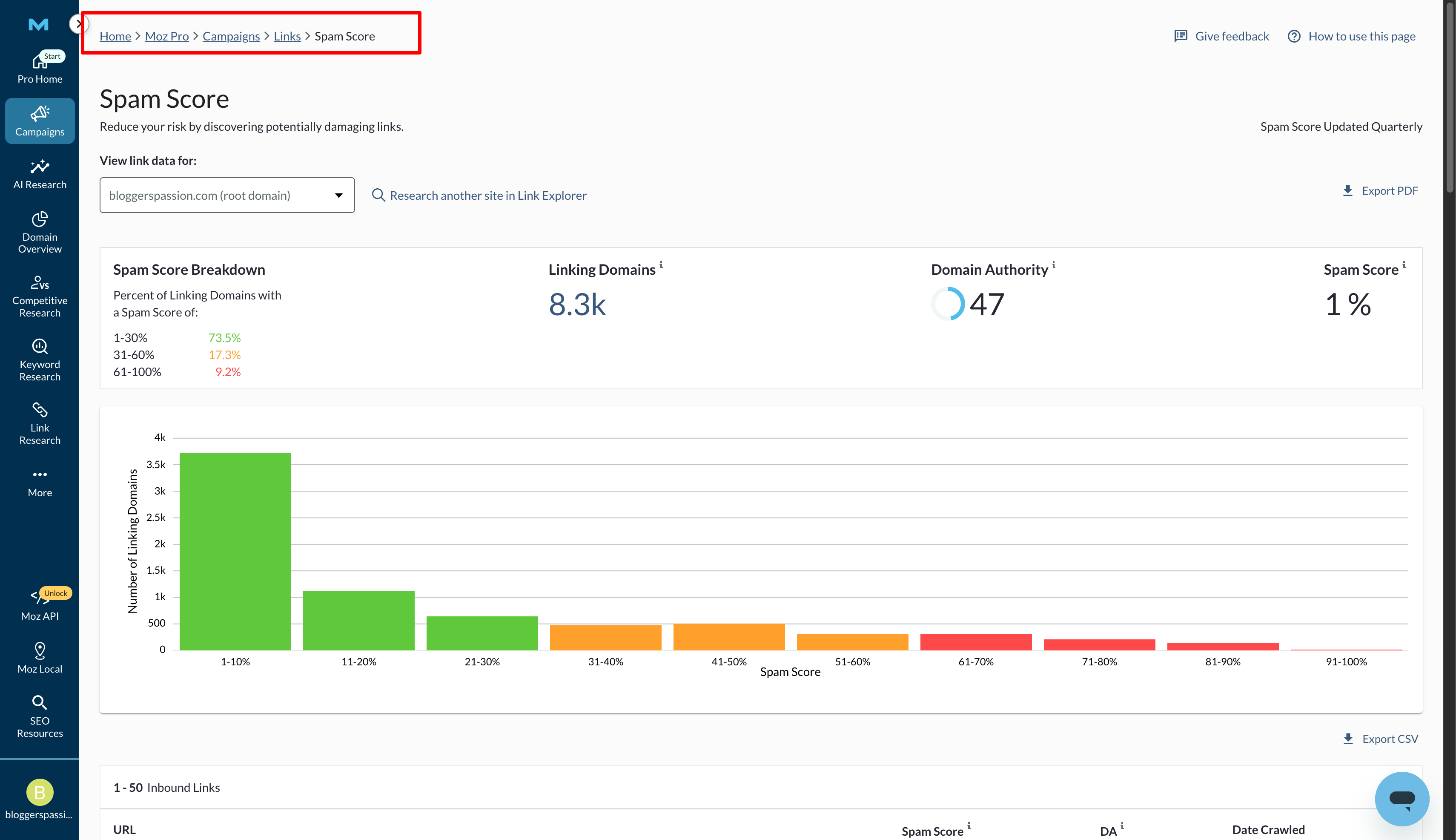
Moz is known for the famous Domain Authority (DA), which many use as the industry standard for measuring site strength. Its Spam Score and Link Intersect (which allows for 5 domain comparisons vs. Semrush’s 4) are highly effective for manual outreach and link auditing.
When we compare carefully, Semrush pulls ahead with filtering options and data visualization. It provides additional insights like Backlinks by Country and Referring IPs.
Moz is generally more affordable for those who need high Google crawl limits or API access to link data.
Site Audit:
Both the SEO tools provide automated crawlers that scan your entire website and return a prioritized list of issues.
In both platforms, you will find a “Health Score” (usually a percentage from 0-100%) that gives you an immediate sense of your site’s technical state.
Both tools check for over 100+ common SEO issues, including:
- Crawlability and Indexability issues
- HTTPS implementation, Broken Links (4xx/5xx errors), and Missing Meta Tags (like titles or descriptions).
They also both provide “On-Page” suggestions to help you optimize individual pieces of content.
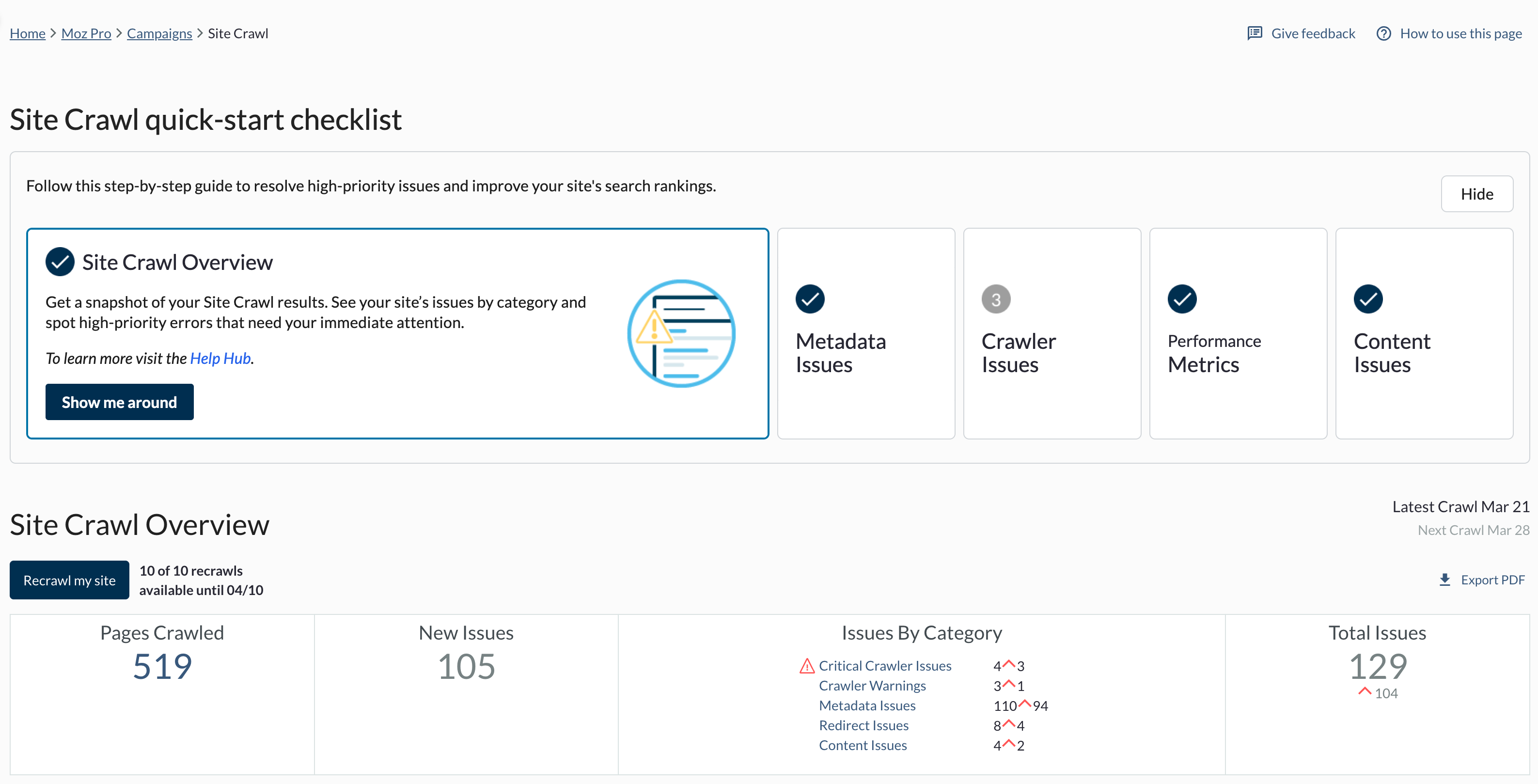
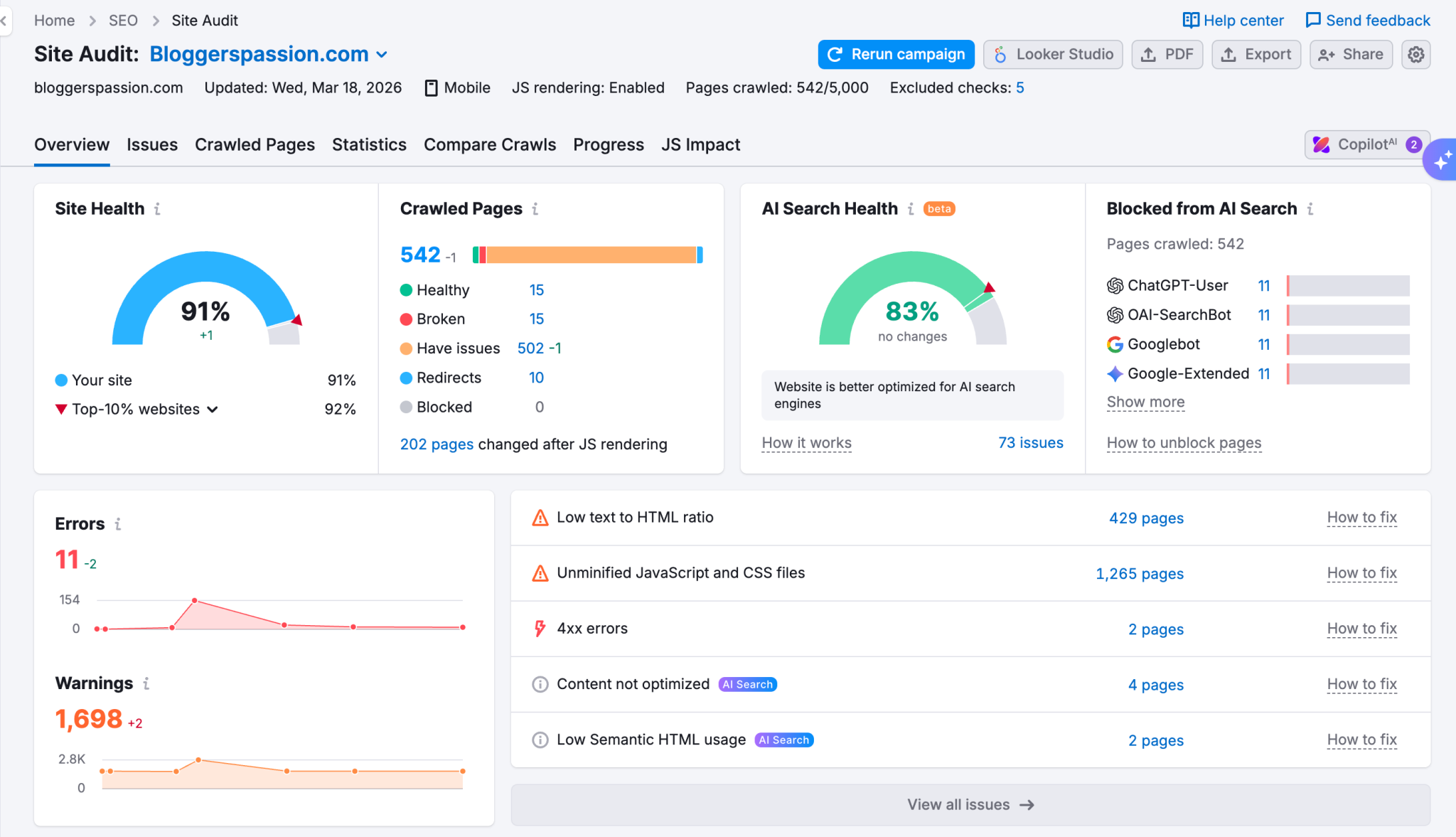
In a real-world scenario, the Moz site audit interface is cleaner and less intimidating. It covers the essentials like duplicate content and redirection issues. However, Semrush goes deep and even covers core web vitals monitoring, and also tells you whether your site is properly structured to be cited by AI answer engines like ChatGPT or Perplexity.
If we talk about audit crawl counts, then Moz gives you way more than Semrush for a lesser amount of money. If you have a simple or less technical site then I think you should save your money on audits.
Content Marketing:
By nature, Moz has always focused primarily on SEO functionality. However, Semrush is continuously evolving, and you will find a lot of helpful features specifically designed for content marketing.
In Semrush, I like using their Topic Research tool. It gives me trending topics and common questions people are asking around my main keyword. And their SEO Writing assistant helps me to improve my on-page SEO score in my Google docs editor as well.
I don’t find such tools in Moz. Hence, a clear win for Semrush in this segment.
User Interface & Experience:
Both of our tools follow a standard “Sidebar Navigation” structure. All the major toolkits, like Keyword Research, Link Building, Site Audits, etc are categorized on the left.
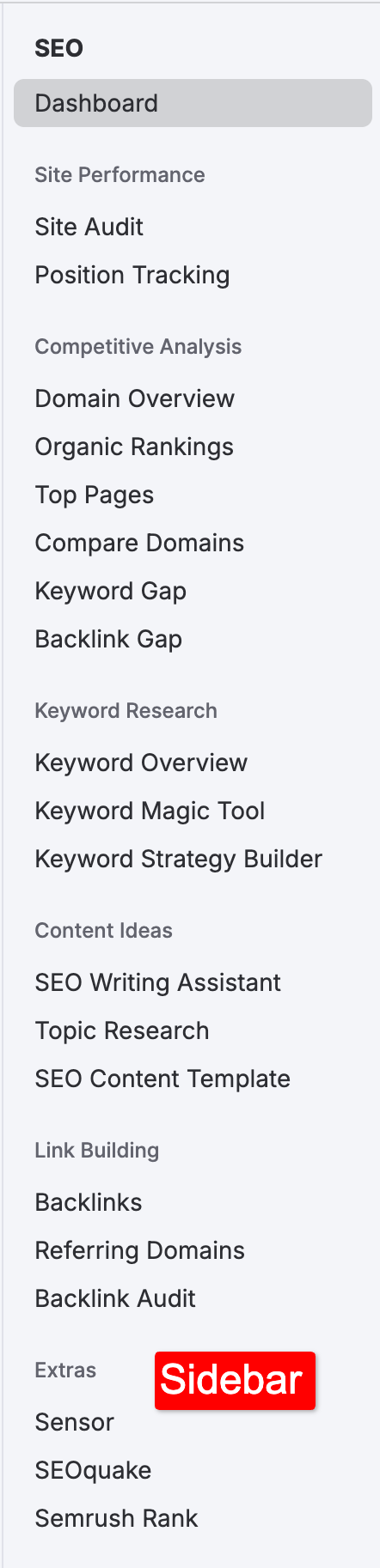
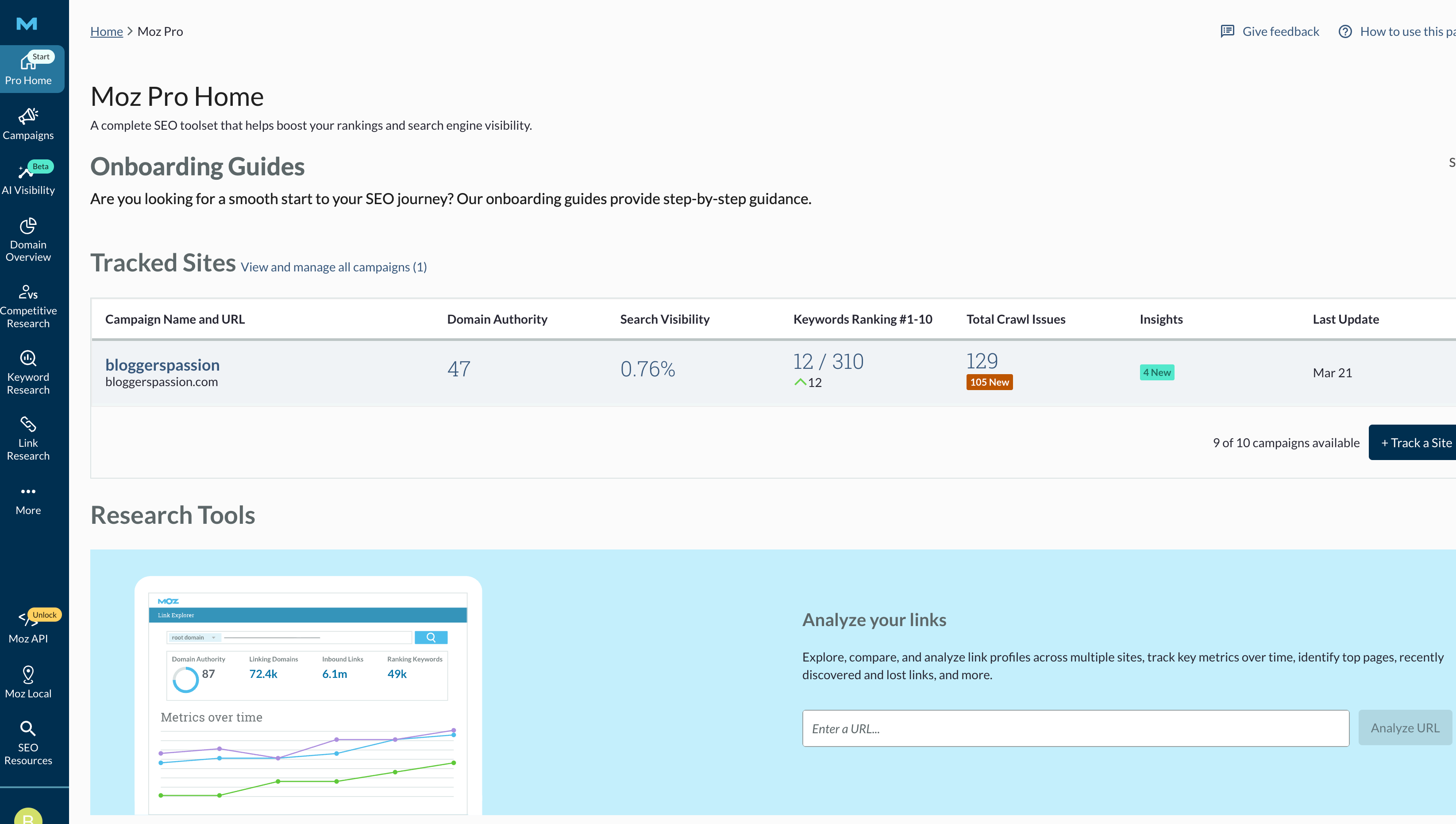
Both platforms utilize a “Project-Based” dashboard, which allows you to sync your domain to the tool for automated tracking. You’ll find similar visualized data reports in both tools. The tooltips attached to every option can be seen.
Semrush overall dashboard looks cluttered and not beginner friendly. They can’t do anything about it as they have to organize 50+ features in a single dashboard. Moz is ahead here. They have limited features in their toolkit, and hence, they are able to manage the organization easily.
Rank Tracking:
Rank Tracking is a module we all use on a daily basis.
In both platforms, you will find daily or weekly updates on your Visibility %, Average Position, and Total Traffic Forecast.
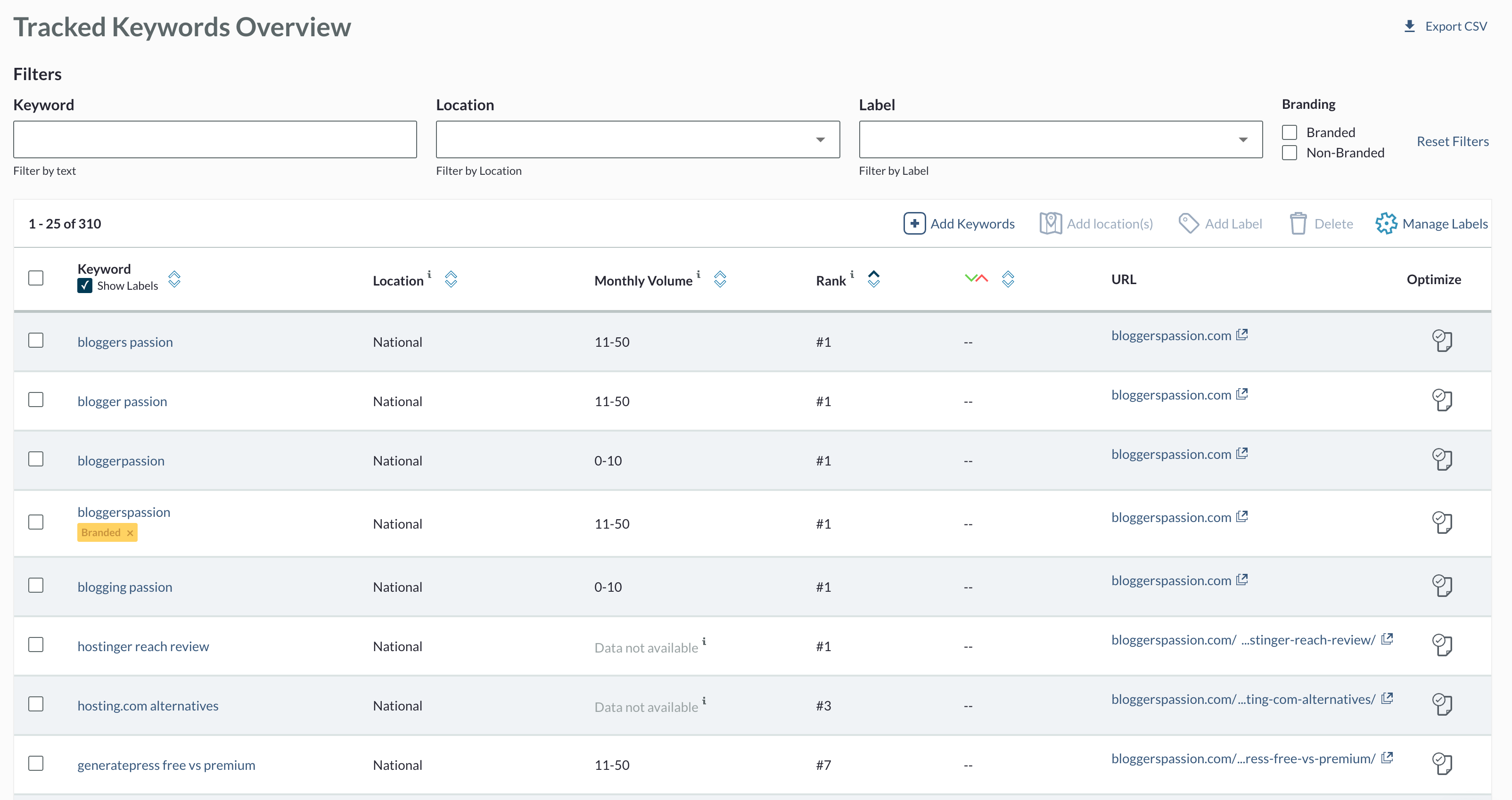

Both tools also allow you to track rankings by specific geographic locations and device types (Desktop vs. Mobile).
They both include SERP Feature tracking. Basically, it shows you if your site appears in “Featured Snippets”, “AI Overviews”, “People Also Ask” boxes, or “Image Packs” for your tracked terms.
Both tools handle rank tracking for you. But the major difference lies in the frequency of rank data updates. Semrush provides you with daily rank data updates every 24 hours, whereas Moz only offers a weekly rank tracking feature.
I don’t even need to say it, but most businesses want daily rank tracking. And even after 20 years, Moz hasn’t been able to upgrade this feature.
Pros and Cons:
After using both the tools and observing their key differences, I found some pros and cons you should know. This helps in your decision making.
Semrush:
| Pros | Cons |
| Semrush will provide you with more links and keywords. That is simply the reality. | For most beginners, 50+ features are unnecessary, but still, they end up investing in multiple toolkits rather than the classic SEO one. |
| For most beginners, 50+ features are unnecessary, but still they end up investing in multiple toolkits rather than the classic SEO one. | The user interface is poor. The learning curve is there. |
| It is currently the only tool that gives you a clear AI Visibility score | Expensive! |
Moz:
| Pros | Cons |
| The budget requirement is less here hence anyone can plan their strategies with the SEO tool | Moz lacks a lot of essential features. It is evolving at a slow pace. |
| Moz has fairer plans. They offer more generous limits on all features | No refund policy is available. |
| Moz metrics like DA and Spam score are acknowledged by experts. Hence, Moz seems more trusted | |
| It is much more affordable to add additional users, and mid-tier plans often include multiple seats for free. |
Pricing:
In 2026, Semrush changed its pricing structure completely. You’ll find separate toolkits, and you have to buy them individually.
Yes, the classic Pro ($117.33/month) and Guru ($208.33/month) plans are still available in their SEO Classic toolkit. But people are now considering their Semrush One plan, which includes both traditional SEO and AI SEO features. Do remember, this 17% OFF pricing is for an annual tenure.
Moz offers much lower plans. Its Starter plan at $49/month is a game-changer for users with just one website. In Moz, you won’t find multiple toolkits as they only offer SEO features.
Yes, Moz is the winner if we are giving a merit on the cheaper priced plans. It even beats Ahrefs.
FAQs:
Which one is actually worth it in terms of money?
Moz is the clear winner if we talk about affordability. Their starting price is $49 and offers generous limits on crawls, keywords, and reports.
Do I need a separate tool for content marketing if I choose Moz?
Most likely, yes. Semrush includes a full content suite.
Why do the traffic estimates look so different from my Google Search Console?
No SEO tool has a direct wire into Google’s brain. They use clickstream data to estimate traffic. I recommend trusting Google Search Console data if you have access.
Can I use these SEO tools for free?
There is a free trial available for both tools. But you can’t use them forever for free usage. Please check the introduction for trial links.
Explore More:
- Semrush Review (Full Breakdown with Detailed Analysis)
- Moz Review (Is this worth it in 2026)
- Semrush vs Ahrefs [Comparison Between Pro Tools]
- Is SEO Alive in 2026?
- How to Remove Toxic Backlinks?


Out of both these tools, I find Semrush easy to use and quite accurate.