

Key Takeaways:
There are four types of keywords;
- Informational: People want answers or to learn something (Ex: how to start a YouTube channel)
- Navigational: People want to visit a specific site or brand (Ex: Amazon login)
- Commercial: People are comparing options to research brands, products, or services (almost ready to buy) (Ex: best web hosting for WordPress)
- Transactional: People want to act now, such as buy, sign up, free trial (Ex: Grammarly free trial)
Not all keywords mean the same thing.
Some people want answers, others want to reach a brand, many are comparing options, and a few others are ready to buy right now.
If you target the wrong keyword type, you’ll get traffic that NEVER converts.
In this guide, we’ll break down the 4 keyword types that actually matter in 2026, with simple examples, so you know what to target, when, and why.
The Only 4 Keyword Types You Need in 2026
Although there are many keyword categories, the four most essential types of keywords are;

- Informational
- Navigational
- Commercial
- Transactional
1. Informational Keywords
The primary intent: Learn something or find an answer
This is the awareness stage.
The searcher isn’t buying yet. They’re trying to understand a topic, fix a problem, or learn how something works.
Most informational searches are question-based. They usually start with what, why, or how.
For these queries, Google typically shows blog posts, guides, videos, or explainers, NOT product pages.
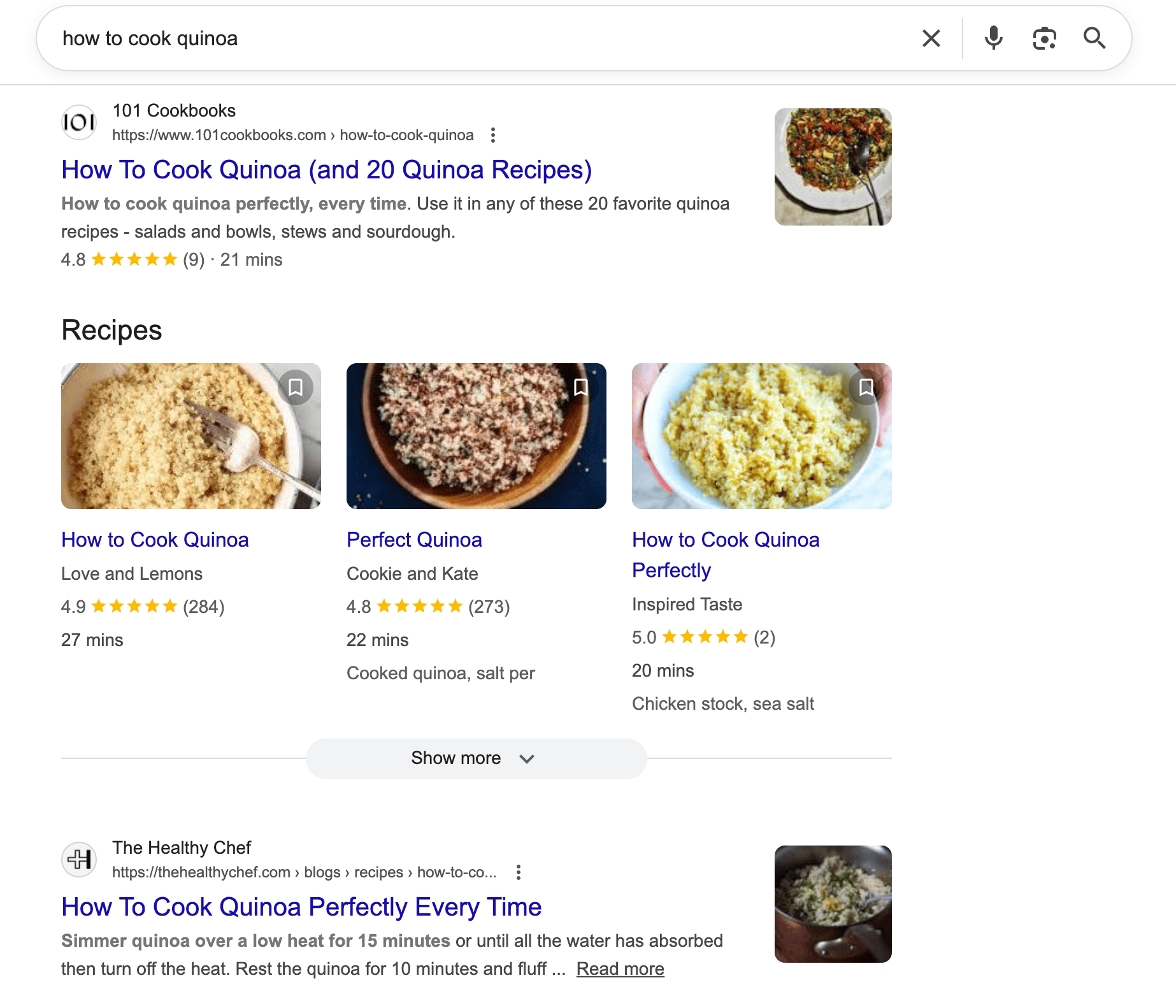
For example, if you search for “how to cook quinoa,” Google clearly understands that you’re trying to learn, not buy.
So, the search results are filled with step-by-step blog posts, recipes, videos, and cooking guides. You won’t see product pages or “Buy quinoa now” product listings at the top.
That’s because this is a 100% informational query. The intent is to get an answer, and Google only shows content that clearly explains the process and solves the user’s problem.
If your content answers the question clearly, you’ll rank in Google.
Why are informational keywords important?
Here are some of the major reasons to consider informational keywords;
- They bring more traffic because most searches are informational, not buying-focused
- They build trust early by helping users before trying to sell anything
- Google prefers them since search and AI results favor clear answers over sales pages
- They boost authority by positioning you as a trusted source in your niche
- They last longer because most of the informational content stays relevant for years
2. Navigational Keywords
The primary intent: To find a specific website or page
This is the consideration stage, where the searcher already knows what they want and is looking for the right source.
These searches usually include brand names or exact page names, such as “Netflix login” or “YouTube.”
Targeting navigational keywords helps increase brand visibility and brings traffic from users who already recognize or trust your brand.
For example, when you search for “Netflix login,” Google instantly knows you want to go to a specific page, not read an article or compare options.
So, the top result is Netflix’s official website, along with direct sitelinks such as Sign In, Billing & Payments, Join Netflix, and Help pages.
That’s how navigational keywords work.
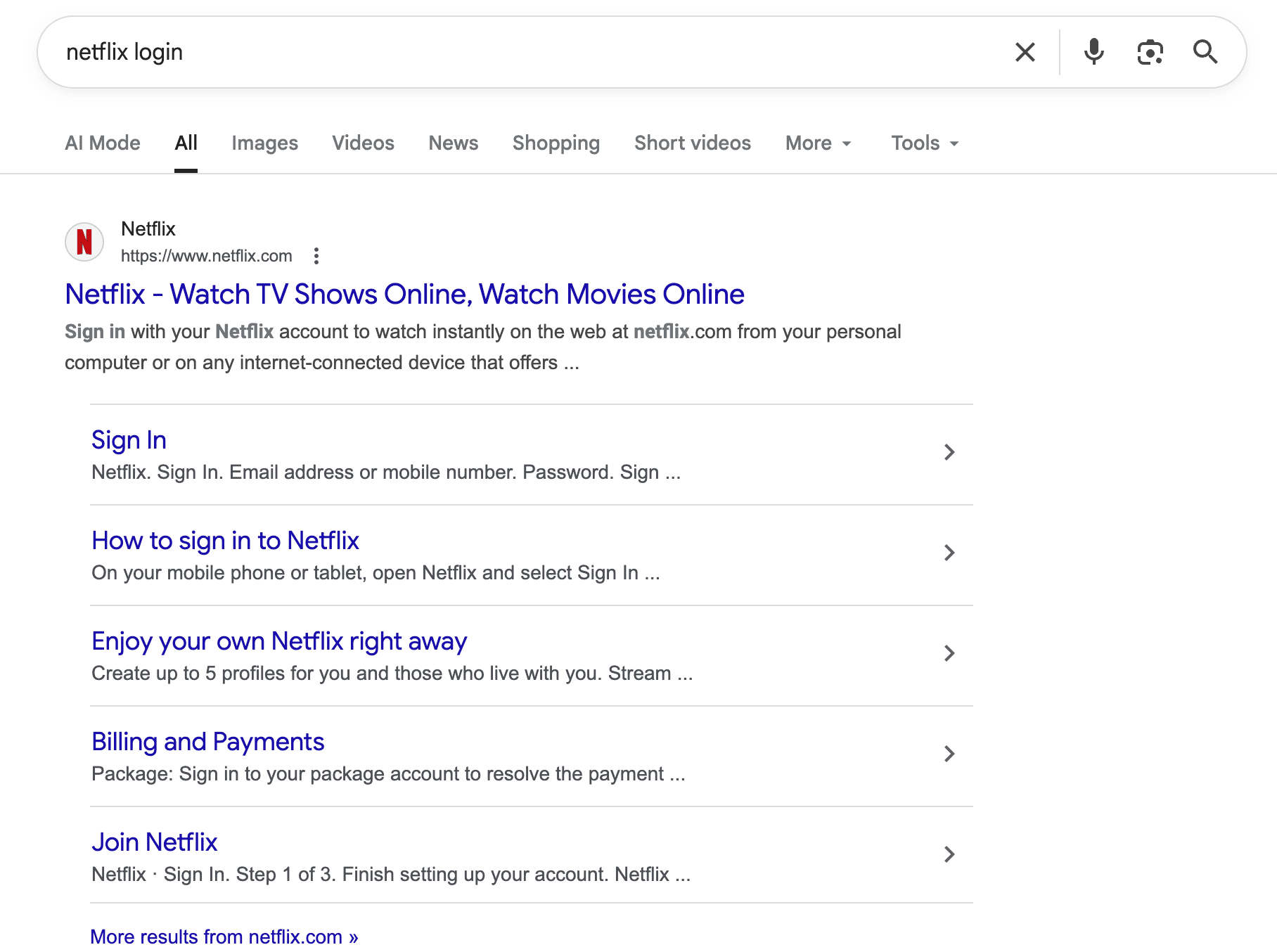
The searcher already knows the brand. They’re just trying to reach the right page as fast as possible.
Why are navigational keywords important?
Here are a few benefits of focusing on navigational keywords;
- Navigational keywords boost brand visibility because people search your name, product, or site directly
- They improve user experience since searchers reach the exact page they want fast
- They attract returning users who already trust or know your brand
- They’re easier to rank for since the keyword is already related to your own brand
- They’re helpful in AI and voice search, where users ask for brands by name
Must Read: Learn how Stop Words in SEO affect different keyword strategies.
3. Commercial Keywords
The primary intent: To compare products or services
This is the decision stage. The user knows what they want and is close to buying, but they’re still checking options, reviews, prices, or deals.
That’s why these searches include comparisons, ratings, and alternatives. One good recommendation or a better deal can lead to the purchase.
Commercial keywords often include words like best, top, or, reviews, compare, vs, or cheapest, along with brand or product names.
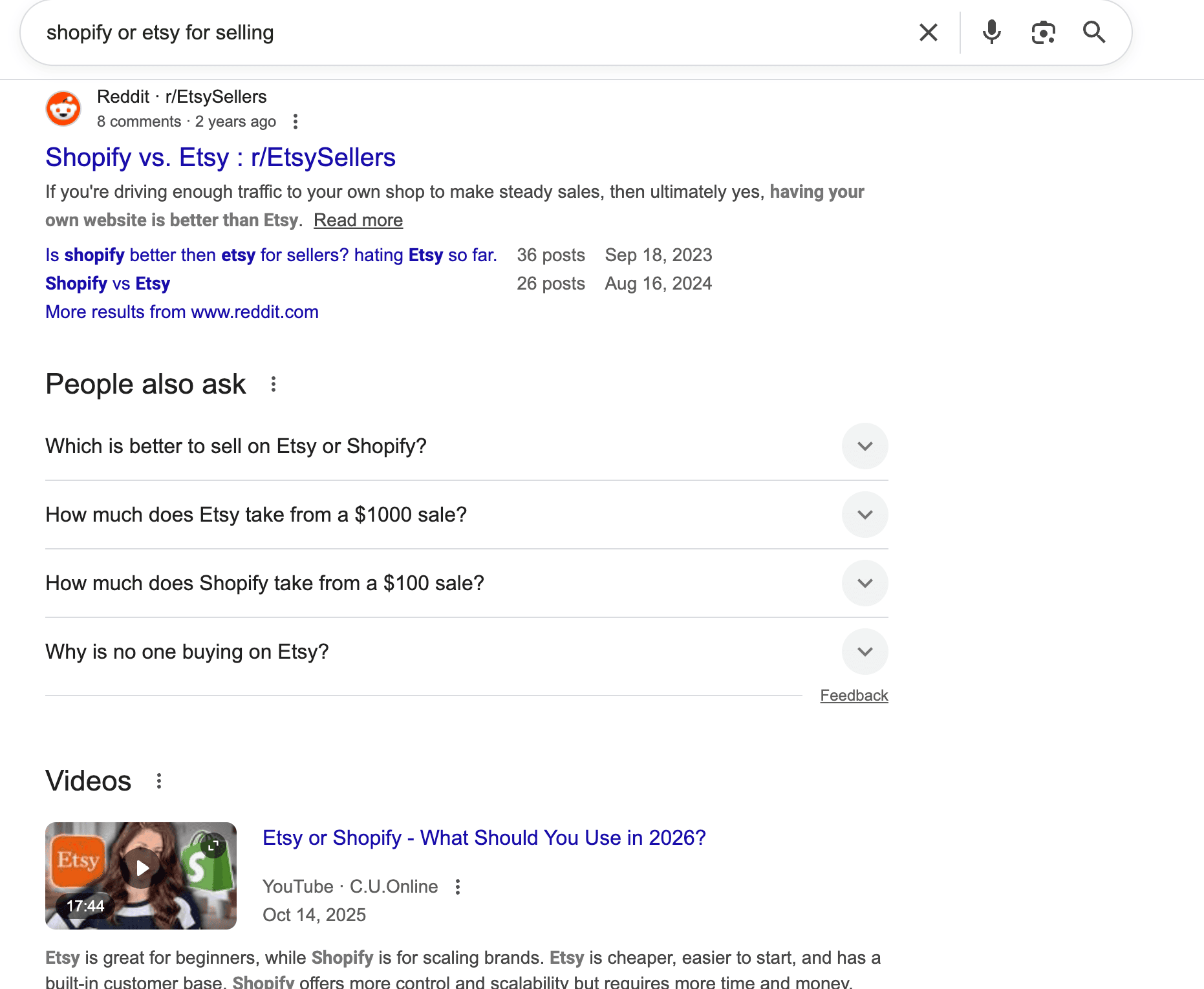
Someone searching “Shopify or Etsy for selling” is not just learning, they’re comparing platforms before deciding where to sell. This is why Google shows comparison posts, Reddit discussions, FAQs about fees, and videos instead of basic guides.
Why are commercial keywords important?
Here are some of the BIGGEST benefits of targeting commercial keywords;
- You attract high-intent visitors who are already close to buying
- They work well across search, AI overviews, and video results
- They drive higher conversions because intent is clear and focused
- They help you rank for “best / vs / alternatives” searches
- They let you educate, compare, and sell on one page
4. Transactional Keywords
The primary intent: To complete an action such as buying something or signing up for a service
This is the conversion stage. The user is done researching and is ready to act.
These are high-intent keywords. The searcher isn’t browsing anymore, as they want to purchase, subscribe, start a free trial, or download something now.
Transactional keywords often include words like buy, price, deal, discount, free trial, sign up, or download.
If your goal is sales and revenue, transactional keywords matter most.
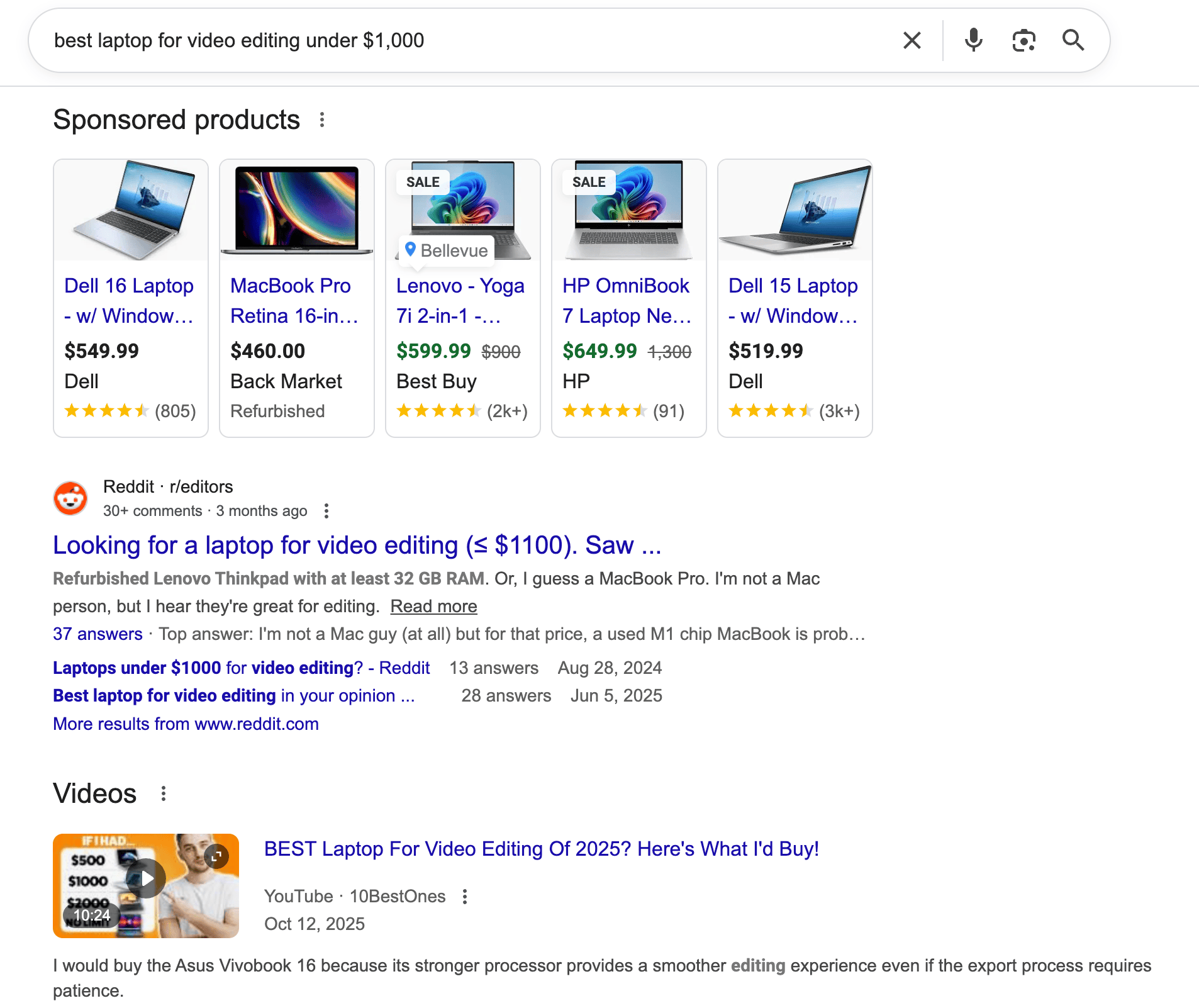
For example, when someone searches “best laptop for video editing under $1,000”, they’re clearly comparing options within a budget, which is why Google shows product ads, Reddit discussions, comparison posts, and videos that help them choose before buying.
Why are transactional keywords important?
Here are some of the major benefits of focusing on transactional keywords;
- They attract users who are ready to buy or sign up, like someone searching “Grammarly free trial”
- They bring higher conversions and direct revenue, not just page views
- They drive ROI-focused traffic, not random visits
- They work best for pricing pages, deals, free trials, and landing pages
Above all, transactional keywords generate almost immediate sales, which ultimately lead to improved overall revenue. By targeting keywords like “buy [Product] now” and “[service] near me,” you attract visitors who are actively searching for where and how to purchase.
How to Check the Types of Keyword Intent In 2026?
Sometimes, it can be really difficult to understand the intent behind a keyword.
Let’s consider the example of “Yoga mats.”
Is the intent informational? Or to buy?
This could be someone seeking information about yoga mats (informational), searching for recommendations (commercial), or directly looking to purchase one (transactional).
One of the simplest yet most effective ways to understand the intent is to analyze the search results for those keywords.
What are the top 3 search results showing up for your target keyword? When you search for that keyword in Google, you’ll notice that most of the listings contain commercial intent.
Have a look;
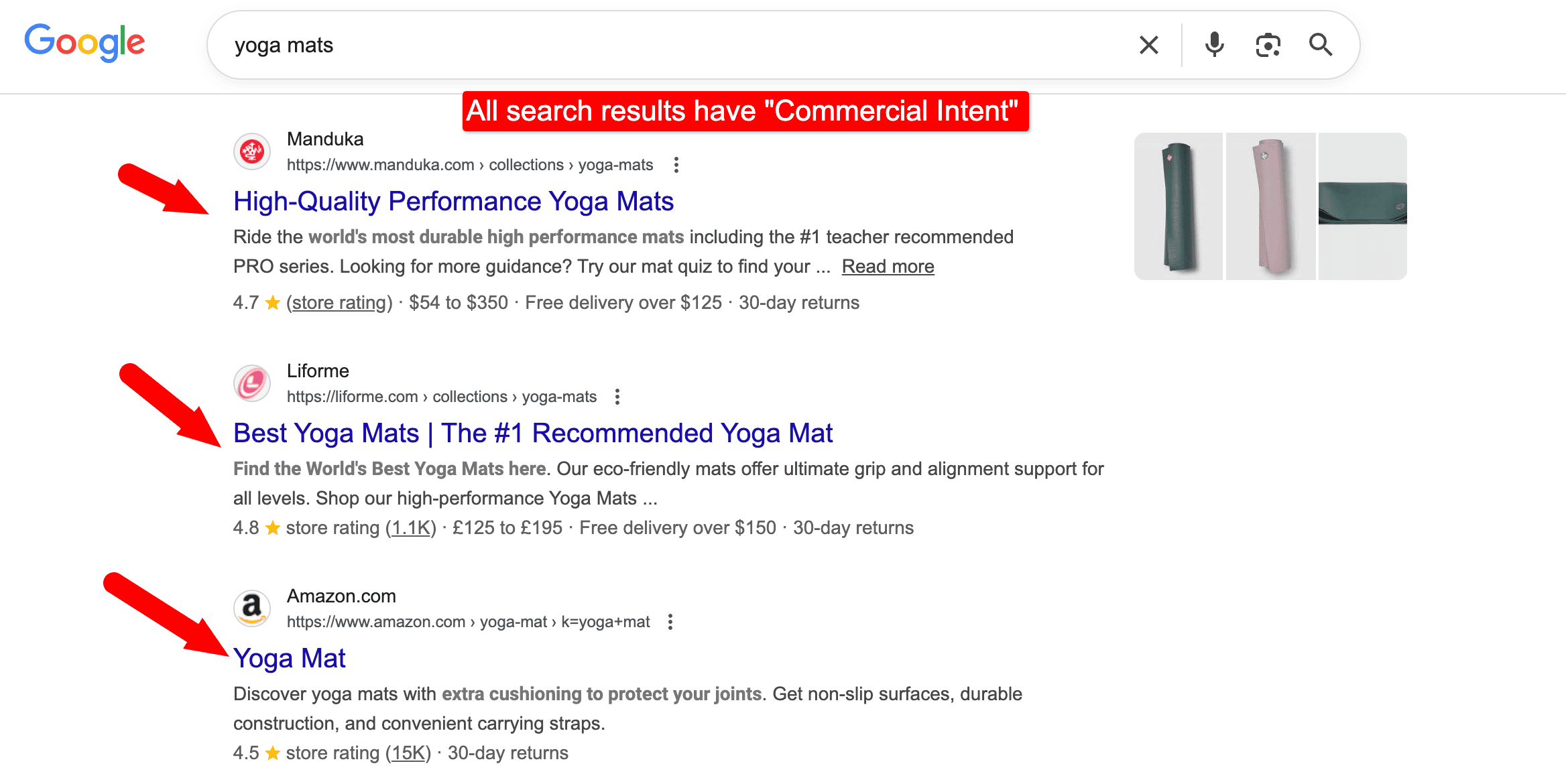
Even though the keyword “yoga mats” looks broad, Google understands that most users searching for it want to buy or compare products. That’s why the results are dominated by brand stores, marketplaces, prices, ratings, and delivery details instead of blog posts or informational guides.
Similarly, you can analyze the search results to understand the dominant intent behind a keyword.
The key here is to consider long-tail keywords. Why? Because they’re more specific phrases like “best budget yoga mat” or “Goa vacation rentals for families,” usually reveal more precise intent.
If you’re looking for another simple option, we’d recommend Semrush. With Semrush, you can easily determine the type of search intent behind ANY keyword.
Here’s what it looks like;

As you can see above, not only does the tool suggest relevant keywords, but it also helps you identify the INTENT behind those keywords.
Want to find more details? You can read our unbiased Semrush review for more information about this fantastic tool.
How to Optimize Keywords Based on Search Intent?
Optimizing keywords by search intent is one of the most important SEO factors in 2026. It’s no longer about stuffing keywords; it’s about giving users exactly what they’re looking for.
For example, if someone searches “best WordPress hosting,” they expect comparisons and recommendations, not a basic tutorial.
Start by finding the intent behind a keyword. Search it on Google and look at the top results.
If you see blogs and guides, the intent is informational. If you see product pages, comparisons, or ads, the intent is commercial or transactional.
Google already shows what it wants to rank, all you need to do is to match that intent.
Here are some tips to optimize various keyword types in 2026;
- For informational intent: Create clear content that answers questions fast. Use simple words, headings, FAQs, and examples so it works for AI answers and featured snippets.
- For navigational intent: Optimize brand pages and titles so users can reach the exact page they’re looking for quickly.
- For commercial intent: Create comparisons, reviews, and pricing-focused content that helps users decide.
- For transactional intent: Make it easy to buy or sign up. Show clear pricing, use strong CTAs, and optimize pages for speed.
Keyword Intent Best Practices

Understanding the intent behind each keyword can help you attract the RIGHT traffic from Google. Here are some best practices for mastering keyword intent in 2026.
- Understand the intent before targeting any keyword. Ask one simple question: is the searcher trying to learn, compare, find a brand, or buy?
- Analyze the keyword itself. When you’re doing keyword research, look for words like “buy”, “free”, “compare”, “review”,”price”, “near me”, etc., These are also called “keyword identifiers”, which often indicate the intent behind the keywords.
- Create the same type of page that’s already ranking on page one
- Use keyword research tools like Google Keyword Planner, Semrush, or Ubersuggest, as they provide lots of keyword metrics, including keyword difficulty level, search volume, competition, and related keywords.
- See what Google already ranks. Blogs and FAQs mean informational intent. Product pages and pricing mean commercial or transactional intent.
- Create content that satisfies the intent. For example, create informative articles for informational queries, comparisons for commercial intent, and helpful buying guides for transactional intent.
- Refresh older content when user intent or SERPs change over time
- Above all, analyze your website’s performance using Google Search Console (GSC). You should always monitor metrics like search queries that are generating traffic, time on site, and conversions to see if your content matches with user intent.
FAQs on Types of Keywords
Here are some commonly asked questions on various keyword types.
The four types of search intent in SEO are informational, navigational, commercial, and transactional.
No. Mixing two different search intents confuses users and search engines. One page should focus on one clear intent.
Yes. Informational keywords help you attract users who are looking for answers, build trust, and grow topical authority before selling anything.
Use them in blog posts, how-to guides, tutorials, explainers, FAQs, and videos where the goal is to educate, not sell.
You can use tools like Google Keyword Planner, Semrush, and Ubersuggest, along with People Also Ask, forums, and AI search suggestions.
Check the Google search results and see what type of pages are ranking — blogs, videos, product pages, or comparisons.
Final thoughts on keyword categories
In 2026, traffic alone doesn’t matter. Right traffic does.
By understanding and effectively using the RIGHT types of keywords, you can attract HIGHLY targeted traffic from Google.
Remember, each keyword has its own intent. Informational keywords help you build trust and authority, navigational keywords improve your brand visibility, commercial keywords drive leads, and transactional keywords bring revenue.
Got questions or thoughts? Feel free to drop them in the comments.
![How to do Keyword Research Correctly in 2026 for GEO & SEO (A to Z Tutorial]](https://bloggerspassion.com/wp-content/uploads/2019/02/how-to-do-keyword-research-like-a-pro-300x157.jpg.webp)


Great article! Understanding the different types of keywords is crucial for any SEO strategy. Incorporating these keyword types helps reach diverse audiences effectively. Thanks for sharing such valuable insights!