

Gray hat SEO sits between white hat SEO (100% safe tactics) and black hat SEO (tactics that can get your site penalized).
For instance, you might publish genuinely helpful articles (white hat) but then boost their rankings using paid links or private blog networks (black hat).
In short, grey hat SEO isn’t completely wrong, but it’s not completely safe either.
Here is the quick explanation of the major SEO types:
| SEO Type | Meaning | Risk Level | Google-Safe |
|---|---|---|---|
| White Hat SEO | Follows Google’s guidelines and best practices | Low | Yes |
| Gray Hat SEO | Uses tactics not clearly approved or disapproved by Google | Medium | Unclear |
| Black Hat SEO | Uses manipulative tactics that violate Google rules | High | No |

Will Grey Hat SEO Get Your Site Penalized?
Short answer: yes, it can.
Grey hat optimization isn’t illegal, but it does mix safe SEO tactics with questionable ones that can put your rankings at risk.
A common example is keyword stuffing: repeating the same keyword over and over on a page to rank higher. It may work briefly, but it hurts readability and user experience.
Also, sometimes, these tactics do not directly violate Google’s guidelines, but they can harm user experience.
The best example for that? AI-generated content.
Say you publish 50 AI-written articles in a week with zero editing.
Google won’t immediately penalize your site, but it won’t reward you with better rankings either. Why? Because that content lacks your personal experience, real opinions, and depth.
So while some grey hat tactics aren’t against the Google terms, they can still lead to ranking drops or penalties if Google flags them.
If your goal is long-term authority and steady traffic, sticking to clean, white-hat SEO is the KEY.
Is Grey Hat SEO Important?
Although white-hat SEO tactics such as creating high-quality content, building relevant links, etc., are essential for SEO success, they often take a long time to yield results.
Here’s where grey hat SEO tactics come into play, as they can generate quick results.
For instance, a new website might purchase low-quality backlinks to quickly improve its search traffic and attract more visitors.
But remember that relying solely on grey-hat SEO techniques can be extremely risky. This is because search engines like Google constantly update their algorithms to identify and penalize websites that use such tactics.
Why Grey Hat Optimization Still Matters in 2026?
- Faster rankings, as they can push pages up quicker. Example: Buying a few strategic backlinks.
- Still in the grey zone, as many tricks aren’t clearly banned. Example: Using a relevant expired domain redirect.
- Too much competition, as good content alone may not rank. Example: Your post is helpful, but stuck on page 3, so you buy a few niche-relevant backlinks or do a link exchange to push it higher.
Not all grey hat techniques are equally risky. Some are safer and can be tried, but only if you understand how they work and use them carefully.
Let’s discuss such techniques now.
6 Grey Hat SEO Techniques You Can Try Without Too Much Risk in 2026
Table of Contents
1. AI-Generated Content
AI-generated content is a common grey-hat SEO tactic in which you use AI tools to quickly create articles rather than writing everything yourself.
But here’s the catch: publishing AI content without adding any REAL value or your own expertise can lead to thin pages.
Google doesn’t penalize AI just for being AI, but it does NOT rank thin content.
How to use AI content the right way?
Here are some of the effective ways to do that.
1. Use AI for drafts, then improve them with real EXPERIENCE
Don’t publish 100% AI text. Instead, add your own insights and give real examples, screenshots, personal tips, or updated data.
Example: Let’s say you use AI to draft a post on “How to Choose a Web Hosting Plan.” It can give you a good outline, but it won’t know real-life details like how Hostinger’s cheapest plan slowed your site after traffic increased, something you only learned from experience.
Now, that experience is what makes your content REAL and HELPFUL. It also builds trust and makes your content stand out from hundreds of AI-written posts.
2. Adapt content for different platforms
Use AI to repurpose one idea into multiple formats.
Example: Turn a blog post into a LinkedIn summary, email tips list, or short FAQ.
3. Add a new angle instead of bulk publishing
Rather than generating 50 similar AI posts, expand with a unique perspective.
Example: Instead of publishing 10 generic “Best Web Hosting” posts, write one laser-focused post like “Best Web Hosting for Bloggers Who Get Less Than 1,000 Visitors a Month”, which is something the big review sites completely ignore.
The key here is to use AI for structure, not the final copy. Only use AI tools to create an outline or bullet points, then write the actual content yourself.
2. Expired Domain Redirects
One widely used technique is buying expired domains (also known as domain grabbing), which still works like a charm when done carefully.
Here’s how they work: you buy old domains with existing backlinks and authority, then use them to boost your site.
Instead of starting from zero Domain Authority (DA), you reuse a domain that has a good DA.
Example: You find an expired fitness blog domain with good backlinks, buy it, and redirect it to your fitness website to pass some authority.
Another approach is to rebuild the expired site, publish a few relevant posts, and link back to your main site naturally. This looks more organic to Google.
Before buying an expired domain, always check the domain’s history on the Wayback Machine, its backlink profile on Ahrefs, and its spam score on Moz.
Some of the top platforms to buy expired domains;
- NameCheap Domain Auctions
- GoDaddy Auctions
- Flippa Domain Auctions
- DomCop
3. PBN Usage
A Private Blog Network (PBN) is a group of websites built mainly to link to one main site and help it rank higher in Google.
How Do PBNs Work?
Think of a PBN like fake 5-star reviews for your own restaurant, but in SEO.
You buy expired domains with authority, set up simple sites on them, and link them to your main website.
Google sees many sites linking to you and assumes your site is important, which can boost your rankings.
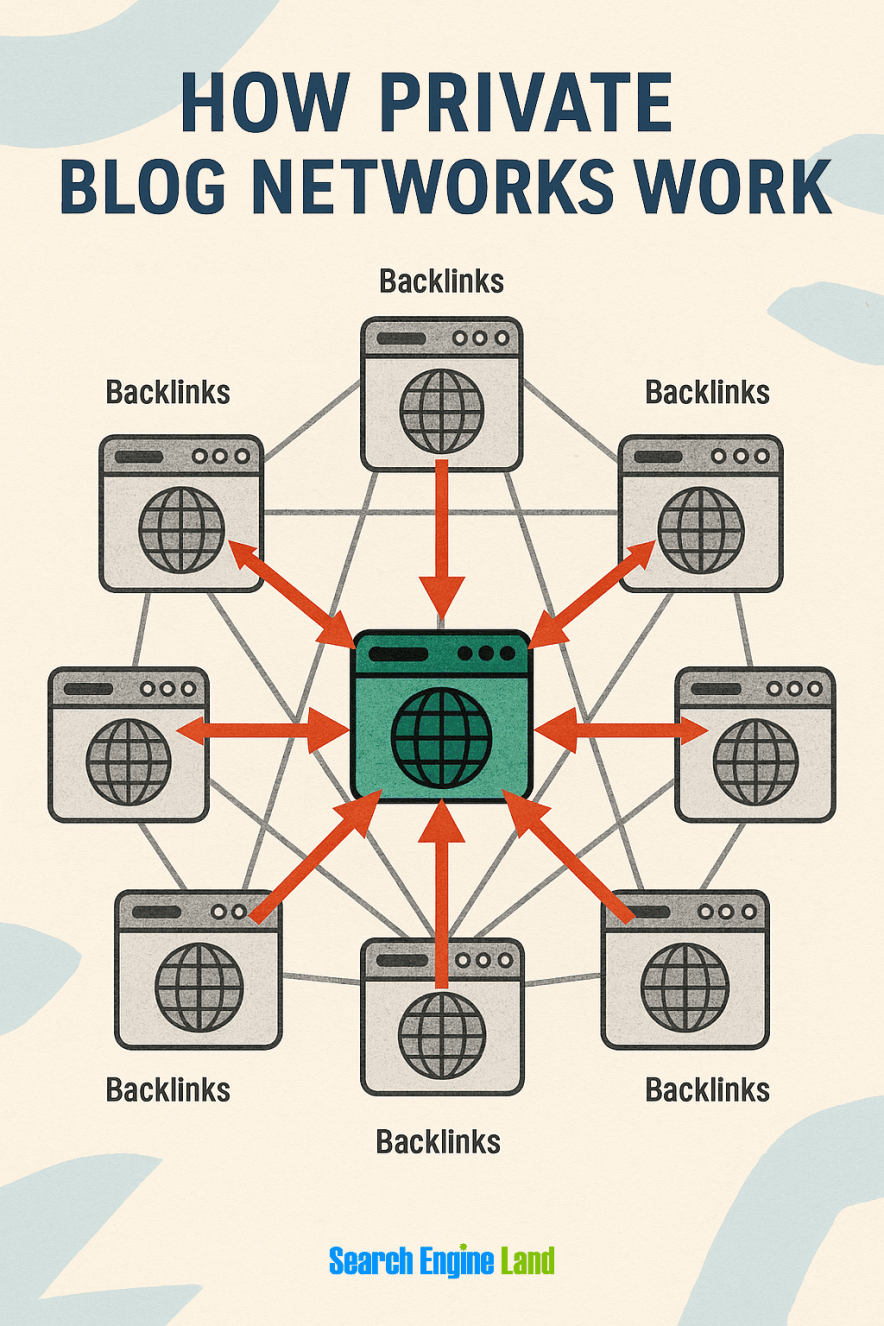
However, PBNs violate several of Google’s policies, so if detected, they can lead to penalties or a sudden drop in rankings.
What can you do instead of using PBNs?
Build a real second site.
Instead of using a shady PBN, create a genuine blog in a related niche with real content.
Example: You run a blogging tips site and also start a WordPress tutorials site, both of which naturally link to each other.
4. Slight Over-Optimization
Keyword stuffing is bad SEO, everyone agrees on that.
But.. there’s a sweet spot between too little and too much. And when you hit it, your rankings can actually improve.
Think of it like adding salt to your food. Too little, and it’s bland. Too much, and it’s ruined. The right amount? Perfect.
So instead of randomly repeating your keyword, place it where it actually matters.
Say you’re writing a 1500-word article targeting “best budget laptops.”
Use that keyword 4 to 5 times naturally, once in your title, once in your intro, once or twice in your subheads, and once near the end. That’s it.
This isn’t stuffing; it’s smart keyword placement. And Google rewards it. We highly recommend starting with a great SEO optimization plugin like RankMath, which offers excellent features to easily optimize your content for your target keywords.
5. Selective Link Exchange
You’ve probably heard “don’t exchange links, as Google hates it.”
It’s true that swapping links with unrelated sites at random can hurt your rankings.
But selective link exchange still works in 2026.

For example, you run a personal finance blog. Another finance blogger links to your budgeting post. You link to their savings guide. That’s natural and useful. Google can see this as helpful, not spam.
The keyword here is selective. You’re not exchanging links with just anyone.
You’re doing it with very few sites that are HIGHLY relevant to your niche.
How to exchange links without getting penalized by Google?
Build a small tribe
You can build a list of all the relevant blogs in your industry and then start contacting each and every blogger to promote each other’s content.
You don’t need a big list of people to build a tribe, as you can find 10 to 20 bloggers in your industry to form a group on Facebook, then start helping each other out by sharing, linking, and commenting on each other’s stuff regularly.
Link out to other bloggers frequently
One of the best ways to attract links from other websites is to link out to them frequently in your content. Whenever you link to another website, connect with them on social media or via email so they know you are helping by linking. If you do it frequently, you can also ask them for a retweet or a link back to your content.
If they find your content engaging and valuable, they will definitely link back to it.
Keep it simple and relevant
Only exchange with blogs in your niche; a food blog linking to a tech blog makes zero sense to Google.
Keep it natural
Don’t swap 10 links in one week. If you connect with three bloggers, don’t exchange links with all of them this week.
Do one now, another next month, and one later when it fits your content.
Slow and relevant looks normal to Google. Fast and bulk looks suspicious.
6. Getting Paid Positive Reviews
Ever seen a product get tons of 5-star reviews just days after launch? Yeah, that’s not always organic.
Paid reviews are simple: you pay people to post positive reviews about your product, service, or site.
It can work for a while. More good reviews build trust, attract clicks, and may even help local SEO.
But here’s the risk: Google, Yelp, Amazon, and others are much better now at spotting fake or paid reviews.

So how do you use this grey hat tactic without crossing the line?
- Give a free sample or trial for an honest review. Do not ask for a guaranteed 5-star review. Let them decide. Example: Send your website app’s 7-day premium access and ask for real feedback.
- Don’t write the review for them. Let them share their own experience. Example: Instead of sending a template, just ask, “What did you like or dislike?”
- Start with real users. If customers are satisfied with your products, they’ll leave the most natural reviews. Example: Email buyers a week after purchase and ask how it worked for them.
Should You Use Grey Hat SEO Techniques In 2026?
Honestly? Use them carefully or avoid them altogether.
Grey hat SEO can give you a quick boost. But it’s not a long-term plan. One Google update, and everything you built can disappear overnight.
White hat SEO is slower. But it’s safe. And it gives better results over time.
Write helpful content. Target the right keywords. Build links the natural way. These things take time, but they don’t put your site at risk.
If you do try grey hat tactics, keep them to a minimum. Never make them your main strategy.
And always ask yourself one simple question before trying anything: “Would Google be okay with this?”
If the answer is no, avoid.
Conclusion On Grey Hat SEO Techniques For 2026
Should you use gray-hat? It depends.
The smartest move? Build your website’s foundation with white hat SEO techniques. Use grey hat tactics sparingly, if at all.
Remember, Google’s algorithms are getting smarter every month. What works today might penalize you tomorrow.
So play the long-term game. Write helpful content. Earn your links. Build REAL authority.
That’s what actually sticks in 2026 and beyond.
Got questions about any of these grey hat techniques? Or tried one yourself? Drop your thoughts in the comments below.
FAQs On Grey Hat SEO Techniques
Generally, there are three types of SEO techniques: White hat SEO, Black hat SEO, and gray hat SEO.
It is a combination of both white hat SEO and Black hat SEO practices, which may improve your site’s ranking without negative consequences.
White hat SEO is all about good SEO practices that obey Google’s rules, whereas Black hat SEO includes ugly SEO practices that are risky and may result in your site getting penalized.
No, they don’t, as they ultimately lead to Google penalties.
Buying expired domains, keyword stuffing, link exchanges, and AI-generated content are among the best gray-hat SEO techniques.
There are three types of hats in SEO: white hat, black hat, and grey hat. White hat follows Google’s guidelines, black hat uses unethical SEO tactics, and grey hat SEO uses both.



wow these tips are so amazing these are realy helpful for new bloggers.
Thanks for sharing this awesome blog post and updating us about new seo techniques in 2018.
I have a question from you.
Some people say that keywords densit should be between 1% to 2% but you said it should be 0.5 to 1% so you mean to say 2% is bad if its natural.
Hi Anil… Your idea of Link Exchange as Grayhat SEO looks awesome. Let me try some of your techniques on my website. Thanks for sharing.
Hi Anil Sir
Thank you for sharing gray hat SEO tricks for us. i am trying to build links on some instant approval directories. Is it Good or not for my website?
I’ve found the natural organic SEO without all the extra, almost dangerous hat varieties to be best. The others take a lot of time and really don’t offer so much benefit. But this was an interesting read. Thanks.
Few technique may be used by non technical persons. Please write a blog regarding SEO for the persons who know little about these technique in simple language.
Hi Anil,
Excellent Post. Really, i am doing grey hat seo for my sites. Ethically do grey hat that will convert white hat i think. We should do in natural way link building, content generation etc. In my experience, creating best human readable content by hand written is the best way to get the backlink from web 2.0. We should focus on the page content quality where link coming from. So i avoid spinned contents.
Anyway Thanks for this great post
Regards
shajeer
Hi
thanks for sharing this article.. how many months Gray Hat seo will take to attain results?
Anil,
Thanks for sharing this awesome article!
Actually, this post came at the very right time for me. Currently, I’m mapping my mind about backlinks. This article besides a few other guides help me to develop on my own strategies.
I’ve not used any of the methods mentioned here. But I think, a couple of them may be developed and combined with other white hat techniques to bring long-lasting ideas that will boost SEO and Search Engine Traffic.
I’ve been lately into Products reviews and Guest posts. Both are bringing nice results. But still, they’re not very enough. I’ve though about links exchange but thought this might get caught and penalize my site!
Anyways, I would like to thank you so much for sharing this awesome guide. And please keep it always up. You’re doing awesome at BloggersPassion.
Regards..
Hello Anil,
Great post as usual. I haven’t tried grey hat techniques as I am quite active with white hat techniques. Yes, you are right if we use and implement these above techniques properly then it really helps us to increase our search traffic. I haven’t used expired domains to build some backlinks for my blog. Whilst, I am using few directories which are of high PR. It helps me to improve my SEO score. Thanks for sharing these great tips here.
Have a great Day 🙂
Vishwajeet