

Table of Contents
Meta tags are HTML elements that describe the summary or context of a web page and are not displayed on the page.
These tags can be found within a website’s HTML header.
Want to see the meta tags on any website? Right-click on any webpage and select “View Page Source.” Then look for the <head> section at the top.

You won’t see this on the page itself. But Google reads it every single time it crawls your site.
Here’s what they actually help you with:
- They control how your page looks in Google search results. Better title and description = more clicks
- They tell Google what to crawl and what to ignore
- They improve how links look on social media, as Open Graph tags control the title, description, and image shown when your link is shared on sites like X or Facebook
- The meta viewport tag tells Google your site fits properly on small screens, helping mobile rankings
Not all meta tags carry the same weight.
Some directly impact your search rankings. Other tags control how your content looks on social media.
Here are the 8 most important ones every website owner needs to know.
1. Title Tag
The title tag is the most important meta tag in SEO.
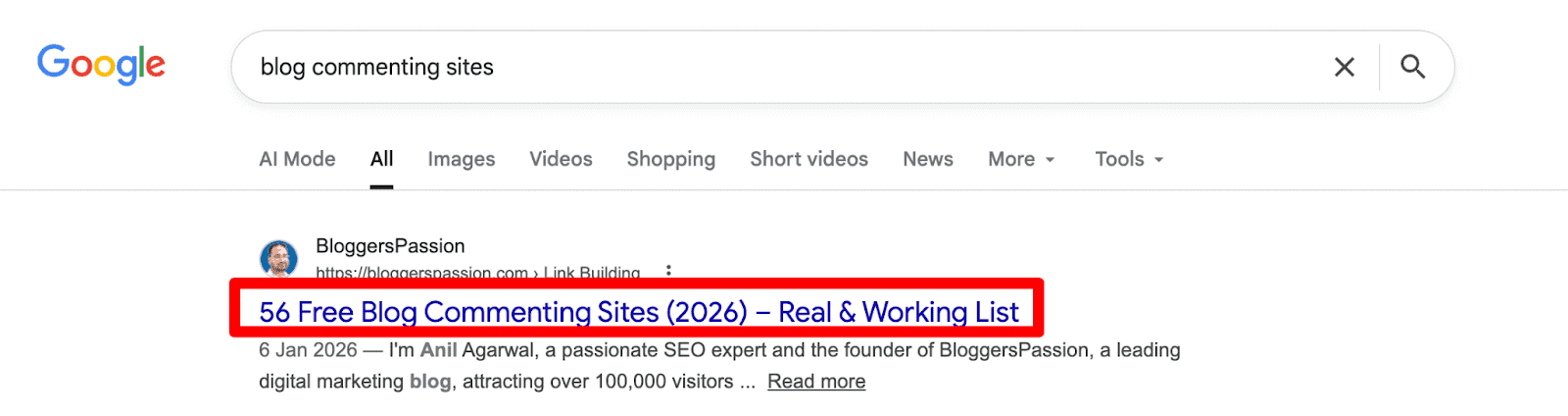
It’s the clickable blue headline you see in Google search results. And it’s one of the strongest signals Google uses to understand what your page is about.
Example of Title Tag
The title tag is featured as a clickable link in search results.
Here’s what it looks like;
Best practices:
- Keep it around 50–60 characters
- Put the main keyword near the start
- Make it clear, accurate, and click-worthy
- Use a unique title for every page
2. Meta Description Tag
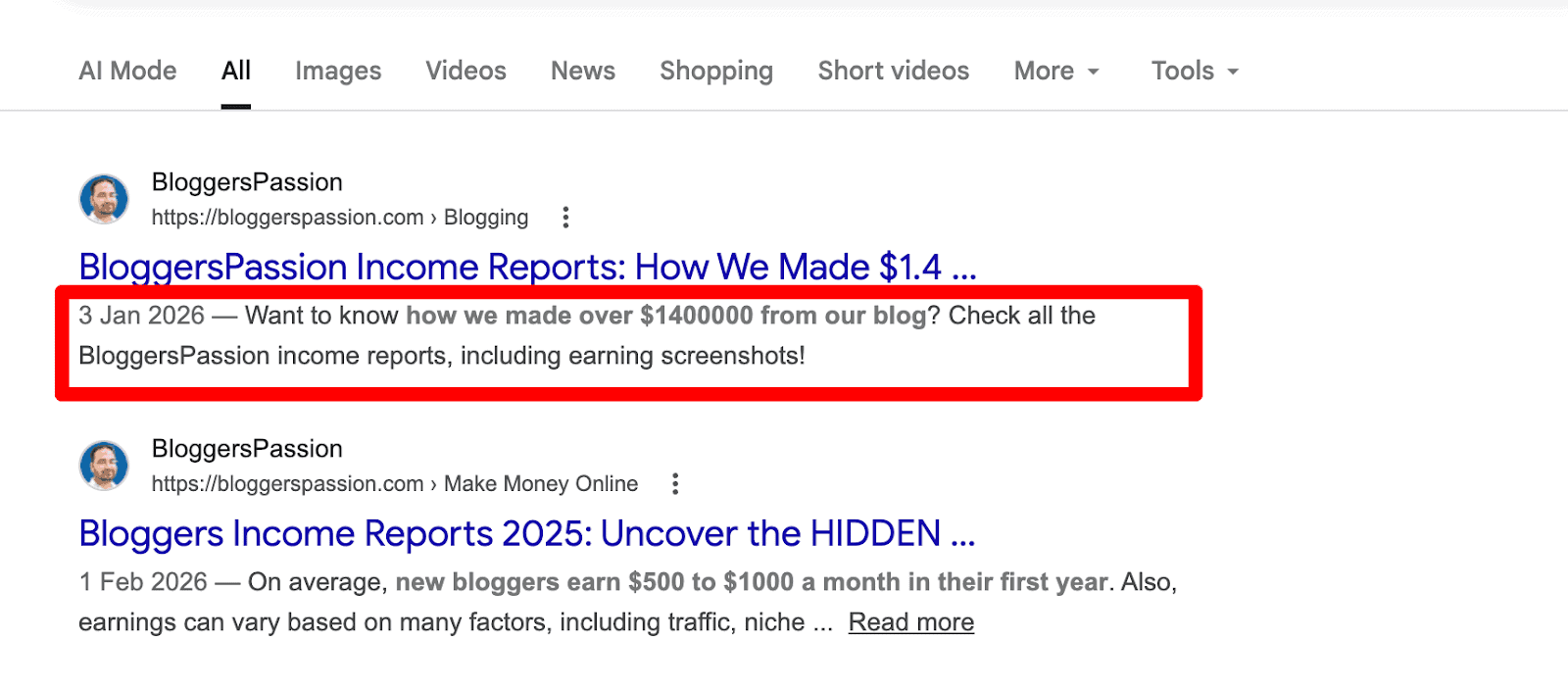
The meta description is the short summary that appears under your title in search results.
It doesn’t directly affect rankings. But a well-written one can definitely improve your click-through rate, which does affect rankings.
Example of Meta Description Tag
Just like title tags, meta descriptions appear in SERP results. Here’s what it looks like;
One thing you need to remember:
Google can and often does rewrite your meta description. Especially if it thinks your version doesn’t match the searcher’s intent well enough. So write it for humans first and make it clear, relevant, and compelling.
Best practices:
- Keep it under 105 characters (mobile-safe)
- Use the main keyword naturally
- Add a simple CTA like “Learn how” or “Get started”
- Write a unique description for each page
- Clearly match what the page is about
3. Robots Meta Tag
This tag tells search engines what to do with your page: index it or ignore it, follow its links or skip them.
Here’s what it looks like:
<meta name=”robots” content=”noindex, nofollow”>
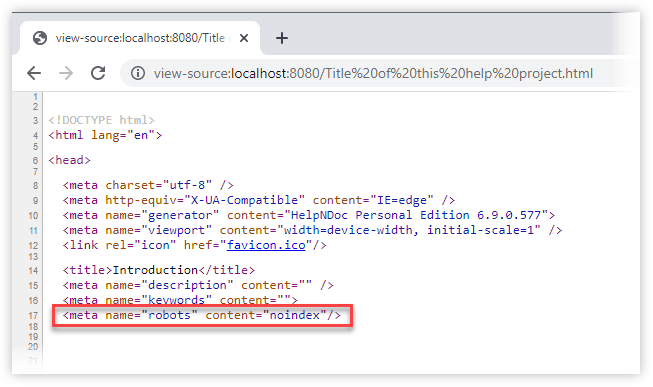
The four main features:
- Index — allows Google to show this page in search results (default)
- Noindex — hides this page from search results
- Follow — allows Google to follow links on this page (default)
- Nofollow — tells Google NOT to follow links on this page
When to use noindex:
- Thank you pages after a purchase or form submission
- Duplicate content pages
- Private or temporary pages
4. Image Alt Tag
Image Alt tags are used to describe an image’s content. The image tag will provide an alternative caption to display if the image is not displayed on the page.
Google can’t actually see images. It reads the alt text to understand what the image is about.
Here’s an illustration;

Best practices:
- Describe the image clearly in simple words
- Add your keyword if it fits naturally (don’t force it)
- Keep it short
- Don’t leave alt text blank for important images
5. Meta Viewport Tag
This tag tells browsers how to display your page on different screen sizes.
Without it, your site might look fine on desktop but completely broken on mobile.
For example, the standard viewport on a smartphone is smaller than on a desktop monitor.
Here’s an illustration;

The good news? Most modern WordPress themes add this tag automatically.
Header tags (h1, h2, h3, etc.) specify the header for a document or section on a web page.
As you can see above, the h1 tag is the most important tag and carries more weight in search engines (and you should use it ONLY once on a web page).
The 2nd- and 3rd-most-important tags after the h1 tag are h2 and h3, respectively, and so on. You can use h2 and h3 tags as many times as you want. These h2 and h3 tags are usually used for subheadings on your page.
Here’s a simple illustration that explains how you can outline your content or web page using H1, H2, H3, etc, header tags.

Quick tip: If you’re using WordPress, you can install a free plugin called Easy Table of Contents, which automatically generates a table of contents for your posts and pages by parsing their contents for headers.
7. Canonical Tag
A canonical tag solves one of the most common technical SEO problems: duplicate content.
This tag is usually used to prevent duplicate content or URLs on your site.
It tells search engines that a specific URL represents the master copy of a page.
Here’s is its syntax: <link rel=”canonical” href=”https://yoursite.com/original-page/”>
If you are using the canonical tag, you can easily prevent all the website SEO-related issues caused by very similar or duplicate content appearing on multiple URLs in order to improve your overall website’s SEO.
Here’s a real example of when you’d need it.
Say you have the same blog post accessible at two different URLs:
- https://yoursite.com/meta-tags
- https://yoursite.com/meta-tags?ref=newsletter
Google sees these as two separate pages with identical content. That confuses it and splits your ranking power between both URLs.
The canonical tag tells Google: “This is the original page; ignore the rest.”
Here’s how it looks:
Ever shared a link on Instagram, LinkedIn, or WhatsApp and noticed it automatically pulls in a title, image, and description? They’re Open Graph tags.
Here’s how one of our posts looks when shared on Facebook with Open Graph meta tag descriptions:
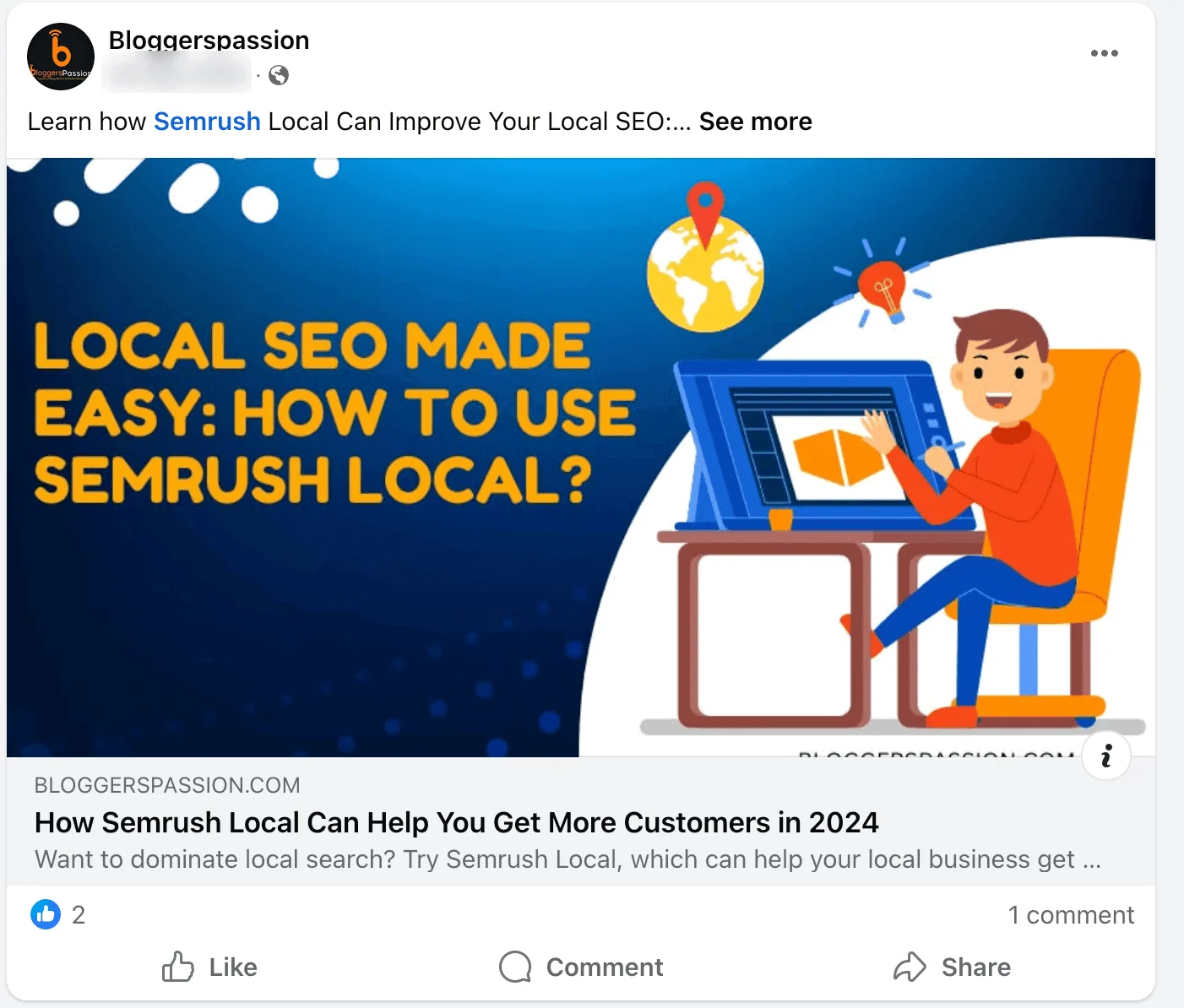
Open Graph (OG) tags are snippets of code that control how URLs appear when shared on social media (Facebook, LinkedIn, X).
Note: OG tags don’t directly impact Google rankings. But they improve social media visibility and referral traffic.
If you’re using WordPress, you can install the RankMath plugin to add Open Graph meta tags. Here’s a helpful video tutorial on how to implement them.
Here’s something most bloggers aren’t considering: Search isn’t just about Google anymore.
People are now finding content through ChatGPT, Google’s AI Overviews, and Perplexity.
So if you’re optimizing meta tag data for Google, you’re already halfway there.
But there are a few extra things worth knowing to better optimize for AI search as well.
AI Overviews pull content from well-structured pages
Google’s AI Overviews, ChatGPT answers, etc., pull content from well-structured pages that directly answer a question.
Your meta description plays a KEY role here.
If it is well-written, keeping users in mind, it will more likely appear in AI searches.
Clear Title Tags help AI understand your page quickly
Specific titles are easier to understand.
And easier to pick by AI tools.
A clear title tag tells them right away what your page is about.
If someone asks an AI, “best protein foods for muscle gain,” the AI will likely mention a page titled “Best Protein Foods for Muscle Gain (Top 10 List)”, not one titled “Healthy Eating Tips for a Better Life.”
Add an FAQ section to every post
This is one of the highest-impact things you can do right now.
AI tools love FAQ sections. They’re often well structured, conversational, and directly answer specific questions.
A well-written FAQ at the bottom of your post increases your chances of showing up in both Google’s People Also Ask box and AI-generated answers.
For example, a WordPress beginner’s guide that ends with questions like “How do I install a plugin?” or “Which theme is best for SEO?” makes it easier for AI and Google to pull answers from your page.
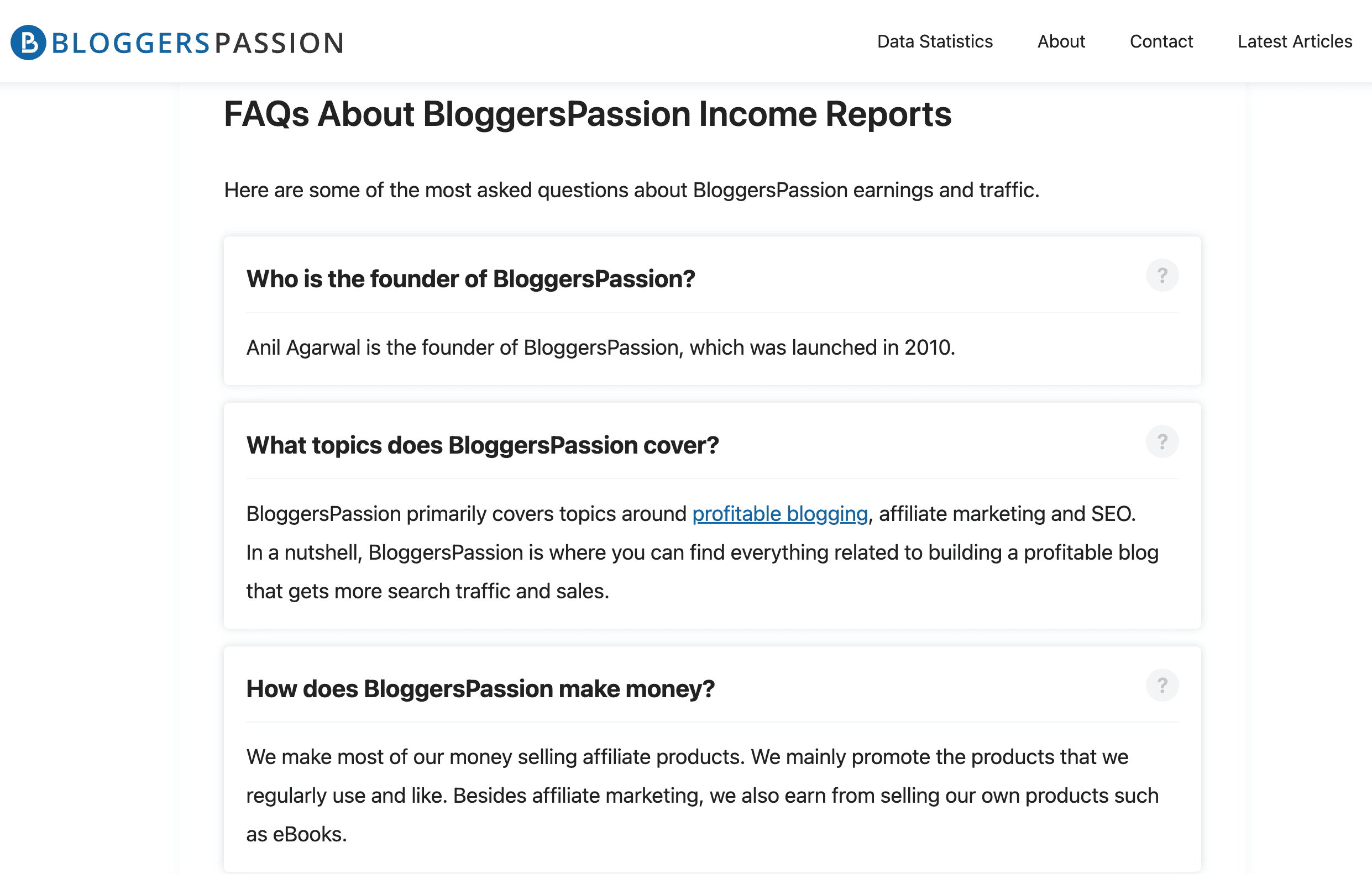
Here’s an example of how we use them;
If you want to use meta data for better SEO, here are the 7 most important things you must know to better optimize your website pages.
1. Never Duplicate Meta Tag Descriptions Across Pages
Every page on your site needs a unique title and meta description.
Using the same ones across multiple pages confuses Google. It can’t tell which page is more relevant for a given search, so it may rank none of them well.
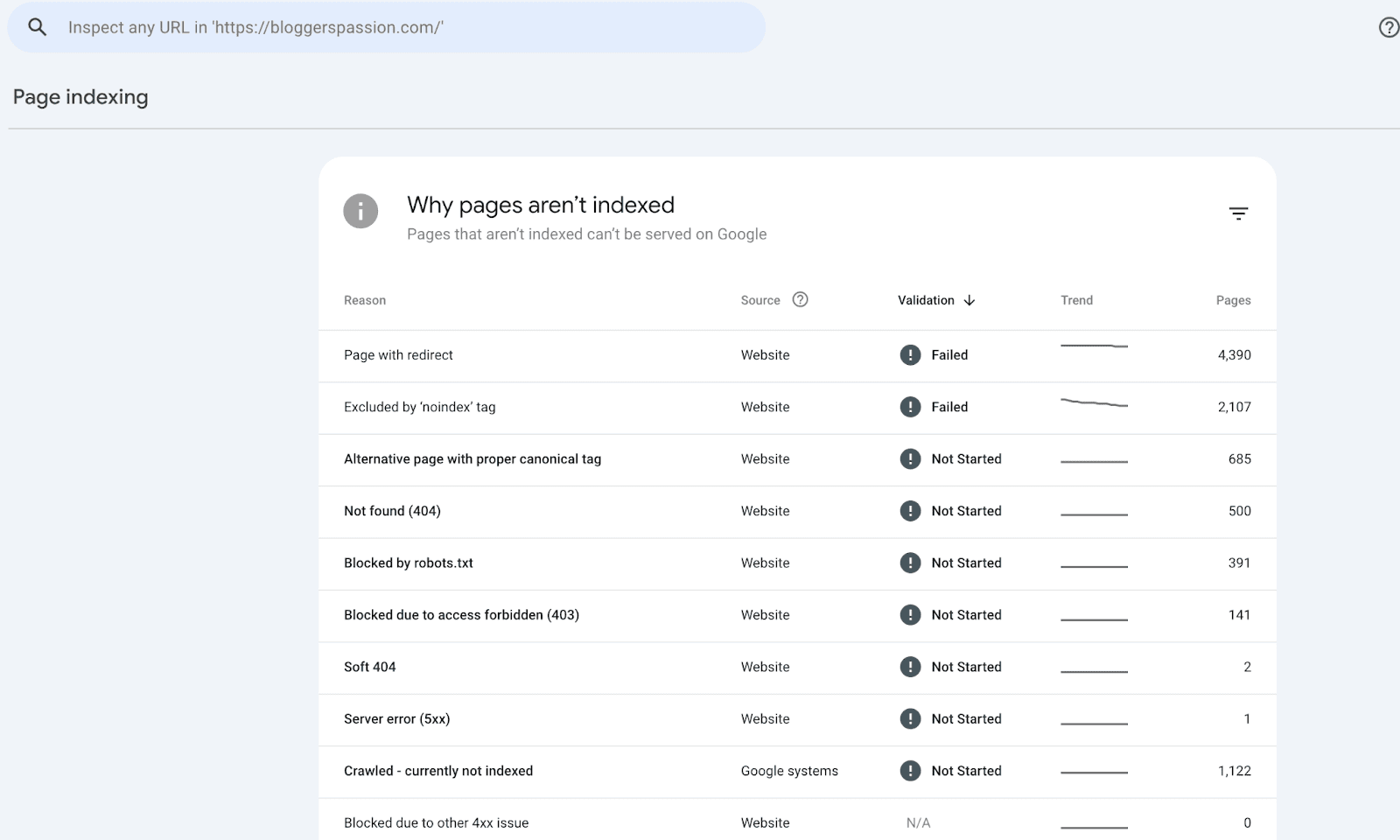
A quick way to check for duplicates? Go to Google Search Console → Pages → Why pages aren’t indexed. It’ll flag any duplicate titles or descriptions across your entire site.
2. Match Your Keywords to Search Intent
Before writing a single meta tag, understand why someone is searching for your keyword.
Every search falls into one of three categories:
- Informational: The person wants to learn something. Ex: “what are meta tags”
- Commercial: The person is comparing options. Ex: “best SEO plugins for WordPress”
- Transactional: The person is ready to buy. Ex: “buy Yoast SEO premium”
Your title and meta description need to match that search intent exactly.
If someone searches “what are long-tail keywords” and your title says “Buy Our SEO Course,” they’ll skip your result instantly. Even if you’re ranking on page one.
3. Write Every Meta Tag for Humans First
Google’s job is to serve people, not robots.
If your metadata (especially the title and description) is generic, people won’t click.
Write them like short ads. Keep them clear, natural, and focused on what the reader gets from the page.
4. Optimize Title and Meta Description Length
This is what most bloggers still ignore.
Too long and Google cuts off your title or description mid-sentence.
Follow these limits:
- Title tag: 50–60 characters
- Meta description: under 105 characters for mobile, up to 160 for desktop
5. Put Your Primary Keyword Early
Don’t bury your main keyword at the end of your title.
Put it as close to the front as possible.
- Weak: “A Complete Guide to Learning Search Engine Optimization for Beginners in 2026”
- Strong: “SEO for Beginners: How to Start Ranking in 2026”
6. Never Keyword Stuff
While optimizing for a primary keyword, most people go crazy and stuff it into their content again and again. This is called keyword stuffing, a black-hat SEO technique that can get your site penalized by Google.
Instead of keyword stuffing, you can find and use semantic keywords.
Semantic keywords are simply words and phrases closely related to your primary keyword.
For a page about “website speed,” semantic keywords might include: page load time, Core Web Vitals, image compression, caching, CDN, etc.
7. Test and Update Your Meta Data Regularly
Most bloggers write their meta tags once and never touch them again.
That’s a mistake.
Search trends change. Your rankings shift. Your competition uses BETTER meta tag descriptions.
And what worked six months ago might not be working today.
Here’s a simple routine you can follow:
- Check your click-through rates: Open Google Search Console and go to the Performance report. If a page is ranking well but getting low clicks, your title or meta description probably needs a rewrite.
- Update meta data on old posts: If you’re refreshing old content for 2026, update the title and description too. An outdated title like “Best SEO Tips for 2022” instantly kills your CTR.
- Test different titles: Try a question-based title vs a list-based one and see which gets more clicks over 30 days.
Above all, review your top 10 pages every quarter. Check the CTR, check the rankings, and ask yourself: Does this title still make someone want to click?
If the answer is no, change it.
To understand their importance, let’s first look at how these tags help your SEO.
So, how are these tags helpful for SEO?
1. Improve content relevance
Metadata helps search engines understand what your page is about.
When your title, description, headings (H1–H3), and content match the same topic, Google can show your page for relevant searches.
2. Help you match search intent
No matter how new or old your website is, if you want to rank on the first page for a keyword, you need to properly optimize your page.
Ranking today isn’t just about keywords; it’s about matching the search intent.
Well-written meta tag descriptions help search engines decide whether your page answers what users actually want (learn, buy, compare, or find).
When your title and description match the right intent, your page is more likely to rank.
3. To improve your organic click-through rates
Google has a simple concept when it comes to giving the top 3 results to a page.
It simply looks at how many people are clicking on the first page results to determine higher rankings (if more people click a 5th result, it will move up the rankings to 1, 2, or 3).
Your title tag and meta description show up in search results.
A strong snippet = more clicks.
4. Boosts social sharing previews
Open Graph tags control how your page looks on Instagram, X, Facebook, LinkedIn, and other platforms.
5. Prevents indexing issues
Robot meta tags tell search engines what to crawl and what to ignore.
Meta tags give Google and AI tools clear signals about what your page is. These tags are only visible when you click the “View page source” option (right-click a page), and they are easily read by search engine crawlers.
The good news?
You don’t need to be an SEO professional to get this right. Most of what we covered today can be implemented in under an hour using a free plugin like Yoast SEO or Rank Math on WordPress.
Start with the basics: title tags, meta descriptions, and Open Graph tags. Get those right first. Then work your way through the rest.
Small optimizations. Do them consistently. That’s what helps with better SEO.
Have any questions? Drop your thoughts in the comments.
FAQs on Meta Tag Optimisation
Here are some of the FAQs we’ve compiled for you to better understand everything you need to know about these SEO tags to improve your website’s SEO in 2026 and beyond.
Some do, some don’t. Title tags and header tags directly influence rankings. Meta descriptions don’t. But well-written meta data can boost clicks, which, in turn, can indirectly affect rankings.
If you’re a WordPress user, you can install an optimization SEO plugin as it helps you easily optimize your blog posts and pages for your desired keywords.
Yes, and it does this often.
Open Graph (OG) tags primarily help improve how your web page information appears on social media sites. They provide information such as titles, descriptions, and images.
Yes, they are still helpful even in 2026, as they help search engines understand what your page is all about.
Right-click on any page and select “View Page Source.” Look for the <head> section; all your meta data will be listed there. Also, you can use free tools like RankMath Meta Tag Analyzer to see how search engines are using your website’s meta data.





Hello, Anil ji
This topic is a bit confusing always to me. but while reading your post I found this is very easy to understand clearly. Every information about meta tag SEO is now clear totally by your post. I think you have an advanced level of knowledge about SEO.
Thanks for sharing the useful post. I will Surely wait for the next post.
This on page SEO content is written by the expert who has done great work in digital marketing and praised by millions.
Great post bro. now I understand the importance of meta tag. I feel like want to follow your blog for update
very nice article on SEO topic
and it’s very useful and helpful for our SEO knowledge
thanks a lot sir
I always found the whole concept of meta tags bit confusing but there were some really good insights in this post about meta tags. Thank you for sharing it.
What a great read and very detailed about metatags, metadata and see and how to use it all. Will put it into place.
Amazing post i got much needed help abo meta tags thanks.
Thanks, admin for this valuable post about Meta tags, We all know meta tags are important but I wasn’t aware there are 6 types of meta tags. So I’m really thankful of this article that taught me about Meta Tags
This blog post is a great help, especially for beginners. You just take all the most important things about meta tag in just one article. Carry on your good work.
Hi Anil,
Thanks for expressing this concept in such simple words.
I checked the Reading Level for my blog and the Results state that the content on my blog is : Basic – 1%, Intermediate – 86%
Now the question is that does the Readability Level have any impact on SEO or is this only beneficial for increasing the user experience?
Readability Level has direct impact on SEO but indirectly it does have impact like if your audience find’s is too hard to read after few second only your bounce rate increases which in the end has direct effect on your SEO or SERP rankings.
Hello Anil,
I still remember the initial days of my blogging. I was new in this field and always created the mess with my Meta tags. But eventually, I started looking at various posts from professionals and learned a lot about META Tags. I wish I find this post at that time. This is a very informative post and I am sure that this gonna help newbie a lot. Thanks for the share.
With Regards,
Vishwajeet