


Do you want to choose between Elementor and Divi? The answer is no longer just about design features. The better page builder affects Core Web Vitals, website scalability, WooCommerce conversions, and maintenance costs.
I have been working in the blogging industry for more than a decade and have used both Elementor and Divi across affiliate sites, WooCommerce stores, and client lead-generation funnels. I’ve also migrated a few sites from Divi to Elementor after struggling with the performance and flexibility.
That’s why this comparison is based on my implementation experience, not a generic one!
In this blog post, I’ll compare:
- Elementor vs Divi speed
- Elementor vs Divi SEO
- Core Web Vitals impact
- WooCommerce flexibility
- beginner usability
- AI features
- hidden maintenance costs
At the end of the article, you’ll come to know which WordPress page builder is better to build your dream site.
Elementor Vs Divi – Quick Comparison
| Feature | Elementor | Divi |
| Theme Builder | ✓ | ✓ |
| Performance & Speed | Faster and lighter | Slightly heavier |
| A/B Testing | ✕ | ✓ Built-in |
| Free Version | ✓ Available | ✕ No free version |
| Widgets / Modules | 100+ widgets with Pro | 200+ design modules |
| Popup Builder | ✓ Built-in | ✕ Requires extra tools |
| Layout Structure | Sections & Containers | Sections & Rows |
| Ease of Use | More beginner-friendly overall | Simple visual editing |
| Dynamic Content | ✓ Strong support | ✓ Available |
| Template Library | Large template ecosystem | 350+ layout packs |
| Built-in Theme | ✕ Works with most themes | ✓ Includes Divi Theme |
| Theme Compatibility | Excellent | Good |
| WooCommerce Support | Advanced customization | Basic to moderate customization |
| Form Builder | Good, but limited conditional logic | More advanced conditional logic |
| Third-Party Ecosystem | Massive addon ecosystem | Smaller ecosystem |
| Maintenance Mode | ✓ | ✕ |
| Role Management | Basic | More advanced |
| Lifetime Pricing | ✕ Not available | ✓ Available |
| Pricing | Starts at $59/year | Starts at $89/year or $249 lifetime |
My Recommendation
Choose Elementor if you
- Care about SEO and page speed optimization
- Run WooCommerce websites
- Build affiliate websites
- Need advanced design controls
- Want to work with scalable workflows
Go with Divi if you
- Want an all-in-one package
- Prefer simple visual editing
- Build smaller business websites
- Want lifetime pricing
- Don’t want to manage multiple add-ons
My Experience Using Elementor & Divi on Real Websites
Almost every page builder feels fast and flexible during the first few weeks. What happens after your website grows?
The real differences appear later when you start dealing with increasing traffic, plugin conflicts, WooCommerce scaling, and responsive design issues.
Over the last several years, I’ve tested both Elementor and Divi. And one pattern became obvious.
- Divi works well for visually-driven beginner websites.
- Elementor works better for scalable, performance-focused WordPress projects.
Let me explain what I have experienced!
After migrating a content-heavy affiliate site from Divi to Elementor, mobile load time improved significantly after optimization, because Elementor generated:
- few nested wrappers
- clean frontend code output
- light CSS delivery
- low DOM complexity
The difference became more noticeable after I added the schema plugin, analytics tool, email marketing tool, advanced caching and WooCommerce extension.
That’s where Elementor’s ecosystem advantage becomes much clearer.
How I Tested Elementor and Divi?
To keep this comparison fair, I rebuilt the exact same homepage using both builders.
Testing Environment
- Cloudways DigitalOcean hosting
- PHP Version: 8.3
- Latest WordPress Version
- Cloudflare CDN
- FlyingPress performance plugin
- Elementor Hello Theme
- Native Divi Theme
Elementor vs Divi Performance Test Results
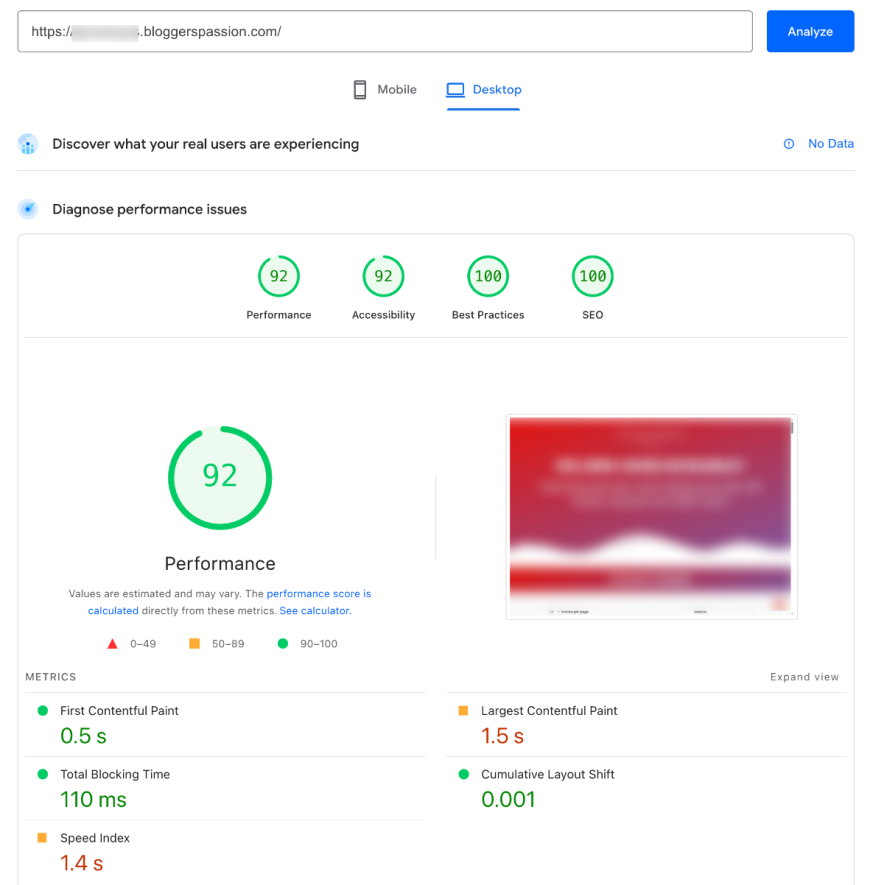
Elementor Speed
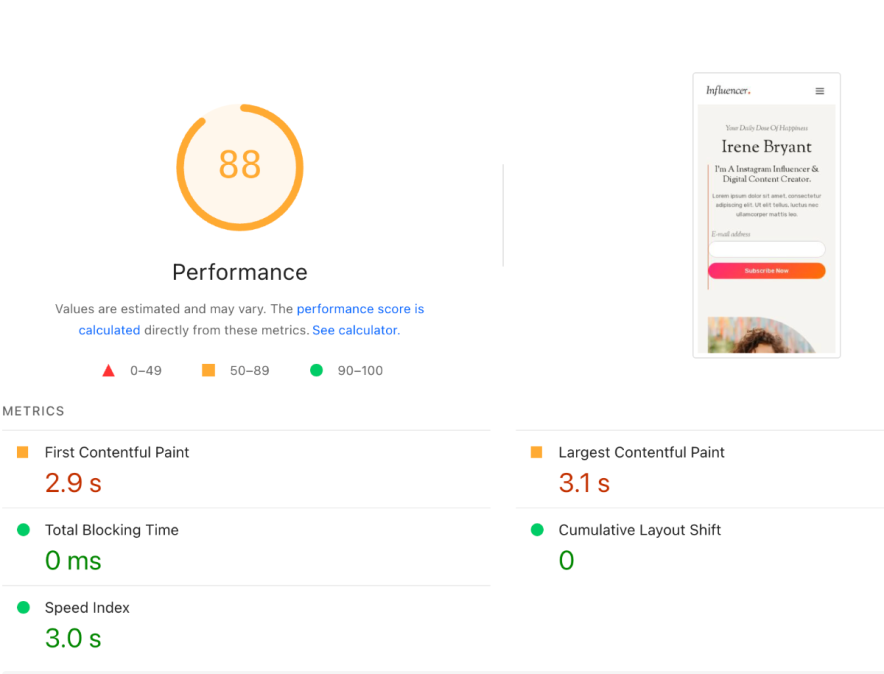
Divi Speed
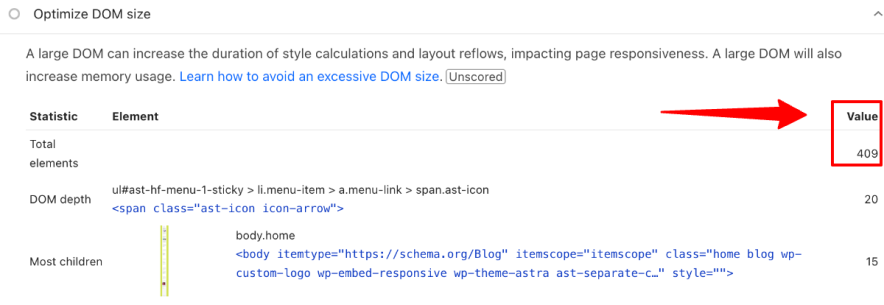
Elementor DOM Value
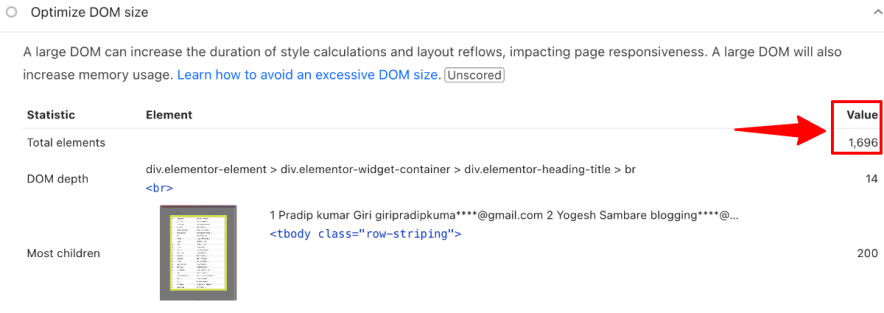
Divi DOM Value
Here is what I measured!
| Metric | Elementor | Divi |
| Mobile PSI Score | 92 | 88 |
| Largest Contentful Paint | 1.5s | 3.1s |
| DOM Nodes | 409 | 1,696 |
| CSS Size | Smaller | Larger |
| JavaScript Requests | Lower | Higher |
| Time to Interactive | Fast | Slow |
What I Observed From Testing?
Elementor consistently produced:
- clean frontend rendering
- light CSS payloads
- few nested elements
- fast mobile rendering
- low DOM complexity
Divi still relies on a heavier visual rendering architecture.
If my site grows larger, this increases render-blocking resources, JavaScript execution overhead and frontend complexity. For small brochure-style websites, this is not a big deal.
But for affiliate blogs, WooCommerce stores, lead generation websites, and high-traffic content sites, it matters a lot!
Elementor vs Divi for SEO
Based on my personal testing and optimization, Elementor has a noticeable advantage over Divi in technical SEO performance and Core Web Vitals optimization.
Why Elementor Performed Better for Technical SEO?
One of the biggest advantages I experienced with Elementor was its compatibility with modern SEO workflows and performance optimization practices.
It worked smoothly with
- lightweight WordPress theme
- dynamic SEO template
- caching and CDN systems
- image optimization plugin
- lazy load configurations
I’m impressed with Elementor’s newer Flexbox Container architecture.
In practical SEO terms, this helped me to improve page rendering efficiency, crawlability, accessibility structure, Largest Contentful Paint (LCP), Interaction to Next Paint (INP) and overall page speed performance.
During my tests, Elementor pages consistently required less cleanup and fewer technical adjustments to attain acceptable Lighthouse and Core Web Vitals scores.
I also noticed that Elementor has well integrated with cache optimizers, CSS delivery tools, and script management plugin. This made technical SEO maintenance easier for my content-heavy websites.
What Divi SEO Limitations Did I Experience?
Divi was still capable of producing visually attractive websites, but from a technical SEO perspective, I experienced several recurring optimization challenges.
In my tests, Divi theme generated:
- large DOM structures
- heavy inline CSS output
- render-blocking resources
- slow mobile rendering times
- high unused CSS percentages
These issues did not harm rankings, but they increased the amount of my manual optimization work required to improve page speed.
I have spent extra time to disable unused features, optimizing CSS delivery, reducing layout shifts, and improving mobile performance scores.
On content-heavy pages, I noticed that the Divi struggled to maintain fast rendering speeds compared to Elementor’s container-based layouts.
I also observed that Divi pages become heavier when modules and animations were added, which affects Time to Interactive and overall frontend efficiency.
Understand Important SEO Reality Check
You should understand that neither Elementor nor Divi will automatically improve your Google rankings. In my experience, SEO success depends on:
- search intent
- content quality
- topical authority
- backlink profile
- internal link strategy
- site architecture
- user experience
After using both WordPress builders, I concluded that Elementor offers a scalable SEO foundation for long-term growth.
Elementor Or Divi, Which Is Faster?
Site speed is closely tied to the real-world user experience. After testing, I found that Elementor is easy to optimize the core web vitals metrics.
Largest Contentful Paint (LCP)
Elementor loads hero sections faster because its container-based architecture reduces unnecessary nesting.
Divi layouts include additional wrappers, larger CSS files, and heavier visual rendering layers, and these have increased my initial rendering time, especially on mobile devices.
Interaction to Next Paint (INP)
INP measures responsiveness after user interaction.
Elementor performed better because it relies less on heavy animation dependencies during page interaction.
Divi uses sliders, animations, and hover effects, so my site was slower than Elementor.
Cumulative Layout Shift (CLS)
Both builders achieved good CLS scores.
However, Elementor provides more granular responsive breakpoint controls and made the layout stable to maintain across devices.
From a practical perspective, Elementor requires less effort to achieve strong Core Web Vitals scores.
Elementor Vs Divi for Beginners
I can see this part where Divi performs very well! Let me tell you why!
Divi’s visual builder feels beginner-friendly, with a simple, more design-focused interface that’s easier to understand for those building their first site.

It is comfortable for beginners since it offers:
- A smoother initial learning experience
- Simple visual editing
- Less overwhelming customization options
- Faster setup for basic websites
Elementor, on the other hand, has a slightly steeper learning curve. That’s mainly because it includes more advanced tools and flexibility.

Elementor offers:
- More widgets and customization controls
- Advanced responsive editing
- Dynamic content features
- Popup builders
- Template conditions
- Deeper marketing and WooCommerce integrations
If you are new to Elementor, it may take you longer to learn. I have moved from Divi to Elementor when I need advanced integration and scalable workflows.
So for beginners, Divi feels easier in the early stages. But for long-term growth, flexibility, and professional website building, Elementor offers room to scale.
Elementor Vs Divi for WooCommerce
This was one of the biggest differences in my testing for the comparison Divi Vs Elementor.
When it comes to building modern WooCommerce stores, Elementor offers more flexibility and scalability than Divi.
In my experience working on WordPress eCommerce projects, Elementor makes it easier to create high-converting online stores without feeling restricted by the builder.
For me, it performed well for
- Product page customization
- Conversion-focused layouts
- Dynamic WooCommerce templates
- Upsell and sales funnels
- Cart optimization
- Checkout customization
- Advanced product filtering
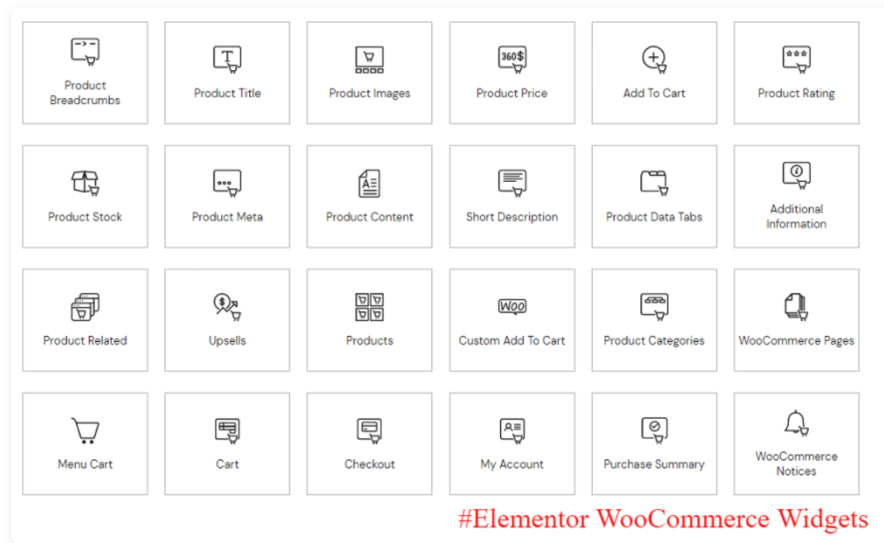
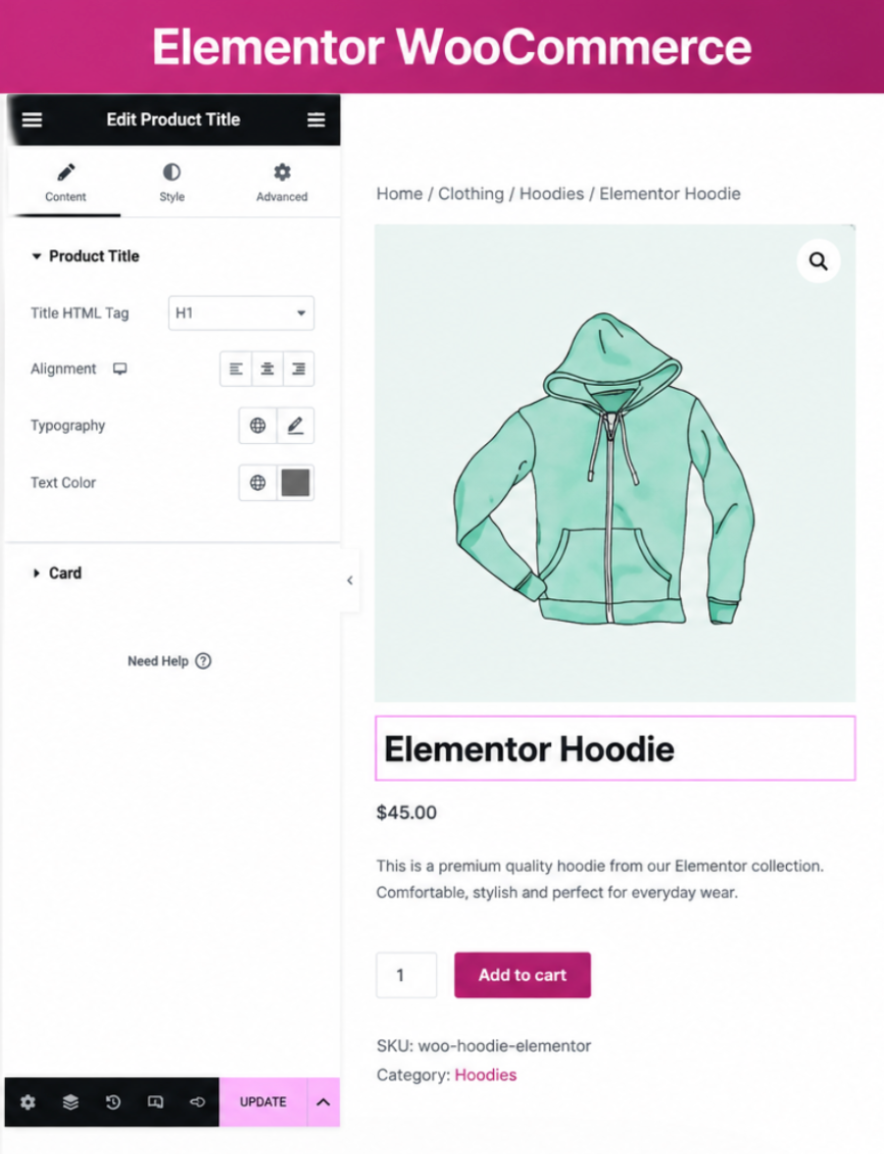
I see the biggest advantage of Elementor is its compatibility with advanced WooCommerce ecosystems. It integrates smoothly with powerful tools used by store owners and marketers.
This flexibility is important for growing stores that need better user experience, higher conversions, and advanced sales funnels.
Divi also supports WooCommerce, but I feel limited with its WooCommerce experience. Compared to Elementor, Divi store layouts were
- Heavier on mobile devices
- Harder to optimize for speed
- visually constrained
- Less conversion-focused
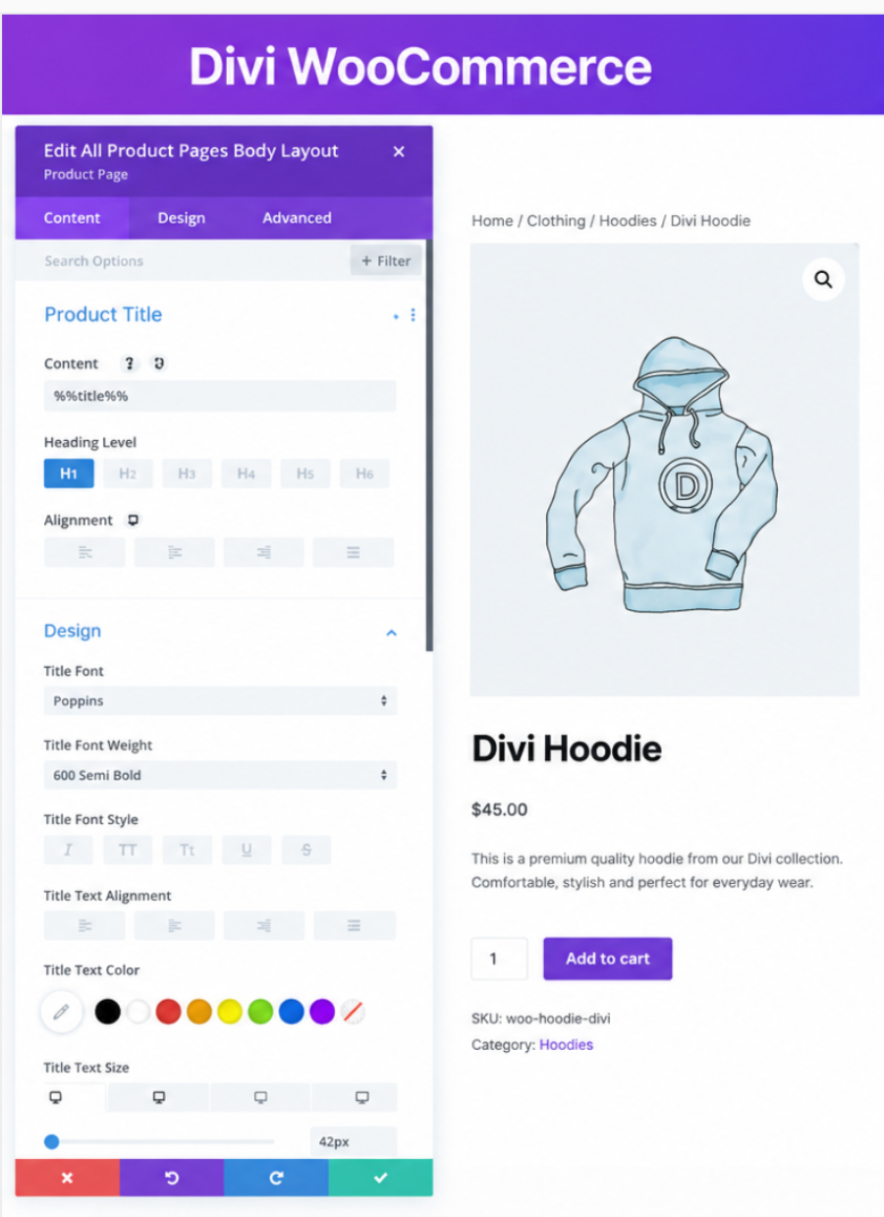
For smaller web stores, Divi can work fine. But for serious WooCommerce businesses focused on scalability, performance, and optimization, Elementor is the stronger choice in 2026.
Elementor AI Vs Divi AI
Let me share my AI design experience with these WordPress page builders! I felt that Elementor is more advanced and practical for professional workflows.
Elementor AI stands out because it goes beyond basic content generation. It integrates directly into the builder and helps speed up both design and development tasks.
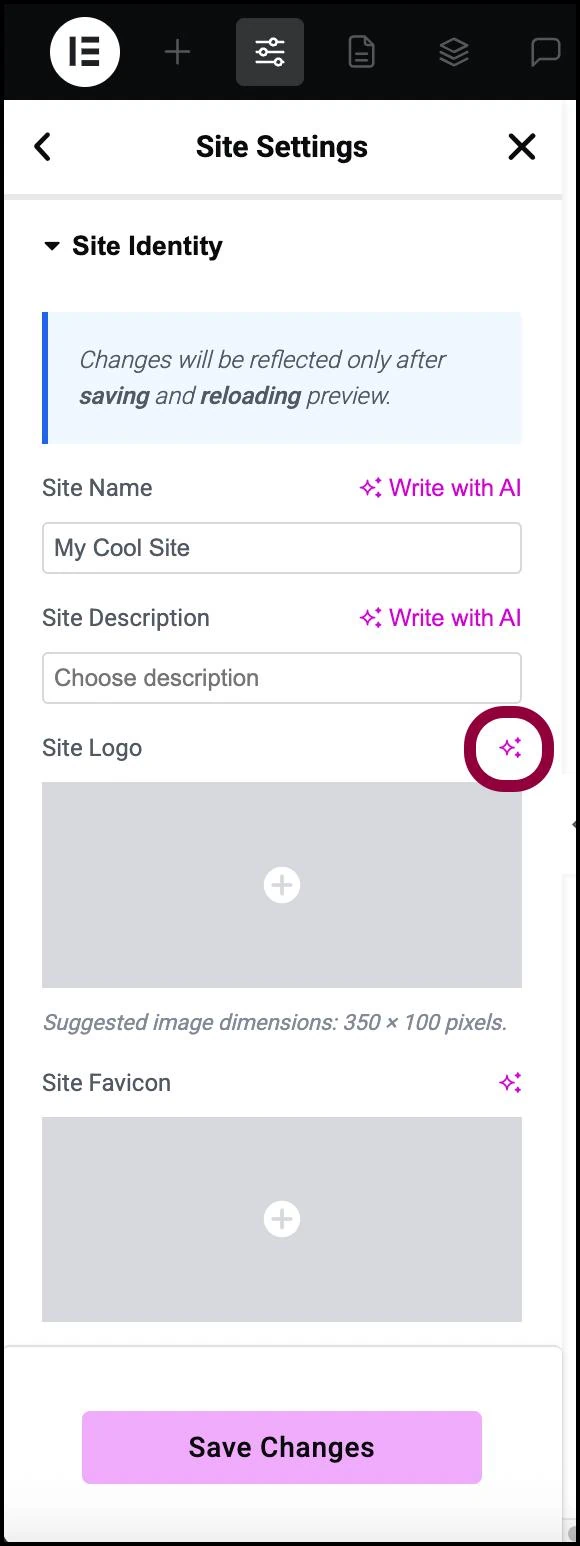
Key strengths of Elementor AI:
- AI-assisted layout generation
- Smart copywriting for sections and CTAs
- CSS generation inside widgets
- Custom code assistance
- AI image generation
- Faster workflow automation
I admire the way it naturally fits into the website-building process. You can generate copy, improve layouts, create custom CSS, and refine design sections without leaving the editor. For bloggers, agencies, and SEO professionals, this saves a significant amount of time.
On the other hand, Divi AI has improved a lot and works well for beginners and newbie bloggers. It offers:
- AI text generation
- Image creation
- Basic code assistance
- Content and section suggestions
However, compared to Elementor AI, Divi still feels more limited for advanced customization, automation, and developer-focused workflows.

In my design experience, Elementor’s ecosystem is moving faster toward AI-assisted website development. Its AI tools feel more polished, flexible, and better suited for modern WordPress workflows.
If you want stronger AI features, advanced flexibility, and better productivity tools, Elementor AI currently has the edge. Divi AI is improving quickly, but Elementor still feels ahead for professional website building and SEO-driven projects.
Biggest Mistake When Choosing a Page Builder
Most users choose a WordPress page builder based on templates, animations, visual effects and pricing. But almost nobody evaluates long-term technical debt. That becomes a major problem later.
Initially, your website feels fast. But once you start adding plugins, form builder, WooCommerce extensions and marketing integrations, the underlying builder architecture becomes more important.
This is where Elementor currently scales better than Divi. And it’s also why many agencies increasingly avoid shortcode-heavy ecosystems.
Hidden Costs Nobody Talks About
Most Elementor Vs Divi comparisons focus only on features and pricing plans. But from my experience working on real WordPress websites, the actual long-term cost is usually higher than the initial subscription fee.
Elementor Hidden Costs
Elementor offers excellent flexibility and a modern workflow, but costs can increase as websites grow.
I purchased
- premium add-ons
- advanced form integrations
- template kits
- WooCommerce extensions
- performance optimization plugins
I also came across several large Elementor websites that rely on multiple third-party plugins for advanced functionality. While Elementor performs well technically, managing extra plugins, licenses, and ongoing optimization can increase maintenance costs over time. Before purchasing the page builder, check whether an Elementor discount code is available.
Divi Hidden Costs
Divi looks cheaper initially, especially with its lifetime pricing and official discount. However, I experienced more hidden technical costs during optimization and scaling.
In my testing, Divi required additional work for:
- speed optimization
- reducing unused CSS
- mobile performance fixes
- frontend cleanup
- migration complexity
When my sites became larger and more content-heavy, I needed extra developer time and high-speed hosting resources to maintain good performance scores.
The Real Cost Over Time
The “cheaper” option is not cheaper in the long run.
Elementor may involve higher plugin-related costs, while Divi may require more technical optimization and maintenance later.
The decision should depend on your:
- scalability needs
- SEO priorities
- performance expectations
- long-term maintenance budget
Pros and Cons
Elementor Pros
- Better SEO foundation
- Faster performance
- Cleaner frontend architecture
- Excellent WooCommerce support
- Massive plugin ecosystem
- Better scalability
- Strong AI direction
Elementor Cons
- Can become expensive
- Add-on overload risk
- Slightly steeper learning curve
Divi Pros
- Affordable lifetime pricing
- Easy visual editing
- Beginner friendly
- All-in-one experience
Divi Cons
- Heavier frontend output
- Shortcode dependency
- Slower mobile performance
- Less scalable architecture
- More optimization overhead
Final Verdict: Is Elementor Better Than Divi?
After using both Elementor and Divi across blogs and client websites, my future-proof builder recommendation is based less on marketing claims and more on long-term usability, SEO performance, and scalability.
For most modern WordPress websites, Elementor is a stronger long-term investment.
It performs better for:
- Speed & SEO
- WooCommerce
- scalability
- conversion optimization
- agency workflows
- technical flexibility
Divi is still a good choice for:
- beginners
- smaller business websites
- Users who need simple visual editing
- Tight-budget users who prefer lifetime pricing
If your priorities include fastest builder, long-term growth, search engine rankings, mobile performance, website scalability, technical SEO, and future-proof architecture. Elementor is the better choice in 2026.
Frequently Asked Questions
Is Elementor faster than Divi?
Yes. In my speed performance tests, Elementor produces better Core Web Vitals scores and lighter frontend output.
Is Divi bad for SEO?
No! However, Divi usually requires more optimization tasks to achieve strong performance metrics.
Which builder is better for WooCommerce?
Elementor is significantly better for advanced WooCommerce customization and optimization.
Should I switch from Divi to Elementor?
If SEO, speed, scalability, and long-term growth matter to your business, migrating to Elementor can absolutely be worthwhile.




![GeneratePress Review 2026 [Pros, Cons, Theme Features, Pricing & Verdict] – Why I Use it For My Site Design](https://bloggerspassion.com/wp-content/uploads/2022/05/generatepress-review-2022-300x157.jpg)


Hello Anil,
I'm using Elementor, however when we compare the features between Divi and Elementor, I would strongly say that Elementor is the better one.
Thanks for your time to elaborate both.
Thanks